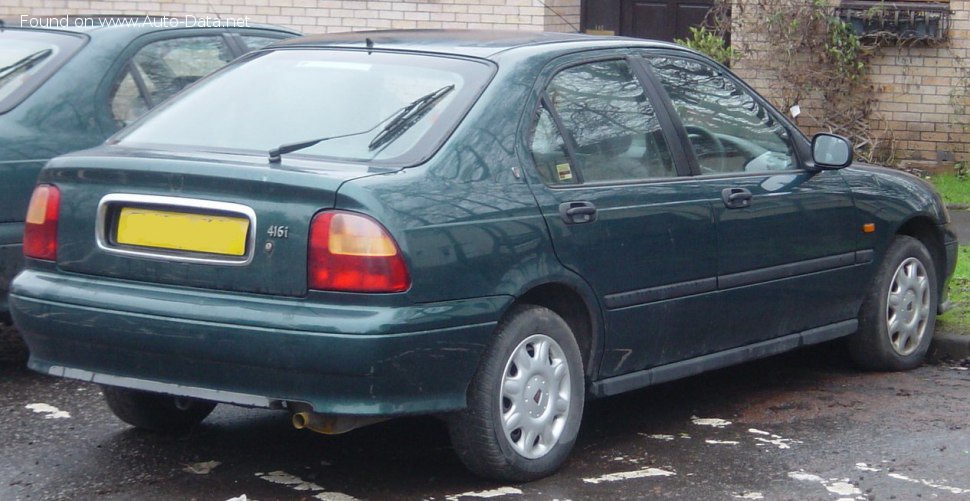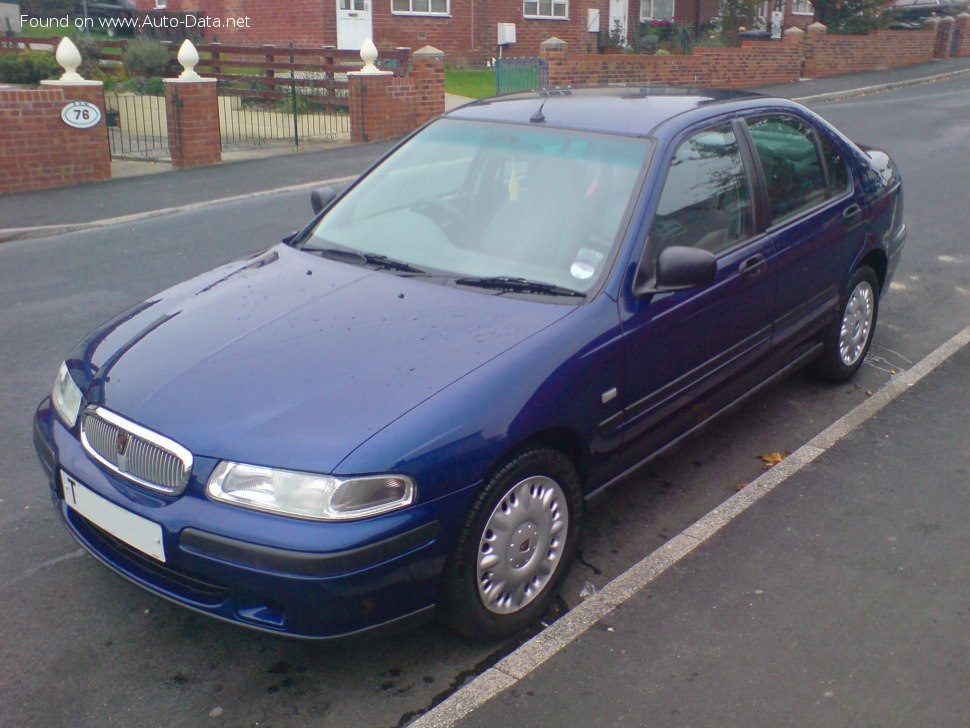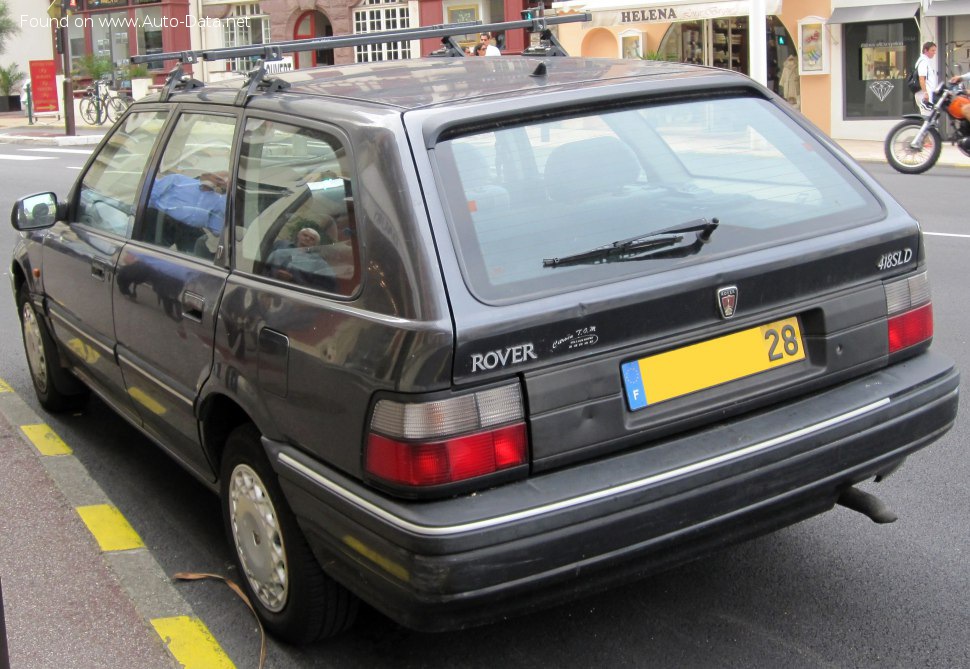
The Rover 400 Tourer (XW) 416 GTI (122 Hp) represents a significant chapter in the history of the British automaker Rover, embodying a period of strategic collaboration with Honda that aimed to combine British design sensibilities with Japanese engineering prowess. Launched in 1994 and produced until 1998, this particular variant of the Rover 400 series was the station wagon (or “estate” in European parlance) body style, designated as the XW generation. It carved out a niche in the highly competitive European compact family car segment, offering a compelling blend of practicality, a touch of performance, and a distinctive British character.
During the 1990s, Rover, then part of British Aerospace, relied heavily on its partnership with Honda to develop new models, ensuring modern platforms and reliable powertrains. The 400 series, including the Tourer, was a direct beneficiary of this collaboration, sharing its underpinnings with the contemporary Honda Civic. The 416 GTI variant, specifically, was positioned as a more spirited offering within the Tourer lineup, leveraging a potent Honda-sourced engine to deliver a driving experience that transcended its family-hauler designation. While never officially sold in the United States, the Rover 400 Tourer (XW) played a crucial role in Rover’s European market strategy, providing a practical, well-equipped, and surprisingly engaging option for families seeking versatility without sacrificing a degree of driving enjoyment.
The 416 GTI: Positioning and Target Audience
The 416 GTI Tourer occupied a mid-range position within the Rover 400 Tourer lineup. Below it sat the base 1.6-liter models, focused on affordability and fuel economy. Above it, there were no higher-performance Tourer variants; the GTI represented the peak of performance for the station wagon body style. The target audience was families who desired a practical vehicle with a bit more driving flair than the standard models offered. It appealed to those who appreciated the Rover brand’s image of understated elegance and British character, but also wanted a car that was reasonably quick and enjoyable to drive. It was a competitor to cars like the Ford Mondeo Estate and Vauxhall/Opel Vectra Estate, but aimed to offer a more refined experience.
Powertrain & Engine Architecture
At the heart of the Rover 400 Tourer (XW) 416 GTI (122 Hp) lies a testament to the successful Anglo-Japanese engineering partnership: the Honda ZC engine. This naturally aspirated, internal combustion gasoline engine was a well-regarded unit known for its smooth operation, reliability, and willingness to rev. Producing a respectable 122 horsepower (at 5,800 rpm) and 108 lb-ft of torque (at 4,500 rpm), this engine provided the 416 GTI Tourer with ample power for its class, making it one of the more potent options in the compact station wagon segment of the mid-1990s.
The ZC engine is a 1.6-liter, 16-valve, inline-four cylinder engine. It features a single overhead camshaft (SOHC) design, utilizing Honda’s VTEC (Variable Valve Timing and Lift Electronic Control) system. VTEC allowed for optimized valve timing at both low and high engine speeds, contributing to both fuel efficiency and performance. Fuel delivery was handled by Honda’s PGM-FI multi-point fuel injection system. The engine block was cast iron, while the cylinder head was aluminum, contributing to a relatively lightweight construction. The 416 GTI was exclusively offered with a four-speed automatic transmission, a Jatco unit licensed to Rover. This transmission was chosen to provide ease of use and convenience for family drivers, although it did impact overall performance compared to the available five-speed manual transmission in other 400 models.
Driving Characteristics
The Rover 400 Tourer (XW) 416 GTI with the automatic transmission offered a comfortable and relatively refined driving experience. Acceleration from 0 to 60 mph was around 10.5-11.5 seconds, which was respectable for the era, but noticeably slower than the manual transmission version. The automatic transmission, while smooth, had relatively long gear ratios, prioritizing fuel economy over outright performance. This meant that the engine often felt strained during quick overtaking maneuvers or when climbing hills. The VTEC system did provide a noticeable surge of power at higher engine speeds, but the automatic transmission sometimes masked the engine’s full potential.
Compared to the base 1.6-liter automatic, the 416 GTI offered a significant improvement in performance. The extra horsepower and torque made it feel more responsive and capable. However, compared to the 1.8-liter models (which were not available in Tourer form), the 416 GTI felt less powerful, particularly at higher speeds. The suspension was tuned for comfort, providing a compliant ride, but it wasn’t particularly sporty. The steering was light and easy to use, but lacked the precision of some competitors.
Equipment & Trim Levels
The 416 GTI Tourer typically came equipped with a reasonable level of standard features. These included central locking, power windows, power steering, an adjustable steering column, and a basic stereo system. Interior upholstery was typically cloth, although leather options were available as an extra-cost upgrade. The dashboard featured a wood-effect trim, adding a touch of sophistication. Optional extras included air conditioning, an upgraded stereo system with a CD player, alloy wheels, and a sunroof. The “GTI” trim also often included subtle exterior enhancements, such as a rear spoiler and body-colored bumpers.
The interior layout was typical of European family cars of the time, with a focus on practicality and ergonomics. The rear seats offered ample legroom for passengers, and the split-folding rear seats allowed for a versatile cargo area. The overall interior ambiance was comfortable and well-built, although the materials were not particularly luxurious.
Chassis & Braking
The Rover 400 Tourer (XW) utilized a MacPherson strut front suspension and a semi-independent torsion beam rear suspension. This setup provided a good balance between ride comfort and handling. The 416 GTI typically featured a front stabilizer bar to reduce body roll during cornering. Braking was typically accomplished with disc brakes on the front wheels and drum brakes on the rear wheels. ABS (Anti-lock Braking System) was available as an optional extra, improving braking performance and safety, particularly in wet or slippery conditions. The chassis was relatively lightweight, contributing to the car’s overall agility.
Market Reception & Comparison
Critics generally praised the Rover 400 Tourer (XW) 416 GTI for its comfortable ride, spacious interior, and refined driving experience. The Honda-sourced engine was widely regarded as reliable and efficient. However, some critics noted that the automatic transmission detracted from the car’s performance potential. Fuel economy was reasonable for the time, averaging around 28-32 mpg in mixed driving conditions. Compared to other trims in the lineup, the 416 GTI offered a noticeable performance upgrade, but at a slightly higher price point. Reliability was generally good, although Rover’s overall build quality was sometimes questioned. The 416 GTI offered a compelling alternative to more mainstream competitors like the Ford Mondeo and Vauxhall Vectra, appealing to buyers who valued British style and refinement.
Technical Specifications: Rover 400 Tourer (XW) 416 GTI (122 Hp)
| Category | Specification |
| General Information | |
| Brand | Rover |
| Model | 400 |
| Generation | 400 Tourer (XW) |
| Type (Engine) | 416 GTI (122 Hp) |
| Start of Production | 1994 |
| End of Production | 1998 |
| Powertrain Architecture | Internal Combustion engine |
| Body type | Station wagon (estate) |
| Seats | 5 |
| Doors | 5 |
| Performance Specs | |
| Fuel Type | Petrol (Gasoline) |
| Power | 122 Hp @ 5,800 rpm |
| Torque | 108 lb-ft @ 4,500 rpm |
| Engine Model/Code | Honda ZC |
| Engine Aspiration | Naturally aspirated |
| Transmission | 4-speed Automatic (Jatco) |
| Space, Volume and Weights | |
| Fuel Tank Capacity | 55 liters (14.53 US gallons) |
Legacy
The Rover 400 Tourer (XW) 416 GTI, while not a high-volume seller, remains a fondly remembered car among Rover enthusiasts. The Honda ZC engine is known for its durability and reliability, and well-maintained examples can still provide years of service. However, finding parts can be challenging, as Rover went out of business in 2005. Rust is a common issue with these cars, particularly in areas exposed to harsh weather conditions. On the used car market today, the 416 GTI Tourer is a relatively affordable classic, appealing to those seeking a practical and stylish estate car with a touch of British charm. Its blend of Honda reliability and Rover character makes it a unique and interesting vehicle for collectors and enthusiasts alike. The automatic transmission, while convenient, does limit its appeal to those seeking a more engaging driving experience.