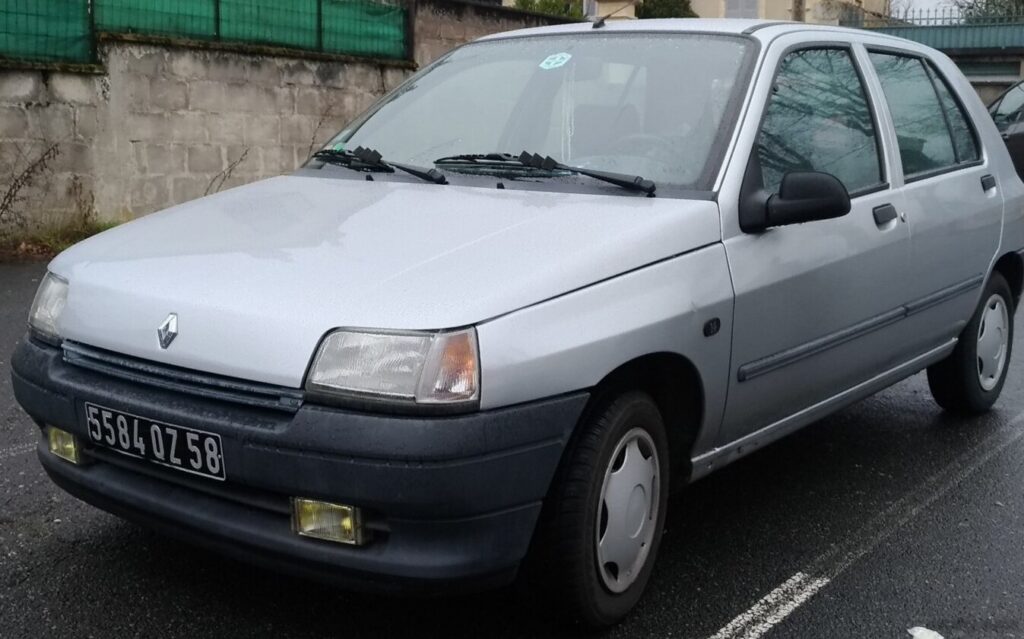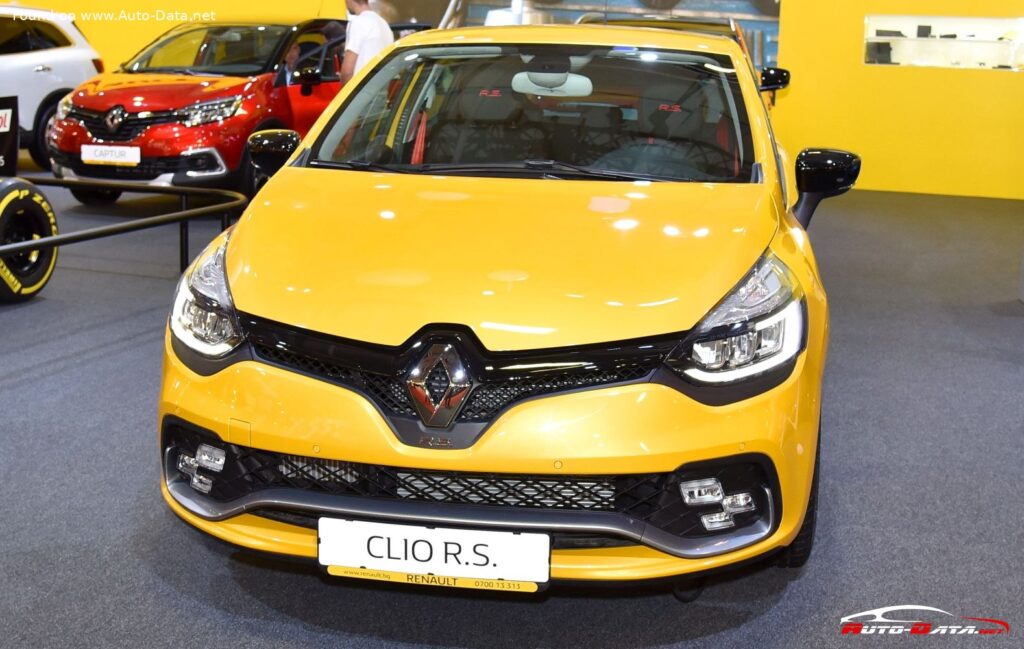
The Renault Clio IV (Phase II, 2016) 1.2 Energy TCe (120 Hp) EDC S&S represents a significant refresh of Renault’s highly successful fourth-generation Clio, a car that has consistently ranked among Europe’s best-selling superminis. Unveiled in 2016, this Phase II update aimed to sharpen the Clio’s already appealing design, enhance its technological offerings, and refine its powertrain options to maintain its competitive edge in the fiercely contested B-segment. While not officially sold in the United States market, the Clio is a cornerstone of Renault’s global strategy, particularly in Europe, where it serves as a stylish, efficient, and practical solution for urban commuters and small families.
The 1.2 Energy TCe (120 Hp) EDC S&S: Positioning and Role
This particular variant, the 1.2 Energy TCe (120 Hp) EDC S&S, showcases a blend of spirited performance and modern efficiency. It occupies a mid-range position within the Clio IV lineup, offering a step up in performance from the base 1.2 TCe 75 hp engine while remaining more accessible than the higher-performance 1.6 TCe models. It combines a potent, turbocharged gasoline engine with an advanced dual-clutch automatic transmission and a Start & Stop system, all housed within a practical five-door hatchback body. Its role in its primary European market is to offer a compelling alternative to rivals, providing a distinctive French flair alongside robust engineering and a feature set tailored to contemporary driving demands. The Clio IV, in its refreshed guise, continued to build upon a legacy of innovation and design that has defined the model line since its inception in 1990.
Powertrain & Engine Architecture
Under the hood of the Renault Clio IV (Phase II, 2016) 1.2 Energy TCe (120 Hp) EDC S&S lies a sophisticated powertrain designed for both lively performance and impressive fuel economy. The engine, designated H5F 408, is a 1.2-liter (1197 cm³ or 73.05 cubic inches) inline four-cylinder gasoline unit. This compact engine benefits from direct fuel injection and forced induction via a turbocharger and intercooler, a configuration that allows it to punch above its weight in terms of power output and torque delivery. The direct injection system, utilizing solenoid injectors, ensures precise fuel metering for optimal combustion and reduced emissions.
Engine Details
The H5F 408 engine features a single overhead camshaft (SOHC) valvetrain with four valves per cylinder. This configuration balances simplicity with adequate breathing for the engine’s output. The turbocharger is a twin-scroll unit, designed to minimize turbo lag and provide a more responsive driving experience. The engine also incorporates variable valve timing (VVT) on the intake side, further optimizing performance and efficiency across a wider range of engine speeds.
EDC Transmission
Power is channeled to the front wheels through a 6-speed EDC (Efficient Dual Clutch) automatic transmission. This advanced gearbox, sourced from Getrag, offers quick and seamless gear changes, enhancing both performance and fuel efficiency compared to traditional automatic transmissions. The EDC utilizes two separate clutches – one for odd-numbered gears and one for even-numbered gears – allowing for pre-selection of the next gear, resulting in virtually uninterrupted power delivery. The inclusion of a Start & Stop (S&S) system further boosts efficiency by automatically shutting off the engine when the vehicle is stationary and restarting it instantly when the driver presses the accelerator. This technology is particularly beneficial in urban environments, reducing fuel consumption and emissions.
Driving Characteristics
The 1.8L / Automatic setup delivers a surprisingly engaging driving experience for a supermini. The 120 horsepower and 151.2 lb-ft of torque provide ample power for everyday driving, with brisk acceleration from a standstill and confident overtaking capabilities. The broad torque band, peaking at 2000 rpm, means that the engine feels responsive throughout the rev range, minimizing the need for frequent downshifts. Compared to the lower-powered 75 hp version, the 120 hp model offers a noticeable improvement in performance, particularly when fully loaded or tackling uphill stretches. While not as overtly sporty as the 1.6 TCe variants, the 1.2 Energy TCe provides a good balance between performance and fuel economy. The EDC transmission contributes to a smooth and refined driving experience, with quick and precise gear changes. The gear ratios are tuned for a blend of acceleration and fuel efficiency, with a relatively tall sixth gear for comfortable highway cruising.
Equipment & Trim Levels
The Clio IV (Phase II) 1.2 Energy TCe (120 Hp) EDC S&S was typically offered in several trim levels, varying by market. Standard equipment generally included air conditioning, power windows, central locking, a basic audio system with USB connectivity, and ABS brakes. Higher trim levels added features such as alloy wheels, a touchscreen infotainment system with navigation, rear parking sensors, cruise control, and automatic headlights and wipers. Interior upholstery typically consisted of cloth seats, with options for upgraded materials and designs. The dashboard configuration featured a modern and ergonomic layout, with a focus on ease of use. Optional extras included a panoramic sunroof, leather upholstery, and a premium audio system.
Chassis & Braking
The Clio IV utilizes a MacPherson strut front suspension and a torsion beam rear suspension. This setup provides a good balance between ride comfort and handling. The torsion beam rear suspension is a cost-effective solution that offers adequate stability and control for everyday driving. The braking system utilizes ventilated discs at the front for effective stopping power and drums at the rear, a common setup for vehicles in this class balancing cost and performance. The steering system is a responsive rack and pinion setup, ensuring agile handling characteristic of a European supermini. Stabilizer bars are fitted to both the front and rear axles to reduce body roll during cornering.
Market Reception & Comparison
Critics generally praised the Renault Clio IV (Phase II) 1.2 Energy TCe (120 Hp) EDC S&S for its stylish design, comfortable ride, and efficient powertrain. The 1.2 Energy TCe engine was lauded for its responsiveness and fuel economy. The EDC transmission was also well-received, offering a smooth and convenient driving experience. Compared to its rivals, the Clio IV often stood out for its distinctive styling and perceived French flair. Fuel economy was competitive, with the 1.2 Energy TCe achieving comparable figures to similar-sized engines from Volkswagen and Ford. Reliability was generally good, although some owners reported minor issues with the EDC transmission. Overall, the Clio IV 1.2 Energy TCe (120 Hp) EDC S&S was considered a strong contender in the supermini segment, offering a compelling package of style, efficiency, and practicality.
Technical Specifications
| Category | Specification |
| General Information | |
| Brand | Renault |
| Model | Clio |
| Generation | Clio IV (Phase II, 2016) |
| Type (Engine) | 1.2 Energy TCe (120 Hp) EDC S&S |
| Start of Production | 2016 year |
| End of Production | 2018 year |
| Powertrain Architecture | Internal Combustion engine |
| Body type | Hatchback |
| Seats | 5 |
| Doors | 5 |
| Performance Specs | |
| Fuel consumption (economy) – urban | 6.8 l/100 km (34.6 US mpg) |
| Fuel consumption (economy) – extra urban | 4.5 l/100 km (52.3 US mpg) |
| Fuel consumption (economy) – combined | 5.4 l/100 km (43.6 US mpg) |
| CO2 emissions | 120 g/km |
| Fuel Type | Petrol (Gasoline) |
| Acceleration 0 – 60 mph | 8.7 sec |
| Maximum speed | 123.65 mph (199 km/h) |
| Emission standard | Euro 6 b |
| Weight-to-power ratio | 9.1 kg/Hp, 110.1 Hp/tonne |
| Weight-to-torque ratio | 5.3 kg/Nm, 188.1 Nm/tonne |
| Engine Specs | |
| Power | 120 Hp @ 5500 rpm |
| Power per liter | 100.3 Hp/l |
| Torque | 151.2 lb.-ft. @ 2000 rpm (205 Nm) |
| Engine layout | Front, Transverse |
| Engine Model/Code | H5F 408 |
| Engine displacement | 1.2 liters (1197 cm³ / 73.05 cu. in.) |
| Number of cylinders | 4 |
| Engine configuration | Inline |
| Number of valves per cylinder | 4 |
| Fuel injection system | Direct injection |
| Engine aspiration | Turbocharger, Intercooler |
| Engine oil capacity | 4.86 US qt (4.6 l) |
| Coolant | 5.28 US qt (5 l) |
| Engine Systems | |
| Start & Stop System | Yes |
| Space, Volume and Weights | |
| Kerb Weight | 2403.04 – 2634.52 lbs (1090-1195 kg) |
| Max. weight | 3716.99 – 3736.84 lbs (1686-1695 kg) |
| Max load | 1102.31 – 1313.96 lbs (500-596 kg) |
| Dimensions | |
| Length | 159.92 in (4062 mm) |
| Width | 68.15 in (1731 mm) |
| Width including mirrors | 76.57 in (1945 mm) |
| Height | 57.01 in (1448 mm) |
| Wheelbase | 101.93 in (2589 mm) |
| Front track | 59.29 in (1506 mm) |
| Rear (Back) track | 59.29 in (1506 mm) |
| Front overhang | 33.5 in (851 mm) |
| Rear overhang | 24.49 in (622 mm) |
| Ride height (ground clearance) | 4.72 in (120 mm) |
| Drivetrain, Brakes and Suspension Specs | |
| Drivetrain Architecture | Internal combustion engine drives the front wheels |
| Drive wheel | Front wheel drive |
| Number of gears and type of gearbox | 6 gears, automatic transmission (EDC) |
| Front brakes | Ventilated discs |
| Rear brakes | Drum |
| Assisting systems | ABS (Anti-lock braking system) |
| Steering type | Steering rack and pinion |
| Tires size | 185/65 R15; 195/55 R16; 205/45 R17 |
| Wheel rims size | 15; 16; 17 |
Legacy
The Renault Clio series, and particularly the fourth generation with its Phase II refresh, holds a significant and cherished place in the European automotive landscape. It is not merely a car but a cultural icon in many European countries, consistently appearing at the top of sales charts. The Renault Clio IV (Phase II, 2016) 1.2 Energy TCe (120 Hp) EDC S&S, with its blend of style, efficiency, and performance, was instrumental in maintaining this strong market position during its production run from 2016 to 2018. In the used car market, these Clios are generally well-regarded for their reliability and low running costs. The EDC transmission, while occasionally requiring maintenance, has proven to be generally durable. The 1.2 Energy TCe engine is known for its fuel efficiency and relatively simple construction, making it a cost-effective option for budget-conscious buyers. The Clio IV continues to be a popular choice for those seeking a stylish, practical, and affordable supermini.