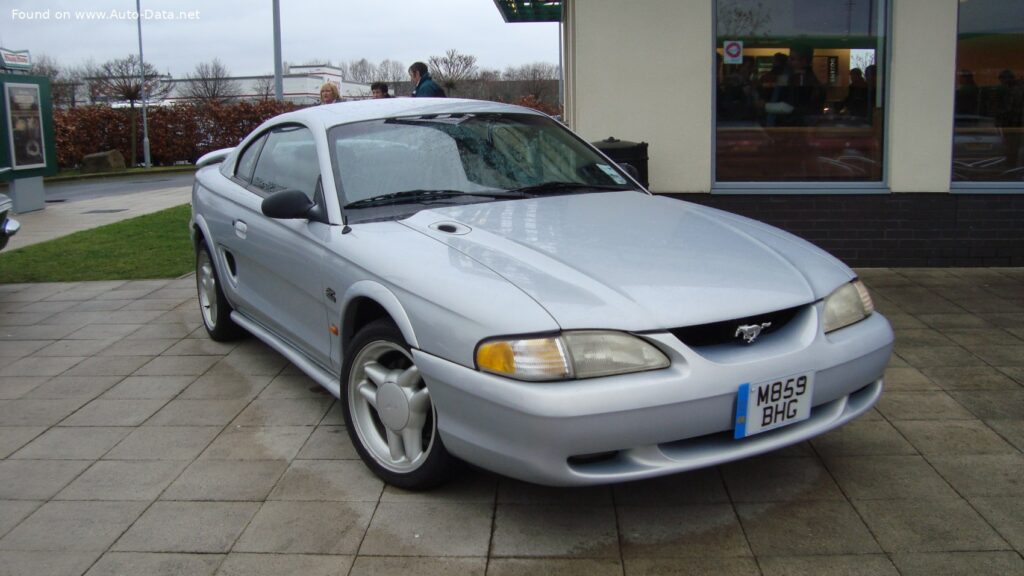
The Ford Mustang, an icon of American automotive culture, entered its fourth generation, known internally as the SN95, for the 1994 model year. The specific variant under review, the Ford Mustang IV 4.6 V8 32V Cobra (320 Hp), represents the pinnacle of performance for the Mustang lineup during its “New Edge” facelift period, spanning from 1999 to 2002. This iteration of the Cobra, crafted by Ford’s Special Vehicle Team (SVT), was more than just a trim level; it was a carefully engineered performance machine designed to challenge perceptions of what a Mustang could be. Positioned in the highly competitive pony car segment, the 1999-2002 Cobra aimed to deliver a sophisticated blend of raw power, improved handling, and distinctive styling, solidifying its role as a modern classic for enthusiasts.
The 1999-2002 Ford Mustang Cobra: A Performance Benchmark
During its production run, the SN95 generation brought significant advancements to the Mustang platform, moving away from the Fox-body architecture that underpinned its predecessor. While standard GT models received the 2-valve 4.6-liter V8, the Cobra distinguished itself with a more advanced, high-revving 32-valve DOHC engine, alongside a crucial independent rear suspension (IRS) system, a first for a production Mustang. These technical upgrades underscored its ambition to compete with the best performance coupes of its era, offering a compelling package of speed, agility, and the unmistakable roar of an American V8.
Powertrain & Engine Architecture
At the heart of the 1999-2002 Ford Mustang IV 4.6 V8 32V Cobra lay its formidable powertrain: a naturally aspirated 4.6-liter (4601 cm3 or 280.77 cu. in.) “Modular” V8 engine. Unlike the more common 2-valve SOHC versions found in GT models, the Cobra’s engine boasted a sophisticated DOHC (Dual Overhead Camshaft) 32-valve configuration. This advanced valvetrain, featuring four valves per cylinder, allowed for superior airflow, enabling the engine to breathe more efficiently and produce significantly more power at higher RPMs. The engine code for these engines is typically identified as ROMEO.
This meticulously engineered V8 delivered an impressive 320 horsepower at 6000 rpm, translating to a specific output of 69.6 horsepower per liter. Torque was equally robust, peaking at 317.15 lb.-ft. (430 Nm) at 4750 rpm, providing strong, immediate acceleration across the rev range. The engine’s layout was traditional American muscle: a front-mounted, longitudinal V-engine with an 8-cylinder configuration. With a compression ratio of 9.9:1 and a multi-port fuel injection system, the engine was designed for optimal combustion and responsiveness. Its bore and stroke dimensions were nearly square at 3.55 inches (90.2 mm) and 3.54 inches (90 mm) respectively, contributing to its balanced power delivery.
Power was channeled to the rear wheels via a precise 5-speed manual transmission, offering direct driver engagement and control. While an automatic transmission was offered, the manual was the preferred choice for enthusiasts. The drivetrain architecture, combined with the potent engine, allowed the Ford Mustang IV 4.6 V8 32V Cobra to achieve remarkable performance figures for its time. It could accelerate from 0 to 60 mph in a swift 5.2 seconds, and complete the 0-100 km/h sprint in 5.5 seconds. The Cobra’s top speed was electronically limited to 149.13 mph (240 km/h), a testament to its high-performance capabilities. The power-to-weight ratio stood at a competitive 4.8 kg/Hp (209.8 Hp/tonne), while the torque-to-weight ratio was 3.5 kg/Nm (282 Nm/tonne), highlighting the car’s strong acceleration potential relative to its 3362.05 lbs (1525 kg) curb weight.
Driving Characteristics
The 1999-2002 Cobra offered a significantly different driving experience compared to the standard GT Mustang. The DOHC engine demanded to be revved, delivering its peak power higher in the RPM range. This contrasted with the GT’s more low-end torque focused engine. The 5-speed manual transmission allowed for precise control, while the automatic, though convenient, felt less engaging. The independent rear suspension dramatically improved handling, providing a more planted and controlled feel, especially during cornering. Compared to the solid axle GT, the Cobra exhibited less axle hop and a more refined ride quality. The IRS also allowed for more aggressive suspension tuning without compromising ride comfort.
Equipment & Trim Levels
The Cobra came standard with a number of features designed to enhance the driving experience and differentiate it from the GT. These included sport seats with enhanced bolstering, a leather-wrapped steering wheel, and unique Cobra badging both inside and out. Standard exterior features included a unique front fascia, rear spoiler, and side skirts. Interior upholstery was typically dark gray or black leather. Optional extras included a premium sound system, power-adjustable seats, and a sunroof. The Cobra was positioned as the premium performance trim, offering a more refined and feature-rich experience than the GT.
Chassis & Braking
The chassis of the 1999-2002 Cobra was significantly upgraded compared to the standard Mustang. The most notable change was the introduction of the independent rear suspension (IRS), which replaced the traditional solid rear axle. This IRS system utilized a three-link design with coil springs and adjustable shocks. The front suspension utilized a wishbone design. Stopping power was assured by disc brakes at both the front and rear, augmented by an Anti-lock Braking System (ABS), a crucial safety feature for controlling such a powerful vehicle. The braking system featured vented front rotors and solid rear rotors. Steering was handled by a hydraulic rack and pinion system, offering direct feedback to the driver.
Market Reception & Comparison
Critics generally praised the 1999-2002 Cobra for its improved handling, powerful engine, and distinctive styling. The IRS was widely lauded as a significant improvement over the solid rear axle found in previous Mustangs. However, some critics noted that the Cobra’s engine, while powerful, lacked the low-end grunt of some of its competitors. Fuel economy was also a concern, typical of a high-performance V8. Compared to the GT, the Cobra offered a more refined and engaging driving experience, but at a higher price point. The Cobra also offered better fuel economy than the Camaro SS, but slightly less horsepower. Reliability was generally good, although some owners reported issues with the engine’s timing chain tensioners.
Technical Specifications
| Category | Specification |
| Brand | Ford |
| Model | Mustang |
| Generation | Mustang IV |
| Type (Engine) | 4.6 V8 32V Cobra (320 Hp) |
| Start of Production | 1999 |
| End of Production | 2002 |
| Powertrain Architecture | Internal Combustion Engine |
| Body Type | Coupe |
| Seats | 4 |
| Doors | 2 |
| Performance Specs | |
| Fuel Consumption (Urban) | 13.1 US mpg (18 l/100 km) |
| Fuel Consumption (Extra Urban) | 23.5 US mpg (10 l/100 km) |
| Fuel Type | Petrol (Gasoline) |
| Acceleration 0-60 mph | 5.2 sec |
| Acceleration 0-100 km/h | 5.5 sec |
| Maximum Speed | 149.13 mph (240 km/h) |
| Weight-to-Power Ratio | 4.8 kg/Hp (209.8 Hp/tonne) |
| Weight-to-Torque Ratio | 3.5 kg/Nm (282 Nm/tonne) |
| Engine Specs | |
| Power | 320 Hp @ 6000 rpm |
| Power per Liter | 69.6 Hp/l |
| Torque | 317.15 lb.-ft. (430 Nm) @ 4750 rpm |
| Engine Layout | Front, Longitudinal |
| Engine Displacement | 4.6 l (4601 cm3 / 280.77 cu. in.) |
| Number of Cylinders | 8 |
| Engine Configuration | V-engine |
| Cylinder Bore | 3.55 in. (90.2 mm) |
| Piston Stroke | 3.54 in. (90 mm) |
| Compression Ratio | 9.9:1 |
| Number of Valves per Cylinder | 4 |
| Fuel Injection System | Multi-port manifold injection |
| Engine Aspiration | Naturally Aspirated |
| Valvetrain | DOHC |
| Engine Oil Capacity | 6.02 US qt (5.7 l) |
| Space, Volume and Weights | |
| Kerb Weight | 3362.05 lbs (1525 kg) |
| Trunk (Boot) Space – Minimum | 10.95 cu. ft. (310 l) |
| Fuel Tank Capacity | 15.59 US gal (59 l) |
| Dimensions | |
| Length | 183.5 in. (4661 mm) |
| Width | 73.11 in. (1857 mm) |
| Height | 53.5 in. (1359 mm) |
| Wheelbase | 101.3 in. (2573 mm) |
| Front Track | 59.88 in. (1521 mm) |
| Rear Track | 59.88 in. (1521 mm) |
| Drivetrain, Brakes and Suspension Specs | |
| Drivetrain Architecture | Internal combustion engine drives the rear wheels |
| Drive Wheel | Rear-wheel drive |
| Number of Gears and Type of Gearbox | 5 gears, Manual Transmission |
| Front Suspension | Wishbone |
| Rear Suspension | Independent Rear Suspension (Coil spring) |
| Front Brakes | Disc |
| Rear Brakes | Disc |
| Assisting Systems | ABS (Anti-lock Braking System) |
| Steering Type | Steering rack and pinion |
| Power Steering | Hydraulic Steering |
| Tires Size | 245/45 R17 |
Legacy
The Ford Mustang IV 4.6 V8 32V Cobra (320 Hp) carved out a significant niche in the annals of American performance cars. As a product of Ford’s Special Vehicle Team (SVT), it was designed not just to be fast, but to showcase the engineering prowess and performance potential of the Mustang platform. Its introduction of the DOHC 32-valve 4.6-liter “Modular” V8 was a pivotal moment for the Mustang, signaling a shift towards more technologically advanced engines, moving beyond the traditional pushrod V8s that had long defined American muscle. The most impactful feature, however, was undoubtedly the independent rear suspension (IRS).
In the used car market today, these Cobras command a premium price, particularly well-maintained examples with low mileage. They are sought after by collectors and enthusiasts who appreciate their unique combination of performance, handling, and styling. While some maintenance items, such as the timing chain tensioners, may require attention due to age, the Cobra remains a reliable and rewarding performance car. It stands as a testament to Ford SVT’s commitment to building truly special performance vehicles.