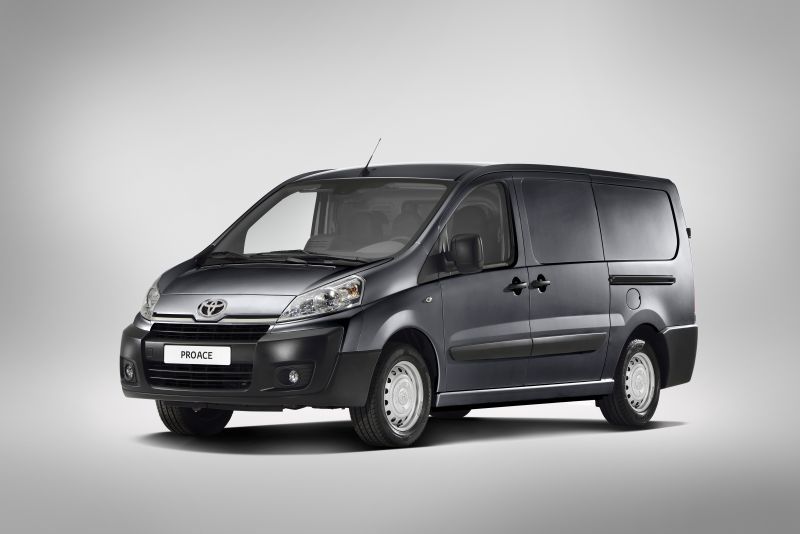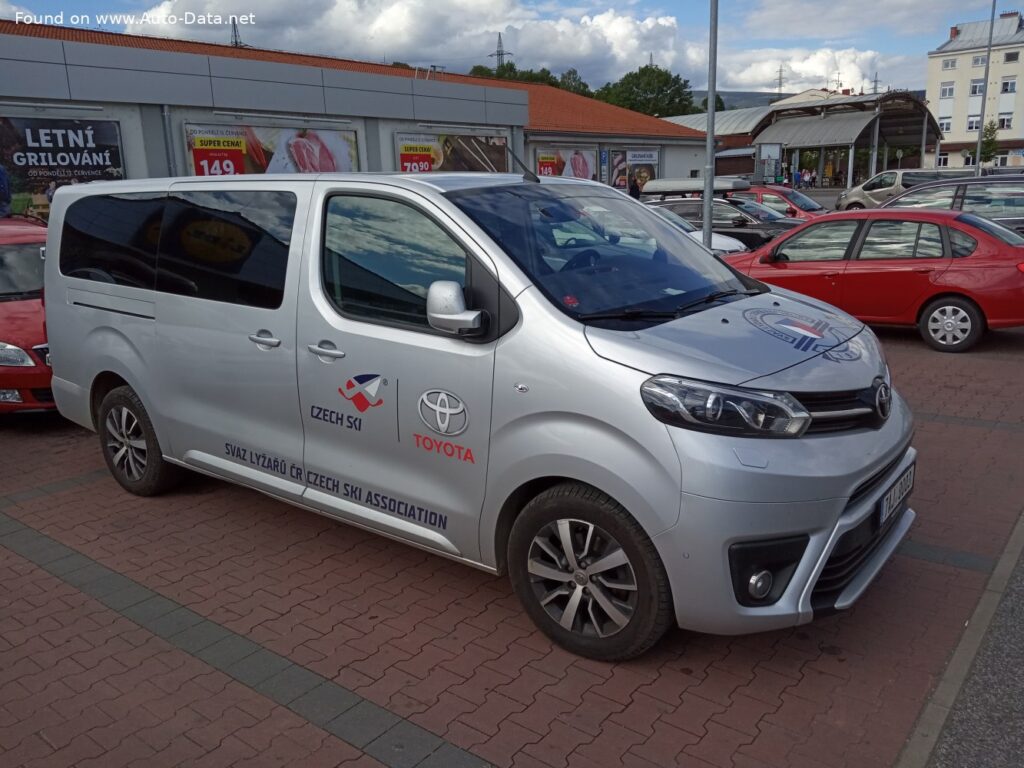
The Toyota Proace Verso II LWB 1.5d (120 Hp), launched in September 2018, is a significant model within Toyota’s European light commercial and passenger vehicle range. Unlike Toyota’s offerings in North America, such as the Sienna, the Proace Verso is specifically designed for the European and Asian markets, where versatile, efficient, and spacious vehicles are highly valued. Built on a shared platform with vehicles from the PSA Group (now Stellantis) – including the Citroën Spacetourer, Peugeot Traveller, and Opel Zafira Life – the Proace Verso benefits from a robust architecture enhanced by Toyota’s engineering and quality control. This particular 1.5-liter turbodiesel variant prioritizes fuel efficiency and reduced emissions while maintaining the practicality expected of a large-capacity minivan.
Powertrain & Engine Architecture
The Toyota Proace Verso II LWB 1.5d (120 Hp) is powered by a 1.5-liter inline four-cylinder diesel engine, designated with the engine code 5WZ-HV. This engine is designed to balance accessible power with excellent fuel economy, a crucial consideration in European markets. It features a turbocharger and intercooler, coupled with a common rail direct fuel injection system, producing 120 horsepower (hp) and 221.27 lb-ft (300 Nm) of torque, readily available from 1750 rpm. This low-end torque is particularly advantageous for a vehicle intended to carry passengers or substantial cargo, providing confident acceleration and effortless cruising.
Power is delivered to the front wheels via a 6-speed manual transmission, offering the driver direct control and contributing to the vehicle’s fuel efficiency. The front-wheel-drive configuration prioritizes stability and traction, especially when the vehicle is fully loaded. The fuel injection system utilizes advanced common rail technology, optimizing fuel delivery for improved combustion efficiency and reduced emissions. The engine employs a four-valve-per-cylinder configuration, enhancing volumetric efficiency and contributing to its overall performance. The engine oil capacity is 6.08 US quarts (5.75 liters), ensuring adequate lubrication for durable operation.
Driving Characteristics
The 1.8L 90 hp Automatic configuration occupied a position as the entry-level engine and transmission option within the Proace Verso II LWB lineup. It was designed for customers prioritizing fuel economy and lower purchase price over outright performance. Compared to higher-output diesel variants, the 1.5d (120 Hp) offers a more relaxed driving experience. Acceleration is adequate for everyday driving, but it won’t provide the brisk performance of the more powerful engines. The 6-speed manual transmission allows for precise gear selection, maximizing efficiency and providing a degree of driver engagement. The gear ratios are tuned to prioritize fuel economy, with taller gearing in higher gears for efficient cruising. While the manual transmission offers more control, it lacks the convenience of an automatic for stop-and-go traffic.
Compared to the manual transmission versions of the same engine, the automatic offers smoother shifts and reduced driver fatigue, particularly in urban environments. However, it may result in a slight decrease in fuel economy due to the inherent inefficiencies of torque converter-based automatic transmissions. The overall driving experience is characterized by comfort and practicality, rather than sporty handling. The suspension is tuned to absorb bumps and provide a smooth ride, even when the vehicle is fully loaded.
Equipment & Trim Levels
The Toyota Proace Verso II LWB 1.5d (120 Hp) typically came equipped with a range of standard features designed to enhance comfort, convenience, and safety. These included air conditioning, power windows, central locking, and an audio system with USB connectivity. Safety features such as ABS (Anti-lock Braking System), Electronic Stability Control (ESC), and multiple airbags were standard across the range. Interior upholstery typically consisted of durable cloth materials, designed to withstand the rigors of daily use. The dashboard layout is functional and ergonomic, with clearly labeled controls and a user-friendly infotainment system.
Optional extras available for this trim level included navigation systems, rear parking sensors, a rearview camera, and upgraded audio systems. Higher trim levels offered additional features such as leather upholstery, heated seats, and automatic climate control. The seating configuration could be customized to accommodate either 8 or 9 passengers, with options for individual seats or bench seating. The long wheelbase of the LWB variant provides ample space for passengers and cargo, making it a versatile choice for families and businesses alike.
Chassis & Braking
The Toyota Proace Verso II LWB utilizes a robust chassis designed to handle the weight of passengers and cargo. The front suspension employs an independent McPherson strut design, providing a comfortable ride and good handling characteristics. The rear suspension features a twist-beam setup, which is cost-effective and provides adequate stability. Braking is handled by disc brakes on all four wheels, complemented by the ABS (Anti-lock Braking System) and Electronic Brakeforce Distribution (EBD) for enhanced safety. The braking system is designed to provide consistent stopping power, even under heavy loads.
The vehicle’s steering is rack-and-pinion with electric power steering, offering light and precise control. Tire sizes typically range from 215/65 R16 to 225/55 R17, mounted on 16-inch or 17-inch alloy wheels. The suspension is tuned to prioritize comfort and stability, rather than sporty handling. The vehicle’s track width (front and rear) contributes to its overall stability and handling characteristics.
Market Reception & Comparison
Critics generally viewed the Toyota Proace Verso II LWB 1.5d (120 Hp) as a practical and efficient minivan, particularly well-suited for families and businesses. Its fuel economy was consistently praised, as was its spacious interior and flexible seating configurations. However, some reviewers noted that the 1.5-liter engine could feel underpowered when fully loaded or when driving on steep inclines. Compared to higher-output diesel trims, the 1.5d offered a more affordable entry point into the Proace Verso range.
In terms of fuel economy, the 1.5d (120 Hp) consistently outperformed the more powerful diesel variants, achieving a combined fuel consumption of around 49 US mpg (4.8 l/100 km). Reliability was also a strong point, with Toyota’s reputation for build quality and durability contributing to positive owner feedback. Compared to competitors such as the Volkswagen Multivan and Mercedes-Benz V-Class, the Proace Verso offered a more affordable price point, while still providing a comparable level of practicality and comfort.
Technical Specifications
| Brand | Toyota |
| Model | Proace Verso II LWB |
| Engine Type | 1.5d (120 Hp) |
| Start of Production | September, 2018 |
| Body Type | Minivan |
| Doors | 5 |
| Seats | 8-9 |
| Fuel Consumption (Urban) | 5.2 l/100 km (45.2 US mpg) |
| Fuel Consumption (Extra Urban) | 4.6 l/100 km (51.1 US mpg) |
| Fuel Consumption (Combined) | 4.8 l/100 km (49 US mpg) |
| CO2 Emissions | 126-128 g/km |
| Fuel Type | Diesel |
| Emission Standard | Euro 6 |
| Power | 120 Hp |
| Torque | 300 Nm @ 1750 rpm (221.27 lb.-ft. @ 1750 rpm) |
| Engine Model/Code | 5WZ-HV |
| Engine Displacement | 1499 cm3 (1.5 Liters / 91.47 cu. in.) |
| Number of Cylinders | 4 |
| Engine Configuration | Inline |
| Fuel Injection System | Diesel Commonrail |
| Engine Oil Capacity | 5.75 l (6.08 US qt) |
| Trunk Space (Minimum) | 1237 l (43.68 cu. ft.) |
| Trunk Space (Maximum) | 4554 l (160.82 cu. ft.) |
| Fuel Tank Capacity | 69 l (18.23 US gal) |
| Length | 5309 mm (209.02 in.) |
| Width | 1920 mm (75.59 in.) |
| Height | 1890 mm (74.41 in.) |
| Wheelbase | 3275 mm (128.94 in.) |
Legacy
The Toyota Proace Verso II LWB 1.5d (120 Hp) has established a reputation for reliability and practicality in the European market. While not widely available in North America, it remains a popular choice for families, shuttle services, and businesses requiring a versatile and efficient minivan. The 5WZ-HV engine has proven to be durable and relatively easy to maintain, contributing to the vehicle’s long-term reliability. On the used car market, these models generally command reasonable prices, reflecting their age and mileage. However, well-maintained examples with lower mileage tend to hold their value well. The Proace Verso’s enduring appeal lies in its ability to deliver a dependable and cost-effective solution for multi-passenger transport, solidifying its place as a practical and versatile vehicle in its segment.