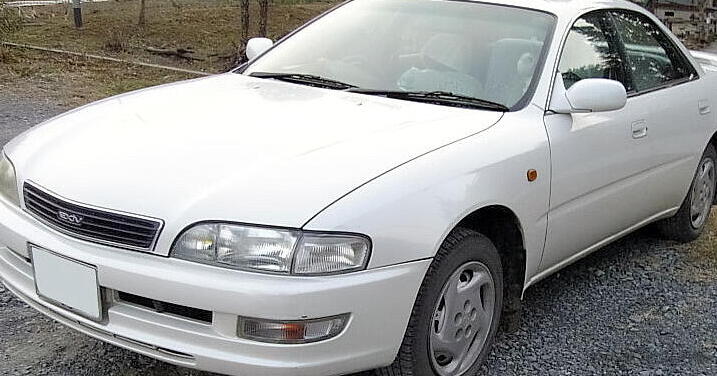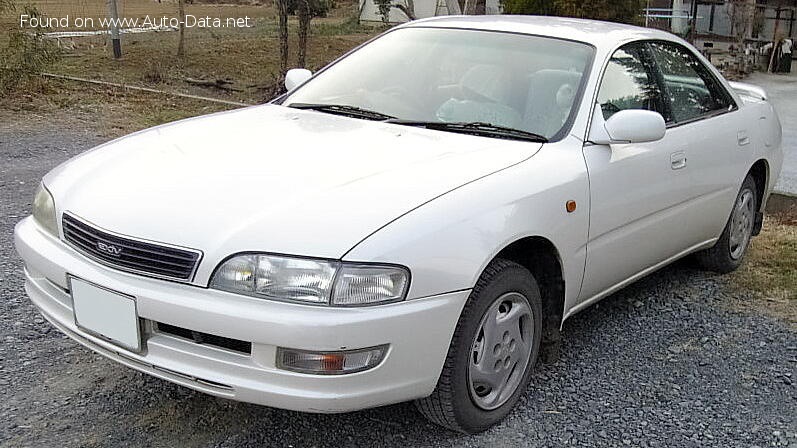
The Toyota Corona EXiV 1.8i (115 Hp) represents a distinct chapter in Toyota’s extensive history, specifically tailored for the Japanese domestic market (JDM). Launched in 1989, the Corona EXiV was not merely another variant of the long-running Corona line, but a stylish, four-door hardtop sedan designed to appeal to a younger, more design-conscious demographic. This first-generation EXiV, produced until 1993, carved out a unique niche, blending the practicality of a sedan with the sleek, pillarless aesthetics typically found in coupes. It sat on the T180 platform, shared with the Carina ED, and was positioned as a “personal luxury” vehicle, offering a sportier and more upscale alternative to the standard Corona without encroaching on the larger, more traditional Mark II or Chaser models. While never officially sold in the United States, the Corona EXiV exemplifies late 1980s and early 1990s Japanese automotive trends, emphasizing style, advanced features for its class, and Toyota’s renowned reliability.
The 1.8i EXiV: Positioning in the Corona Lineup
The 1.8i EXiV occupied a mid-range position within the broader Corona EXiV lineup. While the base models often featured smaller displacement engines, the 1.8-liter variant offered a noticeable step up in performance and refinement. It was aimed at buyers who desired a more spirited driving experience than the entry-level models could provide, but weren’t necessarily seeking the higher performance or luxury features found in potential, more expensive trim levels. It bridged the gap between affordability and a more premium feel, making it a popular choice for young professionals and families.
Powertrain & Engine Architecture
Under the hood, the Toyota Corona EXiV 1.8i (115 Hp) was equipped with a robust and efficient powertrain. The engine utilized Toyota’s 1S-E family, specifically the 1S-EL, 1S-ELU, or 1S-E variants. These inline four-cylinder engines were known for their durability and respectable performance. Displacing 1.8 liters (1762 cm³ or 107.52 cubic inches), the naturally aspirated engine produced 115 horsepower at 5400 rpm. Torque output was 114.32 lb-ft (155 Nm), peaking at 2800 rpm, contributing to excellent drivability in both urban and highway conditions.
Fuel Injection and Valvetrain
The 1S-E engine featured a multi-port fuel injection system, a sophisticated setup for its time that improved fuel efficiency and precision compared to carbureted systems. The valvetrain employed a Double Overhead Camshaft (DOHC) configuration with four valves per cylinder. This design allowed for improved breathing and higher power output for its size. The engine was mounted transversely in the front of the vehicle, driving the front wheels.
Transmission Details
While a 5-speed manual transmission was available, the automatic transmission was a four-speed unit, typically the A240E. This transmission was a common choice for Toyota vehicles of the era, known for its reliability and smooth operation. The gear ratios were tuned for a balance of acceleration and fuel economy, prioritizing comfortable cruising over outright performance. First gear was relatively short for quick take-offs, while the higher gears were geared for efficient highway travel. The automatic transmission contributed to the EXiV’s appeal to buyers seeking a convenient and easy-to-drive vehicle.
Driving Characteristics
The 1.8i Automatic combination delivered a comfortable and predictable driving experience. Compared to the manual transmission version, the automatic offered smoother acceleration and eliminated the need for frequent gear changes. However, it did result in a slight reduction in overall performance and fuel economy. The 0-60 mph time was estimated to be around 11-12 seconds, which was competitive for its class but slower than the manual variant. The engine’s torque peak at 2800 rpm provided adequate power for everyday driving, but overtaking maneuvers required careful planning. The front-wheel-drive configuration offered predictable handling, but lacked the dynamic capabilities of rear-wheel-drive alternatives.
Equipment & Trim Levels
The Corona EXiV 1.8i typically came standard with features considered generous for its time. These included power windows, power steering, air conditioning, and a basic audio system. Interior upholstery was typically cloth, with options for upgraded materials and colors. Higher trim levels offered features such as central locking, electric mirrors, and a more advanced audio system. Optional extras included a sunroof, alloy wheels, and upgraded interior trim. The dashboard design was functional and ergonomic, with clearly labeled controls and a user-friendly layout. The overall interior ambiance aimed for a balance of comfort and sophistication.
Chassis & Braking
The Corona EXiV 1.8i utilized a MacPherson strut suspension in the front and a torsion beam suspension in the rear. This setup provided a comfortable ride quality, absorbing bumps and irregularities in the road surface effectively. Ventilated disc brakes were fitted to the front wheels, providing strong stopping power, while the rear wheels utilized drum brakes, a cost-effective solution for this segment. The availability of an Anti-lock Braking System (ABS) was a significant safety feature for 1989, enhancing control during emergency braking. The car rode on 185/65 R14 tires fitted to 6.0J x 14-inch wheel rims, prioritizing ride comfort and fuel efficiency.
Market Reception & Comparison
Critics generally praised the Corona EXiV 1.8i for its stylish design, comfortable ride, and Toyota’s renowned reliability. However, some reviewers noted that the performance was adequate but not particularly exciting, especially with the automatic transmission. Compared to other trims in the lineup, the 1.8i offered a good balance of performance and fuel economy. The smaller-engined models were more fuel-efficient but lacked the power of the 1.8i, while higher-performance variants offered more exhilarating acceleration but came at a higher price point. In terms of reliability, the 1.8i engine proved to be exceptionally durable, with many examples exceeding 200,000 miles with proper maintenance.
Technical Specifications: Toyota Corona EXiV 1.8i (115 Hp)
| Brand | Toyota |
| Model | Corona EXiV |
| Type (Engine) | 1.8i (115 Hp) |
| Start of Production | 1989 year |
| End of Production | 1993 year |
| Powertrain Architecture | Internal Combustion Engine |
| Body Type | Sedan (Hardtop) |
| Seats | 5 |
| Doors | 4 |
| Fuel Type | Petrol (Gasoline) |
| Weight-to-Power Ratio | 24.03 lbs/Hp (10.9 kg/Hp) |
| Power per Tonne | 92 Hp/tonne |
| Weight-to-Torque Ratio | 8.1 kg/Nm |
| Torque per Tonne | 124 Nm/tonne |
| Power | 115 Hp @ 5400 rpm |
| Power per Liter | 65.3 Hp/l |
| Torque | 114.32 lb-ft (155 Nm) @ 2800 rpm |
| Engine Layout | Front, Transverse |
| Engine Model/Code | 1S-EL, 1S-ELU, 1S-E |
| Engine Displacement | 1.8 L (1762 cm³, 107.52 cu. in.) |
| Number of Cylinders | 4 |
| Engine Configuration | Inline |
| Cylinder Bore | 3.19 in (81 mm) |
| Piston Stroke | 3.37 in (85.5 mm) |
| Compression Ratio | 9.5:1 |
| Number of Valves per Cylinder | 4 |
| Fuel Injection System | Multi-port manifold injection |
| Engine Aspiration | Naturally aspirated |
| Valvetrain | DOHC |
| Kerb Weight | 2755.78 lbs (1250 kg) |
| Length | 177.36 in (4505 mm) |
| Width | 66.54 in (1690 mm) |
| Height | 51.97 in (1320 mm) |
| Wheelbase | 99.41 in (2525 mm) |
| Front Track | 57.68 in (1465 mm) |
| Rear Track | 56.3 in (1430 mm) |
| Minimum Turning Circle | 30.84 ft (9.4 m) |
| Drivetrain Architecture | Front-wheel drive (ICE drives front wheels) |
| Drive Wheel | Front-wheel drive |
| Number of Gears and Type of Gearbox | 4 gears, Automatic Transmission |
| Front Brakes | Ventilated discs |
| Rear Brakes | Drum |
| Assisting Systems | ABS (Anti-lock braking system) |
| Tires Size | 185/65 R14 |
| Wheel Rims Size | 6.0J x 14 |
Legacy
The Toyota Corona EXiV, particularly the 1.8i (115 Hp) variant, left a notable legacy within the Japanese domestic market as a stylish and reliable compact hardtop sedan. The 1S-E engine family is known for its longevity, and well-maintained examples continue to provide reliable transportation today. On the used car market, the EXiV is gaining popularity among JDM enthusiasts who appreciate its unique styling and Toyota’s reputation for quality. While finding parts can sometimes be challenging outside of Japan, the EXiV’s robust construction and readily available components within Japan ensure that it remains a viable and enjoyable classic car for years to come. Its enduring appeal lies in its ability to blend practicality, style, and Toyota’s legendary reliability into a compelling package.