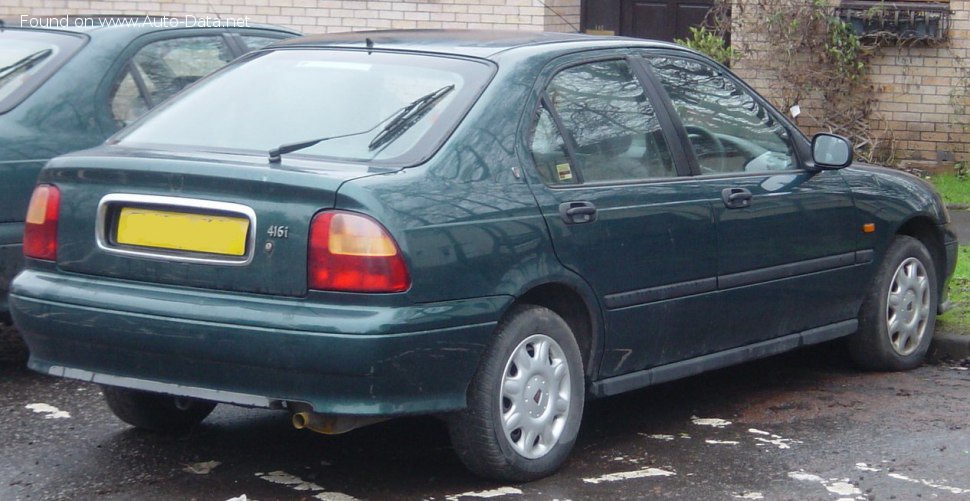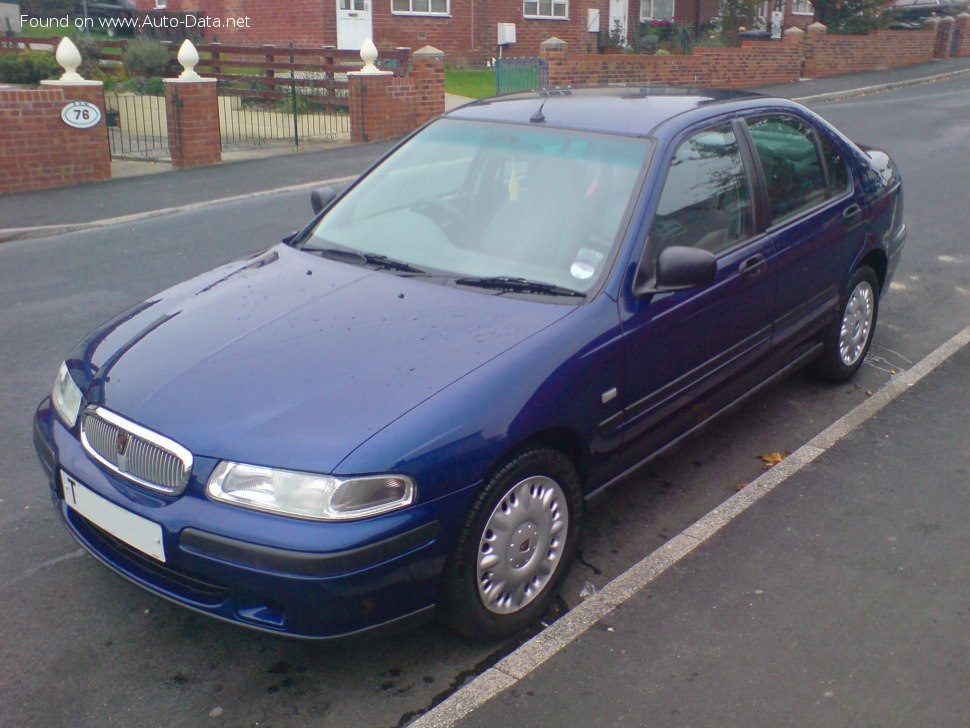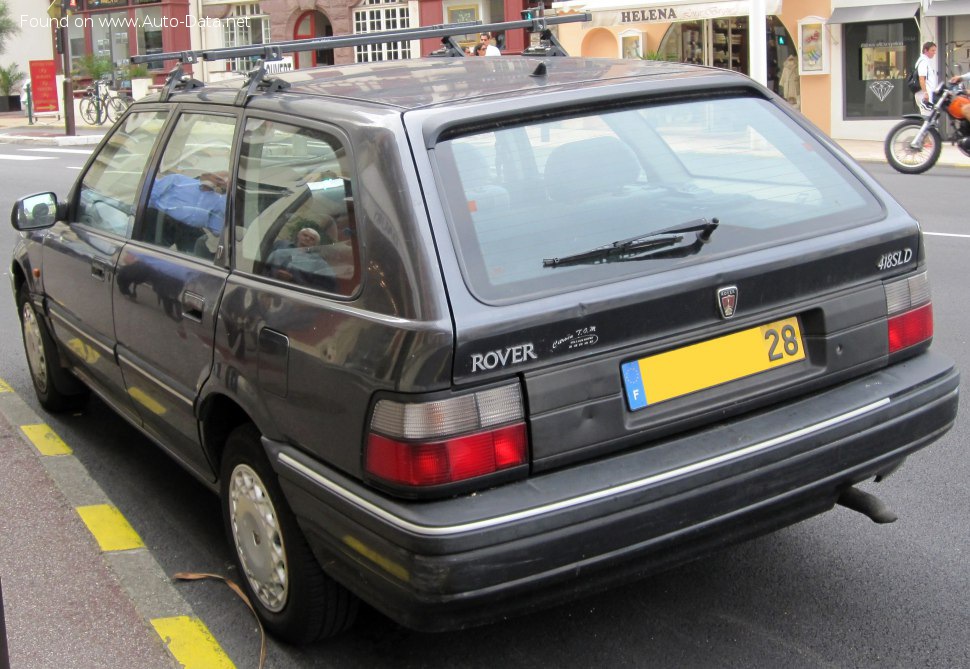
The Rover 400 Tourer (XW) represents a significant chapter in the history of the British automotive manufacturer, Rover Group, during the 1990s. Launched in 1993, this particular generation of the Rover 400 series marked Rover’s foray into the highly competitive compact family car segment with a dedicated station wagon variant. While the Rover brand was not extensively sold in the United States, its models like the Rover 400 Tourer (XW) played a crucial role in the European market, offering a blend of traditional British styling, practicality, and increasingly, modern engineering.
The XW designation for the Tourer differentiated it from the earlier R8 generation of the Rover 200/400 series, indicating a specific body style that prioritized cargo capacity and family utility. The 418 TD variant, the focus of this article, was particularly noteworthy for its diesel powertrain, a popular and economical choice for European motorists. Produced between 1993 and 1998, the Rover 400 Tourer (XW) aimed to compete with established players by offering a distinctive British alternative, combining a comfortable ride with a spacious interior in a practical station wagon format. This model underscored Rover’s commitment to providing versatile vehicles for the discerning European consumer, especially those prioritizing fuel efficiency and load-carrying capability.
Rover 400 Tourer (XW) 418 TD: Powertrain & Engine Architecture
At the heart of the Rover 400 Tourer (XW) 418 TD was a robust and widely used diesel engine, a testament to Rover’s strategic partnerships during the era. The vehicle was powered by a 1.8-liter (1800 cm3, or approximately 109.84 cubic inches) turbocharged diesel engine, identified by the engine code A8A (XUD7TE). This particular powerplant was not an in-house Rover design but rather a product of PSA Peugeot Citroën, a common practice for British manufacturers seeking reliable and proven engine technology. The XUD7TE engine was renowned for its durability and fuel economy, making it an ideal choice for a family station wagon destined for the European market.
Engine Details & Fuel Injection
The XUD7TE engine is an inline-four cylinder diesel, utilizing an indirect injection system. This system, common for diesels of the time, involved pre-chambers where fuel was injected and partially combusted before entering the main combustion chamber. This design contributed to quieter operation and reduced emissions compared to direct injection systems. The engine featured a single overhead camshaft (SOHC) operating two valves per cylinder. The turbocharger, a Garrett unit in most applications, provided a significant boost in power and torque, improving acceleration and overall drivability. The engine’s robust construction, including a cast iron block and cylinder head, contributed to its longevity and reputation for reliability.
Transmission
The Rover 400 Tourer (XW) 418 TD was typically equipped with a four-speed automatic transmission. This transmission, while not known for its particularly quick shifts, was designed for smooth operation and reliability. The gear ratios were optimized for fuel efficiency and comfortable cruising, rather than sporty performance. The automatic transmission contributed to the ease of driving, particularly in urban environments, and made the 418 TD accessible to a wider range of drivers.
Driving Characteristics
The 418 TD, with its 88 horsepower and turbocharged diesel engine, offered a driving experience focused on practicality and economy rather than outright performance. Acceleration was adequate for everyday driving, but it wasn’t a particularly quick vehicle. The turbocharger helped to mitigate some of the inherent lag associated with diesel engines, providing a noticeable boost in power once the engine reached a certain RPM. The four-speed automatic transmission, while smooth, limited the vehicle’s ability to accelerate quickly. Compared to the 1.6L or 2.0L gasoline-powered versions of the Rover 400, the 418 TD offered significantly more torque at lower engine speeds, making it easier to pull away from a standstill or climb hills. However, the gasoline engines provided quicker acceleration and a more responsive driving experience. The 418 TD’s strength lay in its ability to deliver consistent, reliable performance with excellent fuel economy, making it ideal for long journeys and everyday commuting.
Equipment & Trim Levels
The Rover 400 Tourer (XW) 418 TD was generally positioned as a mid-range offering within the Rover 400 lineup. Standard equipment typically included central locking, power windows, and a basic stereo system. Higher trim levels, such as the ‘Si’ or ‘SL’ variants, added features like air conditioning, alloy wheels, upgraded upholstery, and a sunroof. Interior upholstery was typically cloth, with leather options available on higher-spec models. The dashboard layout was functional and straightforward, with clearly labeled controls. Optional extras included a trip computer, upgraded sound systems, and metallic paint finishes. The Rover 400 Tourer aimed to provide a comfortable and well-equipped interior, reflecting Rover’s commitment to offering a slightly more premium experience than some of its competitors.
Chassis & Braking
The Rover 400 Tourer (XW) utilized a MacPherson strut front suspension and a semi-independent torsion beam rear suspension. This setup provided a comfortable ride, absorbing bumps and imperfections in the road effectively. The suspension was tuned for comfort rather than sporty handling. Braking systems varied depending on the trim level. Lower-spec models typically featured disc brakes on the front wheels and drum brakes on the rear wheels. Higher-spec models often included disc brakes on all four wheels, providing improved stopping power. Anti-lock Braking System (ABS) was available as an option, enhancing safety and control during emergency braking. Stabilizer bars were fitted to both the front and rear axles to reduce body roll during cornering.
Market Reception & Comparison
Critics generally viewed the Rover 400 Tourer (XW) 418 TD as a practical and economical family car. The diesel engine was praised for its fuel efficiency and reliability, while the spacious interior and large cargo area were also well-received. However, the vehicle was often criticized for its lack of outright performance and its somewhat dated interior design compared to some of its rivals. Compared to the gasoline-powered versions of the Rover 400, the 418 TD offered significantly better fuel economy but lacked the same level of responsiveness. Against competitors like the Ford Mondeo Estate and Vauxhall Cavalier Estate, the Rover 400 Tourer offered a more refined driving experience and a more distinctive British character, but it often came at a slightly higher price point. The 418 TD’s reliability was generally considered good, although maintenance costs could be higher due to the complexity of the diesel engine and the potential for issues with the turbocharger.
Technical Specifications
| Category | Specification |
| Brand | Rover |
| Model | 400 |
| Generation | 400 Tourer (XW) |
| Type (Engine) | 418 TD (88 Hp) |
| Start of Production | 1993 year |
| End of Production | 1998 year |
| Powertrain Architecture | Internal Combustion engine |
| Body Type | Station wagon (estate) |
| Seats | 5 |
| Doors | 5 |
| Fuel Type | Diesel |
| Power | 88 Hp |
| Power per Liter | 48.9 Hp/l |
| Engine Layout | Front, Transverse |
| Engine Model/Code | A8A (XUD7TE) |
| Engine Displacement | 1.8 L (1800 cm3 / 109.84 cu. in.) |
| Engine Aspiration | Turbocharger |
| Engine Oil Capacity | 5 L (5.28 US qt | 4.4 UK qt) |
| Coolant Capacity | 8.8 L (9.3 US qt | 7.74 UK qt) |
| Fuel Tank Capacity | 55 L (14.53 US gal | 12.1 UK gal) |
Legacy
The Rover 400 Tourer (XW) 418 TD, while not a groundbreaking vehicle, remains a fondly remembered model for many European motorists. The XUD7TE diesel engine proved to be exceptionally durable, and many examples are still on the road today, testament to its robust construction. In the used car market, these vehicles are relatively affordable and offer a practical and economical transportation option. However, potential buyers should be aware of the age-related issues common to vehicles of this era, such as corrosion and wear and tear on suspension components. The 418 TD’s legacy lies in its ability to provide reliable and economical transportation for families and business users alike, embodying Rover’s commitment to building practical and comfortable vehicles. It represents a period of transition for the Rover Group, showcasing its ability to adapt to changing market demands and leverage partnerships with other manufacturers.