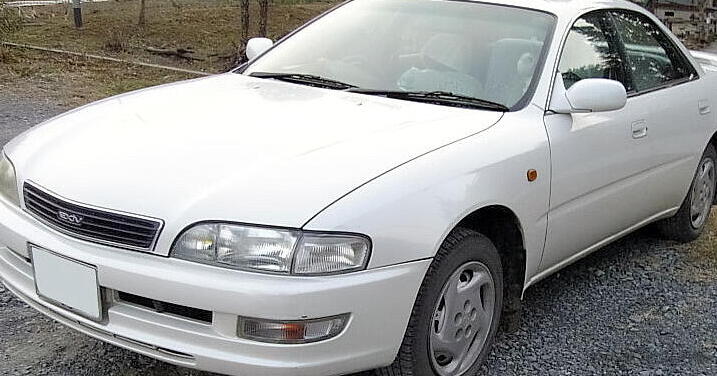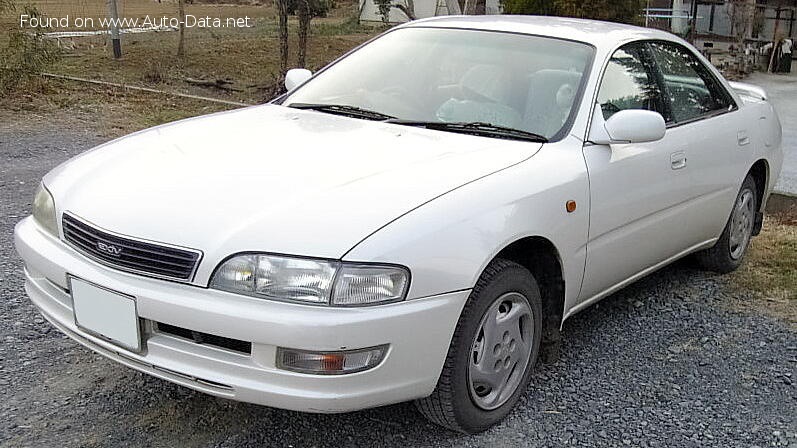
The Toyota Corona EXiV 1.8i (115 Hp) Automatic, produced between 1989 and 1993, is a compelling example of Toyota’s engineering and design capabilities within the Japanese Domestic Market (JDM). Part of the T180 series, this model represented a departure from the traditional Corona and Carina, aiming for a more stylish and “personal luxury” sedan experience. Never officially sold in the United States, the EXiV showcases Toyota’s response to the demands of a sophisticated Japanese consumer base during the economic boom of the late 1980s and early 1990s. It offered a blend of comfort, reliability, and a distinctive aesthetic that appealed to a younger, more affluent demographic.
The 1.8i Automatic: Positioning in the EXiV Lineup
The 1.8i (115 Hp) Automatic variant served as the entry point into the Corona EXiV range. It was positioned below the more powerful 2.0-liter and 2.2-liter models, which offered increased performance but at a higher price point. The 1.8i Automatic prioritized fuel efficiency and ease of driving, making it ideal for daily commuting and urban environments. While the larger-engined EXiVs catered to drivers seeking a more spirited driving experience, the 1.8i appealed to those who valued comfort, refinement, and Toyota’s renowned reliability above all else. It was a practical choice for individuals and small families who desired a stylish sedan without the added cost and complexity of the higher-performance trims.
Powertrain & Engine Architecture
The heart of the 1989-1993 Toyota Corona EXiV 1.8i Automatic was the 1S-EL, 1S-ELU, or 1S-E series 1.8-liter (1762 cc) inline four-cylinder engine. This transversely mounted, naturally aspirated engine produced 115 horsepower at 5400 rpm and 155 Nm (114.32 lb-ft) of torque at 2800 rpm. The engine featured a Dual Overhead Camshaft (DOHC) valvetrain with four valves per cylinder, a relatively advanced configuration for a 1.8-liter engine of that era, contributing to improved volumetric efficiency and power output. Fuel delivery was managed by a multi-port fuel injection system, ensuring precise fuel metering and optimized combustion.
The engine’s design emphasized low-end torque, making it responsive in everyday driving situations. The 9.5:1 compression ratio balanced performance and fuel economy. Power was transmitted to the front wheels through a four-speed automatic transmission. This transmission was selected for its smooth shifting characteristics and ease of operation, aligning with the EXiV’s focus on comfort and convenience. While not offering the driver engagement of a manual transmission, the automatic provided a relaxed and effortless driving experience, particularly in congested urban traffic.
Driving Characteristics
The Toyota Corona EXiV 1.8i Automatic delivered a comfortable and predictable driving experience. The 115 horsepower engine, coupled with the four-speed automatic transmission, provided adequate acceleration for typical driving conditions. However, it was noticeably less responsive than the higher-output 2.0-liter and 2.2-liter variants. The automatic transmission’s gear ratios were optimized for fuel efficiency and smooth cruising, rather than aggressive acceleration. The relatively low curb weight of approximately 2755.78 lbs (1250 kg) helped to mitigate the performance deficit, resulting in a weight-to-power ratio of 10.9 kg/Hp (92 Hp/tonne). Compared to a manual transmission equipped 1.8i, the automatic version offered less direct control and a slightly slower 0-60 mph time, but it prioritized ease of use and driver comfort.
Equipment & Trim Levels
The Corona EXiV 1.8i Automatic came standard with a range of features designed to enhance comfort and convenience. These typically included power windows, power door locks, and a basic audio system. Higher trim levels offered upgrades such as alloy wheels, upgraded upholstery (often velour or a combination of cloth and vinyl), and a more sophisticated audio system. Optional extras included air conditioning, a sunroof, and power mirrors. The interior design emphasized a clean and modern aesthetic, with a focus on ergonomics and user-friendliness. The dashboard layout was straightforward and intuitive, providing easy access to essential controls. The EXiV’s interior materials were of a good quality for its price point, contributing to a sense of refinement and sophistication.
Chassis & Braking
The Toyota Corona EXiV 1.8i Automatic featured a front-wheel-drive layout with independent MacPherson strut suspension in the front and a torsion beam rear suspension. This suspension setup provided a comfortable ride and predictable handling characteristics. The front suspension was designed to absorb bumps and irregularities in the road surface, while the rear torsion beam offered a balance of stability and space efficiency. Braking duties were handled by ventilated disc brakes at the front and drum brakes at the rear. Anti-lock Braking System (ABS) was available as an option, enhancing braking performance and safety, particularly in slippery conditions. The steering system was a power-assisted rack-and-pinion setup, providing light and precise steering feel.
Market Reception & Comparison
The Toyota Corona EXiV 1.8i Automatic was generally well-received in the Japanese market. Critics praised its stylish design, comfortable interior, and Toyota’s reputation for reliability. However, some reviewers noted that the 1.8-liter engine lacked the punch of the larger-engined models. Compared to competitors like the Nissan Presea and Honda Accord Inspire, the EXiV offered a compelling combination of features, performance, and value. In terms of fuel economy, the 1.8i Automatic performed competitively with other vehicles in its class, achieving approximately 25-30 mpg in combined driving conditions. Reliability was a key strength of the EXiV, with owners reporting few major mechanical issues. The 1.8i Automatic was considered a practical and dependable choice for everyday driving.
Technical Specifications
| Brand | Toyota |
| Model | Corona EXiV |
| Generation | Corona EXiV (T180 series) |
| Type (Engine) | 1.8i (115 Hp) Automatic |
| Start of Production | 1989 year |
| End of Production | 1993 year |
| Powertrain Architecture | Internal Combustion engine |
| Body type | Sedan (4-door hardtop) |
| Seats | 5 |
| Doors | 4 |
| Performance Specs | |
| Fuel Type | Petrol (Gasoline) |
| Weight-to-power ratio | 10.9 kg/Hp |
| Weight-to-torque ratio | 8.1 kg/Nm |
| Engine Specs | |
| Power | 115 Hp @ 5400 rpm |
| Power per liter | 65.3 Hp/l |
| Torque | 155 Nm @ 2800 rpm |
| Torque (lb-ft) | 114.32 lb.-ft. @ 2800 rpm |
| Engine layout | Front, Transverse |
| Engine Model/Code | 1S-EL, 1S-ELU, 1S-E |
| Engine displacement | 1762 cm3 |
| Engine displacement (US) | 1.8 Liters (107.52 cu. in.) |
| Number of cylinders | 4 |
| Engine configuration | Inline |
| Cylinder Bore | 81 mm |
| Cylinder Bore (US) | 3.19 in. |
| Piston Stroke | 85.5 mm |
| Piston Stroke (US) | 3.37 in. |
| Compression ratio | 9.5:1 |
| Number of valves per cylinder | 4 |
| Fuel injection system | Multi-port manifold injection |
| Engine aspiration | Naturally aspirated engine |
| Valvetrain | DOHC |
| Space, Volume and Weights | |
| Kerb Weight | 1250 kg |
| Kerb Weight (US) | 2755.78 lbs. |
| Dimensions | |
| Length | 4505 mm |
| Length (US) | 177.36 in. |
| Width | 1690 mm |
| Width (US) | 66.54 in. |
| Height | 1320 mm |
| Height (US) | 51.97 in. |
| Wheelbase | 2525 mm |
| Wheelbase (US) | 99.41 in. |
| Front track | 1465 mm |
| Front track (US) | 57.68 in. |
| Rear (Back) track | 1430 mm |
| Rear (Back) track (US) | 56.3 in. |
| Minimum turning circle (turning diameter) | 9.4 m |
| Minimum turning circle (turning diameter) (US) | 30.84 ft. |
| Drivetrain, Brakes and Suspension Specs | |
| Drivetrain Architecture | The Internal combustion engine (ICE) drives the front wheels of the vehicle. |
| Drive wheel | Front wheel drive |
| Number of gears and type of gearbox | 4 gears, automatic transmission |
| Front brakes | Ventilated discs |
| Rear brakes | Drum |
| Assisting systems | ABS (Anti-lock braking system) |
| Tires size | 185/65 R14 |
| Wheel rims size | 6.0J x 14 |
Legacy
The Toyota Corona EXiV 1.8i Automatic, while not a high-performance icon, holds a significant place in Toyota’s history as a stylish and reliable sedan tailored to the specific demands of the Japanese market. The 1S-E engine family, in general, is known for its durability and relatively low maintenance costs. Today, well-maintained examples are sought after by JDM enthusiasts who appreciate their unique design and Toyota’s engineering prowess. The 1.8i Automatic powertrain is considered relatively robust, with few common issues reported. In the used car market, these vehicles are often valued for their originality and as a representation of a bygone era of Japanese automotive design. While finding parts may require sourcing from specialized importers, the EXiV’s inherent reliability and the widespread availability of Toyota parts generally make it a manageable classic car to own and maintain.