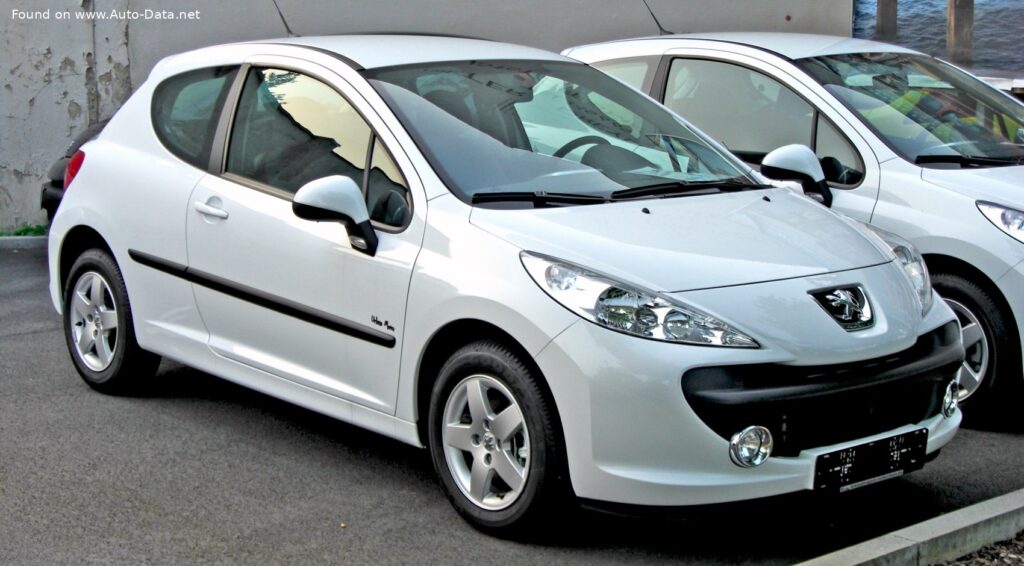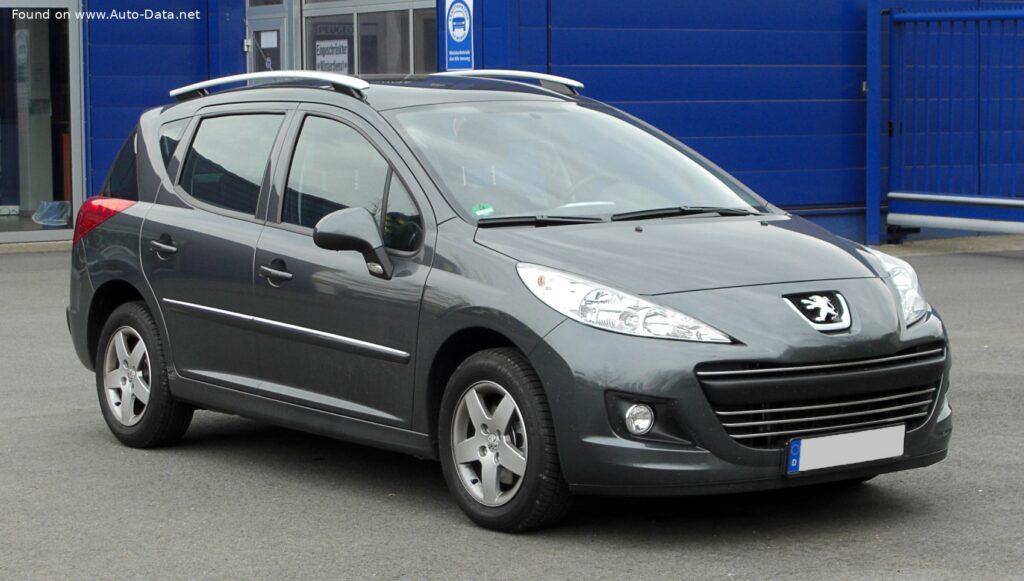
The Peugeot 207 SW (facelift 2009) represents a key offering in the highly competitive European B-segment, or subcompact class, distinguishing itself with a practical station wagon body style. Launched in 2009 as a refreshed version of the original 207 SW, this model aimed to enhance its appeal through subtle design updates, improved efficiency, and refined features, ensuring its continued relevance in a market that highly values versatility and fuel economy. While the Peugeot 207 series, and particularly its station wagon variant, was not officially sold in the United States, it played a crucial role in Peugeot’s European and international portfolio, catering to families and individuals seeking more cargo space than a traditional hatchback without stepping up to a larger, more expensive vehicle.
This particular variant, equipped with the 1.6 VTi engine delivering 120 horsepower, was positioned as a well-balanced option, offering a compelling blend of performance and economy for daily driving. The 207 SW’s design lineage draws from Peugeot’s long history of producing stylish and functional small cars, building upon the success of its predecessors like the 206 SW. The facelifted model, produced from 2009 to 2013, solidified its standing as a practical and aesthetically pleasing choice within its segment, embodying French automotive engineering focused on comfort and usability.
The 1.6 VTi Powertrain & Engine Architecture
At the core of the Peugeot 207 SW (facelift 2009) discussed here is the 1.6-liter VTi gasoline engine, a modern and efficient powertrain developed in collaboration with BMW. This naturally aspirated, four-cylinder inline engine (code 5FS EP6C) features a Double Overhead Camshaft (DOHC) valvetrain with Variable Valve Timing (VVT), a technology designed to optimize valve lift and timing for improved performance and fuel efficiency across the rev range. With a displacement of 1598 cubic centimeters (97.52 cubic inches), it generates a respectable 120 horsepower at 6000 rpm, providing ample power for both urban commuting and highway cruising.
Torque output stands at 160 Nm (118.01 lb.-ft.) at 4250 rpm, delivered smoothly through a multi-port manifold injection system. This engine’s characteristics contribute to a responsive driving experience, allowing the 207 SW to accelerate from 0 to 60 mph in a brisk 9.1 seconds, with a maximum speed of 119.3 mph. For its segment and era, these figures represent a competitive performance package.
Power is channeled to the front wheels via a five-speed manual transmission, a common and reliable setup for European subcompacts, offering direct engagement and maximizing driver control over the engine’s output. The powertrain architecture, with the engine mounted transversely at the front, is typical for front-wheel-drive vehicles, optimizing cabin space and weight distribution.
Beyond performance, efficiency was a key consideration. The 1.6 VTi engine achieves a combined fuel economy of 38.6 US mpg (6.1 l/100 km), which was commendable for a gasoline engine of its size at the time. It also met the stringent Euro 5 emission standards, with CO2 emissions of 140 g/km, reflecting Peugeot’s commitment to environmental responsibility. The engine oil capacity is 4.25 liters (4.49 US quarts), and the cooling system holds 5.7 liters (6.02 US quarts), indicating standard maintenance requirements for its class.
Positioning within the 207 SW Lineup
The 1.6 VTi 120 hp variant occupied a mid-range position within the 207 SW lineup. Below it sat the 1.4-liter engine options, offering lower power and prioritizing fuel economy for budget-conscious buyers. Above it were the diesel variants, such as the 1.6 HDi, which focused on maximizing fuel efficiency and torque for long-distance driving. The 1.6 VTi struck a balance, appealing to drivers who wanted a reasonable level of performance without sacrificing fuel economy or incurring the higher cost of the diesel models. It was a popular choice for families and individuals who needed a versatile vehicle for everyday use.
Driving Characteristics of the 1.6 VTi Automatic
The 1.6 VTi engine, when paired with the five-speed manual transmission, provided a reasonably engaging driving experience. The engine felt responsive at lower RPMs, making it suitable for city driving, and had enough power for confident highway overtaking. The five-speed gearbox was well-matched to the engine’s powerband, allowing drivers to keep the engine in its optimal range for acceleration and fuel efficiency. Compared to the lower-powered 1.4-liter versions, the 1.6 VTi offered noticeably more punch, especially when fully loaded with passengers or cargo.
While a four-speed automatic transmission was available, it significantly altered the driving experience. The automatic transmission, while offering convenience, resulted in a noticeable decrease in performance and fuel economy. The gear ratios were not as well-optimized for the engine’s characteristics, leading to more frequent downshifts and a less responsive feel. The automatic version was primarily targeted towards drivers who prioritized ease of use over sporty driving dynamics. The automatic transmission also tended to hold gears longer, resulting in a louder engine note during acceleration.
Equipment & Trim Levels
The Peugeot 207 SW (facelift 2009) 1.6 VTi was available in several trim levels, each offering a different level of equipment. Standard features typically included power steering, central locking, electric front windows, and an audio system with MP3 compatibility. Higher trim levels added features such as air conditioning, alloy wheels, a trip computer, and upgraded interior trim. Optional extras included a panoramic sunroof, parking sensors, and a navigation system. Interior upholstery ranged from basic cloth to more premium materials in the higher trim levels. The dashboard configuration was generally functional and well-laid-out, with a focus on ergonomics and ease of use. Safety features included ABS, front airbags, and seatbelt pretensioners.
Chassis & Braking
The 207 SW utilized an independent McPherson strut suspension at the front, providing a comfortable and controlled ride. The rear suspension employed a semi-independent coil spring arrangement, which was a cost-effective solution that still offered reasonable handling characteristics. The braking system comprised ventilated discs at the front and solid discs at the rear, providing adequate stopping power for the vehicle’s weight and performance. The steering system was a rack and pinion type, complemented by electric power steering, which offered light and precise control, particularly beneficial in urban environments and for parking maneuvers, where its minimum turning circle of 34.78 feet was advantageous. Stabilizer bars were fitted to both the front and rear axles to reduce body roll during cornering.
Market Reception & Comparison
Critics generally viewed the Peugeot 207 SW 1.6 VTi as a competent and practical vehicle. It was praised for its stylish design, comfortable ride, and efficient engine. However, some reviewers noted that the interior materials were not as premium as those found in some competitors. Fuel economy was generally considered to be good, especially compared to other gasoline-powered vehicles in the segment. Reliability was generally average, with some reports of minor electrical issues. Compared to the diesel variants, the 1.6 VTi offered less fuel economy but a more responsive driving experience. Compared to the lower-powered 1.4-liter versions, the 1.6 VTi provided a noticeable performance boost. Overall, the 207 SW 1.6 VTi was considered a well-rounded and versatile vehicle that offered a good balance of performance, economy, and practicality.
Technical Specifications
| Category | Specification |
| General Information | |
| Brand | Peugeot |
| Model | 207 SW (facelift 2009) |
| Engine Type | 1.6 VTi (120 Hp) |
| Production Start | 2009 |
| Production End | 2013 |
| Powertrain Architecture | Internal Combustion engine |
| Body Type | Station wagon (estate) |
| Seats | 5 |
| Doors | 5 |
| Performance Specifications | |
| Fuel Consumption (Urban) | 8.3 l/100 km (28.3 US mpg) |
| Fuel Consumption (Extra Urban) | 4.9 l/100 km (48 US mpg) |
| Fuel Consumption (Combined) | 6.1 l/100 km (38.6 US mpg) |
| CO2 Emissions | 140 g/km |
| Fuel Type | Petrol (Gasoline) |
| Acceleration 0 – 60 mph | 9.1 sec |
| Acceleration 0 – 62 mph (0-100 km/h) | 9.6 sec |
| Maximum Speed | 119.3 mph (192 km/h) |
| Emission Standard | Euro 5 |
| Weight-to-Power Ratio | 10 kg/Hp (99.7 Hp/tonne) |
| Weight-to-Torque Ratio | 7.5 kg/Nm (132.9 Nm/tonne) |
| Engine Specifications | |
| Power | 120 Hp @ 6000 rpm |
| Power per liter | 75.1 Hp/l |
| Torque | 160 Nm (118.01 lb.-ft.) @ 4250 rpm |
| Engine Layout | Front, Transverse |
| Engine Model/Code | 5FS EP6C |
| Engine Displacement | 1598 cm3 (97.52 cu. in.) |
| Number of Cylinders | 4 |
| Engine Configuration | Inline |
| Cylinder Bore | 77 mm (3.03 in.) |
| Piston Stroke | 85.8 mm (3.38 in.) |
| Compression Ratio | 11:1 |
| Valves per Cylinder | 4 |
| Fuel Injection System | Multi-port manifold injection |
| Engine Aspiration | Naturally aspirated engine |
| Valvetrain | DOHC-VVT |
| Engine Oil Capacity | 4.25 l (4.49 US qt) |
| Coolant Capacity | 5.7 l (6.02 US qt) |
| Space, Volume and Weights | |
| Kerb Weight | 1204 kg (2654.37 lbs.) |
| Maximum Weight | 1707 kg (3763.29 lbs.) |
| Maximum Load | 503 kg (1108.93 lbs.) |
| Trunk Space (Minimum) | 337 l (11.9 cu. ft.) |
| Trunk Space (Maximum) | 1258 l (44.43 cu. ft.) |
| Fuel Tank Capacity | 50 l (13.21 US gal) |
| Permitted Trailer Load with Brakes (12%) | 1150 kg (2535.32 lbs.) |
| Permitted Trailer Load without Brakes | 600 kg (1322.77 lbs.) |
| Dimensions | |
| Length | 4164 mm (163.94 in.) |
| Width | 1748 mm (68.82 in.) |
| Width with Mirrors Folded | 1818 mm (71.57 in.) |
| Width Including Mirrors | 1972 mm (77.64 in.) |
| Height | 1527 mm (60.12 in.) |
| Wheelbase | 2540 mm (100 in.) |
| Front Track | 1467 mm (57.76 in.) |
| Rear Track | 1461 mm (57.52 in.) |
| Minimum Turning Circle | 10.6 m (34.78 ft.) |
| Drivetrain, Brakes and Suspension | |
| Drivetrain Architecture | Front-wheel drive, Internal Combustion engine |
| Drive Wheel | Front wheel drive |
| Gearbox Type | 5 gears, manual transmission |
| Front Suspension | Independent type McPherson |
| Rear Suspension | Semi-independent, coil spring |
| Front Brakes | Ventilated discs |
| Rear Brakes | Disc |
| Assisting Systems | ABS (Anti-lock braking system) |
| Steering Type | Steering rack and pinion |
| Power Steering | Electric Steering |
| Tires Size | 195/55 R16 |
| Wheel Rims Size | 16 inches |
Legacy
The Peugeot 207 SW (facelift 2009) 1.6 VTi, while not a groundbreaking vehicle, remains a solid and reliable choice in the used car market. The 1.6 VTi engine, developed in collaboration with BMW, has proven to be relatively durable, with proper maintenance. Common issues include occasional problems with the electric power steering and minor electrical glitches. However, these are generally not major concerns and can be addressed with routine servicing. The 207 SW’s practicality and fuel efficiency continue to appeal to buyers looking for a versatile and affordable vehicle. Its enduring popularity in Europe is a testament to its well-rounded design and engineering. As a representative of French automotive design, the 207 SW holds a place in automotive history as a practical and stylish option for families and individuals alike.