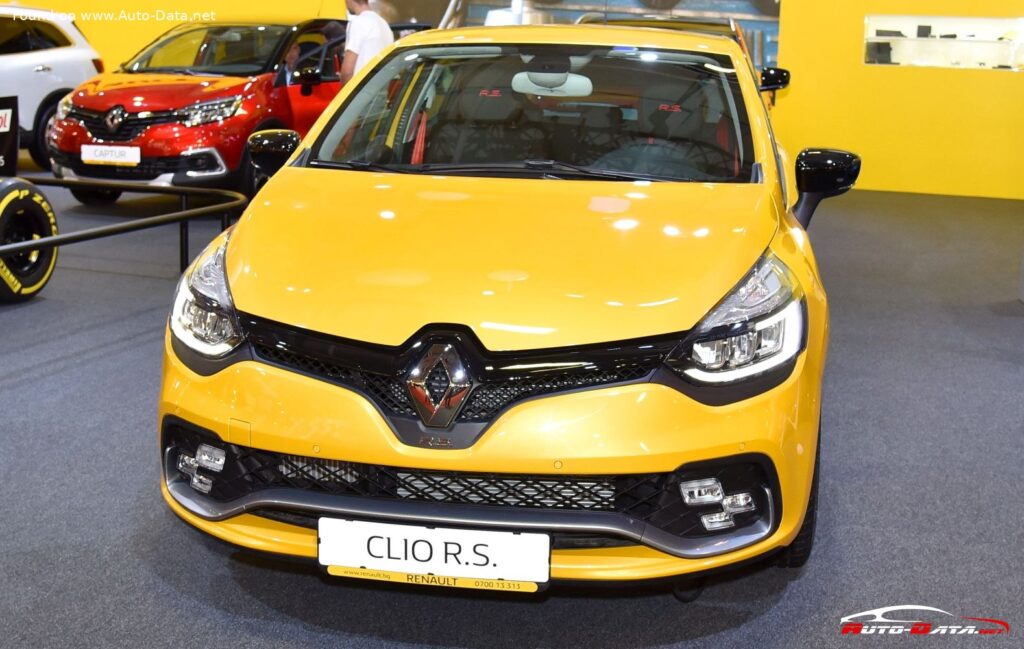
The Renault Clio, a cornerstone of the European B-segment (subcompact) market, has consistently been one of the best-selling models for the French automaker. The fourth generation, introduced in 2012, received a significant mid-cycle refresh in 2016, designated as Phase II. This update brought subtle but impactful design enhancements, updated interior features, and refined powertrain options, maintaining its competitive edge against formidable rivals. The specific variant under examination, the Renault Clio IV (Phase II, 2016) 1.5 Energy dCi (110 Hp) S&S, represents a highly efficient and capable diesel offering within the Clio lineup, primarily targeted at European consumers where such powertrains remain popular for their fuel economy and robust torque characteristics.
While the Renault Clio is not officially sold in the United States market, its global significance in the compact car segment cannot be overstated. It embodies the European philosophy of balancing compact dimensions with ample interior space, dynamic driving characteristics, and impressive fuel efficiency. The 2016 Phase II model, produced until 2018, continued this tradition, offering a modern hatchback package that appealed to a broad demographic, from young urban drivers to small families. This particular 1.5 Energy dCi variant, with its 110 horsepower and advanced Start & Stop system, was a prime example of Renault’s commitment to delivering economical yet engaging vehicles within its primary markets.
Powertrain & Engine Architecture
At the heart of the Renault Clio IV (Phase II, 2016) 1.5 Energy dCi (110 Hp) S&S lies Renault’s well-regarded K9K 646 1.5-liter Energy dCi turbodiesel engine. This four-cylinder, inline configuration powerplant is mounted transversely at the front, driving the front wheels. It delivers a respectable 110 horsepower at 4000 rpm, which translates to a power-to-liter ratio of 75.3 horsepower per liter, showcasing efficient output for its displacement. More notably, the engine generates a robust 260 Nm (191.77 lb.-ft.) of torque available at a low 1750 rpm. This characteristic low-end torque is crucial for a vehicle designed for urban environments and highway cruising, providing excellent responsiveness and reducing the need for frequent downshifts.
The K9K 646 engine utilizes a Diesel Commonrail fuel injection system, delivering precise fuel metering for optimized combustion. The engine features a turbocharger with an intercooler, enhancing air intake density and boosting power output. A key component is the Particulate Filter, designed to trap and eliminate soot particles, reducing harmful emissions and ensuring compliance with stringent European emission standards. The valvetrain employs two valves per cylinder (DOHC), a configuration balancing simplicity and efficiency. The engine’s block is constructed from cast iron for durability, while the cylinder head is aluminum to reduce weight. The 6-speed manual transmission paired with this engine is a conventional design, known for its smooth shifting and robust construction. Gear ratios are tuned to maximize fuel efficiency and provide adequate acceleration, with a relatively long final drive ratio prioritizing economy.
Driving Characteristics
The Renault Clio IV (Phase II) 1.5 Energy dCi (110 Hp) S&S offers a driving experience focused on efficiency and usability rather than outright performance. The 110 horsepower output, combined with the 260 Nm of torque, provides adequate acceleration for everyday driving situations. Acceleration from 0 to 60 mph is estimated at 10.6 seconds (0-100 km/h in 11.19 seconds), and a maximum speed of 120.55 mph (194 km/h) is achievable. Compared to the lower-powered 90 hp diesel variant, the 110 hp version offers noticeably improved responsiveness, particularly during overtaking maneuvers and when climbing hills. However, it doesn’t match the performance of the petrol-powered TCe engines in the Clio range.
The 6-speed manual transmission is well-matched to the engine’s characteristics. Gear ratios are spaced to keep the engine within its optimal torque band, minimizing the need for frequent gear changes. The clutch is relatively light, making it easy to operate in stop-and-go traffic. The steering is precise and provides good feedback, contributing to a confident driving experience. The suspension is tuned for comfort, absorbing bumps and imperfections in the road surface effectively. While not a particularly sporty car, the Clio IV 1.5 dCi offers a composed and predictable handling balance.
Equipment & Trim Levels
The Renault Clio IV (Phase II, 2016) 1.5 Energy dCi (110 Hp) S&S typically occupied a mid-range position within the Clio lineup. Standard equipment generally included air conditioning, power windows, power door locks, a basic audio system with USB connectivity, and ABS brakes. The “S&S” designation indicates the inclusion of the Start & Stop system, a key feature for fuel efficiency. Higher trim levels, such as the Intens, added features like alloy wheels, a touchscreen infotainment system with navigation, rear parking sensors, cruise control, and automatic headlights and wipers.
Interior upholstery was typically cloth, with options for upgraded materials and designs on higher trims. The dashboard layout was modern and functional, with a focus on ergonomics. Optional extras included a panoramic sunroof, leather upholstery, and a premium audio system. Safety features, standard for modern European vehicles, included multiple airbags, electronic stability control (ESC), and traction control. The car’s interior space is well-utilized, offering comfortable seating for five adults, although rear legroom can be limited for taller passengers.
Chassis & Braking
The Renault Clio IV (Phase II) utilizes a MacPherson strut front suspension and a torsion beam rear suspension. This configuration provides a good balance between ride comfort and handling. The torsion beam rear suspension is a cost-effective solution that minimizes weight and complexity. Stabilizer bars are fitted to both the front and rear axles to reduce body roll during cornering. The steering system is a responsive rack and pinion setup, providing precise control.
Braking is handled by ventilated discs at the front and drum brakes at the rear. This combination is common in vehicles of this class, offering adequate stopping power for everyday driving. ABS (Anti-lock braking system) is standard, preventing wheel lockup during emergency braking. The braking system is generally reliable and provides a consistent pedal feel. Tire sizes varied depending on the trim level, ranging from 185/65 R15 to 205/45 R17, influencing grip and ride comfort.
Market Reception & Comparison
The Renault Clio IV (Phase II, 2016) 1.5 Energy dCi (110 Hp) S&S was generally well-received by automotive critics in Europe. It was praised for its fuel efficiency, comfortable ride, and stylish design. The 110 horsepower diesel engine was considered a good compromise between performance and economy. However, some critics noted that the interior materials could be improved and that the car lacked the sporty driving dynamics of some of its rivals.
Compared to the lower-powered 90 hp diesel variant, the 110 hp version offered a noticeable improvement in performance, making it a more versatile option for drivers who frequently travel on highways or carry passengers. Compared to the petrol-powered TCe engines, the 1.5 dCi offered superior fuel economy but less outright performance. In terms of reliability, the K9K engine family has a generally good reputation, although regular maintenance is essential to ensure longevity. The Start & Stop system, while beneficial for fuel economy, has been known to experience occasional issues in some vehicles.
Technical Specifications
| Category | Specification |
| General Information | |
| Brand | Renault |
| Model | Clio |
| Generation | Clio IV (Phase II, 2016) |
| Type (Engine) | 1.5 Energy dCi (110 Hp) S&S |
| Start of production | 2016 year |
| End of production | 2018 year |
| Powertrain Architecture | Internal Combustion engine |
| Body type | Hatchback |
| Seats | 5 |
| Doors | 5 |
| Performance Specs | |
| Fuel Type | Diesel |
| Acceleration 0 – 60 mph | (Calculated by Auto-Data.net) 10.6 sec |
| Acceleration 0 – 100 km/h | 11.19 sec |
| Acceleration 0 – 62 mph | 11.19 sec |
| Maximum speed | 194 km/h (120.55 mph) |
| Emission standard | Euro 6 b |
| Weight-to-power ratio | 10.9 kg/Hp (91.4 Hp/tonne) |
| Weight-to-torque ratio | 4.6 kg/Nm (215.9 Nm/tonne) |
| Engine Specs | |
| Power | 110 Hp @ 4000 rpm |
| Power per liter | 75.3 Hp/l |
| Torque | 260 Nm @ 1750 rpm (191.77 lb.-ft. @ 1750 rpm) |
| Engine layout | Front, Transverse |
| Engine Model/Code | K9K 646 |
| Engine displacement | 1461 cm3 (1.5 l / 89.16 cu. in.) |
| Number of cylinders | 4 |
| Engine configuration | Inline |
| Number of valves per cylinder | 2 |
| Fuel injection system | Diesel Commonrail |
| Engine aspiration | Turbocharger, Intercooler |
| Engine oil capacity | 4.5 l (4.76 US qt) |
| Coolant | 5 l (5.28 US qt) |
| Engine Systems | |
| Start & Stop System | Yes |
| Particulate filter | Yes |
| Space, Volume and Weights | |
| Kerb Weight | 1204-1205 kg (2654.37 – 2656.57 lbs.) |
| Max. weight (Gross weight) | 1706-1716 kg (3761.09 – 3783.13 lbs.) |
| Max load | 502-511 kg (1106.72 – 1126.56 lbs.) |
| Dimensions | |
| Length | 4062 mm (159.92 in.) |
| Width | 1731 mm (68.15 in.) |
| Width including mirrors | 1945 mm (76.57 in.) |
| Height | 1448 mm (57.01 in.) |
| Wheelbase | 2589 mm (101.93 in.) |
| Front track | 1506 mm (59.29 in.) |
| Rear (Back) track | 1506 mm (59.29 in.) |
| Front overhang | 851 mm (33.5 in.) |
| Rear overhang | 622 mm (24.49 in.) |
| Ride height (ground clearance) | 120 mm (4.72 in.) |
| Drivetrain, Brakes and Suspension Specs | |
| Drivetrain Architecture | The Internal combustion engine (ICE) drives the front wheels of the vehicle. |
| Drive wheel | Front wheel drive |
| Number of gears and type of gearbox | 6 gears, manual transmission |
| Front brakes | Ventilated discs |
| Rear brakes | Drum |
| Assisting systems | ABS (Anti-lock braking system) |
| Steering type | Steering rack and pinion |
| Tires size | 185/65 R15; 195/55 R16; 205/45 R17 |
| Wheel rims size | 15; 16; 17 |
Legacy
The Renault Clio has enjoyed an illustrious history in the European automotive landscape since its inception in 1990, consistently ranking among the continent’s best-selling cars. The fourth-generation Clio, and particularly its Phase II iteration from 2016, continued this legacy of success. It cemented its reputation as a stylish, practical, and economical choice in the fiercely competitive B-segment, often vying for top sales spots with perennial rivals such as the Ford Fiesta, Volkswagen Polo, Peugeot 208, and Opel/Vauxhall Corsa.
The Renault Clio IV (Phase II, 2016) 1.5 Energy dCi (110 Hp) S&S played a crucial role in the Clio’s market strategy. In European markets, diesel engines, especially in compact cars, were highly valued for their superior fuel economy and strong torque, making them ideal for both long-distance commuting and urban driving. This specific 110 horsepower variant offered an appealing blend of performance and efficiency, positioning it as a premium diesel option within the range. Its Euro 6 b compliance and Start & Stop system were significant selling points, appealing to environmentally conscious buyers and those seeking lower running costs. The car’s low kerb weight, ranging from 2654 to 2657 lbs. (1204-1205 kg), further contributed to its agility and efficiency.
Despite the broader shift away from diesel engines in passenger cars in later years, the 2016-2018 Clio IV 1.5 Energy dCi (110 Hp) S&S stands as a testament to the peak of diesel technology in the compact class. It represented a period where diesel offered a compelling proposition for efficiency and performance, making it a highly significant model for Renault and a strong contender in the European subcompact segment. Its enduring popularity on the used car market in Europe continues to reflect its solid build quality, low running costs, and attractive design.