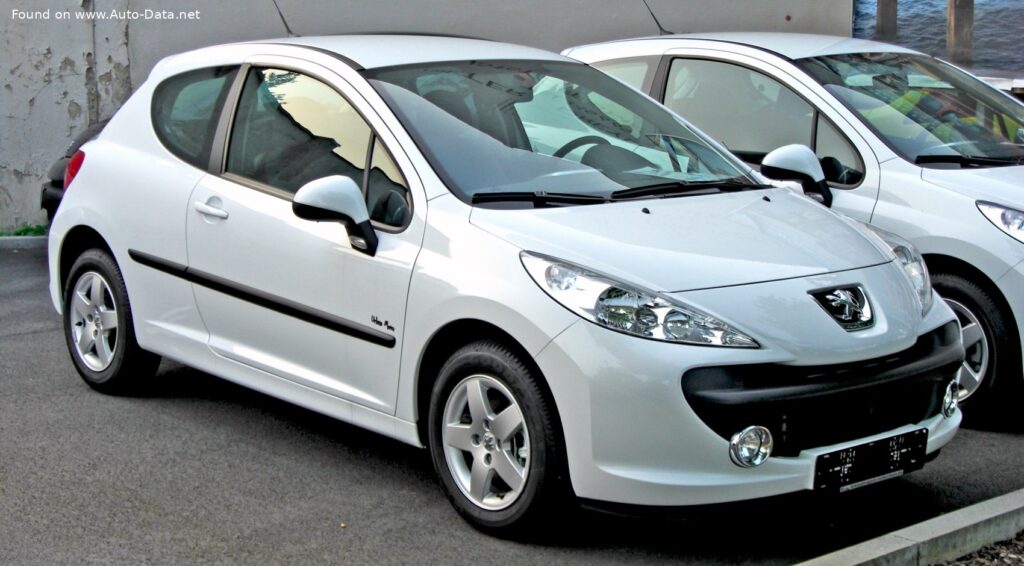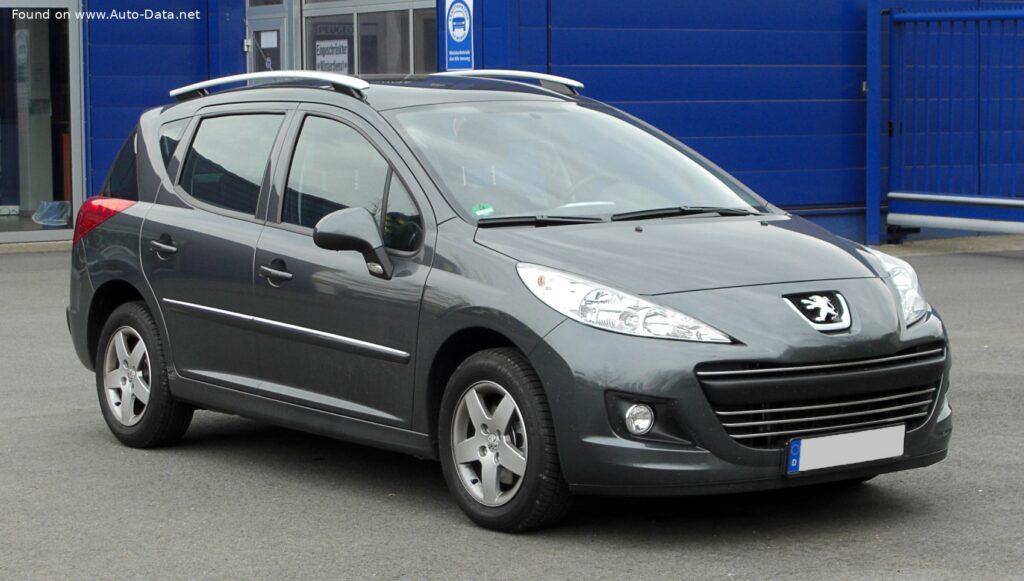
The Peugeot 207 SW (facelift 2009) represents a significant offering within the European B-segment, or subcompact class, particularly for consumers prioritizing versatility and practicality. Launched in 2009 as part of a mid-cycle refresh for the second generation of Peugeot’s popular 207 lineup, this station wagon variant aimed to build upon the success of its hatchback sibling by providing enhanced cargo capacity and family-friendly utility. While never officially imported into the United States market, the Peugeot 207 SW (facelift 2009) played a crucial role in Europe, offering a compelling blend of French design flair, respectable efficiency, and a comfortable ride. The 207 series, which succeeded the immensely popular 206, evolved Peugeot’s design language with a more assertive front fascia and larger dimensions. The SW (Station Wagon) model, in particular, extended the standard 207’s silhouette to create a more capacious and adaptable vehicle. The 2009 facelift brought subtle but effective updates, primarily focusing on refreshed styling elements, improved interior materials, and tweaks to the powertrain lineup to enhance efficiency and meet evolving emission standards. This article specifically focuses on the 1.6 VTi (120 Hp) Automatic variant, a powertrain combination that offered a balanced approach to performance and convenience for its target audience.
Powertrain & Engine Architecture
At the heart of the Peugeot 207 SW (facelift 2009) discussed here is a robust and efficient 1.6-liter VTi gasoline engine. This naturally aspirated, inline-four-cylinder unit, bearing the internal code 5FS EP6C, was part of a collaborative effort between PSA Peugeot Citroën and BMW, known for its advanced engineering and variable valve timing (VVT) technology. With a displacement of 1598 cubic centimeters (97.52 cubic inches), the engine was tuned to produce a respectable 120 horsepower at 6000 rpm, delivering a lively performance for a vehicle in its class. Torque output stood at 118.01 lb.-ft. (160 Nm) at 4250 rpm, providing adequate pulling power for both urban commuting and highway cruising.
The 5FS EP6C engine utilizes multi-port fuel injection and a double overhead camshaft (DOHC) valvetrain with variable valve timing on both intake and exhaust valves. This VVT system optimizes engine performance across the rev range, improving both fuel efficiency and responsiveness. The engine block is constructed from aluminum alloy, contributing to a relatively lightweight design. The cylinder head also features an aluminum alloy construction, further reducing overall weight. The engine’s design prioritized refinement and reduced noise, vibration, and harshness (NVH) levels, contributing to a more comfortable driving experience.
Power was delivered to the front wheels via a 4-speed automatic transmission. While a 4-speed automatic might seem modest by today’s standards, it was a common offering in the B-segment at the time, prioritizing smooth operation and ease of use, particularly in congested European city environments. This transmission contributed to the vehicle’s accessible driving dynamics, making it an appealing option for those seeking a less strenuous driving experience. The transmission is electronically controlled, offering adaptive shift patterns based on driving conditions and throttle input.
Driving Characteristics
The Peugeot 207 SW (facelift 2009) with the 1.6 VTi 120 hp automatic powertrain delivered a comfortable and predictable driving experience. Acceleration from 0-60 mph was achieved in approximately 10.9 seconds, and the vehicle could reach a maximum speed of 121.17 mph (195 km/h). While not particularly sporty, the engine provided sufficient power for everyday driving situations, including highway overtaking and merging. The automatic transmission, while lacking the responsiveness of more modern gearboxes, offered smooth and seamless gear changes, contributing to a relaxed driving experience.
Compared to the manual transmission versions of the 1.6 VTi, the automatic variant offered a slight reduction in fuel economy due to the inherent inefficiencies of the torque converter. However, the convenience of the automatic transmission often outweighed this minor drawback for many drivers. Compared to higher-output versions of the 207, such as those equipped with the 1.6 THP turbocharged engine, the 1.6 VTi automatic offered a more linear power delivery and a less aggressive driving experience. The THP models prioritized performance, while the VTi automatic focused on comfort and efficiency.
The gear ratios of the 4-speed automatic transmission were optimized for fuel efficiency and smooth cruising. First gear provided adequate acceleration from a standstill, while the higher gears allowed for relaxed highway driving at lower engine speeds. The transmission’s shift points were calibrated to balance performance and fuel economy, providing a comfortable and predictable driving experience for a wide range of drivers.
Equipment & Trim Levels
The Peugeot 207 SW (facelift 2009) 1.6 VTi Automatic was typically offered in mid-range trim levels, providing a good balance of features and affordability. Standard equipment generally included electric front windows, central locking, power steering, an air conditioning system, and an audio system with CD player and MP3 compatibility. Safety features such as ABS (Anti-lock Braking System) and front airbags were also standard.
Interior upholstery typically consisted of cloth seats, available in a variety of colors and patterns. The dashboard featured a functional and ergonomic design, with easy-to-read instrumentation. Optional extras available for this trim level included alloy wheels, rear parking sensors, a trip computer, and an upgraded audio system with Bluetooth connectivity. Higher trim levels offered additional features such as automatic headlights and rain-sensing wipers.
The SW variant, by its nature, offered a more practical interior than the hatchback. The rear seats could be folded down to create a large, flat cargo area, making it ideal for transporting bulky items. The rear seats also featured ISOFIX child seat anchors, enhancing the vehicle’s family-friendly appeal.
Chassis & Braking
The Peugeot 207 SW (facelift 2009) utilized a McPherson strut suspension system at the front, providing a comfortable and controlled ride. The rear suspension employed a semi-independent torsion beam setup, which offered a good balance of ride comfort and handling. The suspension was tuned to prioritize comfort over outright sportiness, reflecting the vehicle’s target audience.
Braking duties were handled by ventilated disc brakes at the front and solid disc brakes at the rear. The ABS (Anti-lock Braking System) helped to prevent wheel lockup during hard braking, enhancing safety and control. The braking system provided adequate stopping power for everyday driving conditions.
The 207 SW’s chassis was designed to provide a stable and predictable handling experience. The vehicle’s relatively short wheelbase and narrow track contributed to its agility in urban environments. The electric power steering system offered light and responsive steering, making it easy to maneuver in tight spaces.
Market Reception & Comparison
Critics generally viewed the Peugeot 207 SW (facelift 2009) 1.6 VTi Automatic as a practical and well-rounded vehicle. It was praised for its comfortable ride, spacious interior, and fuel-efficient engine. However, some critics noted that the 4-speed automatic transmission felt dated compared to more modern gearboxes. The vehicle’s styling was also generally well-received, with its sleek lines and distinctive front-end design.
Compared to other trims in the 207 lineup, the 1.6 VTi Automatic offered a good balance of performance and fuel economy. The diesel-powered versions of the 207 offered superior fuel economy but were generally more expensive to purchase. The higher-output gasoline engines provided more performance but were less fuel-efficient. The 1.6 VTi Automatic appealed to buyers who prioritized comfort, convenience, and affordability.
In terms of reliability, the 1.6 VTi engine was generally considered to be a reliable unit. However, like any vehicle, the 207 SW was susceptible to certain common issues, such as problems with the electric power steering system and the automatic transmission. Regular maintenance and servicing were essential to ensure the vehicle’s long-term reliability.
Technical Specifications
| Peugeot 207 SW (facelift 2009) 1.6 VTi (120 Hp) Automatic | |
| General Information | |
| Brand | Peugeot |
| Model | 207 |
| Generation | 207 SW (facelift 2009) |
| Type (Engine) | 1.6 VTi (120 Hp) Automatic |
| Production Start | 2009 |
| Production End | 2013 |
| Powertrain Architecture | Internal Combustion Engine |
| Body Type | Station wagon (estate) |
| Seats | 5 |
| Doors | 5 |
| Performance Specs | |
| Fuel Consumption (Urban) | 25 US mpg (9.4 l/100 km) |
| Fuel Consumption (Extra Urban) | 45.2 US mpg (5.2 l/100 km) |
| Fuel Consumption (Combined) | 35.1 US mpg (6.7 l/100 km) |
| CO2 Emissions | 155 g/km |
| Fuel Type | Petrol (Gasoline) |
| Acceleration 0-60 mph | 10.9 sec |
| Maximum Speed | 121.17 mph (195 km/h) |
| Emission Standard | Euro 5 |
| Weight-to-Power Ratio | 10.3 kg/Hp (97.2 Hp/tonne) |
| Weight-to-Torque Ratio | 7.7 kg/Nm (129.7 Nm/tonne) |
| Engine Specs | |
| Power | 120 Hp @ 6000 rpm |
| Power per liter | 75.1 Hp/l |
| Torque | 118.01 lb.-ft. (160 Nm) @ 4250 rpm |
| Engine Layout | Front, Transverse |
| Engine Model/Code | 5FS EP6C |
| Engine Displacement | 1.6 liters (1598 cm3 / 97.52 cu. in.) |
| Number of Cylinders | 4 |
| Engine Configuration | Inline |
| Cylinder Bore | 3.03 in. (77 mm) |
| Piston Stroke | 3.38 in. (85.8 mm) |
| Compression Ratio | 11:1 |
| Valves per Cylinder | 4 |
| Fuel Injection System | Multi-port manifold injection |
| Engine Aspiration | Naturally aspirated |
| Valvetrain | DOHC-VVT |
| Engine Oil Capacity | 4.49 US qt (4.25 l) |
| Coolant Capacity | 6.02 US qt (5.7 l) |
| Space, Volume and Weights | |
| Kerb Weight | 2720.5 lbs. (1234 kg) |
| Max. Weight | 3893.36 lbs. (1766 kg) |
| Max Load | 1172.86 lbs. (532 kg) |
| Trunk Space (Minimum) | 11.9 cu. ft. (337 l) |
| Trunk Space (Maximum) | 44.43 cu. ft. (1258 l) |
| Fuel Tank Capacity | 13.21 US gal (50 l) |
| Permitted Trailer Load with Brakes (12%) | 2535.32 lbs. (1150 kg) |
| Permitted Trailer Load without Brakes | 1322.77 lbs. (600 kg) |
| Dimensions | |
| Length | 163.94 in. (4164 mm) |
| Width | 68.82 in. (1748 mm) |
| Width with Mirrors Folded | 71.57 in. (1818 mm) |
| Width Including Mirrors | 77.64 in. (1972 mm) |
| Height | 60.12 in. (1527 mm) |
| Wheelbase | 100 in. (2540 mm) |
| Front Track | 57.76 in. (1467 mm) |
| Rear Track | 57.52 in. (1461 mm) |
| Drag Coefficient (Cd) | 0.3 |
| Minimum Turning Circle | 34.78 ft. (10.6 m) |
| Drivetrain, Brakes and Suspension Specs | |
| Drivetrain Architecture | Front wheel drive, Internal Combustion Engine |
| Drive Wheel | Front wheel drive |
| Number of Gears & Type | 4 gears, automatic transmission |
| Front Suspension | Independent type McPherson |
| Rear Suspension | Semi-independent, coil spring |
| Front Brakes | Ventilated discs |
| Rear Brakes | Disc |
| Assisting Systems | ABS (Anti-lock Braking System) |
| Steering Type | Steering rack and pinion |
| Power Steering | Electric Steering |
| Tires Size | 195/55 R16 |
| Wheel Rims Size | 16 inches |
Legacy
The Peugeot 207 SW (facelift 2009) 1.6 VTi Automatic, while no longer in production, continues to be found on the used car market. Its reputation for reliability, combined with its practical design and comfortable ride, makes it an attractive option for buyers seeking an affordable and versatile vehicle. The 1.6 VTi engine, when properly maintained, has proven to be a durable and long-lasting unit. However, potential buyers should be aware of the potential for issues with the electric power steering system and the automatic transmission, and should ensure that these components are thoroughly inspected before purchase.
The 207 SW represents a significant chapter in Peugeot’s history, demonstrating the brand’s commitment to offering practical and stylish vehicles to a wide range of consumers. While the market has shifted towards crossovers and SUVs, the 207 SW remains a testament to the enduring appeal of the compact station wagon, offering a unique blend of versatility, comfort, and affordability.