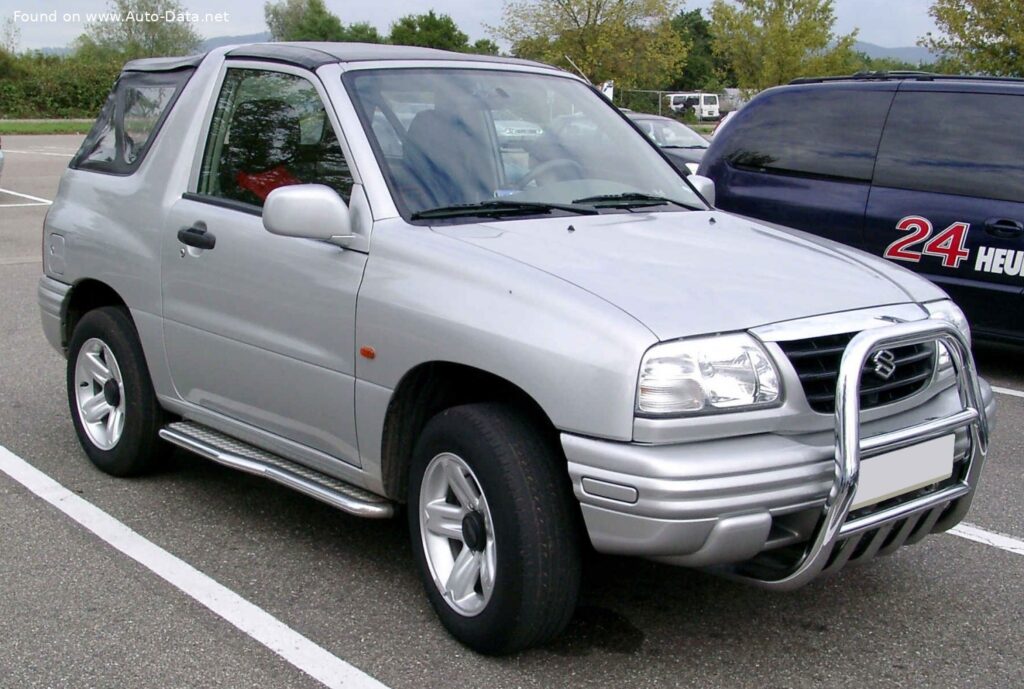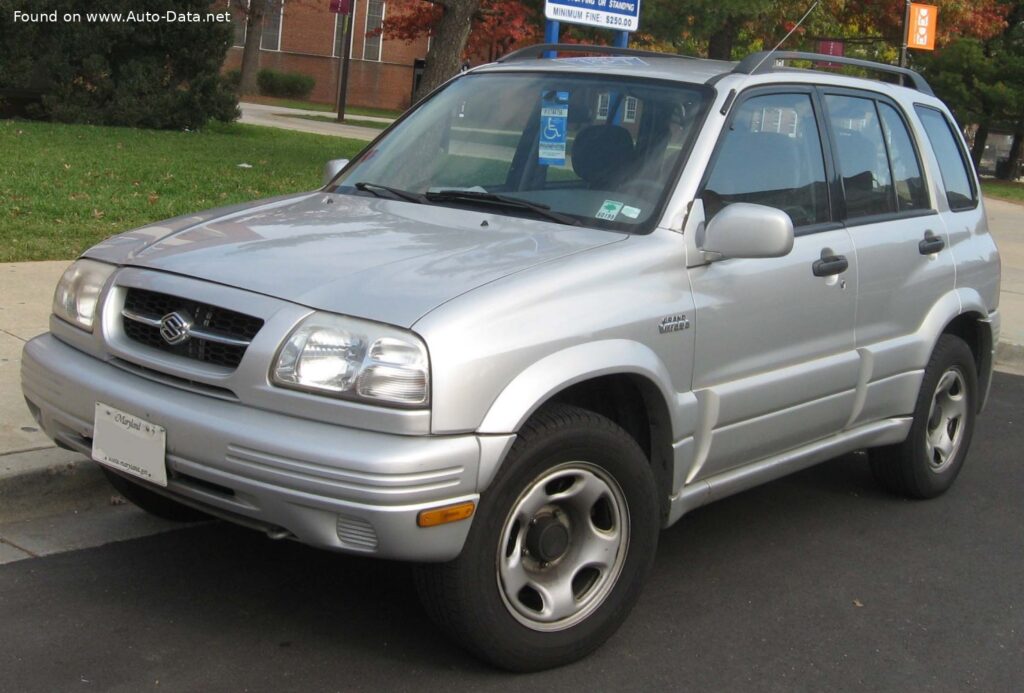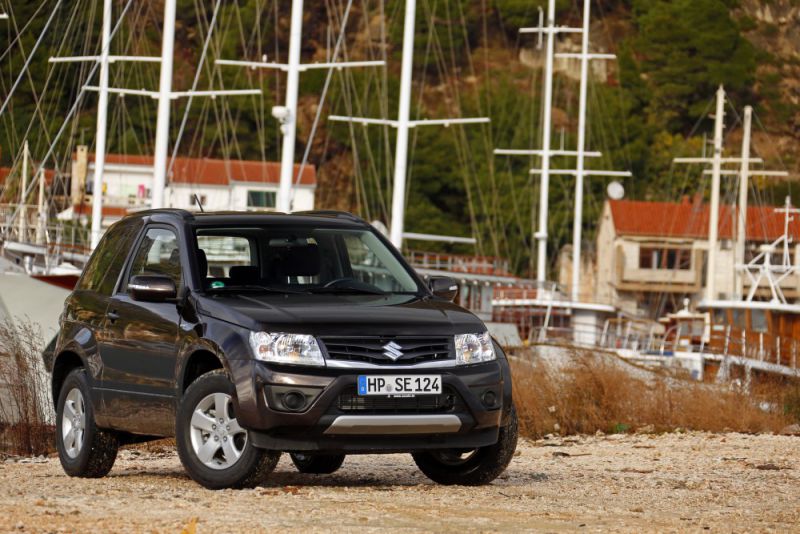
The Suzuki Grand Vitara II (facelift 2012) 3 Door 2.4 (166 Hp) 4×4 represents a notable iteration of Suzuki’s long-standing commitment to producing capable and compact sport utility vehicles. Launched in 2012 as a refreshed version of the second-generation Grand Vitara, this particular variant – with its three-door configuration and 2.4-liter gasoline engine – carved out a distinct niche in international markets, particularly in Europe and Asia. Unlike the larger, five-door models often seen in North America, this three-door version emphasized agility, ruggedness, and a more traditional SUV approach, standing apart from the burgeoning trend of car-based crossovers. It offered a compelling blend of genuine off-road capability, facilitated by its permanent four-wheel-drive system, and everyday practicality in a compact footprint. Production for this specific model ran from 2012 to 2015, maintaining Suzuki’s reputation for reliable and robust vehicles during a transitional period for the automotive industry.
Powertrain & Engine Architecture
At the heart of the Suzuki Grand Vitara II (facelift 2012) 3 Door 2.4 (166 Hp) 4×4 was the J24B engine, a naturally aspirated 2.4-liter (2393 cm3 or 146.03 cu. in.) inline-four gasoline unit. This powerplant was engineered for a balance of power, durability, and efficiency, delivering 166 horsepower at 6000 rpm and a respectable 165.95 lb-ft of torque at 3800 rpm. Its engine layout was front-mounted and longitudinal, typical for vehicles designed with serious off-road intentions, allowing for better weight distribution and proper integration with the four-wheel-drive system. The engine featured a Double Overhead Camshaft (DOHC) valvetrain with Variable Valve Timing (VVT-i), optimizing valve lift and duration for improved performance across the rev range and better fuel economy.
Fuel was delivered via a multi-port manifold injection system, a proven and reliable technology for the era. The J24B engine, while not a high-performance unit, was known for its robustness and relatively simple design, contributing to its long-term reliability. The engine block was constructed from cast iron, enhancing its durability, while the cylinder head was made of aluminum alloy to reduce weight. The engine’s cooling system was a conventional liquid-cooled setup with a radiator and thermostat to maintain optimal operating temperatures. The J24B engine was not particularly known for cutting-edge technology, but rather for its dependable and predictable performance.
Driving Characteristics
The Suzuki Grand Vitara II (facelift 2012) 3 Door 2.4 (166 Hp) 4×4, equipped with the J24B engine and a five-speed manual transmission, offered a driving experience geared towards practicality and capability rather than outright speed. Acceleration from 0 to 60 mph took a respectable 10.6 seconds, and the top speed was 111.85 mph (180 km/h). However, the engine’s power delivery was more linear than explosive, with peak torque arriving at 3800 rpm. This meant that while it wasn’t a particularly fast vehicle, it offered sufficient power for everyday driving and moderate off-road excursions.
Compared to potential higher-output versions (which weren’t commonly available in the 3-door configuration), this 166 hp setup prioritized fuel efficiency and ease of use. The five-speed manual transmission provided drivers with good control over the engine’s powerband, allowing them to select the appropriate gear for various driving conditions. The permanent all-wheel-drive system ensured consistent traction, particularly on slippery surfaces, enhancing stability and control. The gear ratios were tuned for a balance between on-road cruising and off-road crawling, providing adequate torque for navigating challenging terrain without sacrificing highway drivability. The 3-door model’s shorter wheelbase and lighter weight contributed to its nimble handling, making it more responsive than its 5-door counterpart.
Equipment & Trim Levels
The Suzuki Grand Vitara II (facelift 2012) 3 Door 2.4 (166 Hp) 4×4 typically came with a standard equipment list focused on functionality and durability. Standard features generally included air conditioning, power windows, power door locks, and a basic audio system with CD player and AM/FM radio. Safety features included an Anti-lock Braking System (ABS) as standard, ensuring stable braking performance. The interior upholstery was typically cloth, with durable and easy-to-clean materials used throughout the cabin.
Optional extras varied depending on the market, but commonly included alloy wheels, a more advanced audio system with Bluetooth connectivity, and a sunroof. Some models also offered optional side airbags and a rear parking sensor system. The dashboard configuration was straightforward and functional, with clearly labeled controls and a simple instrument cluster. The 3-door configuration meant that rear seat access was somewhat limited, and rear passenger space was relatively tight. However, the rear seats could be folded down to expand cargo capacity. Trim levels were often differentiated by the availability of these optional extras and minor cosmetic enhancements.
Chassis & Braking
The chassis of the Suzuki Grand Vitara II (facelift 2012) 3 Door 2.4 (166 Hp) 4×4 was a body-on-frame construction, a traditional SUV design that provided excellent strength and durability, particularly for off-road use. The suspension system featured an independent McPherson strut setup with coil springs and an anti-roll bar at the front, paired with an independent multi-link suspension at the rear, providing a comfortable ride on pavement while maintaining articulation and control off-road. The suspension was tuned to prioritize stability and control over outright comfort, reflecting the vehicle’s off-road intentions.
Braking was handled by ventilated discs both front and rear, offering strong stopping power. The ABS system helped to prevent wheel lockup during hard braking, enhancing stability and control. The steering system was a rack and pinion setup, providing precise and responsive steering feel. The 3-door model’s relatively light weight contributed to its agile handling and reduced braking distances. The rear drums were not used in this model, as ventilated discs were standard on all four wheels. Stabilizer bars were fitted both front and rear to reduce body roll during cornering.
Market Reception & Comparison
Critics generally viewed the Suzuki Grand Vitara II (facelift 2012) 3 Door 2.4 (166 Hp) 4×4 favorably, praising its genuine off-road capability, robust construction, and affordable price point. However, some reviewers noted that its interior was somewhat basic compared to more modern crossovers, and its fuel economy was not class-leading. Compared to the five-door Grand Vitara, the 3-door version was seen as more agile and fun to drive, but less practical for families.
In terms of fuel economy, the 27 US mpg (combined) was competitive for a 4×4 SUV of its size and capability, but it lagged behind more fuel-efficient crossovers. Reliability was generally considered to be excellent, with the J24B engine and the overall mechanical design proving to be durable and dependable. Compared to other trims in the Grand Vitara lineup, the 2.4-liter engine offered a good balance between power and fuel efficiency, making it a popular choice for buyers who wanted a capable and practical SUV without sacrificing affordability. Competitors like the Toyota RAV4 and Mitsubishi Pajero iO offered similar levels of capability, but the Grand Vitara often stood out with its more affordable price and robust construction.
Technical Specifications
| Category | Specification |
| General Information | |
| Brand | Suzuki |
| Model | Grand Vitara II (facelift 2012) 3 Door |
| Type (Engine) | 2.4 (166 Hp) 4×4 |
| Production Start | 2012 |
| Production End | 2015 |
| Powertrain Architecture | Internal Combustion Engine |
| Body Type | SUV |
| Seats | 4 |
| Doors | 3 |
| Performance Specs | |
| Fuel Consumption (Urban) | 21.4 US mpg (11 l/100 km) |
| Fuel Consumption (Extra Urban) | 31.8 US mpg (7.4 l/100 km) |
| Fuel Consumption (Combined) | 27 US mpg (8.7 l/100 km) |
| CO2 Emissions | 201 g/km |
| Fuel Type | Petrol (Gasoline) |
| Acceleration 0 – 60 mph | 10.6 sec |
| Maximum Speed | 111.85 mph (180 km/h) |
| Emission Standard | Euro 5 |
| Weight-to-power ratio | 9.2 kg/Hp, 109.1 Hp/tonne |
| Weight-to-torque ratio | 6.8 kg/Nm, 147.9 Nm/tonne |
| Engine Specs | |
| Power | 166 Hp @ 6000 rpm |
| Power per liter | 69.4 Hp/l |
| Torque | 165.95 lb.-ft. @ 3800 rpm (225 Nm) |
| Engine Layout | Front, Longitudinal |
| Engine Model/Code | J24B |
| Engine Displacement | 2.4 liters (2393 cm3, 146.03 cu. in.) |
| Number of Cylinders | 4 |
| Engine Configuration | Inline |
| Cylinder Bore | 3.62 in. (92 mm) |
| Piston Stroke | 3.54 in. (90 mm) |
| Compression Ratio | 10:1 |
| Valves per Cylinder | 4 |
| Fuel Injection System | Multi-port manifold injection |
| Engine Aspiration | Naturally aspirated |
| Valvetrain | DOHC – VVT-i |
| Engine Oil Capacity | 5.07 US qt (4.8 l) |
| Coolant Capacity | 7.71 US qt (7.3 l) |
| Space, Volume & Weights | |
| Kerb Weight | 3353.23 lbs. (1521 kg) |
| Max. Weight | 4122.64 lbs. (1870 kg) |
| Max Load | 769.41 lbs. (349 kg) |
| Trunk Space (Minimum) | 6.5 cu. ft. (184 l) |
| Trunk Space (Maximum) | 18.22 cu. ft. (516 l) |
| Fuel Tank Capacity | 14.53 US gal (55 l) |
| Dimensions | |
| Length | 159.84 in. (4060 mm) |
| Width | 71.26 in. (1810 mm) |
| Height | 66.73 in. (1695 mm) |
| Wheelbase | 96.06 in. (2440 mm) |
| Front Track | 60.63 in. (1540 mm) |
| Rear Track | 61.81 in. (1570 mm) |
| Ride Height (Ground Clearance) | 8.07 in. (205 mm) |
| Minimum Turning Circle | 33.46 ft. (10.2 m) |
| Drivetrain, Brakes & Suspension | |
| Drive Wheel | All-wheel drive (4×4) |
| Gearbox Type | 5 gears, manual transmission |
| Front Suspension | Independent, McPherson with coil spring and anti-roll bar |
| Rear Suspension | Independent multi-link suspension |
| Front Brakes | Ventilated discs |
| Rear Brakes | Ventilated discs |
| Assisting Systems | ABS (Anti-lock braking system) |
| Steering Type | Steering rack and pinion |
| Tires Size | 225/70 R16 102S |
| Wheel Rims Size | 6.5J x 16 |
Legacy
The Suzuki Grand Vitara series, and particularly the second generation, holds a significant place in the global automotive landscape, especially in markets outside North America. The Suzuki Grand Vitara II (facelift 2012) 3 Door 2.4 (166 Hp) 4×4 was a testament to Suzuki’s enduring philosophy of building robust, capable, and affordable 4×4 vehicles. In an era where many manufacturers were transitioning towards softer, car-based crossovers with limited off-road ability, the Grand Vitara remained a staunch advocate for traditional SUV virtues.
The J24B engine, while not known for being particularly innovative, proved to be a reliable and durable powerplant. With proper maintenance, these engines can often exceed 200,000 miles. The body-on-frame construction also contributed to the vehicle’s longevity, making it resistant to rust and damage. In the used car market today, these Grand Vitara IIs are often sought after by enthusiasts and those looking for a capable and affordable off-road vehicle. Prices vary depending on condition and mileage, but they generally represent good value for money. While finding parts may become more challenging as the vehicle ages, Suzuki’s reputation for reliability and the availability of aftermarket support ensure that these Grand Vitara IIs will continue to provide years of dependable service.