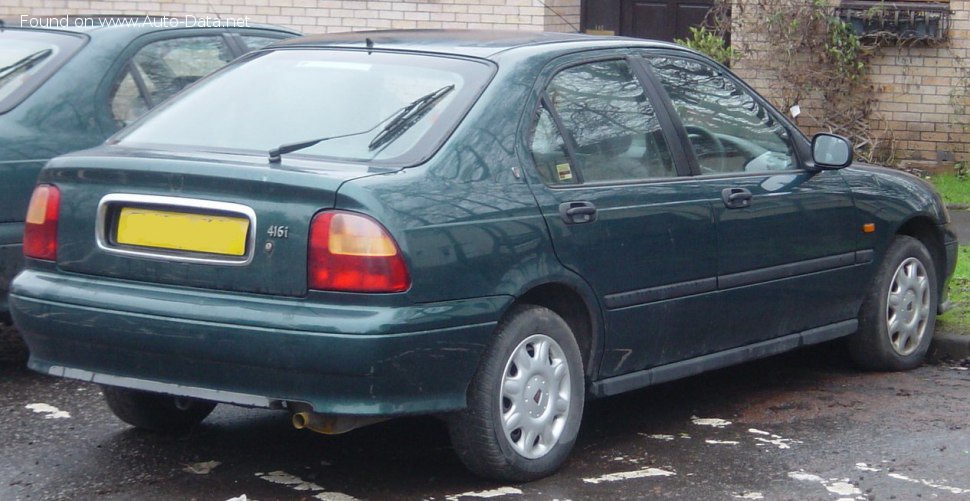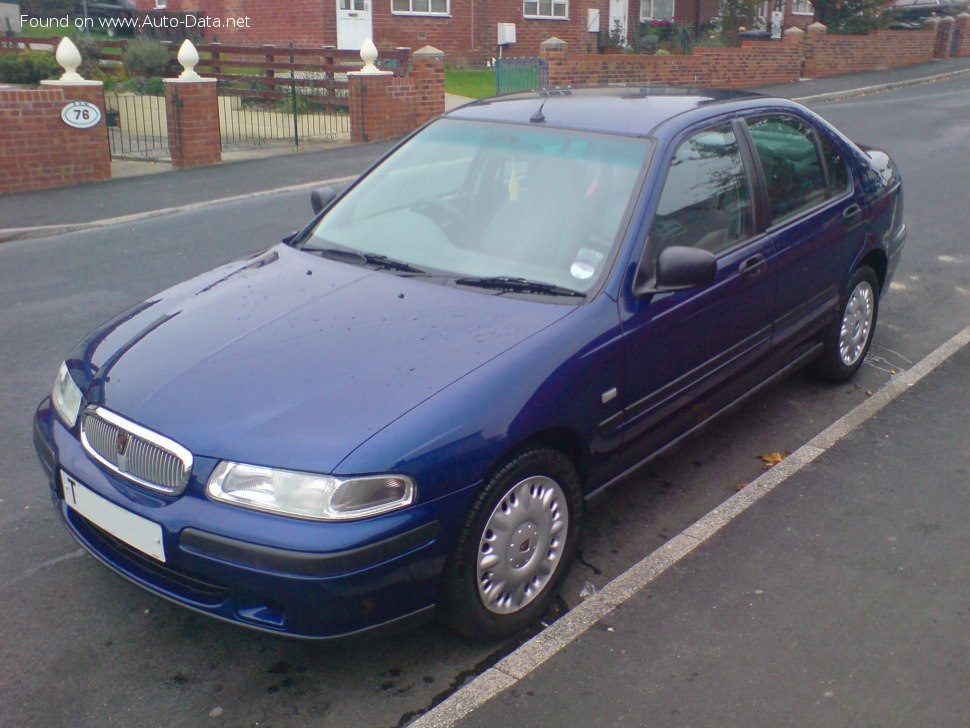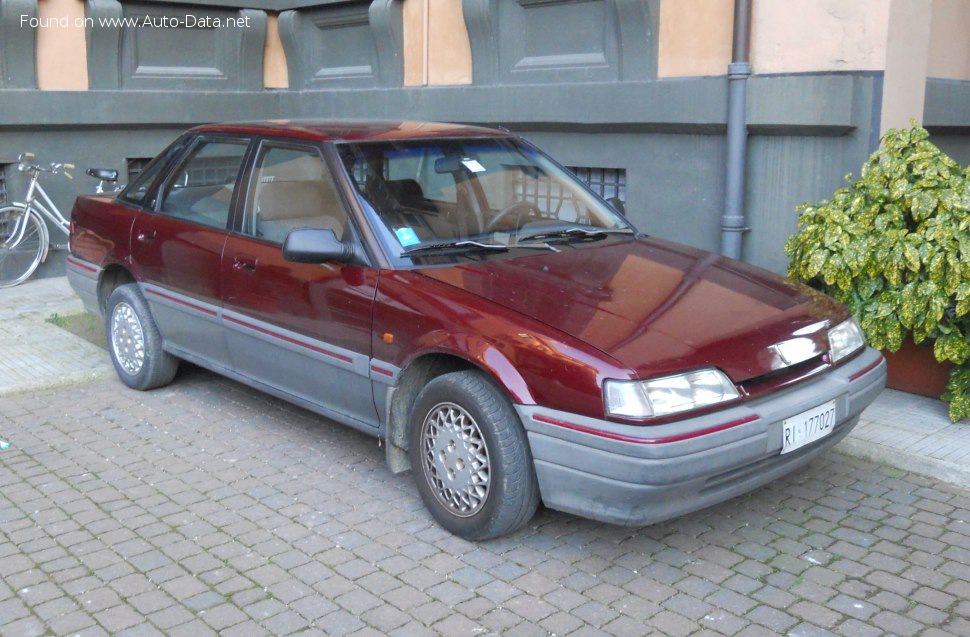
The Rover 400 series, specifically the XW generation produced from 1990 to 1995, represented a significant chapter in the history of the British automotive manufacturer, Rover Group. Emerging from a strategic partnership with Japanese automaker Honda, the 400 (XW) was essentially a rebadged and re-engineered version of the Honda Concerto. This collaboration allowed Rover to leverage Honda’s renowned engineering prowess and reliability, while injecting its distinctive British styling and interior refinement. The Rover 400 (XW) was positioned as a compact executive car, competing in the fiercely contested European C-segment, a market segment characterized by a demand for practicality, efficiency, and a touch of upscale appeal. Among its various iterations, the Rover 400 (XW) 416 GTI (122 Hp) stood out as the performance-oriented variant, offering a blend of spirited driving dynamics and everyday usability within the sedan body style. While never officially sold in the United States, the 400 (XW) carved out a niche in its primary European and other international markets as a sophisticated and capable family car with surprising sporting credentials, particularly in its GTI guise.
Rover 400 (XW) 416 GTI: A Performance Variant
The 416 GTI occupied a mid-range performance position within the Rover 400 lineup. Below it sat the more economical 1.4 and 1.6-liter models geared towards fuel efficiency and everyday commuting. Above it, the range was topped by the V6 variants, offering significantly more power but at a higher price point and with increased running costs. The GTI aimed to bridge the gap, providing a noticeable performance upgrade over the base models without the expense associated with the larger-displacement engines. It was targeted towards drivers who desired a more engaging driving experience and a sportier image, but still needed a practical and comfortable family sedan.
Powertrain & Engine Architecture
At the core of the Rover 400 (XW) 416 GTI (122 Hp) was a powertrain that highlighted the benefits of the Rover-Honda alliance. This model was equipped with the Honda ZC engine, a 1.6-liter (1590 cm³ or 97.03 cu. in.) naturally aspirated inline-four cylinder unit. Known for its rev-happy nature and robust construction, the ZC engine featured a Double Overhead Camshaft (DOHC) valvetrain with four valves per cylinder, a setup that was considered quite advanced for a mainstream compact car in the early 1990s. Fuel delivery was handled by a multi-port fuel injection system, ensuring precise fuel metering and efficient combustion. The engine code for this specific variant is typically identified as ZC.
The ZC engine’s block was cast iron, providing excellent durability, while the cylinder head was aluminum alloy, contributing to a lighter overall weight. The engine utilized hydraulic valve lifters, reducing the need for frequent valve adjustments. The compression ratio was 9.5:1, a figure that balanced performance and fuel efficiency. The 416 GTI was exclusively offered with a five-speed manual transmission, chosen for its direct connection to the engine and its suitability for spirited driving. This transmission was a conventional design, known for its smooth shifting and reliability.
Driving Characteristics
The 416 GTI offered a noticeable step up in performance compared to the lower-spec Rover 400 models. The 122 horsepower and 102.52 lb.-ft. of torque provided brisk acceleration and a willingness to rev. While not a sports car in the purest sense, the GTI felt lively and engaging on the road. The five-speed manual transmission allowed drivers to keep the engine in its optimal power band, maximizing acceleration. The gear ratios were relatively closely spaced, promoting frequent shifting and maintaining the engine within its peak torque range. Compared to the V6 models, the 416 GTI felt lighter and more nimble, particularly in corners. However, it lacked the sheer power and torque of the larger engines, resulting in slower acceleration in higher gears. The steering was precise and well-weighted, providing good feedback to the driver. The suspension, while tuned for comfort, offered a reasonable level of body control, minimizing roll during cornering.
Equipment & Trim Levels
The 416 GTI trim level included several features designed to enhance the driving experience and provide a more sporty aesthetic. Standard equipment typically included sports seats with enhanced bolstering, a leather-wrapped steering wheel, and a unique instrument cluster with additional gauges. Exterior features often included a subtle rear spoiler, alloy wheels, and color-coded bumpers and side moldings. Interior upholstery was typically a combination of cloth and velour, with a sporty pattern. Optional extras available for the 416 GTI included air conditioning, electric windows, a sunroof, and a premium sound system. The dashboard layout was generally similar to other Rover 400 models, but the GTI variant often featured a more prominent center console and additional trim accents.
Chassis & Braking
The Rover 400 (XW) 416 GTI utilized a front-wheel-drive chassis with independent suspension at the front and a semi-independent torsion beam suspension at the rear. The front suspension featured MacPherson struts with coil springs and an anti-roll bar, providing good ride comfort and handling. The rear torsion beam suspension was a cost-effective solution that offered reasonable stability. Braking was handled by ventilated disc brakes at the front and solid disc brakes at the rear. Anti-lock Braking System (ABS) was often included as standard equipment or available as an option, enhancing braking performance and safety. The steering system was a hydraulic rack and pinion setup, providing precise and responsive steering feel. The 416 GTI typically rode on 185/60 R14 tires, offering a good balance of grip and ride comfort.
Market Reception & Comparison
Critics generally praised the Rover 400 (XW) 416 GTI for its blend of performance, refinement, and practicality. The Honda-sourced engine was widely regarded as a strong and reliable unit, and the GTI’s sporty handling characteristics were well-received. However, some critics noted that the interior styling, while comfortable, lacked the visual flair of some of its rivals. Compared to other trims in the Rover 400 lineup, the 416 GTI offered a significant performance upgrade at a reasonable price. Fuel economy was comparable to the 1.6-liter models, but slightly lower than the base 1.4-liter engine. Reliability was generally good, benefiting from the Honda engineering underpinning the powertrain. In terms of competition, the 416 GTI faced rivals such as the Volkswagen Jetta GLi, Ford Escort XR3i, and Opel Astra GSi. It often offered a more refined interior and a more comfortable ride than some of its rivals, but lacked the outright performance of some of the more focused sports models.
Technical Specifications
| Brand | Rover |
| Model | 400 |
| Generation | 400 (XW) |
| Type (Engine) | 416 GTI (122 Hp) |
| Start of Production | 1990 year |
| End of Production | 1995 year |
| Powertrain Architecture | Internal Combustion engine |
| Body type | Sedan |
| Seats | 5 |
| Doors | 4 |
| Fuel consumption (economy) – urban | 23.5 US mpg (10 l/100 km) |
| Fuel consumption (economy) – extra urban | 36.8 US mpg (6.4 l/100 km) |
| Fuel consumption (economy) – combined | 28 US mpg (8.4 l/100 km) |
| Fuel Type | Petrol (Gasoline) |
| Acceleration 0 – 60 mph | 8.5 sec |
| Acceleration 0 – 100 km/h | 8.9 sec |
| Maximum speed | 121.79 mph (196 km/h) |
| Power | 122 Hp @ 6800 rpm. |
| Power per liter | 76.7 Hp/l |
| Torque | 102.52 lb.-ft. @ 5700 rpm. (139 Nm) |
| Engine layout | Front, Transverse |
| Engine Model/Code | Honda ZC |
| Engine displacement | 1.6 l (1590 cm³ / 97.03 cu. in.) |
| Number of cylinders | 4 |
| Engine configuration | Inline |
| Cylinder Bore | 2.95 in. (75 mm) |
| Piston Stroke | 3.54 in. (90 mm) |
| Compression ratio | 9.5:1 |
| Number of valves per cylinder | 4 |
| Fuel injection system | Multi-port manifold injection |
| Engine aspiration | Naturally aspirated engine |
| Valvetrain | DOHC |
Legacy
The Rover 400 (XW) 416 GTI, while not a high-volume seller, has developed a loyal following among enthusiasts. The Honda ZC engine is known for its durability and relatively simple maintenance requirements. However, like any vehicle of its age, it is susceptible to wear and tear, and regular maintenance is essential to keep it running reliably. Parts availability can be a challenge, as Rover ceased production many years ago, but a network of specialist suppliers and enthusiasts has emerged to support owners. In the used car market today, the 416 GTI is considered a desirable classic, particularly examples that have been well-maintained and remain in original condition. Its blend of British styling, Japanese engineering, and sporty performance makes it a unique and appealing vehicle for those seeking a nostalgic driving experience.