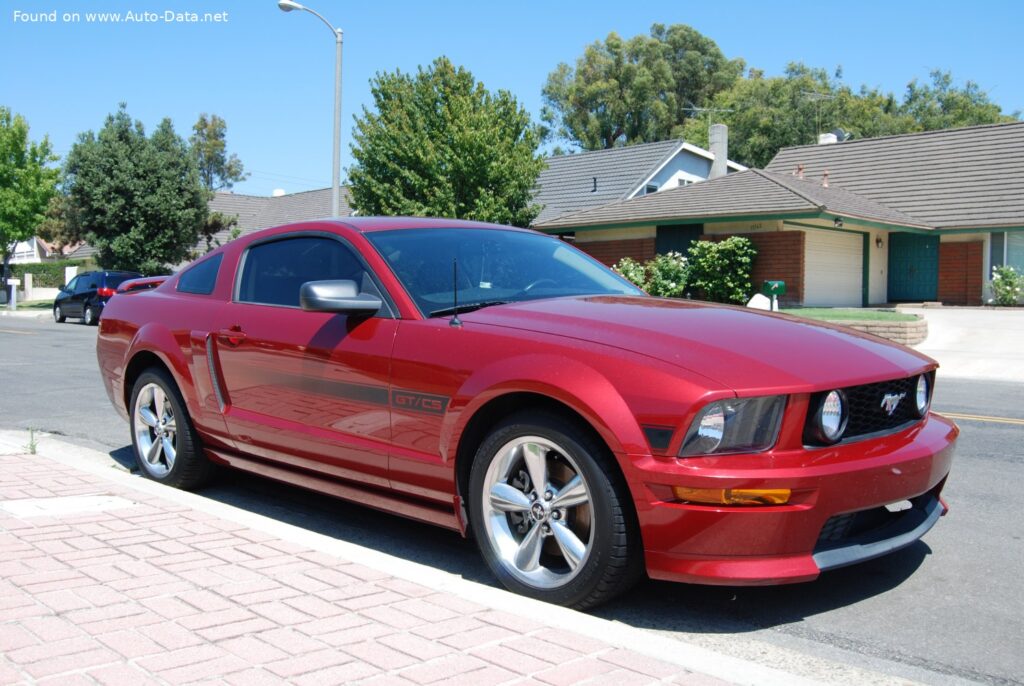
The Ford Mustang V, known internally as the S197 generation, represented a significant turning point for the iconic American pony car. Launched for the 2005 model year and continuing through 2009, this generation marked a deliberate and successful return to the Mustang’s classic roots, blending retro-futuristic styling with modern engineering. The Ford Mustang V 4.0i V6 12V (212 Hp) Automatic specifically served as the accessible entry point into the Mustang lineup, offering a compelling combination of classic aesthetics, rear-wheel-drive dynamics, and respectable performance for the everyday enthusiast. It was a crucial model that revitalized the Mustang’s image and sales, reminding a new generation of drivers why the Mustang had captivated hearts for decades. The design of this generation was led by Hau Thai-Tang and styled by Sid Ramnarace, who drew heavily from the first-generation Mustangs of the late 1960s, particularly the 1967-1968 models, to create a car that was instantly recognizable and deeply nostalgic.
Powertrain & Engine Architecture
Under the hood of the entry-level S197 Mustang resided a 4.0-liter (4009 cm3 or 244.64 cu. in.) naturally aspirated V6 engine, belonging to Ford’s well-regarded Cologne engine family. This particular variant featured a 12-valve configuration – two valves per cylinder – and produced 212 horsepower at 5200 rpm. Torque output was equally impressive for its class, peaking at 239.71 lb-ft (325 Nm) at a relatively low 3500 rpm, providing a responsive feel in everyday driving and ample thrust for highway maneuvers. This powertrain was a substantial upgrade over the preceding 3.8-liter V6, offering not only increased power but also improved refinement.
The 4.0-liter V6 was paired exclusively with a 5-speed automatic transmission, directing power to the rear wheels, upholding the Mustang’s traditional drivetrain layout. This transmission, a Ford 5R55E, was known for its relatively smooth operation and reliability. It featured electronic control and overdrive, contributing to both performance and fuel efficiency. The transmission’s gear ratios were optimized for a balance between acceleration and cruising comfort. First gear was geared for quick off-the-line acceleration, while the higher gears provided relaxed highway cruising. The engine utilized a multi-port fuel injection system and a compression ratio of 9.7:1, designed for a balance of power and efficiency, and was designed to run on regular unleaded gasoline.
Driving Characteristics
The Ford Mustang V 4.0i V6 12V (212 Hp) Automatic offered a distinct driving experience compared to its more powerful V8 siblings and the available manual transmission V6 models. While lacking the raw acceleration of the GT, the V6 Automatic provided a smooth and comfortable ride, making it well-suited for daily commuting and long-distance driving. The automatic transmission eliminated the need for manual gear changes, simplifying the driving experience for many drivers. The 0-60 mph acceleration time of approximately 6.7 seconds was respectable for a V6-powered pony car of the era.
Compared to the manual transmission V6, the automatic version traded some responsiveness for convenience. The manual transmission allowed for more driver control and potentially slightly quicker acceleration, but the automatic offered a more relaxed and effortless driving experience. The gear ratios of the 5R55E transmission were tuned to prioritize smooth shifts and fuel efficiency, rather than outright performance. The power delivery was linear and predictable, making the car easy to control in various driving conditions. The rear-wheel-drive configuration provided a balanced feel and contributed to the Mustang’s sporty handling characteristics.
Equipment & Trim Levels
The V6 Mustang, including the 4.0i Automatic variant, served as the base model in the S197 lineup. Standard features typically included air conditioning, power windows and locks, a CD player, and a tilt steering wheel. The interior featured cloth upholstery and a relatively simple dashboard design. Safety features for the era included dual-stage front airbags and available anti-lock brakes (ABS).
Optional extras available for the V6 model included a premium sound system, leather upholstery, power driver’s seat, and a sunroof. Appearance packages were also offered, allowing buyers to customize the exterior with features like alloy wheels, a rear spoiler, and unique paint colors. While not as lavishly equipped as the GT, the V6 Mustang offered a comfortable and well-appointed interior for its price point. The dashboard retained the dual-cowl design reminiscent of the classic Mustangs, providing a nod to the car’s heritage.
Chassis & Braking
The S197 Mustang employed a traditional suspension setup, featuring a MacPherson strut front suspension and a solid rear axle with trailing arms. While some critics lamented the lack of an independent rear suspension (IRS), the solid axle was a nod to the Mustang’s heritage, offered robustness, and helped keep costs down. The V6 model rode on 215/65 R16 tires mounted on 7J x 16-inch steel or alloy wheels, providing a comfortable ride and adequate grip.
Braking was handled by ventilated discs at both the front and rear, ensuring confident stopping power. The braking system was adequate for the car’s performance capabilities, but ABS was an optional extra. Steering was managed by a rack and pinion system, offering direct and predictable control. The chassis was designed to provide a balance between ride comfort and handling performance. The car’s dimensions – a length of 187.6 inches, a width of 73.82 inches, and a height of 54.53 inches – gave it a substantial road presence, while the 107.09-inch wheelbase contributed to a stable ride.
Market Reception & Comparison
Critics generally viewed the Ford Mustang V 4.0i V6 12V (212 Hp) Automatic favorably, praising its retro styling, comfortable ride, and accessible price point. While acknowledging that it lacked the performance of the GT, reviewers recognized that the V6 model offered a compelling value proposition for buyers seeking a stylish and enjoyable pony car experience. Fuel economy was also a positive point, with the automatic V6 achieving approximately 16.9 US mpg in urban driving and 25 US mpg on the highway.
Compared to other trims in the S197 lineup, the V6 Automatic offered a more affordable entry point into the Mustang family. The GT, with its V8 engine, provided significantly more power and performance but came at a higher price. The V6 manual transmission offered slightly better performance and driver engagement but required more driver involvement. In terms of reliability, the 4.0-liter V6 and 5R55E transmission were generally considered to be reliable, although some owners reported minor issues with the transmission over time. The V6 Automatic was often seen as a more practical and fuel-efficient option for daily driving, while the GT was favored by enthusiasts seeking maximum performance.
Technical Specifications
| General Information | |
| Brand | Ford |
| Model | Mustang |
| Generation | Mustang V (S197) |
| Type (Engine) | 4.0i V6 12V (212 Hp) Automatic |
| Start of Production | 2005 year |
| End of Production | 2009 year |
| Powertrain Architecture | Internal Combustion Engine |
| Body type | Coupe |
| Seats | 4 |
| Doors | 2 |
| Performance Specs | |
| Fuel Consumption (Economy) – Urban | 16.9 US mpg (13.9 l/100 km) |
| Fuel Consumption (Economy) – Extra Urban | 25 US mpg (9.4 l/100 km) |
| Fuel Type | Petrol (Gasoline) |
| Acceleration 0 – 60 mph | 6.7 sec |
| Acceleration 0 – 62 mph (0 – 100 km/h) | 7 sec |
| Maximum Speed | 111.85 mph (180 km/h) |
| Weight-to-Power Ratio | 7.2 kg/Hp (138.6 Hp/tonne) |
| Weight-to-Torque Ratio | 4.7 kg/Nm (212.4 Nm/tonne) |
| Engine Specs | |
| Power | 212 Hp @ 5200 rpm |
| Power per liter | 52.9 Hp/l |
| Torque | 239.71 lb.-ft. @ 3500 rpm (325 Nm) |
| Engine Layout | Front, Longitudinal |
| Engine Model/Code | Cologne |
| Engine Displacement | 4.0 liters (4009 cm3 / 244.64 cu. in.) |
| Number of Cylinders | 6 |
| Engine Configuration | V-engine |
| Cylinder Bore | 3.95 in. (100.4 mm) |
| Piston Stroke | 3.32 in. (84.4 mm) |
| Compression Ratio | 9.7:1 |
| Number of Valves per Cylinder | 2 |
| Fuel Injection System | Multi-port manifold injection |
| Engine Aspiration | Naturally aspirated engine |
| Engine Oil Capacity | 4.97 US qt (4.7 l) |
| Coolant Capacity | 12.47 US qt (11.8 l) |
| Space, Volume and Weights | |
| Curb Weight | 3373.07 lbs. (1530 kg) |
| Trunk (Boot) Space – Minimum | 12.36 cu. ft. (350 l) |
| Fuel Tank Capacity | 16.11 US gal (61 l) |
| Dimensions | |
| Length | 187.6 in. (4765 mm) |
| Width | 73.82 in. (1875 mm) |
| Height | 54.53 in. (1385 mm) |
| Wheelbase | 107.09 in. (2720 mm) |
| Front Track | 62.2 in. (1580 mm) |
| Rear (Back) Track | 62.6 in. (1590 mm) |
| Drivetrain, Brakes and Suspension Specs | |
| Drivetrain Architecture | The Internal combustion engine (ICE) drives the rear wheels of the vehicle. |
| Drive Wheel | Rear wheel drive |
| Number of Gears and Type of Gearbox | 5 gears, automatic transmission |
| Front Suspension | Spring Strut |
| Rear Suspension | Trailing arm |
| Front Brakes | Ventilated discs |
| Rear Brakes | Ventilated discs |
| Steering Type | Steering rack and pinion |
| Tires Size | 215/65 R16 |
| Wheel Rims Size | 7J x 16 |
Legacy
The Ford Mustang V generation, and particularly the 4.0-liter V6 Automatic variant, left a lasting legacy in the automotive world. It successfully revived the Mustang’s iconic styling, which had become somewhat diluted in previous generations, and brought it back to the forefront of American automotive design. The “retro” design trend it pioneered influenced many other manufacturers and models in the years that followed.
The V6 model played a crucial role in the S197’s overall market success. While the GT with its V8 engine garnered headlines and enthusiast adoration, the V6 variant was the volume seller, making the Mustang experience accessible to a broader demographic. It offered the unmistakable looks and rear-wheel-drive dynamics of a true pony car at a more affordable price point and with better fuel economy, positioning it as a compelling alternative to more generic mid-size sedans or front-wheel-drive coupes.
In the used car market today, the S197 Mustang V6 Automatic remains a popular choice for buyers seeking a stylish and affordable classic. The 4.0-liter V6 and 5R55E transmission are generally considered to be reliable, although regular maintenance is essential to ensure long-term durability. These Mustangs offer a unique blend of retro charm, modern convenience, and accessible performance, making them a compelling option for enthusiasts and everyday drivers alike. Their relatively low cost of ownership and readily available parts further contribute to their enduring appeal.