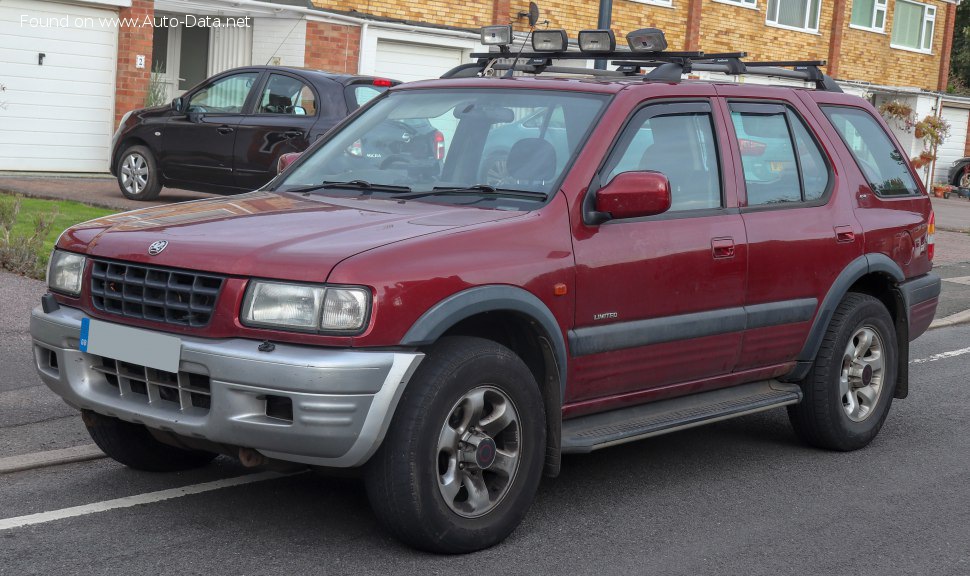
The Vauxhall Frontera 2.5 TDS, produced from 1996 to 1998, represents a significant entry in the European SUV market of the late 1990s. Essentially a rebadged version of the Isuzu MU (also known as the Isuzu Rodeo/Wizard), the Frontera was tailored for European consumers by Vauxhall, the British subsidiary of General Motors. This 2.5 TDS variant, equipped with a 115 horsepower turbodiesel engine, occupied a mid-range position within the Frontera lineup, offering a balance of affordability, practicality, and off-road capability. It provided five doors and seating for five passengers, designed for both urban commuting and light off-road excursions. While the Vauxhall brand wasn’t sold in the United States, the Isuzu Rodeo, its mechanical twin, enjoyed a similar market presence, making the Frontera’s underlying architecture familiar to a broader international audience.
Powertrain & Engine Architecture
The heart of the Frontera 2.5 TDS is a 2.5-liter (2499 cc) inline four-cylinder diesel engine, designated the VM41B. This engine produced 115 horsepower (hp) at 3600 rpm and a substantial 191.77 lb-ft (260 Nm) of torque peaking at 1800 rpm. The VM41B engine is a direct injection diesel, utilizing a precombustion chamber design. This system, common in European diesels of the era, involved small pre-combustion chambers within the cylinder head where fuel was initially ignited, then used to ignite the main combustion chamber. This design contributed to smoother combustion and reduced engine noise compared to earlier direct injection systems. The engine featured a cast iron block and aluminum cylinder head, a robust combination designed for longevity.
Power was delivered through a five-speed automatic transmission, a key differentiator for this variant. Unlike the more common five-speed manual transmission found in other Frontera models, the automatic offered a more relaxed driving experience, particularly appealing to buyers prioritizing convenience over outright performance. The transmission was a traditional hydraulic automatic, known for its durability but lacking the efficiency of modern electronically controlled units. The drivetrain was a part-time four-wheel-drive system, allowing the driver to switch between two-wheel drive (2H) for on-road efficiency and four-wheel drive (4H) for improved traction in challenging conditions. A low-range gear selection was also available for serious off-road situations.
Driving Characteristics
The Frontera 2.5 TDS with the automatic transmission offered a distinctly different driving experience compared to its manual counterparts or the higher-output petrol (gasoline) versions. While the 115 hp engine wasn’t particularly powerful, the abundant low-end torque of the diesel engine made it feel surprisingly capable, especially when towing or navigating challenging terrain. The automatic transmission, while smooth, did detract from the engine’s responsiveness. Gear changes were not particularly quick, and the transmission tended to hunt for gears on inclines. Acceleration from 0 to 60 mph took approximately 16 seconds, and the top speed was around 94 mph (151 km/h). This performance was adequate for the time and segment, but significantly slower than the petrol-powered Fronteras.
The automatic transmission’s gear ratios were optimized for fuel efficiency and towing capacity rather than sporty acceleration. The focus was on providing a comfortable and relaxed driving experience, making it well-suited for long journeys. Compared to the manual transmission, the automatic Frontera felt less engaging to drive, but it offered a significant reduction in driver fatigue, particularly in stop-and-go traffic. The 4×4 system, when engaged, provided excellent traction on loose surfaces, making it a capable off-road vehicle for recreational use.
Equipment & Trim Levels
The 2.5 TDS automatic Frontera typically came with a reasonably well-equipped standard specification, though trim levels varied slightly depending on the specific market. Standard features generally included power steering, central locking, electric windows, and an AM/FM radio. Interior upholstery was typically a durable cloth material, designed to withstand the rigors of family use. The dashboard layout was functional and straightforward, with clearly labeled controls.
Optional extras available for this trim included air conditioning, alloy wheels, a sunroof, and upgraded audio systems. Higher trim levels might also feature leather upholstery and wood trim accents. The Frontera wasn’t positioned as a luxury SUV, so the focus was on providing practical features and durable materials rather than opulent appointments. The interior space was a key selling point, offering ample room for five passengers and a generous cargo area.
Chassis & Braking
The Frontera 2.5 TDS utilized a body-on-frame construction, a traditional SUV design that prioritized robustness and off-road capability. The chassis was a ladder frame, providing a solid foundation for the vehicle. Suspension consisted of independent double wishbones at the front and a multi-link setup at the rear. This suspension configuration provided a reasonable balance of ride comfort and handling, although the vehicle’s high center of gravity and body-on-frame construction meant it wasn’t as agile as more modern crossover SUVs.
Braking was provided by ventilated disc brakes on all four wheels, offering adequate stopping power for a vehicle of its weight (approximately 4233 lbs or 1920 kg). Anti-lock Braking System (ABS) was standard equipment, enhancing safety by preventing wheel lockup during emergency braking. The steering system was a recirculating ball system with hydraulic power assistance, providing a robust and communicative feel. Tire size was typically 235/70 R16, offering a good compromise between on-road comfort and off-road traction.
Market Reception & Comparison
The Vauxhall Frontera 2.5 TDS automatic received generally positive reviews for its practicality, affordability, and off-road capability. Critics praised the engine’s torque and fuel efficiency, but noted the automatic transmission’s lack of responsiveness. Compared to the petrol-powered Fronteras, the 2.5 TDS automatic was slower but offered significantly better fuel economy and a more relaxed driving experience. It was also generally more affordable than the higher-specification petrol models.
Compared to rivals like the Land Rover Freelander, the Frontera offered a more rugged and utilitarian experience, while the Freelander focused on on-road comfort and refinement. The Frontera’s fuel economy was competitive with other diesel-powered SUVs of the era, and its reliability was generally considered good, although maintenance costs could be higher due to the complexity of the diesel engine and the age of the vehicle. The automatic transmission, while convenient, was often cited as a potential weak point, requiring regular servicing to ensure smooth operation.
Technical Specifications
| Category | Specification |
| Brand | Vauxhall |
| Model | Frontera |
| Generation | Frontera (First Generation) |
| Type (Engine) | 2.5 TDS (115 Hp) |
| Production Start | 1996 |
| Production End | 1998 |
| Powertrain Architecture | Internal Combustion Engine |
| Body Type | SUV |
| Seats | 5 |
| Doors | 5 |
| Fuel Consumption (Urban) | 13 l/100 km (18.1 US mpg) |
| Fuel Consumption (Extra Urban) | 8.6 l/100 km (27.4 US mpg) |
| Fuel Type | Diesel |
| Acceleration 0 – 60 mph | 16 sec |
| Maximum Speed | 151 km/h (94 mph) |
| Engine Power | 115 Hp @ 3600 rpm |
| Engine Torque | 260 Nm @ 1800 rpm (191.77 lb.-ft. @ 1800 rpm) |
| Engine Displacement | 2499 cm³ (152.5 cu. in.) |
| Number of Cylinders | 4 |
| Engine Layout | Inline |
| Fuel Injection System | Precombustion chamber injection |
| Transmission | 5-speed Automatic |
| Kerb Weight | 1920 kg (4233 lbs) |
| Fuel Tank Capacity | 80 l (21.13 US gal) |
Legacy
The Vauxhall Frontera 2.5 TDS, particularly the automatic variant, has developed a reputation as a dependable and relatively affordable used SUV. While finding well-maintained examples can be challenging due to their age, those that remain are often prized for their robustness and off-road capability. The VM41B diesel engine, while requiring regular maintenance, is known for its longevity. Common issues include wear and tear on the automatic transmission, corrosion (particularly in regions with harsh winters), and age-related deterioration of rubber components.
In the used car market, the Frontera 2.5 TDS automatic typically commands a modest price, reflecting its age and mileage. It appeals to buyers seeking a practical and affordable 4×4 vehicle for recreational use or light work. The Frontera’s legacy is one of a capable and reliable SUV that helped democratize the 4×4 experience, making it accessible to a wider range of buyers. It remains a popular choice among enthusiasts and those seeking a rugged and dependable vehicle that can handle a variety of tasks.