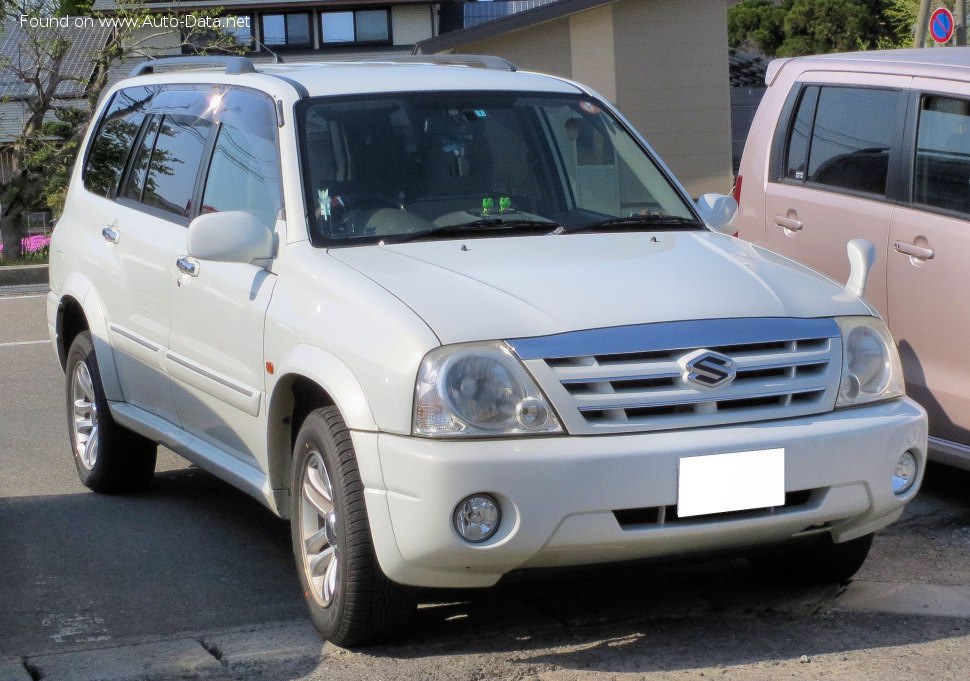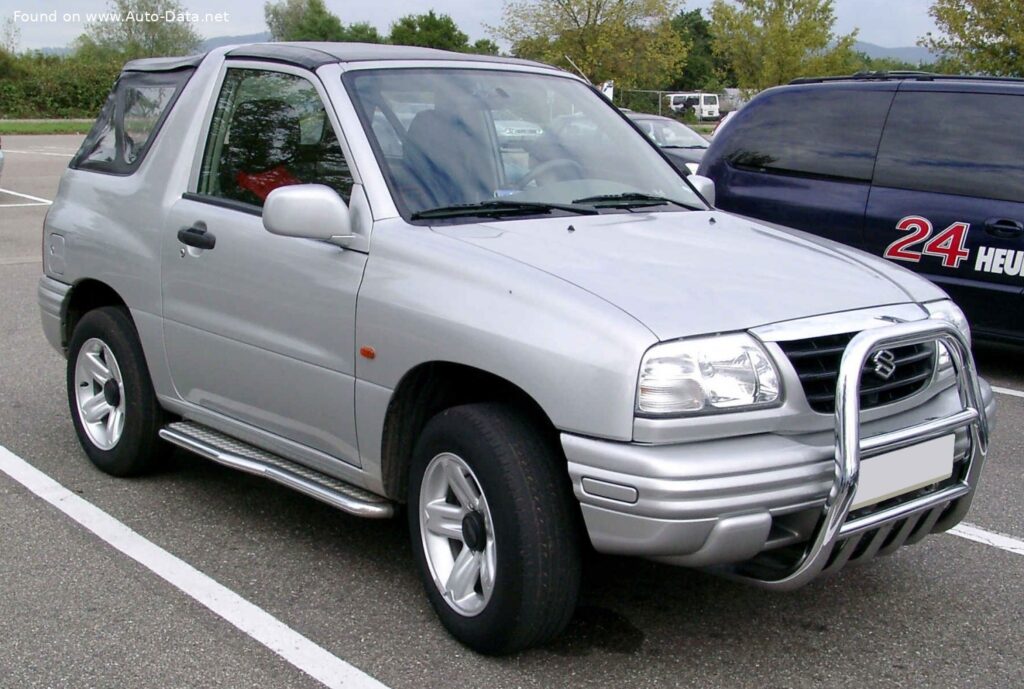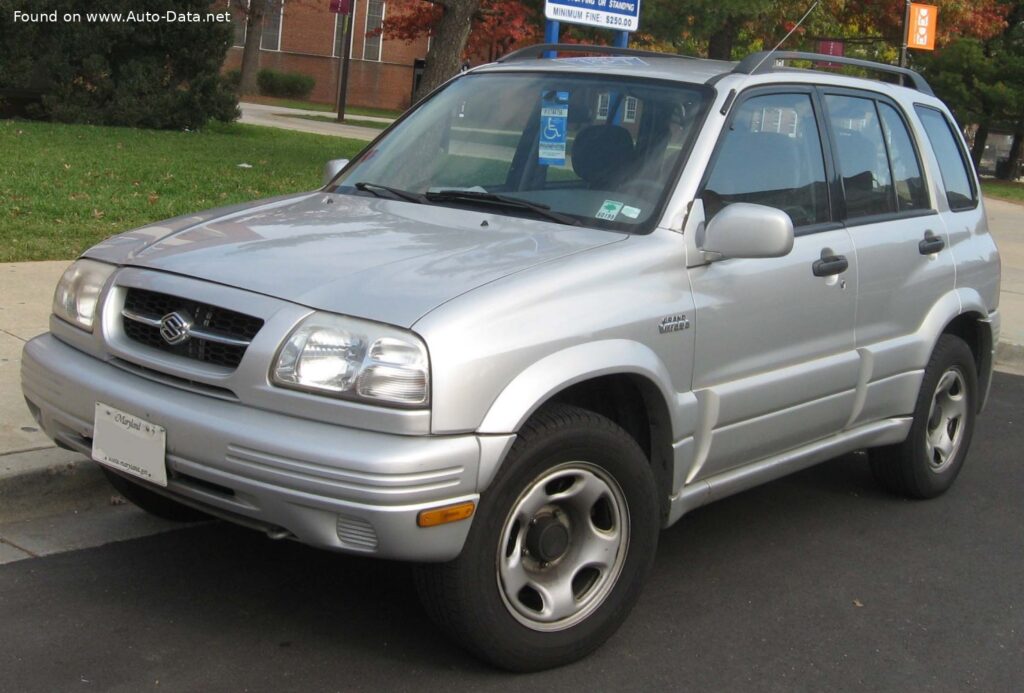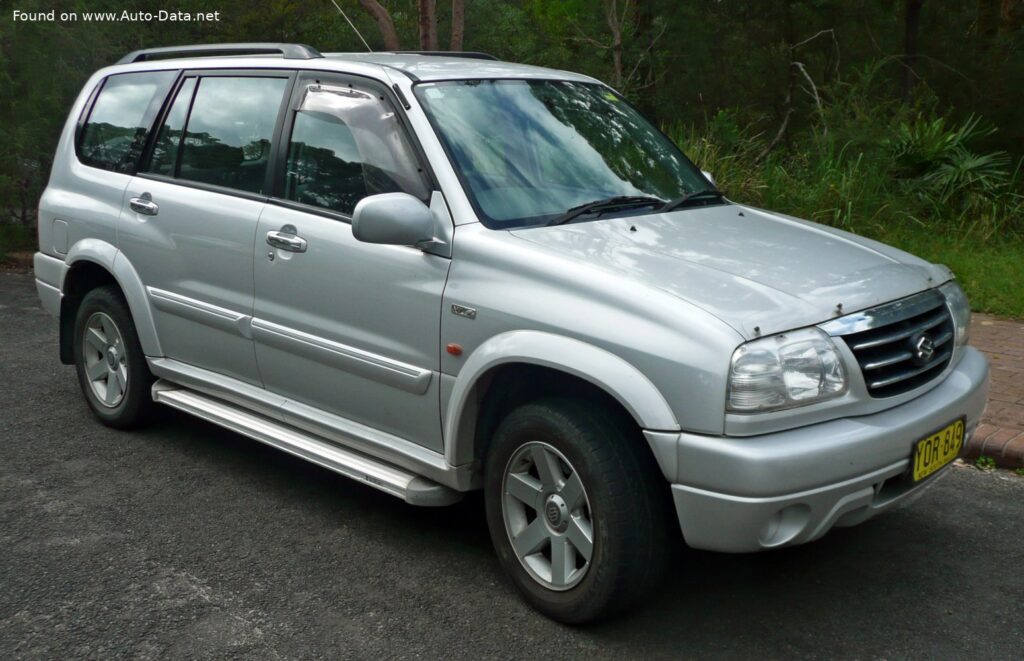
The Suzuki Grand Vitara XL-7 (HT) 2.7 i V6 (172 Hp) 4WD represents a significant offering from the Japanese automaker Suzuki, positioned as a longer, more accommodating variant of the popular Grand Vitara compact SUV. Launched in 1998 and produced through 2005, this generation, specifically the XL-7 (HT) variant, aimed to capture a segment of the burgeoning SUV market by offering a blend of rugged capability, enhanced passenger comfort, and a more potent powertrain. While the standard Grand Vitara often competed with smaller, more car-like SUVs, the XL-7 stretched its wheelbase and overall length, providing increased interior volume that distinguished it from many rivals. This particular model, equipped with a 2.7-liter V6 engine and a robust four-wheel-drive system, was designed to appeal to families and adventurers alike who sought a versatile vehicle capable of handling both daily commutes and light off-road excursions. Its architecture, featuring an internal combustion engine and a traditional SUV body type, underscored Suzuki’s commitment to delivering durable and practical vehicles in the late 1990s and early 2000s.
Powertrain & Engine Architecture
At the heart of the Suzuki Grand Vitara XL-7 (HT) 2.7 i V6 (172 Hp) 4WD lies a capable 2.7-liter (2737 cm³ or 167.02 cu. in.) H27A V-engine. This naturally aspirated, multi-port manifold injected gasoline powerplant was configured with six cylinders and a Double Overhead Camshaft (DOHC) valvetrain, featuring four valves per cylinder. This setup allowed the engine to produce a respectable 172 horsepower at 5500 rpm, providing ample power for its class and weight. Torque output was equally competitive, reaching 241 Nm (177.75 lb.-ft.) at 4000 rpm, ensuring solid low-end pull and responsive acceleration. The engine’s compression ratio stood at 9.4:1, balancing performance with fuel efficiency for its era. The H27A engine, while generally reliable, is known for potential issues with timing chain wear over high mileage, requiring periodic inspection and potential replacement. The fuel injection system, a traditional multi-port setup, is relatively simple and easy to maintain, contributing to the engine’s overall durability.
The XL-7 utilized a 5-speed automatic transmission, a common choice for SUVs of this era aiming for a balance between fuel economy and drivability. This transmission, while not known for being particularly sporty, provided smooth shifts and adequate performance for everyday driving. It featured standard overdrive for highway cruising, helping to reduce engine RPMs and improve fuel efficiency. The transmission’s torque converter played a crucial role in multiplying engine torque, particularly at lower speeds, enhancing the vehicle’s off-road capability and towing capacity. Regular transmission fluid changes are essential for maintaining the longevity of this unit.
Driving Characteristics
The 172 hp V6 and 5-speed automatic combination in the Grand Vitara XL-7 delivered a driving experience that was competent and comfortable, though not particularly exhilarating. Acceleration from 0 to 60 mph took approximately 10 seconds, which was competitive for its class but noticeably slower than the manual transmission equipped models. The automatic transmission prioritized smooth shifts over aggressive performance, resulting in a more relaxed driving experience. The gear ratios were tuned for everyday usability, with a focus on providing adequate power for highway merging and climbing hills. Compared to the standard Grand Vitara’s smaller four-cylinder engine, the V6 offered a significant improvement in power and torque, making it more suitable for hauling passengers and cargo. However, it lacked the responsiveness and fuel efficiency of the manual transmission, which allowed for more driver control and potentially better gas mileage. The four-wheel-drive system provided enhanced traction in slippery conditions, making it a capable vehicle for light off-roading and winter driving.
Equipment & Trim Levels
The Suzuki Grand Vitara XL-7 (HT) 2.7 i V6 (172 Hp) 4WD typically came standard with features considered essential for a family SUV in the early 2000s. These included air conditioning, power windows and locks, an AM/FM stereo with a CD player, and cloth upholstery. Safety features such as Anti-lock Braking System (ABS) were also standard. The interior typically featured a dark gray or beige color scheme. Optional extras included a sunroof, upgraded audio systems, leather upholstery, and alloy wheels. Higher trim levels, if available, might have added features like automatic climate control and a rear wiper. The XL-7’s interior was designed for practicality and durability, with easy-to-clean surfaces and ample storage space. The dashboard layout was straightforward and functional, with clearly labeled controls.
Chassis & Braking
The Grand Vitara XL-7 utilized a traditional body-on-frame construction, which contributed to its ruggedness and off-road capability. The front suspension featured an independent wishbone setup, while the rear suspension employed coil springs. This configuration provided a balance between on-road comfort and off-road articulation. The steering system was a hydraulic power-assisted rack and pinion setup, offering responsive and comfortable steering feedback. Braking duties were handled by ventilated discs at the front and drum brakes at the rear. While the front discs provided adequate stopping power, the rear drums were a cost-saving measure that limited overall braking performance. Stabilizer bars were included at both the front and rear to reduce body roll during cornering. The XL-7’s chassis was designed to handle the added weight and power of the V6 engine and four-wheel-drive system, providing a stable and planted feel on the road.
Market Reception & Comparison
Critics generally viewed the Suzuki Grand Vitara XL-7 2.7 i V6 (172 Hp) 4WD favorably, praising its spacious interior, powerful engine, and capable four-wheel-drive system. However, some reviewers noted that its handling was not as refined as some of its unibody crossover competitors. Fuel economy was considered average for its class, with estimates of 17 US mpg in urban driving conditions and 25.8 US mpg on the highway. Compared to the standard Grand Vitara with the smaller four-cylinder engine, the XL-7 offered a significant improvement in performance and towing capacity, but at the expense of fuel efficiency. Reliability was generally good, although some owners reported issues with the timing chain and automatic transmission over the long term. The XL-7 offered a compelling value proposition, providing a lot of features and capability for its price. It appealed to buyers who wanted a rugged and versatile SUV that could handle both daily commutes and weekend adventures.
Technical Specifications
| Category | Specification |
| Brand | Suzuki |
| Model | Grand Vitara |
| Generation | Grand Vitara XL-7 (HT) |
| Type (Engine) | 2.7 i V6 (172 Hp) 4WD |
| Production Start | 1998 |
| Production End | 2005 |
| Powertrain Architecture | Internal Combustion engine |
| Body Type | SUV |
| Seats | 5 |
| Doors | 5 |
| Fuel Consumption (Urban) | 13.8 l/100 km |
| Fuel Consumption (Extra Urban) | 9.1 l/100 km |
| Fuel Type | Petrol (Gasoline) |
| Acceleration 0 – 60 mph | 10 seconds |
| Acceleration 0 – 100 km/h | 10.5 seconds |
| Maximum Speed | 170 km/h (105.63 mph) |
| Power | 172 Hp @ 5500 rpm |
| Torque | 241 Nm @ 4000 rpm (177.75 lb.-ft. @ 4000 rpm) |
| Engine Displacement | 2737 cm³ (167.02 cu. in.) |
| Engine Code | H27A |
| Compression Ratio | 9.4:1 |
| Kerb Weight | 1715 kg (3780.93 lbs) |
| Max. Weight | 2230 kg (4916.31 lbs) |
| Fuel Tank Capacity | 64 l (16.91 US gal) |
| Tires Size | 235/60 R16 |
Legacy
The Suzuki Grand Vitara XL-7, particularly the 2.7 i V6 (172 Hp) 4WD variant, has developed a reputation for being a reliable and durable SUV, especially when properly maintained. The H27A V6 engine, while not without its potential issues (such as timing chain wear), is generally considered a robust powerplant. The automatic transmission, while not the most technologically advanced, has proven to be relatively dependable with regular fluid changes. In the used car market today, the XL-7 remains an affordable option for buyers seeking a spacious and capable SUV. Its body-on-frame construction and four-wheel-drive system make it well-suited for those who need a vehicle that can handle rough roads or light off-roading. However, potential buyers should be aware of the potential for timing chain wear and transmission issues, and should have the vehicle thoroughly inspected before purchase. The XL-7’s legacy is one of practicality, durability, and value, cementing its place as a memorable and impactful offering in Suzuki’s automotive history.