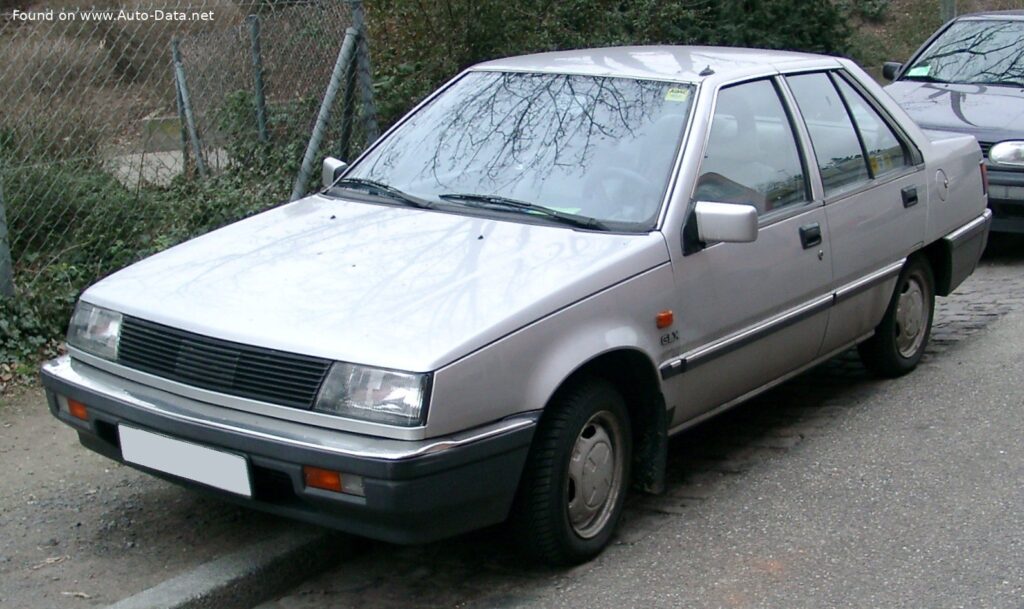
The Mitsubishi Lancer III 1.5 (70 Hp) represents a pivotal moment in Mitsubishi’s global strategy, debuting in 1985 and continuing through 1988. This iteration, internally designated the C10 series, was a key component of the broader Lancer III generation, built on the foundation of accessible and reliable transportation. The 1.5-liter, 70 horsepower variant served as a cornerstone of the lineup, prioritizing affordability and practicality for a wide range of consumers across international markets. It was designed to compete in the burgeoning compact car segment, offering a sensible alternative to more performance-oriented or luxury-focused options.
The 1.5L Lancer III: Entry-Level Practicality
The Mitsubishi Lancer III 1.5 (70 Hp) occupied the entry-level position within the Lancer III range. It was designed to be the most affordable and fuel-efficient option, appealing to first-time car buyers, families on a budget, and those prioritizing reliability over outright performance. Compared to potential higher-trim versions (which varied significantly by market and were not widely available in all regions), the 1.5L model lacked features like upgraded interior trim, more powerful engines, or advanced suspension components. It was a deliberate choice to offer a no-frills, dependable vehicle at a competitive price point.
Powertrain & Engine Architecture
The heart of the Lancer III 1.5 was a 1.5-liter (1498cc) inline-four cylinder gasoline engine. This engine, while modest in output, was designed for durability and fuel efficiency. The engine code varied by market, but common designations include 4G15. It utilized a naturally aspirated fuel delivery system, typically employing a carburetor or early fuel injection systems depending on the specific market and year of production. The valvetrain consisted of a single overhead camshaft (SOHC) operating two valves per cylinder. This configuration contributed to the engine’s simplicity and ease of maintenance.
The transmission paired with the 1.5L engine was typically a four-speed automatic transmission. This automatic was chosen to enhance the car’s appeal to drivers seeking convenience and ease of use, particularly in urban environments. While not known for its sporty performance, the transmission offered smooth shifts and adequate responsiveness for everyday driving. The gear ratios were optimized for fuel economy and low-end torque, prioritizing drivability over acceleration. Manual transmission options were also available in many markets, offering slightly improved fuel economy and driver engagement.
Driving Characteristics
The Mitsubishi Lancer III 1.5 (70 Hp) delivered a driving experience focused on practicality and comfort rather than performance. With 70 horsepower and approximately 88 lb-ft of torque, acceleration was adequate for merging onto highways and navigating city streets, but it was not a particularly quick vehicle. The automatic transmission contributed to a smooth, albeit somewhat leisurely, driving experience. Compared to manual transmission versions, the automatic offered less direct control but greater convenience. Against higher-output Lancer III variants (if available in a given market), the 1.5L model felt noticeably slower, particularly during acceleration and uphill climbs. However, its predictable power delivery and comfortable ride made it well-suited for daily commuting and long-distance travel.
Equipment & Trim Levels
The 1.5 (70 Hp) trim level of the Lancer III was generally sparsely equipped, reflecting its entry-level positioning. Standard features typically included basic analog instrumentation, vinyl or cloth upholstery, and a simple AM/FM radio. Power steering was often optional, and air conditioning was frequently an extra-cost option, particularly in base models. Interior trim was functional and durable, prioritizing longevity over luxury. Exterior features were similarly basic, with steel wheels, black plastic trim, and minimal chrome accents. Optional extras could include upgraded audio systems, power windows, and central locking, depending on the market.
Chassis & Braking
The Lancer III utilized a front-engine, front-wheel-drive layout. The suspension consisted of MacPherson struts in the front and a torsion beam rear suspension. This setup provided a comfortable ride and predictable handling, although it wasn’t designed for sporty driving. Braking systems varied by market, with many models equipped with front disc brakes and rear drum brakes. Stabilizer bars were often omitted on the base 1.5L model to further reduce cost. The chassis was designed for rigidity and durability, contributing to the car’s overall reliability. The relatively lightweight nature of the 1.5L engine and its associated components helped to minimize stress on the suspension and braking systems.
Market Reception & Comparison
The Mitsubishi Lancer III 1.5 (70 Hp) received generally positive reviews for its reliability, fuel efficiency, and affordability. Critics acknowledged that it wasn’t a particularly exciting vehicle, but praised its practicality and dependability. Compared to its rivals, such as the Toyota Corolla, Honda Civic, and Nissan Sentra, the Lancer III offered a competitive price point and a solid build quality. Fuel economy was generally comparable to other vehicles in its class. However, some critics noted that the interior was somewhat spartan and that the engine lacked power, especially when fully loaded with passengers or cargo. In terms of reliability, the Lancer III generally fared well, with few reported mechanical issues. Maintenance costs were relatively low, thanks to the engine’s simple design and the availability of affordable spare parts.
Technical Specifications
| Brand | Mitsubishi |
| Model | Lancer |
| Generation | Lancer III |
| Type (Engine) | 1.5 (70 Hp) |
| Start of production | 1985 year |
| End of production | 1988 year |
| Powertrain Architecture | Internal Combustion engine |
| Body type | Sedan |
| Fuel Type | Petrol (Gasoline) |
| Power | 70 Hp |
| Torque | 88 lb-ft (approximate) |
| Engine aspiration | Naturally aspirated engine |
| Engine Displacement | 1.5L (1498cc) |
| Valvetrain | SOHC, 2 valves/cylinder |
| Transmission | 4-speed Automatic (typically) |
| Drivetrain | Front-Wheel Drive |
| Front Suspension | MacPherson Struts |
| Rear Suspension | Torsion Beam |
| Front Brakes | Disc |
| Rear Brakes | Drum (typically) |
Legacy
The Mitsubishi Lancer III 1.5 (70 Hp) has left a lasting legacy as a reliable and affordable compact sedan. While it may not be remembered for its performance or styling, it played a crucial role in establishing Mitsubishi as a major player in the global automotive market. Today, surviving examples are relatively rare, but those that remain are often prized for their simplicity and durability. The 1.5L engine is known for its longevity, and with proper maintenance, it can continue to provide years of reliable service. In the used car market, these Lancers are typically valued for their affordability and ease of repair, making them attractive to budget-conscious buyers and those seeking a classic 1980s vehicle. The Lancer III 1.5 (70 Hp) serves as a reminder of a time when automotive engineering prioritized practicality, reliability, and affordability above all else.