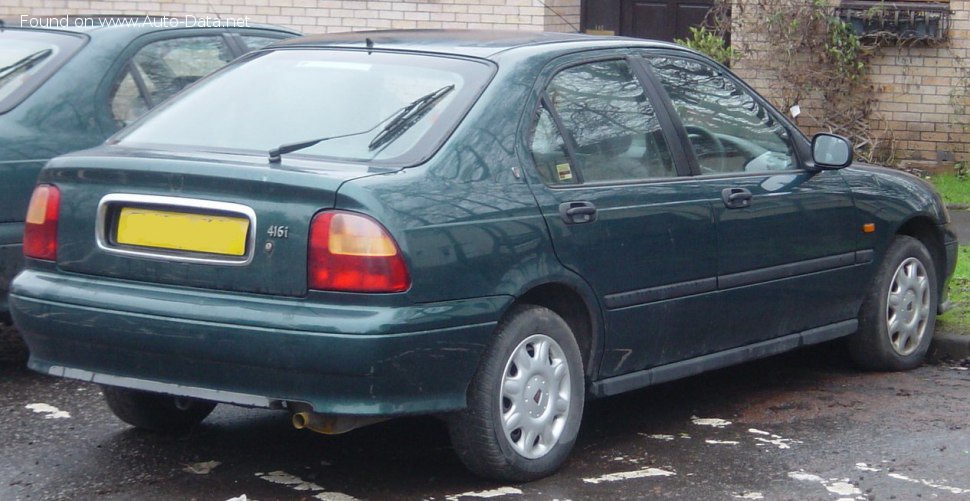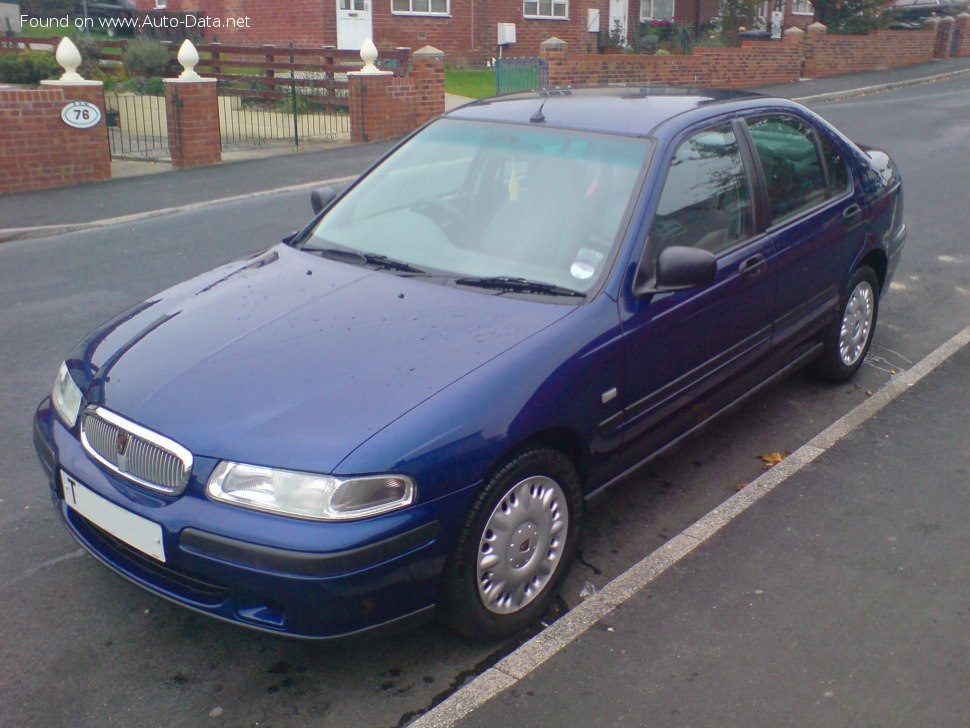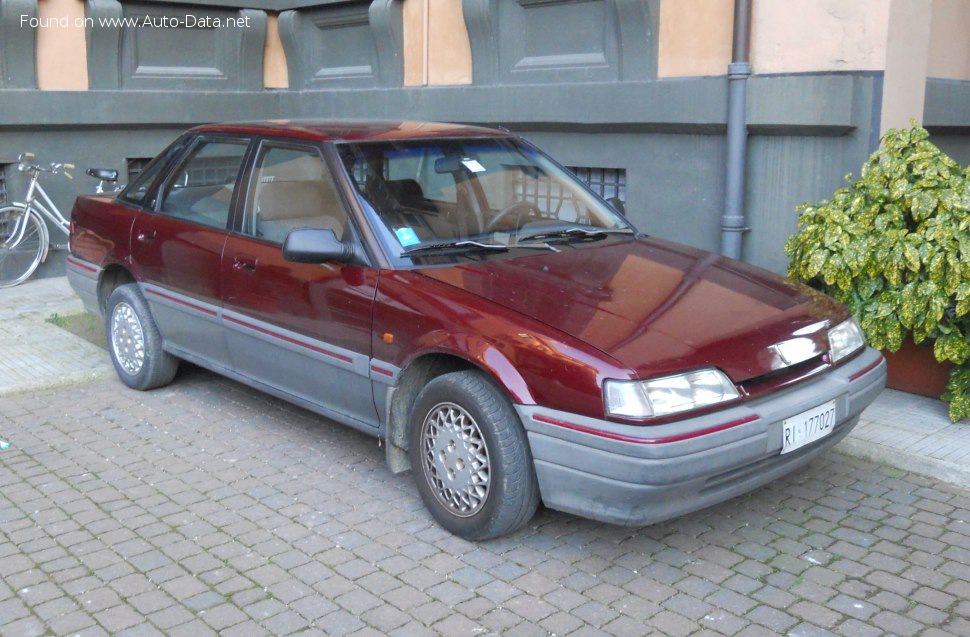
The Rover 400 series, specifically the XW generation produced from 1991 to 1995, represented a significant chapter in the British automaker’s history. Positioned in the highly competitive European C-segment (compact family car), the Rover 400 (XW) 418 TD (88 Hp) was a practical and efficient offering designed to appeal to buyers seeking a blend of comfort, traditional British styling, and robust, economical diesel performance. This particular variant, the 418 TD, was notable for its reliance on a well-regarded Peugeot-Citroën diesel engine, a strategic decision that underscored Rover’s efforts to provide competitive powertrain options in an increasingly demanding market.
Developed as part of a long-standing collaboration with Honda, the XW generation of the Rover 400 shared its underpinnings with the Honda Concerto. However, Rover applied its distinct styling cues and interior treatments to differentiate the vehicle, particularly appealing to a more conservative European clientele. The 418 TD model, with its four-door sedan body style and focus on fuel efficiency, became a popular choice for families and business users across the UK and continental Europe, where diesel engines were gaining considerable traction due to their lower running costs and improved torque characteristics. This article delves into the technical specifics, design philosophy, and market impact of this pragmatic yet quintessential early 1990s Rover.
Powertrain & Engine Architecture
At the heart of the Rover 400 (XW) 418 TD (88 Hp) was a robust 1.8-liter (1769 cm3 or 107.95 cu. in.) inline four-cylinder diesel engine, designated A8A (XUD7TE). This powerplant was sourced from PSA Peugeot Citroën, a testament to the era’s cross-manufacturer collaborations aimed at optimizing development costs and leveraging proven technologies. The engine featured an Overhead Camshaft (OHC) valvetrain with two valves per cylinder, a common and reliable configuration for diesel engines of the period.
Crucially, the engine was equipped with a turbocharger, a feature that significantly enhanced its performance over naturally aspirated diesel alternatives. This turbocharging allowed the 418 TD to produce a respectable 88 horsepower at 4300 rpm. More importantly for a diesel, it generated a healthy 133.5 lb.-ft. of torque at a low 2500 rpm. This ample low-end torque was instrumental in providing strong pulling power and a relaxed driving experience, particularly beneficial for highway cruising and carrying passengers or cargo.
Power was delivered to the front wheels via a smooth-shifting 5-speed manual transmission, a standard and reliable setup for compact cars of this vintage. In terms of acceleration, the 418 TD could achieve 0-60 mph in a competitive 11.2 seconds, with a top speed of 106.25 mph (171 km/h). While not a performance car, these figures were perfectly adequate for the everyday demands of a family sedan.
One of the Rover 400 418 TD’s most compelling attributes was its fuel economy. With a combined consumption rating of 38.6 US mpg (6.1 l/100 km), it offered excellent efficiency, particularly in an era before widespread hybrid or advanced common-rail diesel technologies. Urban driving yielded 35.6 US mpg (6.6 l/100 km), while extra-urban (highway) figures were an impressive 54.7 US mpg (4.3 l/100 km), making it a highly economical choice for long-distance travel. Its compression ratio of 22:1 and precombustion chamber injection system were characteristic of the diesel technology prevalent at the time, prioritizing durability and efficiency.
Driving Characteristics
The Rover 400 418 TD, with its 88 hp and 5-speed manual transmission, offered a driving experience geared towards practicality and relaxed cruising rather than outright performance. Compared to the higher-output petrol versions of the Rover 400, such as the 1.6i or 1.8i, the 418 TD felt noticeably slower in acceleration. However, the substantial low-end torque of the diesel engine provided a strong and usable powerband, making it well-suited for everyday driving conditions and overtaking maneuvers on the highway. The gear ratios were optimized for fuel efficiency and relaxed cruising, with a relatively long fifth gear designed to minimize engine speed at highway speeds.
Compared to a hypothetical Rover 400 418 TD equipped with an automatic transmission (which was not a common offering), the manual gearbox allowed for greater driver control and engagement. The automatic would have likely dulled the engine’s responsiveness and reduced fuel economy. The 5-speed manual provided a good balance between usability and efficiency, allowing drivers to extract the most from the engine’s torque characteristics. While not a sporty driving experience, the 418 TD offered a comfortable and predictable ride, making it a suitable choice for drivers prioritizing practicality and economy.
Equipment & Trim Levels
The Rover 400 (XW) 418 TD typically occupied a mid-range position within the Rover 400 lineup. Standard equipment generally included central locking, power steering, electric front windows, and a basic stereo system. Interior upholstery was typically cloth, with a focus on durability and comfort. The dashboard layout was functional and straightforward, featuring analog gauges and simple controls.
Optional extras available for the 418 TD included air conditioning, alloy wheels, upgraded stereo systems, and a sunroof. Higher trim levels, such as the “S” or “SE” variants, offered additional features like leather upholstery, wood trim, and more sophisticated audio systems. The 418 TD was often chosen by fleet buyers and company car drivers, so many examples were equipped with practical options like ABS brakes and upgraded suspension.
Chassis & Braking
The Rover 400 (XW) 418 TD utilized a conventional chassis setup for a front-wheel-drive compact sedan. The front suspension consisted of independent wishbones with coil springs and an anti-roll bar, providing a good balance between ride comfort and handling stability. The rear suspension employed a semi-independent twist beam setup with coil springs, which was a cost-effective and space-efficient solution.
The braking system featured disc brakes at both the front and rear wheels, providing reliable stopping power. Available Anti-lock Braking System (ABS) was a significant safety feature for the time, improving stopping performance and control under hard braking. The 418 TD’s curb weight of 2557.36 lbs. (1160 kg) contributed to its manageable handling characteristics. The steering was rack and pinion with hydraulic power assistance, offering a direct and responsive feel.
Market Reception & Comparison
Critics generally viewed the Rover 400 418 TD as a competent and practical family car. The diesel engine was praised for its fuel efficiency and low-end torque, making it well-suited for long-distance driving. However, some reviewers noted that the engine was somewhat noisy and lacked the refinement of some of its competitors. The Rover 400’s interior was generally considered to be well-appointed and comfortable, but some criticized its somewhat dated design.
Compared to other trims in the Rover 400 lineup, the 418 TD offered a compelling value proposition for drivers prioritizing economy and practicality. The petrol-powered versions offered more performance, but at the expense of fuel efficiency. The 418 TD also compared favorably to its rivals in terms of fuel economy and reliability. The Peugeot-Citroën diesel engine was known for its durability, and the Rover 400’s overall build quality was generally considered to be good.
Technical Specifications
| Attribute | Value |
| Brand | Rover |
| Model | 400 |
| Generation | 400 (XW) |
| Type (Engine) | 418 TD (88 Hp) |
| Start of Production | 1991 year |
| End of Production | 1995 year |
| Powertrain Architecture | Internal Combustion engine |
| Body Type | Sedan |
| Seats | 5 |
| Doors | 4 |
| Fuel Consumption (Urban) | 6.6 l/100 km (35.6 US mpg) |
| Fuel Consumption (Extra Urban) | 4.3 l/100 km (54.7 US mpg) |
| Fuel Consumption (Combined) | 6.1 l/100 km (38.6 US mpg) |
| Fuel Type | Diesel |
| Acceleration 0 – 60 mph | 11.2 sec |
| Acceleration 0 – 100 km/h | 11.8 sec |
| Maximum Speed | 171 km/h (106.25 mph) |
| Weight-to-Power Ratio | 13.2 kg/Hp (75.9 Hp/tonne) |
| Weight-to-Torque Ratio | 6.4 kg/Nm (156 Nm/tonne) |
| Power | 88 Hp @ 4300 rpm |
| Power per Liter | 49.7 Hp/l |
| Torque | 181 Nm @ 2500 rpm (133.5 lb.-ft. @ 2500 rpm) |
| Engine Layout | Front, Transverse |
| Engine Model/Code | A8A (XUD7TE) |
| Engine Displacement | 1769 cm3 (1.8 Liters / 107.95 cu. in.) |
| Number of Cylinders | 4 |
| Engine Configuration | Inline |
| Cylinder Bore | 80 mm (3.15 in.) |
| Piston Stroke | 88 mm (3.46 in.) |
| Compression Ratio | 22:1 |
| Number of Valves per Cylinder | 2 |
| Fuel Injection System | Precombustion chamber injection |
| Engine Aspiration | Turbocharger |
| Valvetrain | OHC |
| Engine Oil Capacity | 5 Liters (5.28 US qt) |
| Coolant Capacity | 8.8 Liters (9.3 US qt) |
| Kerb Weight | 1160 kg (2557.36 lbs.) |
| Max. Weight | 1610 kg (3549.44 lbs.) |
| Max Load | 450 kg (992.08 lbs.) |
| Trunk (Boot) Space – Minimum | 410 Liters (14.48 cu. ft.) |
| Fuel Tank Capacity | 55 Liters (14.53 US gal) |
| Length | 4370 mm (172.05 in.) |
| Width | 1680 mm (66.14 in.) |
| Height | 1400 mm (55.12 in.) |
| Wheelbase | 2550 mm (100.39 in.) |
| Front Track | 1475 mm (58.07 in.) |
| Rear (Back) Track | 1470 mm (57.87 in.) |
| Drivetrain Architecture | Front-wheel drive (Internal Combustion engine drives front wheels) |
| Drive Wheel | Front wheel drive |
| Number of Gears and Type of Gearbox | 5 gears, Manual transmission |
| Front Suspension | Wishbone |
| Rear Suspension | Coil spring |
| Front Brakes | Disc |
| Rear Brakes | Disc |
| Assisting Systems | ABS (Anti-lock braking system) |
| Steering Type | Steering rack and pinion |
| Power Steering | Hydraulic Steering |
| Tires Size | 175/65 R13 |
Legacy
The Rover 400 (XW) 418 TD (88 Hp) holds a respectable position among well-maintained classic cars. The XUD7TE engine, when properly maintained, is known for its longevity and reliability. However, as with any vehicle of this age, potential buyers should be aware of common issues such as corrosion, wear and tear on suspension components, and potential problems with the fuel injection system.
In the used car market, the 418 TD typically commands modest prices, reflecting its age and the Rover brand’s overall reputation. However, well-preserved examples with low mileage and a complete service history are becoming increasingly sought after by enthusiasts and collectors. The 418 TD represents a unique blend of British styling, French engineering, and practical functionality, making it a charming and economical classic car for those seeking a taste of 1990s motoring.