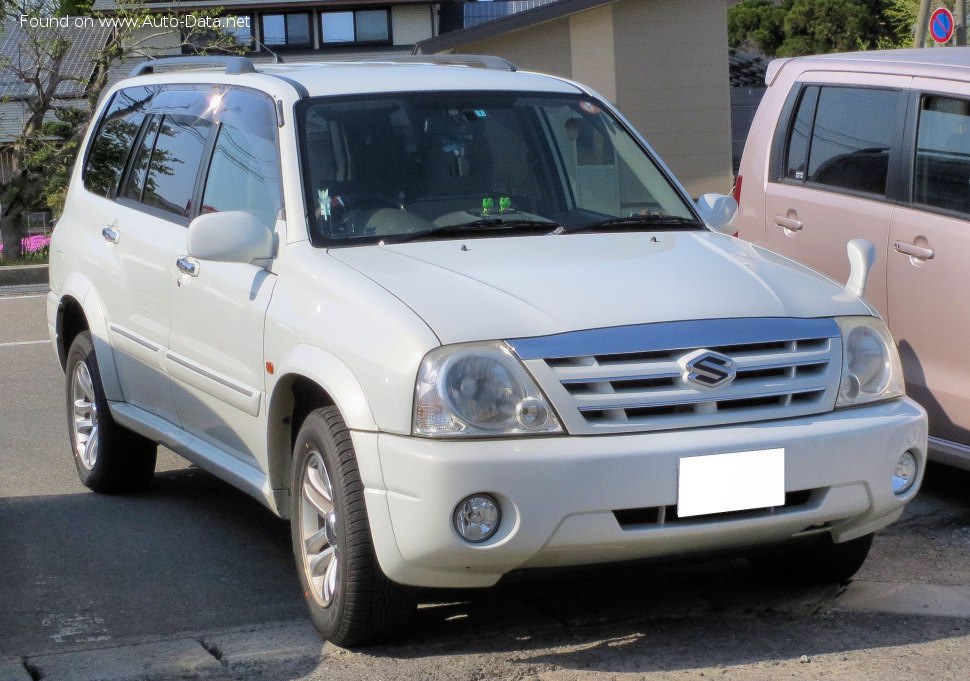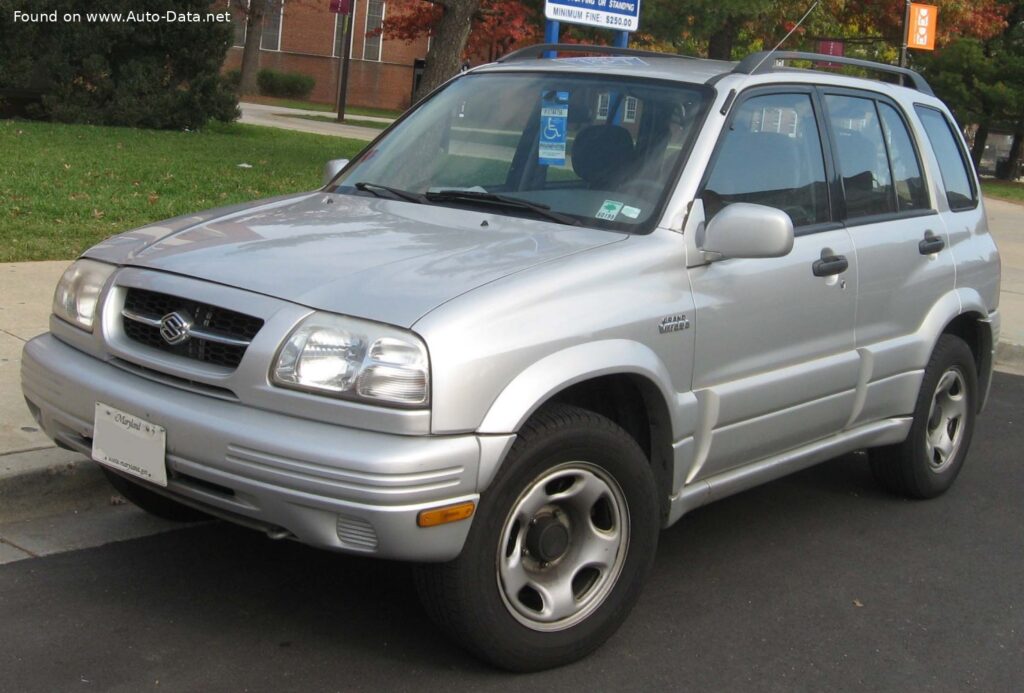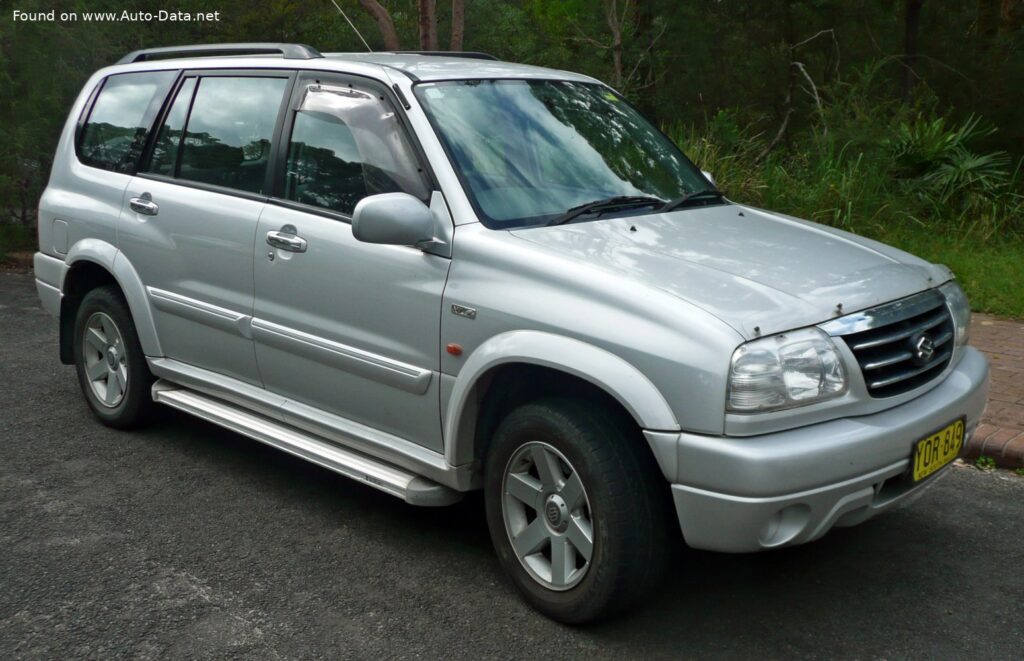
The Suzuki Grand Vitara XL-7 (HT) represents a significant evolution in Suzuki’s sport utility vehicle (SUV) lineup, bridging the gap between compact, more utilitarian offerings and the burgeoning demand for family-friendly, spacious SUVs in the late 1990s and early 2000s. Introduced in 1998, the XL-7 was an extended wheelbase variant of the popular Grand Vitara, designed to offer increased passenger and cargo capacity, often with the option for a third row of seating (though the specific configuration detailed here is a 5-seater). It positioned Suzuki as a more serious competitor in the growing mid-size SUV segment, appealing to buyers who needed more room than the standard Grand Vitara but still appreciated Suzuki’s reputation for ruggedness and off-road capability. Produced until 2005, this generation of the XL-7, particularly the 2.7 i V6 (172 Hp) 4WD Automatic model, highlighted Suzuki’s commitment to delivering a versatile and capable vehicle that could handle both daily commutes and adventurous excursions.
Powertrain & Engine Architecture
Under the hood, the Suzuki Grand Vitara XL-7 (HT) in this configuration featured a robust 2.7-liter (2737 cm³ or 167.02 cu. in.) H27A V6 engine. This naturally aspirated, multi-port manifold injection powerplant was engineered for a blend of smooth power delivery and durability. With a DOHC (Double Overhead Camshaft) valvetrain and four valves per cylinder, the engine produced a respectable 172 horsepower at 5500 rpm and 177.75 lb.-ft. of torque at 4000 rpm. This output was competitive for its class at the time, offering sufficient grunt for highway cruising and light towing, while also providing adequate power for its intended off-road capabilities.
The H27A engine utilizes a cast iron block and aluminum cylinder heads, a common construction for V6 engines of this era, balancing durability with weight reduction. The multi-port fuel injection system delivers fuel directly to each intake port, optimizing combustion efficiency and contributing to smooth engine operation. The DOHC valvetrain, with its four valves per cylinder, enhances volumetric efficiency, allowing for increased airflow and improved power output. The engine’s longitudinal mounting within the chassis contributes to a balanced weight distribution, crucial for handling and stability, particularly in a four-wheel-drive vehicle.
Power was routed through a conventional and reliable 4-speed automatic transmission. While not the most advanced gearbox by today’s standards, this automatic unit was well-suited to the engine’s torque curve, providing smooth shifts and predictable performance. The transmission features a torque converter for smooth engagement and multiplication of engine torque, particularly at lower speeds. The 4WD system is a full-time four-wheel-drive system, providing constant power to all four wheels for enhanced traction in various conditions. A transfer case allows for selecting between 4H (high range) and 4L (low range) for more demanding off-road situations.
Driving Characteristics
The 2.7L V6 and 4-speed automatic combination in the XL-7 delivered a driving experience that prioritized usability and capability over outright sportiness. Acceleration from 0 to 60 mph took approximately 10 seconds, which was adequate for merging onto highways and passing slower traffic, but not particularly quick compared to some competitors. The engine’s torque peak at 4000 rpm provided sufficient pulling power for everyday driving and light towing, but required downshifting for more aggressive acceleration.
Compared to the standard Grand Vitara’s smaller engines, the 2.7L V6 offered a noticeable improvement in performance, particularly when fully loaded with passengers and cargo. The automatic transmission, while not offering the driver engagement of a manual gearbox, provided smooth and predictable shifts, making it well-suited for comfortable cruising. The 4WD system instilled confidence in slippery conditions, providing enhanced traction on gravel, snow, or mud. However, the full-time 4WD system did contribute to a slight decrease in fuel economy compared to two-wheel-drive models.
The XL-7’s gear ratios were optimized for a balance of acceleration and fuel efficiency. First gear provided ample torque for starting from a standstill, while the higher gears allowed for relaxed highway cruising. The transmission’s shift points were programmed to prioritize smooth operation and fuel economy, rather than aggressive performance. Overall, the driving experience was characterized by a comfortable ride, predictable handling, and a sense of security in various driving conditions.
Equipment & Trim Levels
The Suzuki Grand Vitara XL-7 (HT) 2.7 i V6 4WD Automatic typically occupied a mid-range position within the XL-7 lineup. Standard equipment generally included air conditioning, power windows and locks, a CD player, and cloth upholstery. Safety features such as Anti-lock Braking System (ABS) were also standard. The interior was designed with practicality in mind, featuring durable materials and a functional layout.
Optional extras available for this trim included a sunroof, upgraded audio system, leather upholstery, and alloy wheels. Some models also offered features such as a rear cargo organizer and a tow package. The dashboard configuration was relatively straightforward, with clearly labeled controls and a user-friendly interface. The instrument cluster provided essential information such as speed, engine rpm, fuel level, and coolant temperature.
The 5-seat configuration offered ample space for passengers, with comfortable seating and adequate legroom. The rear seats could be folded down to create a larger cargo area, providing versatility for carrying larger items. The interior trim levels varied depending on the specific package selected, with higher-end trims featuring more luxurious materials and finishes.
Chassis & Braking
The XL-7 was built on a robust ladder-frame chassis, a hallmark of more traditional SUVs, which contributed to its durability and off-road prowess. This body-on-frame construction provided a solid foundation for the vehicle, allowing it to withstand the stresses of off-road driving and heavy loads. Suspension duties were handled by an independent wishbone setup at the front, offering a good balance of ride comfort and handling, while the rear utilized a coil spring arrangement, designed to withstand heavier loads and provide articulation for uneven terrain.
Braking performance was managed by ventilated discs at the front and drum brakes at the rear, a common setup for SUVs of this period. The ventilated discs provided improved heat dissipation, enhancing braking performance during repeated use. An Anti-lock Braking System (ABS) was included as a crucial safety feature, enhancing control during emergency braking by preventing wheel lockup. The steering system was a hydraulic rack-and-pinion setup, providing direct feedback and ease of maneuverability for a vehicle of its size.
The 235/60 R16 tires offered a good compromise between on-road grip and off-road capability. The tire tread pattern was designed to provide adequate traction on both paved and unpaved surfaces. The XL-7’s suspension was tuned to provide a comfortable ride on paved roads while still offering sufficient articulation for off-road driving. Stabilizer bars were included at both the front and rear to reduce body roll during cornering.
Market Reception & Comparison
Critics generally viewed the Suzuki Grand Vitara XL-7 (HT) 2.7 i V6 Automatic as a capable and practical SUV, offering a good value for the money. Its V6 engine and 4WD system were praised for providing ample power and traction, while its spacious interior and comfortable ride were also noted as strengths. However, some critics pointed out that its interior lacked the refinement of some competitors and that its fuel economy was not particularly impressive.
Compared to other trims in the XL-7 lineup, the 2.7L V6 Automatic offered a significant performance advantage over the smaller four-cylinder engines. It provided smoother acceleration, more effortless highway cruising, and greater towing capacity. However, it also came with a higher price tag and slightly lower fuel economy. Compared to competitors such as the Toyota RAV4 and Honda CR-V, the XL-7 offered a more traditional SUV feel and greater off-road capability, but lacked the same level of refinement and fuel efficiency.
In terms of reliability, the XL-7 generally proved to be a dependable vehicle, with the 2.7L V6 engine and 4-speed automatic transmission being relatively trouble-free. However, like any vehicle, it was susceptible to certain issues, such as oil leaks and corrosion. Overall, the XL-7 offered a compelling combination of performance, capability, and value, making it a popular choice for buyers seeking a versatile and rugged SUV.
Technical Specifications: Suzuki Grand Vitara XL-7 (HT) 2.7 i V6 (172 Hp) 4WD Automatic
| Category | Specification |
| Brand | Suzuki |
| Model | Grand Vitara |
| Generation | Grand Vitara XL-7 (HT) |
| Type (Engine) | 2.7 i V6 (172 Hp) 4WD Automatic |
| Production Start | 1998 year |
| Production End | 2005 year |
| Powertrain Architecture | Internal Combustion engine |
| Body type | SUV |
| Seats | 5 |
| Doors | 5 |
| Fuel Consumption (Urban) | 15.1 US mpg (15.6 l/100 km) |
| Fuel Consumption (Extra Urban) | 23.8 US mpg (9.9 l/100 km) |
| Fuel Type | Petrol (Gasoline) |
| Acceleration 0 – 60 mph | 10 seconds |
| Maximum Speed | 108.74 mph (175 km/h) |
| Weight-to-Power Ratio | 10 kg/Hp (100.3 Hp/tonne) |
| Weight-to-Torque Ratio | 7.1 kg/Nm (140.5 Nm/tonne) |
| Power | 172 Hp @ 5500 rpm |
| Power per liter | 62.8 Hp/l |
| Torque | 177.75 lb.-ft. @ 4000 rpm (241 Nm @ 4000 rpm) |
| Engine Layout | Front, Longitudinal |
| Engine Model/Code | H27A |
| Engine Displacement | 2.7 liters (2737 cm³ / 167.02 cu. in.) |
| Number of Cylinders | 6 |
| Engine Configuration | V-engine |
| Cylinder Bore | 3.46 inches (88 mm) |
| Piston Stroke | 2.95 inches (75 mm) |
| Compression Ratio | 9.4:1 |
| Valves per Cylinder | 4 |
| Fuel Injection System | Multi-port manifold injection |
| Engine Aspiration | Naturally aspirated engine |
| Valvetrain | DOHC |
| Kerb Weight | 3780.93 lbs (1715 kg) |
| Max. Weight | 4916.31 lbs (2230 kg) |
| Fuel Tank Capacity | 16.91 US gallons (64 l) |
| Length | 183.66 inches (4665 mm) |
| Width | 70.08 inches (1780 mm) |
| Height | 67.99 inches (1727 mm) |
| Wheelbase | 110.24 inches (2800 mm) |
Legacy
The Suzuki Grand Vitara XL-7 (HT) 2.7 i V6 Automatic has proven to be a relatively reliable vehicle in the long term, with many examples still on the road today. The H27A V6 engine is known for its durability, and the 4-speed automatic transmission is generally considered to be robust. However, as with any vehicle of this age, regular maintenance is crucial to prevent issues such as oil leaks, corrosion, and worn suspension components.
In the used car market, the XL-7 remains an affordable and practical option for buyers seeking a capable SUV. Its spacious interior, V6 power, and 4WD system make it well-suited for families and those who need a vehicle that can handle various driving conditions. While it may not offer the same level of refinement or fuel efficiency as newer SUVs, its rugged construction and proven reliability make it a compelling choice for those who prioritize durability and value. The XL-7’s legacy is one of a capable and dependable SUV that provided a solid alternative to more mainstream competitors.