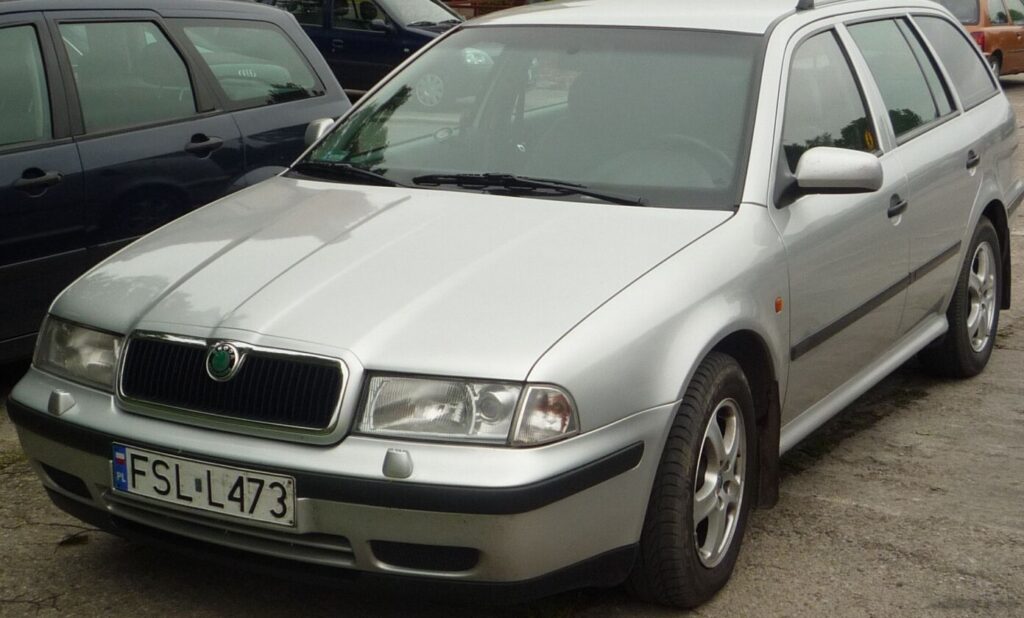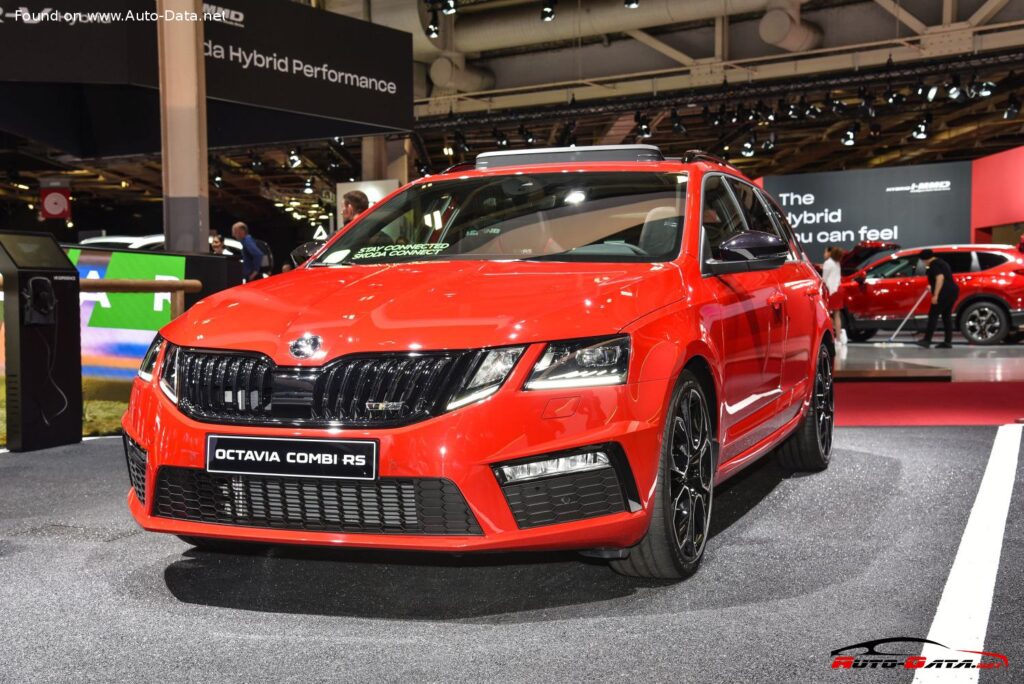
The Skoda Octavia, a cornerstone of the Czech automaker’s lineup and a key player within the Volkswagen Group, represents a highly successful blend of practicality, value, and robust engineering. While not officially sold in the United States, the Octavia is a dominant force in the European compact car segment, particularly in its Combi (station wagon) guise. The third generation, known as the Octavia III, received a significant facelift in 2017, introducing updated styling and enhanced technology. Among its diverse powertrain options, the Skoda Octavia III Combi (facelift 2017) 1.5 G-TEC (130 Hp) CNG DSG variant, produced specifically in 2019, stands out for its innovative bi-fuel system, combining gasoline and Compressed Natural Gas (CNG) to deliver exceptional fuel economy and reduced emissions. This particular model epitomizes Skoda’s “Simply Clever” philosophy, offering ample space, thoughtful features, and environmentally conscious performance.
Powertrain and Engine Architecture of the 1.5 G-TEC
At the heart of this efficient station wagon is the 1.5-liter G-TEC engine, designated by the code DHFA. This inline four-cylinder engine, with a displacement of 1498 cubic centimeters (91.41 cubic inches), is engineered for optimal performance using both gasoline and CNG. Leveraging direct injection and a turbocharger, the engine produces a respectable 130 horsepower when running on CNG. This power output translates to a power-to-weight ratio of 10.1 kg per horsepower, or approximately 98.9 horsepower per ton, ensuring adequate responsiveness for daily driving and highway cruising.
The torque delivery is equally impressive for an engine of this size, generating 200 Newton-meters (approximately 147.5 pound-feet) across a broad rev range, from 1400 to 4000 rpm. This wide torque band contributes to the vehicle’s flexibility and ease of driving, especially when paired with the sophisticated 7-speed DSG automatic transmission. The DSG (Direct Shift Gearbox) is renowned for its quick, smooth shifts, balancing performance with fuel efficiency. The Octavia G-TEC accelerates from 0 to 60 mph in a competitive 9.6 seconds, with a top speed reaching 125.52 mph (202 km/h), making it a capable performer on European highways.
The G-TEC variant’s primary appeal lies in its outstanding fuel economy and environmental credentials. The bi-fuel system allows for seamless switching between gasoline and CNG. When running on CNG, the combined fuel consumption is rated at an impressive 5.4 liters per 100 kilometers, translating to approximately 43.6 US miles per gallon. This efficiency is complemented by remarkably low CO2 emissions of just 96 grams per kilometer, meeting the stringent Euro 6 AG emission standard. The vehicle carries a modest 10.5-liter (2.77 US gallon) gasoline tank, primarily for backup, while its substantial 17.7 kg CNG cylinder capacity allows for extended range on the cleaner, more economical fuel. This dual-fuel approach significantly reduces running costs and environmental impact, making it a compelling choice for eco-conscious consumers and fleet operators in regions with developed CNG infrastructure.
Driving Characteristics of the 1.5 G-TEC Automatic
The 1.5 G-TEC with the 7-speed DSG offers a driving experience geared towards efficiency and comfort rather than outright performance. Compared to the 1.8 TSI gasoline variants or the 2.0 TDI diesel models in the Octavia III lineup, the G-TEC provides noticeably less acceleration. The 1.8 TSI, for example, offered around 180 hp and significantly quicker 0-60 mph times. However, the G-TEC’s broad torque band and the DSG’s quick shifts mitigate some of the power deficit, making it feel responsive enough for everyday driving. The DSG transmission is programmed for fuel economy, often upshifting quickly to maintain lower engine speeds. This can sometimes result in the engine feeling slightly strained during overtaking maneuvers, requiring a downshift for more immediate power. The manual transmission, available on other Octavia models, offered a more engaging driving experience but at the cost of fuel efficiency. The G-TEC’s automatic transmission prioritizes smooth operation and ease of use, making it ideal for urban commutes and long highway journeys.
Equipment & Trim Levels
The Skoda Octavia III Combi (facelift 2017) 1.5 G-TEC (130 Hp) CNG DSG typically came equipped as a mid-range trim level, offering a good balance of features and affordability. Standard equipment generally included air conditioning, a touchscreen infotainment system with Bluetooth connectivity, alloy wheels, and a multi-function steering wheel. Safety features such as ABS, Electronic Stability Control (ESC), and multiple airbags were also standard. Interior upholstery was typically fabric, with options for higher-grade materials available as upgrades. Optional extras included features like a larger touchscreen display with navigation, parking sensors, automatic climate control, heated seats, and a panoramic sunroof. The G-TEC variant often came with specific badging and trim elements to distinguish it from other Octavia models. Compared to the base trims, the G-TEC offered a more comprehensive equipment list, while remaining more affordable than the top-of-the-line Laurin & Klement models.
Chassis & Braking
The Octavia G-TEC features an independent McPherson strut front suspension with coil springs and an anti-roll bar, providing a comfortable yet composed ride. The rear suspension utilizes a multi-link setup, further enhancing ride quality and handling. The braking system consists of ventilated discs at the front and solid discs at the rear, complemented by an Anti-lock Braking System (ABS) for enhanced safety. The vehicle rides on 205/55 R16 tires mounted on 6.5J x 16-inch wheels, offering a good balance of grip and ride comfort. The front-wheel-drive architecture ensures predictable handling and efficiency. Compared to higher-performance Octavia variants, the G-TEC’s suspension was tuned for comfort rather than sporty handling. Stabilizer bar thickness was typically smaller than those found on the vRS models, resulting in more body roll during cornering. The braking system, while adequate for the vehicle’s weight and performance, was not as powerful as the larger brakes found on the higher-spec Octavia models.
Market Reception & Comparison
Critics generally viewed the Skoda Octavia III Combi 1.5 G-TEC favorably, praising its fuel efficiency, low emissions, and spacious interior. The bi-fuel system was seen as a clever solution for reducing running costs and environmental impact, particularly in countries with well-developed CNG infrastructure. However, some reviewers noted the engine’s lack of outright power compared to other Octavia variants. Fuel economy was a key strength, consistently exceeding that of comparable gasoline and diesel models. Reliability was generally good, with the 1.5 TSI engine proving to be a robust and dependable unit. Compared to the 1.8 TSI, the G-TEC offered lower running costs but less performance. Compared to the 2.0 TDI, the G-TEC provided a cleaner alternative, albeit with slightly lower fuel economy when running on gasoline. The G-TEC’s target audience was primarily eco-conscious buyers and fleet operators seeking a practical and economical station wagon.
Technical Specifications: Skoda Octavia III Combi (facelift 2017) 1.5 G-TEC (130 Hp) CNG DSG
| Category | Specification |
| Brand | Skoda |
| Model | Octavia |
| Generation | Octavia III Combi (facelift 2017) |
| Type (Engine) | 1.5 G-TEC (130 Hp) CNG DSG |
| Production Years | 2019 – 2019 |
| Body Type | Station wagon (estate) |
| Seats | 5 |
| Doors | 5 |
| Performance Specs | |
| Fuel Type | Petrol / CNG |
| Fuel Consumption (Combined) | 5.4 l/100 km (43.6 US mpg) |
| Fuel Consumption (Urban) | 6.8 l/100 km (34.6 US mpg) |
| Fuel Consumption (Extra Urban) | 4.6 l/100 km (51.1 US mpg) |
| CO2 Emissions | 96 g/km |
| Emission Standard | Euro 6 AG |
| Acceleration 0-60 mph | 9.6 seconds |
| Maximum Speed | 125.52 mph (202 km/h) |
| Engine Specs | |
| Power (CNG) | 130 Hp |
| Torque (CNG) | 200 Nm @ 1400-4000 rpm (147.5 lb-ft) |
| Engine Model/Code | DHFA |
| Engine Displacement | 1498 cm3 (91.41 cu. in.) |
| Number of Cylinders | 4 |
| Engine Configuration | Inline |
| Fuel Injection System | Direct injection |
| Engine Aspiration | Turbocharger |
| Engine Oil Capacity | 4.3 liters (4.54 US qt) |
| Engine Systems | Particulate filter |
| Dimensions & Weights | |
| Kerb Weight | 1314 kg (2896.87 lbs) |
| Max. Weight (GVWR) | 1865 kg (4111.62 lbs) |
| Max Load | 551 kg (1214.75 lbs) |
| Trunk Space (Minimum) | 480 liters (16.95 cu. ft.) |
| Trunk Space (Maximum) | 1610 liters (56.86 cu. ft.) |
| Fuel Tank Capacity (Petrol) | 10.5 liters (2.77 US gal) |
| CNG Cylinder Capacity | 17.7 kg |
| Max. Roof Load | 75 kg (165.35 lbs) |
| Permitted Trailer Load with Brakes (12%) | 1400 kg (3086.47 lbs) |
| Permitted Trailer Load without Brakes | 690 kg (1521.19 lbs) |
| Length | 4667 mm (183.74 in.) |
| Width | 1814 mm (71.42 in.) |
| Width including mirrors | 2017 mm (79.41 in.) |
| Height | 1462 mm (57.56 in.) |
| Wheelbase | 2680 mm (105.51 in.) |
| Front Track | 1545 mm (60.83 in.) |
| Rear Track | 1536 mm (60.47 in.) |
| Front Overhang | 890 mm (35.04 in.) |
| Ride Height (Ground Clearance) | 141 mm (5.55 in.) |
| Minimum Turning Circle | 10.6 m (34.78 ft) |
| Drivetrain, Brakes & Suspension | |
| Drivetrain Architecture | Front wheel drive, Internal Combustion engine |
| Drive Wheel | Front wheel drive |
| Gearbox Type | 7 gears, automatic transmission DSG |
| Front Suspension | Independent, McPherson with coil spring and anti-roll bar |
| Front Brakes | Ventilated discs |
| Rear Brakes | Disc |
| Assisting Systems | ABS (Anti-lock braking system) |
| Tires Size | 205/55 R16 |
| Wheel Rims Size | 6.5J x 16 |
Legacy
The Skoda Octavia has long been lauded in Europe as a smart, no-nonsense choice for families and businesses alike. Its reputation for robust build quality, reliability, and exceptional value within the Volkswagen Group stable has solidified its position as a segment leader. The third-generation Octavia, particularly after its 2017 facelift, continued this tradition, offering modern technology, improved safety features, and refined driving dynamics. The introduction of specific variants like the 1.5 G-TEC underscored Skoda’s commitment to offering diverse, efficient powertrain options to meet evolving market demands and increasingly stringent emission regulations. The Skoda Octavia III Combi (facelift 2017) 1.5 G-TEC (130 Hp) CNG DSG specifically carved out a niche for itself by appealing to buyers prioritizing low running costs and environmental responsibility. In markets like Germany, Italy, and the Czech Republic, where CNG refueling infrastructure is more developed, the G-TEC models offered significant fuel cost savings compared to traditional gasoline or diesel vehicles. Its low CO2 emissions also made it attractive for corporate fleets and individuals seeking tax incentives or simply a greener alternative. Competitors in this segment, such as the Volkswagen Golf Variant (a close cousin within the VW Group), Ford Focus Estate, Opel Astra Sports Tourer, and Peugeot 308 SW, often offered similar practicality but few matched the Octavia’s specific blend of CNG efficiency, space, and competitive pricing. Although this specific 2019 model year variant had a relatively short production run before the introduction of the fourth-generation Octavia, its impact was significant in demonstrating the viability and benefits of natural gas vehicles. It reinforced Skoda’s image as a brand that delivers practical, intelligent solutions for everyday mobility. The Octavia G-TEC models, known for their solid engineering and “Simply Clever” features – such as an ice scraper in the fuel flap or an umbrella under the passenger seat – contributed to the Octavia’s overall legacy as a highly competent and beloved vehicle in its primary markets. Its success highlighted that efficiency and environmental consciousness could be achieved without compromising on the practicality and comfort that buyers expect from a modern station wagon.