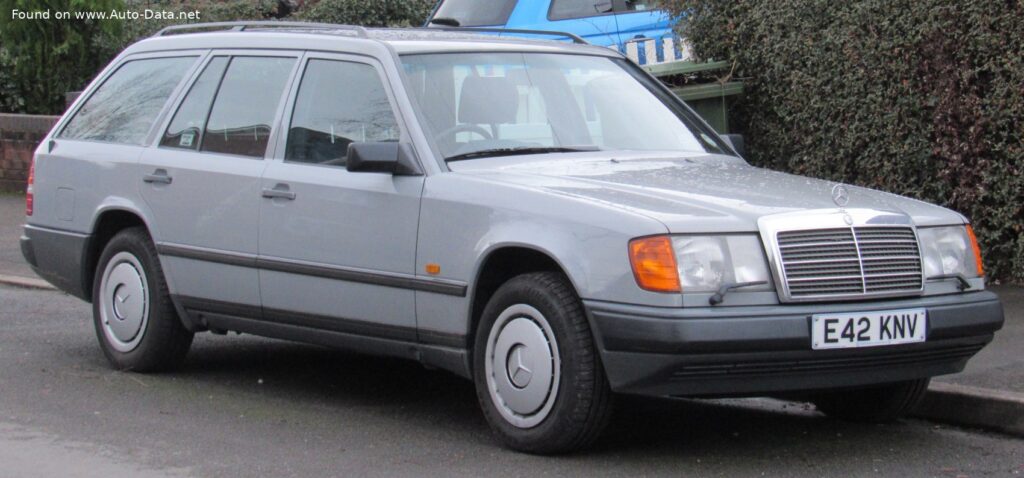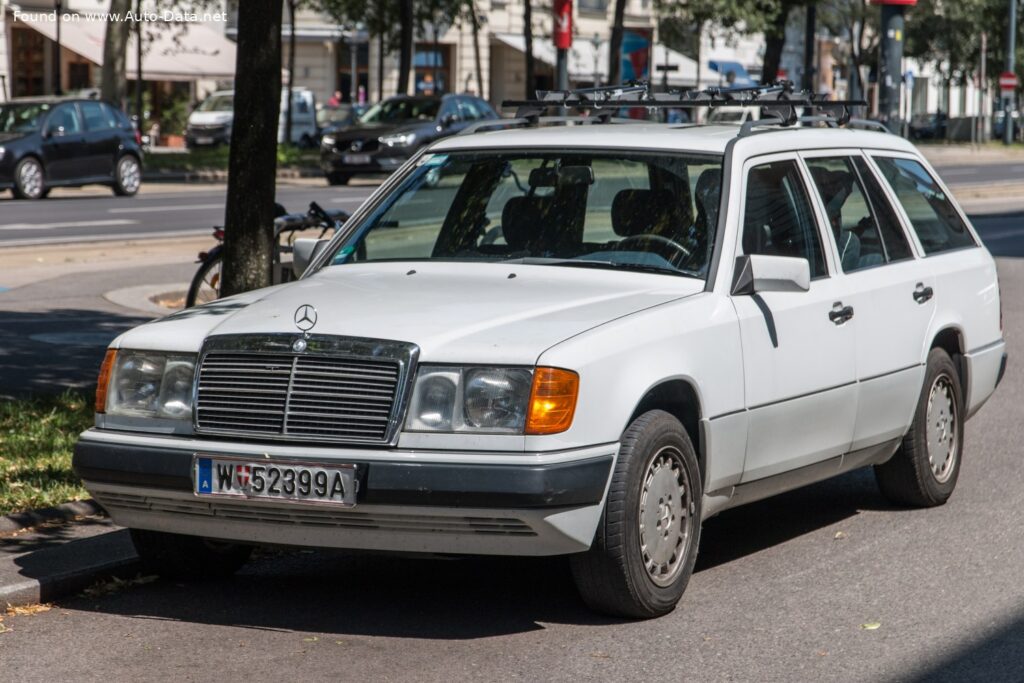
The Mercedes-Benz S124 280 TE, produced from July 1992 to July 1993, represents a refined and powerful iteration of the W124 series station wagon. The W124, manufactured between 1984 and 1995, is celebrated for its German engineering and enduring design. The S124 280 TE, often referred to as an “estate” in European markets, catered to buyers seeking a practical luxury vehicle without compromising on safety or driving dynamics. While the W124 sedan enjoyed broader distribution, including the United States, the 280 TE, especially equipped with a manual transmission, was primarily a European offering, lauded for its robust inline-six engine and exceptional build quality.
Development & History
The W124 series was conceived as a successor to the W123, aiming to improve upon its predecessor’s already high standards of quality and refinement. The W124 utilized a new platform, though it retained the rear-wheel-drive layout of the W123. The 1989 facelift brought significant updates, including subtle styling revisions and, crucially, advancements in powertrain technology. The S124 wagon body style was introduced as part of the initial W124 lineup, offering a more versatile alternative to the sedan and coupe models. The 280 TE specifically benefited from these updates, receiving the more powerful and technologically advanced M104 engine.
Powertrain & Performance
The Mercedes-Benz S124 280 TE is powered by the M 104 E 28 engine, a 2.8-liter (2799 cm3 or 170.81 cu. in.) inline-six cylinder unit (engine code M 104.942). This engine featured a Dual Overhead Camshaft (DOHC) valvetrain with four valves per cylinder, a modern configuration for its time that optimized airflow and combustion efficiency. A compression ratio of 10:1 and a multi-port manifold fuel injection system contributed to smooth power delivery and responsiveness. The engine produced 197 horsepower at 5500 rpm, achieving a power-per-liter output of 70.4 horsepower per liter. Torque peaked at 270 Nm (199.14 lb.-ft.) at 3750 rpm, providing strong pulling power across a wide range of engine speeds.
Despite a kerb weight of 3505.35 lbs. (1590 kg), the 280 TE offered commendable performance. Acceleration from 0 to 60 mph was achieved in 8.6 seconds (0-100 km/h in 9.1 seconds), and the top speed was rated at 135.46 mph (218 km/h). Power was delivered to the rear wheels through a 5-speed manual transmission, appealing to drivers who preferred a more engaging experience. Fuel economy was estimated at 15.9 US mpg in urban driving and 28.3 US mpg on the highway, with a 19.02 US gallon (72-liter) fuel tank providing a substantial cruising range.
Chassis & Handling
The S124 280 TE’s chassis was engineered for a balance of ride comfort and handling precision. The front suspension utilized a wishbone setup, while the rear featured an independent multi-link suspension, a hallmark of the W124 series. This sophisticated rear suspension design minimized body roll and maintained tire contact with the road, even when the vehicle was fully loaded. Braking was handled by ventilated discs at the front and disc brakes at the rear, supported by an Anti-lock Braking System (ABS) as standard equipment. The hydraulic power steering, employing a cone worm with recirculation balls, provided precise and predictable control. The longitudinal engine placement contributed to balanced weight distribution, further enhancing handling characteristics.
Design & Interior
The S124 generation, particularly after the 1989 facelift, embodied Mercedes-Benz’s philosophy of functional elegance. The exterior design, penned by Bruno Sacco, featured clean lines, a robust stance, and an aerodynamic profile. The S124 wagon’s dimensions – 187.6 inches in length, 68.5 inches in width, and 58.62 inches in height, with a 110.24-inch wheelbase – contributed to a spacious and comfortable interior. The design prioritized practicality, with a low loading sill and a wide-opening tailgate.
Inside, the 280 TE showcased ergonomic design and high-quality materials. The dashboard layout was straightforward and intuitive, with clear instrumentation. The build quality was robust, evident in the solid feel of the switchgear and durable upholstery. Seats were designed for long-distance comfort, and visibility was excellent. Facelift models often featured updated trim options and minor interior refinements. The interior emphasized a sense of understated luxury and durability, reflecting Mercedes-Benz’s commitment to long-term ownership satisfaction.
Variants & Special Editions
The S124 wagon was offered in various trim levels, typically differentiated by interior appointments and optional equipment. While not specifically designated as a “performance” variant, the 280 TE, with its more powerful engine, represented a step up in performance compared to the lower-displacement models. The availability of a manual transmission further enhanced the driving experience for enthusiasts. Limited-edition models were occasionally produced with unique color combinations or interior features, but the 280 TE itself was not typically offered as a special edition.
Technical Specifications
| Category | Specification |
| General Information | Mercedes-Benz |
| Model | W124 S124 (facelift 1989) 280 TE (197 Hp) |
| Production Start | July, 1992 |
| Production End | July, 1993 |
| Powertrain Architecture | Internal Combustion Engine |
| Body Type | Station Wagon (Estate) |
| Seats | 5 |
| Doors | 5 |
| Performance Specifications | |
| Fuel Consumption (Urban) | 14.8 l/100 km (15.9 US mpg) |
| Fuel Consumption (Extra Urban) | 8.3 l/100 km (28.3 US mpg) |
| Fuel Type | Petrol (Gasoline) |
| Acceleration 0 – 60 mph | 8.6 sec |
| Acceleration 0 – 100 km/h | 9.1 sec |
| Maximum Speed | 218 km/h (135.46 mph) |
| Weight-to-Power Ratio | 8.1 kg/Hp (123.9 Hp/tonne) |
| Weight-to-Torque Ratio | 5.9 kg/Nm (169.8 Nm/tonne) |
| Engine Specifications | |
| Power | 197 Hp @ 5500 rpm |
| Power per Liter | 70.4 Hp/l |
| Torque | 270 Nm @ 3750 rpm (199.14 lb.-ft. @ 3750 rpm) |
| Engine Layout | Front, Longitudinal |
| Engine Model/Code | M 104 E 28 / 104.942 |
| Engine Displacement | 2799 cm3 (170.81 cu. in.) |
| Number of Cylinders | 6 |
| Engine Configuration | Inline |
| Cylinder Bore | 89.9 mm (3.54 in.) |
| Piston Stroke | 73.5 mm (2.89 in.) |
| Compression Ratio | 10:1 |
| Number of Valves per Cylinder | 4 |
| Fuel Injection System | Multi-port manifold injection |
| Engine Aspiration | Naturally aspirated engine |
| Valvetrain | DOHC |
| Engine Oil Capacity | 7.5 l (7.93 US qt) |
| Coolant Capacity | 9 l (9.51 US qt) |
| Dimensions, Volume & Weights | |
| Kerb Weight | 1590 kg (3505.35 lbs.) |
| Max. Weight (GVWR) | 2200 kg (4850.17 lbs.) |
| Max Load | 610 kg (1344.82 lbs.) |
| Fuel Tank Capacity | 72 l (19.02 US gal) |
| Length | 4765 mm (187.6 in.) |
| Width | 1740 mm (68.5 in.) |
| Height | 1489 mm (58.62 in.) |
| Wheelbase | 2800 mm (110.24 in.) |
| Front Track | 1497 mm (58.94 in.) |
| Rear (Back) Track | 1497 mm (58.94 in.) |
| Drivetrain, Brakes & Suspension | |
| Drivetrain Architecture | Internal combustion engine (ICE) drives the rear wheels of the vehicle. |
| Drive Wheel | Rear wheel drive |
| Number of Gears & Gearbox Type | 5 gears, manual transmission |
| Front Suspension | Wishbone |
| Rear Suspension | Independent multi-link suspension |
| Front Brakes | Ventilated discs |
| Rear Brakes | Disc |
| Assisting Systems | ABS (Anti-lock braking system) |
| Steering Type | Cone worm with recirculation balls |
| Power Steering | Hydraulic Steering |
| Front Wheel Tires | 195/65 R15 |
| Rear Wheel Tires | 195/65 R15 |
| Front Wheel Rims | 6.5J x 15 |
| Rear Wheel Rims | 6.5J x 15 |
Legacy & Reception
The Mercedes-Benz W124 series, and the S124 280 TE in particular, is widely regarded as a high point in Mercedes-Benz engineering. Its reputation for exceptional durability, build quality, and a comfortable yet engaging driving experience has cemented its status as a modern classic. The 280 TE, with its potent M104 engine and the availability of a manual transmission, is especially sought after by enthusiasts. In its primary European market, the S124 wagon competed successfully against rivals from BMW and Volvo, offering a unique blend of luxury, practicality, and engineering excellence. The enduring presence of these vehicles on the road today is a testament to their robust construction and the commitment to quality that defined Mercedes-Benz during this era. The S124 280 TE remains a benchmark for practical luxury and a cherished example of automotive engineering from the 1990s.