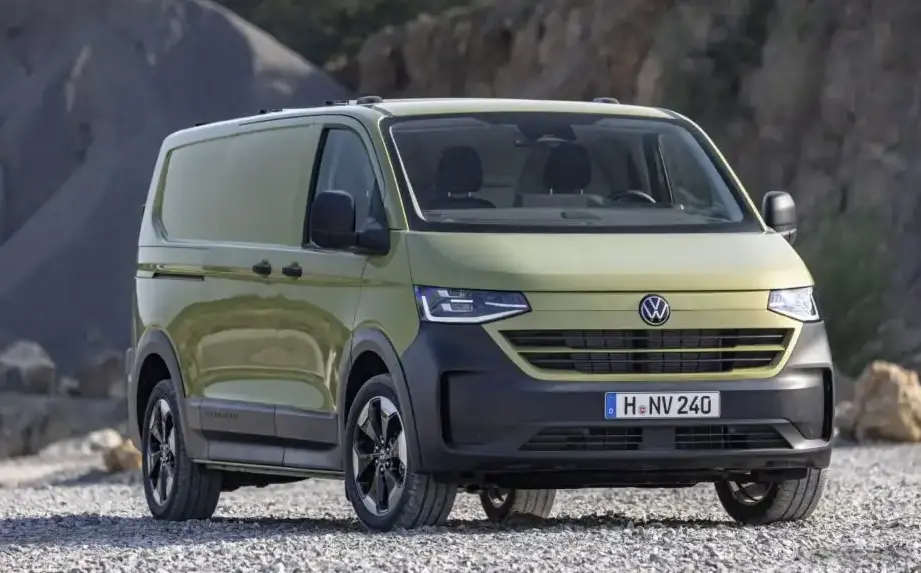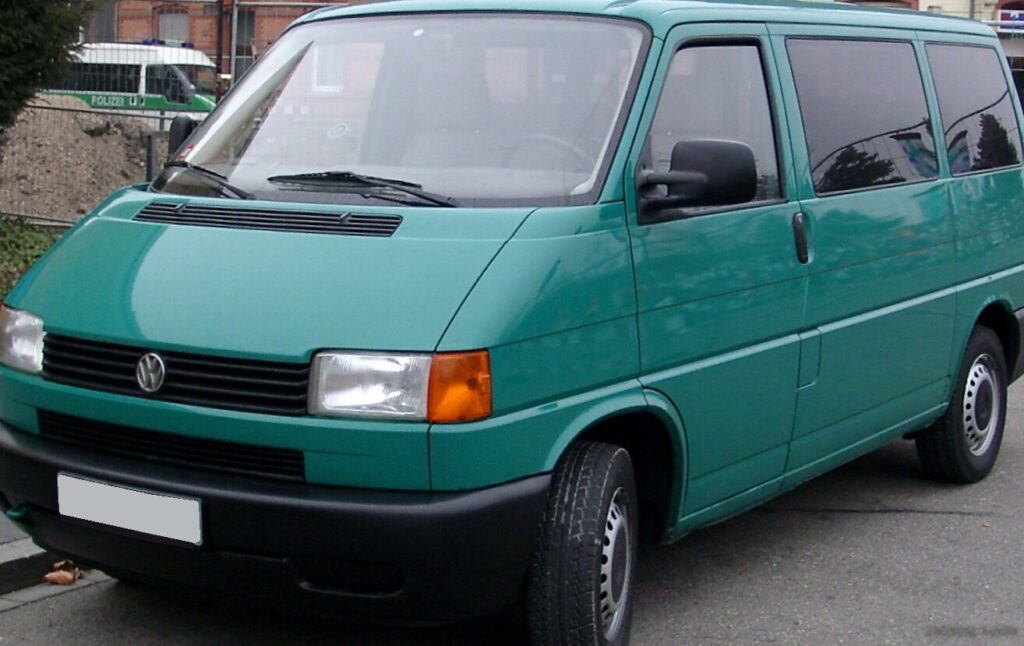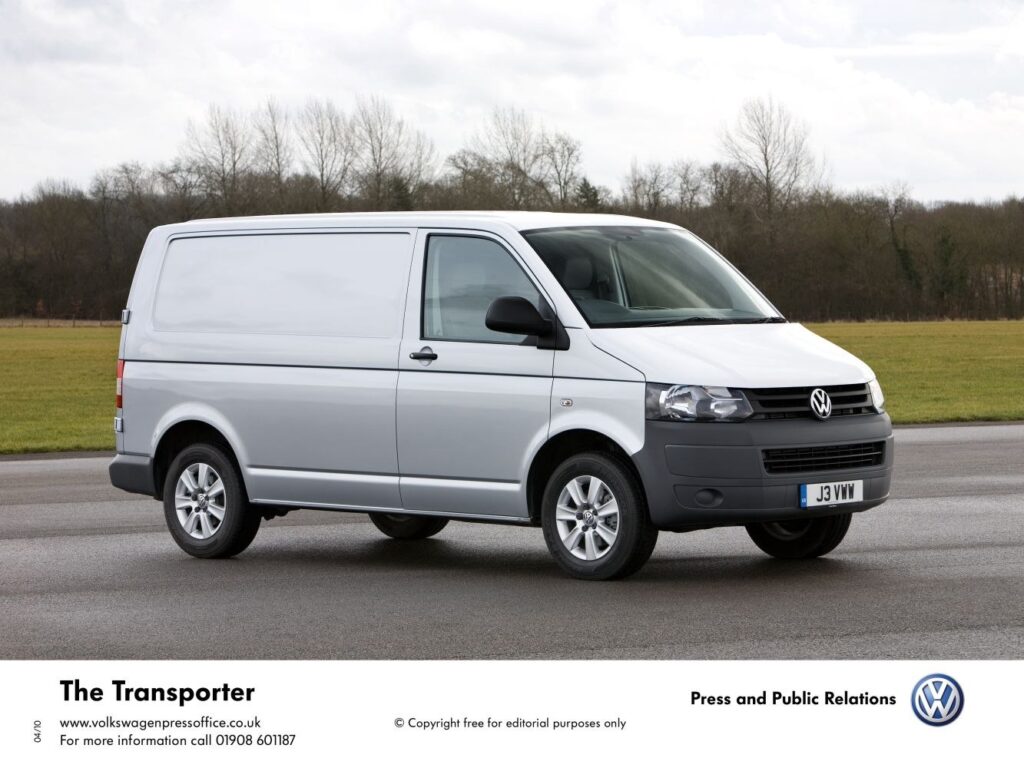
The Volkswagen Transporter (T5, facelift 2009) Panel Van represents a cornerstone of commercial vehicle design, particularly prominent in European markets. This specific iteration, the Volkswagen Transporter (T5, facelift 2009) Panel Van 2.0 TDI BMT (180 Hp) DSG L2H2, produced between 2013 and 2015, exemplifies Volkswagen’s commitment to robust engineering and practical utility. As part of the fifth generation (T5), which debuted in 2003, the 2009 facelift brought significant enhancements in styling, technology, and powertrain options, maintaining its competitive edge in the light commercial vehicle (LCV) segment. While less common in the United States, the Transporter series is globally recognized for its enduring legacy, tracing its roots back to the original Type 2 “Bus” of the 1950s. This model, designated L2H2, signifies a long wheelbase and high roof, maximizing cargo volume for diverse business applications.
Development & History
The Volkswagen Transporter’s lineage extends back to the iconic Type 2, introduced in the 1950s, initially conceived as a versatile vehicle for both commercial and recreational use. The T5 generation, launched in 2003, represented a significant departure from its predecessors, adopting a more modern, car-like design and engineering approach. The T5 platform, while not sharing a specific chassis code in the same manner as some contemporary vehicles (like VW’s MQB), was a dedicated commercial vehicle architecture designed for modularity and adaptability. The 2009 facelift was a substantial mid-cycle refresh, addressing both aesthetic and functional aspects of the vehicle. It brought revised front-end styling, updated interior materials, and, crucially, the introduction of more efficient and powerful engine options, including the 2.0 TDI BMT featured in this variant. The T5 was eventually succeeded by the T6 generation in 2015, which further refined the formula with increased technology and improved fuel efficiency.
Powertrain & Performance
The Volkswagen Transporter (T5, facelift 2009) Panel Van 2.0 TDI BMT (180 Hp) DSG L2H2 is powered by a 2.0-liter turbocharged direct injection (TDI) diesel engine, identified by the engine code EA189 / CFCA. This inline four-cylinder engine produces 180 horsepower at 4000 rpm and a power-per-liter output of 91.5 hp/l. A key feature of this engine is its BiTurbo configuration, utilizing two turbochargers to minimize turbo lag and deliver a broad, consistent power band. This system, combined with a common rail fuel injection system and an intercooler, optimizes combustion efficiency. The engine generates 400 Nm (295.02 lb-ft) of torque between 1500 and 2000 rpm, providing substantial low-end pulling power ideal for a commercial vehicle. The engine is mounted transversely at the front of the vehicle, driving the front wheels. Power is delivered through a 7-speed dual-clutch transmission (DSG), known for its rapid and smooth gear changes. This combination allows for an estimated 0 to 60 mph acceleration time of 9.6 seconds and a top speed of 114.33 mph (184 km/h). Fuel economy, according to the New European Driving Cycle (NEDC), ranges from 30.9 to 32.2 US mpg, aided by Volkswagen’s BlueMotion Technology (BMT), which includes a Start & Stop system and a particulate filter to meet Euro 5 emission standards.
Chassis & Handling
The Volkswagen Transporter (T5, facelift 2009) Panel Van utilizes an independent front suspension with McPherson struts, coil springs, and an anti-roll bar, providing a comfortable and controlled ride. The rear suspension is also independent, employing coil springs, a transverse stabilizer, and trailing arms, contributing to stable handling even when heavily loaded. Braking is accomplished with ventilated discs on all four wheels (340×32.5 mm front, 294×22 mm rear), supported by an Anti-lock Braking System (ABS). Hydraulic rack and pinion steering provides precise control and feedback. The L2H2 variant’s long 133.86-inch (3400 mm) wheelbase enhances stability, while a ground clearance of 7.91 inches (201 mm) allows for navigating varied terrain. Despite its size, the minimum turning circle is a reasonable 43.31 feet (13.2 m). The kerb weight ranges from 4038.87 to 4958.2 lbs (1832-2249 kg), with a maximum permissible weight of 6172.94 to 7054.79 lbs (2800-3200 kg), resulting in a substantial payload capacity of 2096.6 to 2134.07 lbs (951-968 kg). It also boasts a towing capacity of 5511.56 lbs (2500 kg) with brakes and 1653.47 lbs (750 kg) without.
Design & Interior
The Volkswagen Transporter (T5, facelift 2009) Panel Van prioritizes functionality and durability in its design. The L2H2 variant’s extended length (208.35 inches / 5292 mm) and elevated roofline (85.67 inches / 2176 mm) provide a maximum cargo volume of 7800 liters (275.45 cu. ft.). The panel van body style, lacking rear windows, maximizes security and load space. Typically featuring 4-5 doors, including sliding side doors and rear barn doors, it offers convenient access to the cargo area. The cabin is configured for 2-3 occupants, focusing on driver comfort and practicality. The interior, while utilitarian, is ergonomically designed with durable materials and logically placed controls. The width measures 74.96 inches (1904 mm), expanding to 89.88 inches (2283 mm) with mirrors.
Variants & Special Editions
The T5 Transporter was offered in a wide range of configurations to suit diverse commercial needs. Trim levels varied depending on the market, but generally included base models focused on affordability, mid-range options with added comfort and convenience features, and high-end variants with premium materials and technology. Performance-oriented versions, such as the Sportline, offered enhanced styling and suspension upgrades. The Multivan served as a more luxurious passenger-carrying variant, while the California was a popular camper van conversion. The L2H2 designation, as featured in this model, represented a specific body configuration – long wheelbase and high roof – optimized for maximum cargo capacity. Special editions often included unique exterior styling elements, interior trim, and equipment packages.
Technical Specifications
| Category | Specification |
| Brand | Volkswagen |
| Model | Transporter |
| Generation | Transporter (T5, facelift 2009) Panel Van |
| Type (Engine) | 2.0 TDI BMT (180 Hp) DSG L2H2 |
| Start of Production | 2013 |
| End of Production | 2015 |
| Powertrain Architecture | Internal Combustion engine |
| Body Type | Van |
| Seats | 2-3 |
| Doors | 4-5 |
| Fuel Consumption (Urban, NEDC) | 8.5-8.8 l/100 km |
| Fuel Consumption (Extra Urban, NEDC) | 6.6-6.9 l/100 km |
| Fuel Consumption (Combined, NEDC) | 7.3-7.6 l/100 km |
| CO2 Emissions (NEDC) | 192-199 g/km |
| Fuel Type | Diesel |
| Acceleration 0 – 60 mph | 9.6 sec |
| Maximum Speed | 184 km/h |
| Emission Standard | Euro 5 |
| Power | 180 Hp @ 4000 rpm |
| Torque | 400 Nm @ 1500-2000 rpm |
| Engine Displacement | 1968 cm3 |
| Number of Cylinders | 4 |
| Kerb Weight | 1832-2249 kg |
| Max. Weight (GVWR) | 2800-3200 kg |
| Max Load (Payload) | 951-968 kg |
| Trunk (Boot) Space – Maximum | 7800 l |
| Fuel Tank Capacity | 80 l |
| Length | 5292 mm |
| Width | 1904 mm |
| Height | 2176 mm |
| Wheelbase | 3400 mm |
Legacy & Reception
The Volkswagen Transporter series, and the T5 generation in particular, holds an iconic position in the global automotive market, especially in Europe and Asia. Its enduring success stems from its versatility, reliability, and continuous evolution. The 2009 facelift enhanced these qualities, offering a refined and efficient package that appealed to a broad range of commercial users. The T5’s car-like driving dynamics, robust build quality, and strong residual value set it apart from competitors like the Mercedes-Benz Vito, Ford Transit Custom, and Renault Trafic. While not widely available in the United States, the Transporter’s reputation for durability and practicality has made it a staple for businesses and tradespeople worldwide. The 2.0 TDI BMT (180 Hp) DSG L2H2 model represents a high point in the T5’s development, offering a compelling blend of performance, efficiency, and cargo capacity, solidifying its legacy as a benchmark in the light commercial vehicle segment.