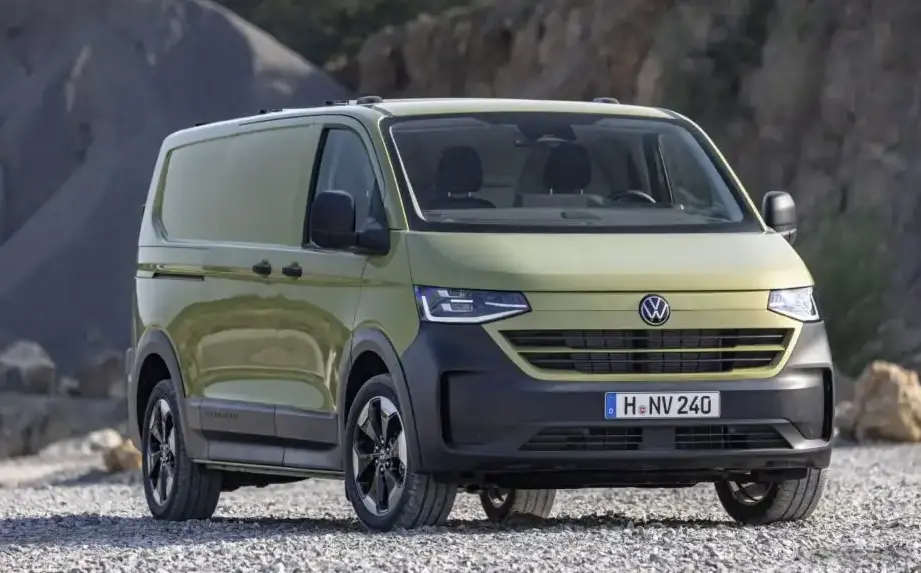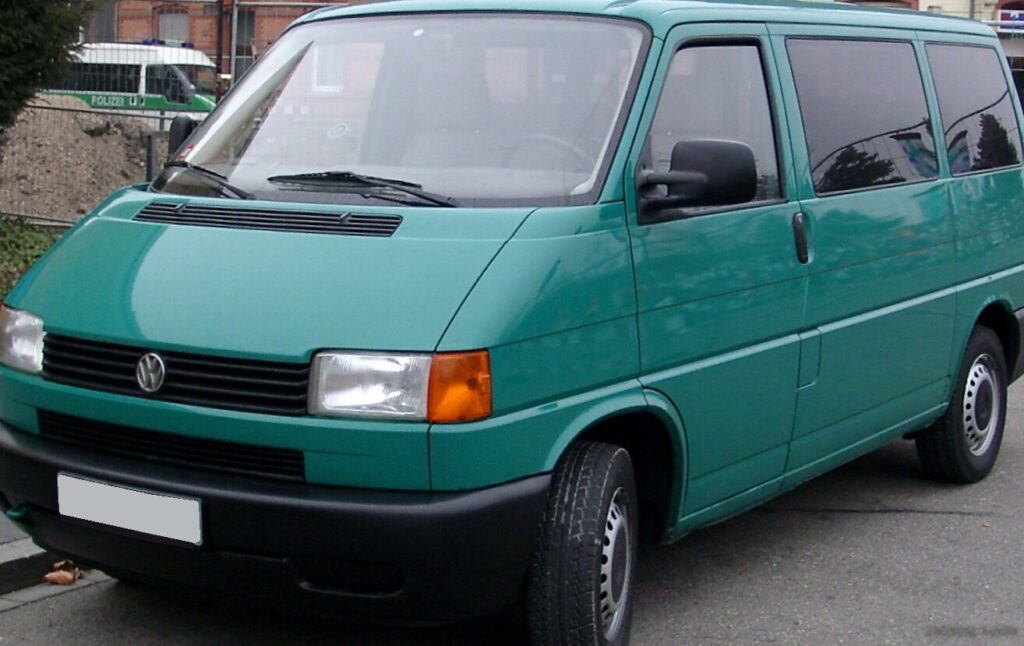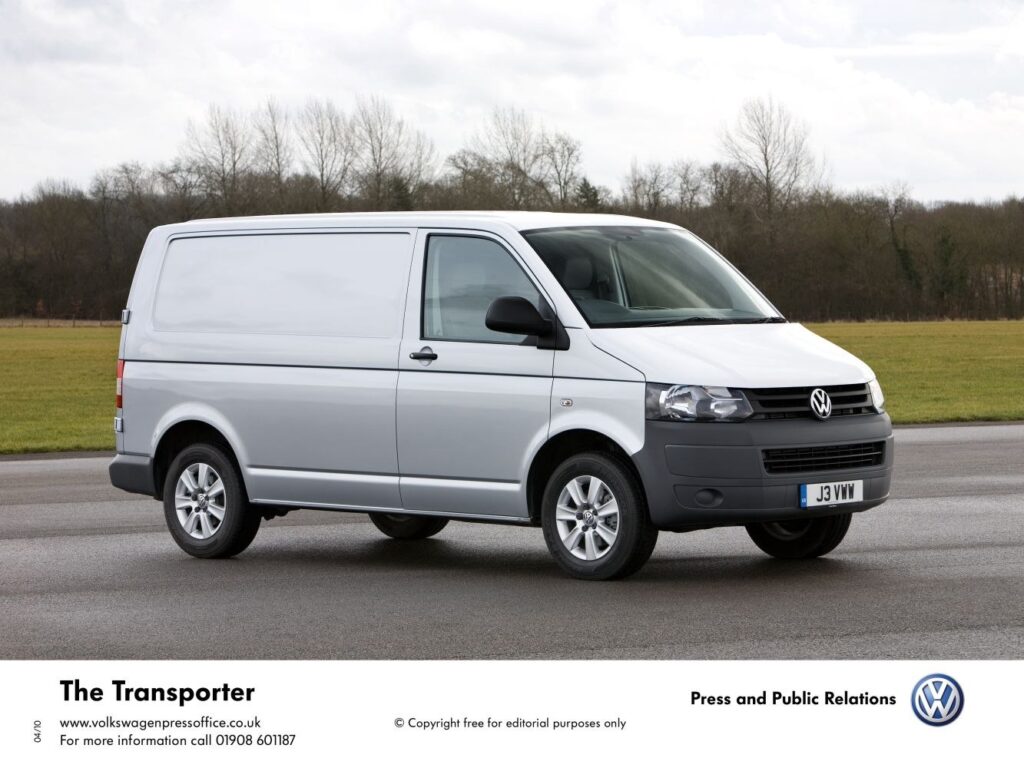
The Volkswagen Transporter (T5, facelift 2009) Panel Van represents a cornerstone of European commercial vehicle design, renowned for its reliability and versatility. Produced from 2013 to 2015, this iteration of the fifth-generation Transporter (T5) continued Volkswagen’s legacy of providing robust and efficient vans to markets outside the United States. The specific model, a Panel Van equipped with a 2.0 TDI BlueMotion Technology (BMT) engine producing 180 horsepower in an L1H2 configuration (Long wheelbase, High roof), exemplified a refinement of diesel powertrain technology and practical utility for businesses across Europe and internationally.
Volkswagen Transporter (T5, facelift 2009): A European Workhorse
As a front-wheel-drive panel van, this Transporter variant was engineered to maximize cargo space and operational efficiency, making it a preferred choice for tradespeople, logistics companies, and various commercial applications. Its design and mechanical underpinnings prioritized durability, fuel economy, and driver comfort, all while adhering to the stringent European emission standards of its time. While not a common sight on American roads, the Transporter held a dominant position in the European light commercial vehicle market.
Engine & Performance
The heart of the Volkswagen Transporter (T5, facelift 2009) Panel Van is a 2.0-liter TDI (Turbocharged Direct Injection) inline four-cylinder diesel engine, designated EA189 / CFCA. This powerplant showcased Volkswagen’s engineering expertise, featuring a sophisticated BiTurbo setup and a Commonrail fuel injection system. The engine produced 180 horsepower at 4000 rpm, equating to 91.5 horsepower per liter. Crucially for a commercial vehicle, it delivered 295.02 lb.-ft. of torque between 1500 and 2000 rpm. This low-end torque was essential for hauling heavy loads and providing responsive acceleration, even when fully laden.
Power was transferred to the front wheels via a precise 6-speed manual transmission, offering drivers optimal control and contributing to the vehicle’s efficiency. The Transporter T5 2.0 TDI BMT could accelerate from 0 to 60 mph in 9.5 seconds, reaching a top speed of 114.33 mph. These figures demonstrated its ability to maintain pace with traffic, even on highways, making it suitable for long-distance deliveries. The BlueMotion Technology (BMT) package included a Start & Stop system and a particulate filter, improving fuel economy and reducing emissions. Combined fuel consumption was rated at 33.6 – 32.2 US mpg, with CO2 emissions ranging from 184-192 g/km, meeting the Euro 5 emission standard.
The engine’s design, including its DOHC valvetrain, 16.5:1 compression ratio, and 4 valves per cylinder, ensured both robust performance and long-term reliability. With an engine oil capacity of 7.4 US quarts and a coolant capacity of 11.62 US quarts, the cooling and lubrication systems were designed for demanding commercial use.
Design & Features
The Volkswagen Transporter (T5, facelift 2009) Panel Van, in its L1H2 configuration, was designed with practicality and utility as primary objectives. The “Panel Van” designation indicates a commercial vehicle with a fully enclosed cargo area, prioritizing load-carrying capacity over passenger comfort. The L1H2 specification denotes a standard length (Length 1) chassis combined with a high roof (Height 2), significantly increasing the internal volume for cargo. With a maximum trunk space of 6700 liters (236.61 cubic feet), this Transporter offered exceptional carrying capacity, making it versatile for various commercial applications, from parcel delivery to specialized equipment transport.
Measuring 192.6 inches in length, 74.96 inches in width (89.88 inches including mirrors), and 85.67 inches in height, the van provided ample interior space without being overly cumbersome for urban environments. The 118.11-inch wheelbase contributed to a stable ride and generous cargo volume. Its robust construction was evident in the kerb weight ranging from 3899.98 to 4757.58 pounds and a maximum permissible weight of 6172.94 to 7054.79 pounds, allowing for a substantial maximum load of 2272.97 to 2297.22 pounds. Furthermore, the Transporter could tow a braked trailer up to 5511.56 pounds and an unbraked trailer up to 1653.47 pounds, highlighting its heavy-duty capabilities.
Driver and passenger accommodation typically offered seating for 2 to 3 individuals, focusing on functional ergonomics for long working hours. Safety features included an Anti-lock Braking System (ABS) as standard, enhancing control during emergency braking. The suspension system, featuring independent McPherson struts with coil springs and an anti-roll bar at the front, and independent coil springs with a transverse stabilizer and trailing arm at the rear, was engineered for both load-bearing capability and a relatively comfortable ride. Large ventilated disc brakes (340×32.5 mm front, 294×22 mm rear) provided strong stopping power. Hydraulic power steering offered precise control, crucial for maneuvering a large vehicle in tight spaces, evidenced by a minimum turning circle of 39.04 feet. Ground clearance of 7.91 inches and a wading depth of 11.81 inches hinted at its capability to handle varied terrains.
Technical Specifications
| Brand | Volkswagen |
| Model | Transporter |
| Generation | Transporter (T5, facelift 2009) Panel Van |
| Type (Engine) | 2.0 TDI BMT (180 Hp) L1H2 |
| Start of production | 2013 year |
| End of production | 2015 year |
| Powertrain Architecture | Internal Combustion engine |
| Body type | Van |
| Seats | 2-3 |
| Doors | 4-5 |
| Fuel consumption (economy) – urban (NEDC) | 8.6-8.9 l/100 km (27.4 – 26.4 US mpg) |
| Fuel consumption (economy) – extra urban (NEDC) | 6.1-6.4 l/100 km (38.6 – 36.8 US mpg) |
| Fuel consumption (economy) – combined (NEDC) | 7-7.3 l/100 km (33.6 – 32.2 US mpg) |
| CO2 emissions (NEDC) | 184-192 g/km |
| Fuel Type | Diesel |
| Acceleration 0 – 60 mph (Calculated) | 9.5 sec |
| Acceleration 0 – 100 km/h | 10 sec |
| Maximum speed | 184 km/h (114.33 mph) |
| Emission standard | Euro 5 |
| Weight-to-power ratio | 9.8 kg/Hp (101.8 Hp/tonne) |
| Weight-to-torque ratio | 4.4 kg/Nm (226.1 Nm/tonne) |
| Power | 180 Hp @ 4000 rpm |
| Power per liter | 91.5 Hp/l |
| Torque | 400 Nm (295.02 lb.-ft.) @ 1500-2000 rpm |
| Engine layout | Front, Transverse |
| Engine Model/Code | EA189 / CFCA |
| Engine displacement | 1968 cm3 (120.09 cu. in.) |
| Number of cylinders | 4 |
| Engine configuration | Inline |
| Cylinder Bore | 81 mm (3.19 in.) |
| Piston Stroke | 95.5 mm (3.76 in.) |
| Compression ratio | 16.5:1 |
| Number of valves per cylinder | 4 |
| Fuel injection system | Diesel Commonrail |
| Engine aspiration | BiTurbo, Intercooler |
| Valvetrain | DOHC |
| Engine oil capacity | 7 l (7.4 US qt) |
| Coolant | 11 l (11.62 US qt) |
| Kerb Weight | 1769-2158 kg (3899.98 – 4757.58 lbs.) |
| Max. weight | 2800-3200 kg (6172.94 – 7054.79 lbs.) |
| Max load | 1031-1042 kg (2272.97 – 2297.22 lbs.) |
| Trunk (boot) space – maximum | 6700 l (236.61 cu. ft.) |
| Fuel tank capacity | 80 l (21.13 US gal) |
| Permitted trailer load with brakes (12%) | 2500 kg (5511.56 lbs.) |
| Permitted trailer load without brakes | 750 kg (1653.47 lbs.) |
| Length | 4892 mm (192.6 in.) |
| Width | 1904 mm (74.96 in.) |
| Wheelbase | 3000 mm (118.11 in.) |
Legacy and Market Impact
The Volkswagen Transporter series has long been a foundational pillar of the light commercial vehicle segment globally, particularly in Europe, where it enjoys a cult following and immense practical appeal. The T5 generation, and specifically its facelifted variant from 2009-2015, continued this tradition, solidifying its reputation as a highly capable and durable workhorse. While this particular panel van configuration was not widely available in the United States market, where larger, typically gasoline-powered vans from American manufacturers dominated, its influence across other continents was undeniable.
In its primary markets, the Volkswagen Transporter (T5, facelift 2009) Panel Van faced competition from rivals such as the Ford Transit, Mercedes-Benz Vito, Renault Trafic, and Fiat Ducato. However, the Transporter consistently stood out for its car-like driving dynamics, robust build quality, and strong resale value. The 2.0 TDI BMT (180 Hp) variant was particularly well-regarded for offering an excellent balance of power and fuel efficiency, a critical factor for businesses looking to minimize operational costs. The BlueMotion Technology, integrating features like Start & Stop and optimized aerodynamics, positioned it as an environmentally conscious choice within its segment, helping businesses meet increasingly strict emission targets like Euro 5. The T5 facelift generation served as a crucial bridge between the long-running T4 and the subsequent T6, incorporating modern technologies and design refinements that kept the Transporter competitive. Its L1H2 configuration, offering increased cargo volume, was a direct response to the diverse needs of commercial operators. The Transporter’s enduring appeal lies in its adaptability, reliability, and the extensive network of Volkswagen commercial vehicle support. It remains a benchmark for what a versatile and efficient commercial van should be, continuing to influence vehicle design and engineering in the light commercial sector worldwide.