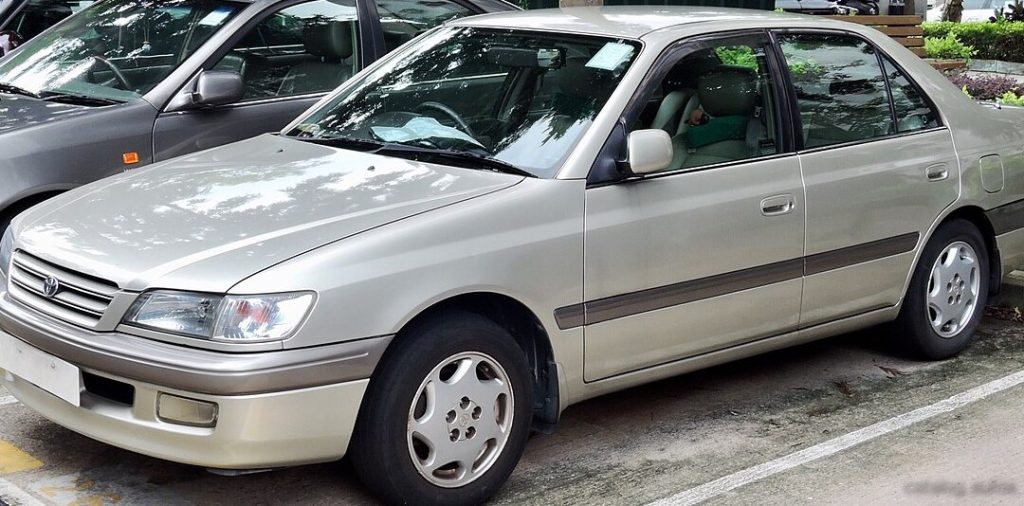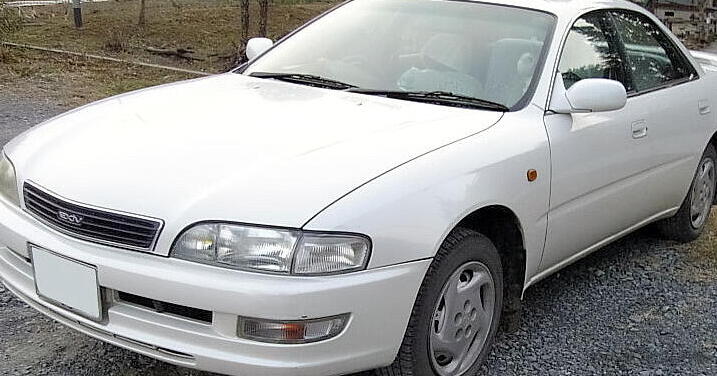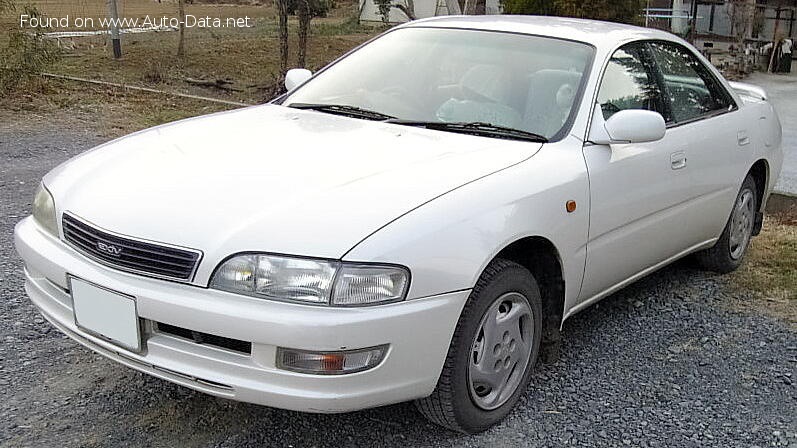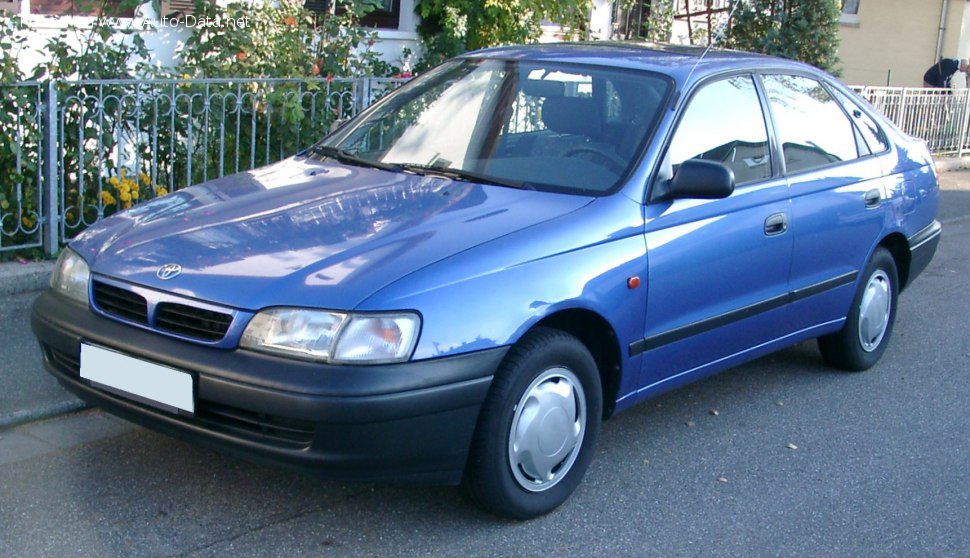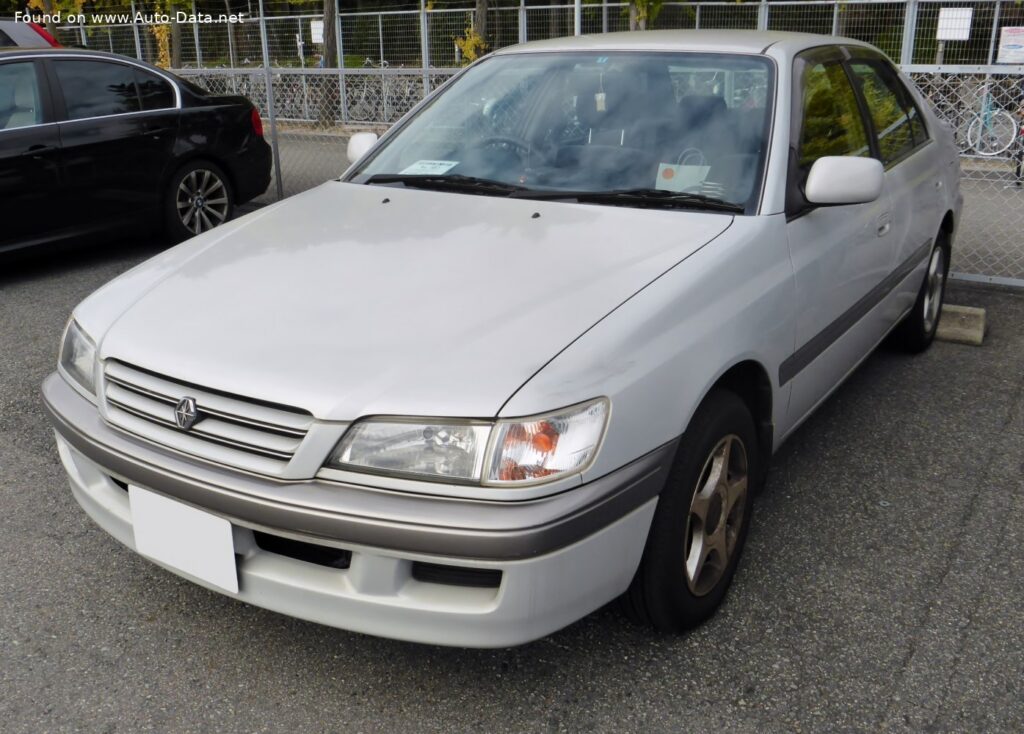
The Toyota Corona Premio (T21) represents the tenth generation of the long-running Toyota Corona nameplate, a model series that established itself as a cornerstone of dependable, practical transportation across various global markets. Introduced in 1996 and produced until 2001, the T21 generation, specifically the Premio variant, was primarily aimed at the Japanese domestic market (JDM) and select Asian regions, where it served as a mid-size sedan offering a blend of comfort, efficiency, and Toyota’s renowned build quality. Unlike its predecessors, which saw broader international distribution, the Corona Premio (T21) was not officially sold in the United States, making it a less familiar name to American consumers. However, its engineering principles and market strategy reflect Toyota’s global automotive dominance during this era, focusing on meeting specific regional demands with tailored products.
The T21 generation marked a significant evolution for the Corona, adopting the “Premio” suffix to denote a more upscale and refined offering compared to earlier, more utilitarian versions. Positioned strategically above the popular Corolla and below the larger Camry and Mark II models, the Corona Premio (T21) aimed to capture a segment of buyers seeking a slightly more spacious and comfortable vehicle without venturing into the premium luxury segment. This article will delve into the technical specifications, design philosophies, and market impact of the Toyota Corona Premio (T21) 1.6i 16V (105 Hp) Automatic, providing an expert analysis through the lens of an international automotive specialist.
Engine & Performance: The Dependable 4A-FE Powertrain
At the heart of the Toyota Corona Premio (T21) 1.6i 16V (105 Hp) Automatic lies the venerable 4A-FE engine, a powerplant synonymous with Toyota’s reputation for reliability and efficiency. This naturally aspirated, 1.6-liter (1587 cm³) inline four-cylinder engine was a staple across many Toyota models of the era, known for its robust design and smooth operation. Featuring a multi-port manifold injection system and 16 valves (four per cylinder), the 4A-FE was engineered for balanced performance and economical fuel consumption, rather than outright speed.
The engine produced a respectable 105 horsepower at 5600 rpm, delivering adequate power for daily commuting and highway cruising. Torque output stood at 104.73 lb.-ft. at 4800 rpm, providing sufficient pulling power for its class. With a compression ratio of 9.5:1 and a bore of 81 mm paired with a stroke of 77 mm, the engine exhibited characteristics of a well-balanced unit designed for longevity. Power was channeled to the front wheels through a conventional 4-speed automatic transmission, a common choice for its smooth shifts and ease of use in urban environments, albeit without the performance aspirations of manual or more advanced automatic gearboxes.
Fuel efficiency was a key selling point for the Corona Premio in its target markets. The 1.6i 16V Automatic variant achieved an estimated 23.5 US mpg in urban driving conditions and an impressive 36.8 US mpg on the extra-urban cycle. These figures were competitive for the late 1990s, highlighting Toyota’s commitment to economical motoring. With a curb weight of 2447.13 lbs., the car boasted a weight-to-power ratio of 10.6 kg/Hp, indicating a sensible balance between vehicle mass and engine output. The engine’s modest 3-liter oil capacity and 5.3-liter coolant capacity further underscored its design for straightforward maintenance and operational simplicity.
Design & Features: Practicality Meets Understated Elegance
The Toyota Corona Premio (T21) adopted a classic four-door sedan body style, emphasizing practicality and a mature aesthetic. Its design ethos was one of understated elegance, avoiding flamboyant styling in favor of clean lines and a timeless silhouette that appealed to a broad demographic, particularly families and business professionals. With a length of 181.1 inches, a width of 66.73 inches, and a height of 55.51 inches, the T21 was dimensionally well-proportioned for a mid-size sedan, offering a comfortable interior for five occupants. The wheelbase of 101.57 inches contributed to a stable ride and ample cabin space.
Inside, the Corona Premio focused on ergonomics and durability. While specific luxury features might have varied by trim level, the core design emphasized user-friendliness and robust materials built to withstand years of use. The trunk space was generous, offering 17.3 cu. ft. of capacity, making it highly practical for family trips or daily errands.
From a chassis perspective, the Corona Premio featured a front-wheel-drive drivetrain. The front suspension utilized a wishbone setup, known for its ability to provide a good balance between ride comfort and handling stability. The rear suspension employed coil springs, further contributing to a compliant ride. Braking duties were handled by ventilated discs at the front, offering effective stopping power, while traditional drum brakes were fitted at the rear. An Anti-lock Braking System (ABS) was included as an assisting system, enhancing safety during emergency braking maneuvers, a significant feature for cars of this era. Steering was managed by a hydraulic rack and pinion system, providing predictable and assisted steering feel. The vehicle rode on 175/70 R14 tires mounted on 14-inch wheel rims, a common specification for comfort and cost-effectiveness.
Technical Specifications
| General Information | |
| Brand | Toyota |
| Model | Corona |
| Generation | Corona Premio (T21) |
| Type (Engine) | 1.6i 16V (105 Hp) Automatic |
| Start of production | 1996 year |
| End of production | 2001 year |
| Powertrain Architecture | Internal Combustion engine |
| Body type | Sedan |
| Seats | 5 |
| Doors | 4 |
| Performance Specs | |
| Fuel consumption (economy) – urban | 23.5 US mpg (10 l/100 km) |
| Fuel consumption (economy) – extra urban | 36.8 US mpg (6.4 l/100 km) |
| Fuel Type | Petrol (Gasoline) |
| Weight-to-power ratio | 10.6 kg/Hp, 94.6 Hp/tonne |
| Weight-to-torque ratio | 7.8 kg/Nm, 127.9 Nm/tonne |
| Engine Specs | |
| Power | 105 Hp @ 5600 rpm. |
| Power per liter | 66.2 Hp/l |
| Torque | 104.73 lb.-ft. @ 4800 rpm. (142 Nm) |
| Engine layout | Front, Transverse |
| Engine Model/Code | 4A-FE |
| Engine displacement | 1.6 liters (1587 cm³, 96.84 cu. in.) |
| Number of cylinders | 4 |
| Engine configuration | Inline |
| Cylinder Bore | 3.19 in. (81 mm) |
| Piston Stroke | 3.03 in. (77 mm) |
| Compression ratio | 9.5:1 |
| Number of valves per cylinder | 4 |
| Fuel injection system | Multi-port manifold injection |
| Engine aspiration | Naturally aspirated engine |
| Engine oil capacity | 3.17 US qt (3 l) |
| Coolant | 5.6 US qt (5.3 l) |
| Space, Volume and Weights | |
| Kerb Weight | 2447.13 lbs. (1110 kg) |
| Max. weight | 3053.4 lbs. (1385 kg) |
| Max load | 606.27 lbs. (275 kg) |
| Trunk (boot) space – minimum | 17.3 cu. ft. (490 l) |
| Fuel tank capacity | 15.85 US gal (60 l) |
| Dimensions | |
| Length | 181.1 in. (4600 mm) |
| Width | 66.73 in. (1695 mm) |
| Height | 55.51 in. (1410 mm) |
| Wheelbase | 101.57 in. (2580 mm) |
| Front track | 57.68 in. (1465 mm) |
| Rear (Back) track | 57.09 in. (1450 mm) |
| Drivetrain, Brakes and Suspension Specs | |
| Drivetrain Architecture | The Internal combustion engine (ICE) drives the front wheels of the vehicle. |
| Drive wheel | Front wheel drive |
| Number of gears and type of gearbox | 4 gears, automatic transmission |
| Front suspension | Wishbone |
| Rear suspension | Coil spring |
| Front brakes | Ventilated discs |
| Rear brakes | Drum |
| Assisting systems | ABS (Anti-lock braking system) |
| Steering type | Steering rack and pinion |
| Power steering | Hydraulic Steering |
| Tires size | 175/70 R14 |
| Wheel rims size | 14 |
Legacy and Market Impact: A Workhorse for its Region
The Toyota Corona Premio (T21), and the Corona line as a whole, carved out a significant niche in the Japanese and broader Asian automotive landscapes. While it might not have garnered the international fame of the Corolla or Camry, its impact as a reliable, efficient, and practical family sedan in its primary markets cannot be overstated. The T21 generation continued the Corona’s legacy as a sensible choice for consumers prioritizing durability and low running costs over performance or ostentatious luxury.
In its competitive environment, the Corona Premio (T21) faced rivals such as the Honda Civic (in its larger sedan forms), Nissan Sunny (known as Sentra in some markets), Mitsubishi Lancer, and Mazda Familia (equivalent to the Protegé). Against these competitors, the Corona Premio distinguished itself with Toyota’s unparalleled reputation for quality and longevity, often being the benchmark for resale value and minimal maintenance headaches. Its conservative styling and comfortable ride appealed to a demographic that valued functionality and dependability.
The Toyota Corona Premio (T21) played a crucial role in bridging the gap between compact and mid-size offerings, providing a slightly larger and more refined option than the Corolla for those who needed more space and comfort. It represented the evolution of a nameplate that had been a global workhorse for decades, adapting to changing market demands with increased refinement and safety features for its time, such as standard ABS.
Ultimately, the Corona nameplate, including the Premio variant, was phased out in favor of new models that better reflected Toyota’s evolving product strategy. The Corona Premio was eventually succeeded by the Toyota Allion and Premio models, which continued to serve the JDM market with a similar focus on comfort, quality, and practicality in the compact-to-mid-size sedan segment. The T21 generation stands as a testament to Toyota’s mastery of segment-specific engineering, delivering a vehicle that perfectly met the needs and expectations of its target audience, ensuring its place in automotive history as a silent but strong performer in its dedicated markets.