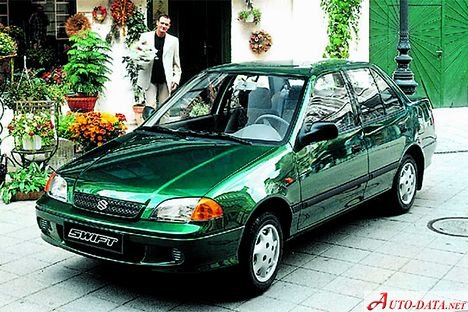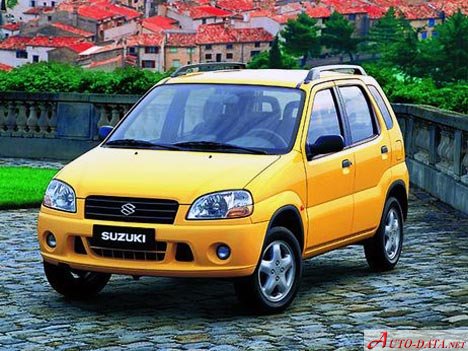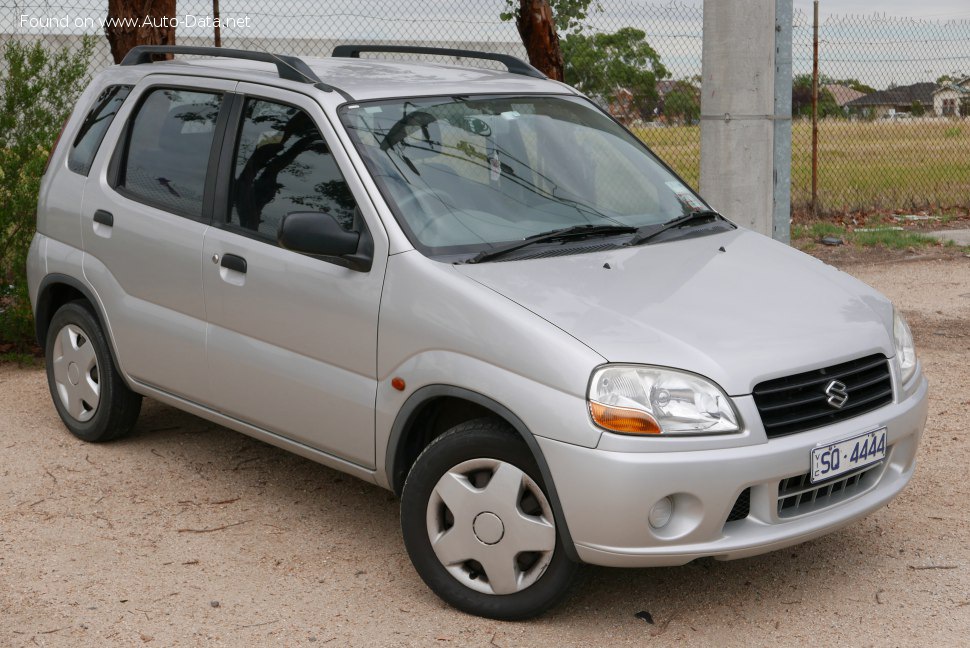
The Suzuki Ignis Hatchback I FH 1.0 i (3 dr) (53 Hp) represents a significant entry by the Japanese automaker into the highly competitive subcompact or supermini segment, primarily targeting European and Asian markets. Produced between 2000 and 2003, this first-generation Ignis model, specifically the 3-door variant equipped with the 1.0-liter engine, was designed as a practical, economical, and agile vehicle for urban environments. It aimed to offer a blend of compact dimensions, respectable fuel efficiency, and Suzuki’s reputation for reliability, appealing to buyers seeking an affordable and easy-to-manage daily driver. While not a mainstream offering in the United States, the Ignis I FH played a crucial role in Suzuki’s global strategy, laying the groundwork for future compact models and even influencing the design ethos of later crossover vehicles.
Engine & Performance of the Suzuki Ignis Hatchback I FH 1.0 i (3 dr) (53 Hp)
The Suzuki Ignis Hatchback I FH 1.0 i (3 dr) (53 Hp) was powered by a 1.0-liter (993 cm3 or 60.6 cubic inches) inline three-cylinder engine. This naturally aspirated powerplant utilized a single overhead camshaft (OHC) valvetrain with two valves per cylinder, a common and cost-effective design for small engines of the period. A single-point fuel injection system managed fuel delivery, prioritizing simplicity and fuel economy. The engine produced a peak output of 53 horsepower at 5700 rpm, achieving a power-per-liter ratio of 53.4 horsepower per liter. Torque figures stood at 76 Newton-meters (approximately 56.05 lb.-ft.) at 3300 rpm, emphasizing low-end grunt suitable for city driving. The engine was mounted transversely at the front, driving the front wheels – a typical configuration for this segment, maximizing interior space and simplifying manufacturing.
A 5-speed manual transmission was standard, providing a direct, though not particularly rapid, driving experience. Acceleration from 0 to 60 mph took 15.2 seconds, with a top speed of 90.1 mph (145 km/h). These figures clearly indicate the Ignis was designed for urban and suburban commuting, where nimble handling and fuel efficiency were prioritized over high-speed performance. The car’s low curb weight of 730 kg (1609.37 pounds) resulted in a respectable weight-to-power ratio of 13.8 kg/Hp, or 72.6 Hp/tonne, making the engine feel more responsive than its power output might suggest.
Fuel economy was a key strength. The combined cycle yielded an impressive 44.4 US mpg (5.3 l/100 km), with extra-urban driving achieving 52.3 US mpg (4.5 l/100 km). Even in urban conditions, it managed a commendable 34.6 US mpg (6.8 l/100 km), making it an economical choice for budget-conscious drivers.
Design & Features
The Suzuki Ignis Hatchback I FH 1.0 i (3 dr) (53 Hp) featured a practical and boxy 3-door hatchback body style, common for supermini vehicles in the early 2000s. The design focused on maximizing interior volume within a compact footprint. Measuring 3745 mm (147.44 inches) in length, 1590 mm (62.6 inches) in width, and 1350 mm (53.15 inches) in height, the Ignis was genuinely small, offering exceptional maneuverability in congested city streets and easy parking. A wheelbase of 2265 mm (89.17 inches) and a minimum turning circle of 9.6 meters (31.5 feet) further enhanced its urban agility.
Despite its small exterior, the Ignis could accommodate five occupants, although rear-seat comfort for three adults on longer journeys would be limited. The interior prioritized functionality, with durable materials and a straightforward layout. Cargo versatility was a selling point; the trunk offered a minimum volume of 280 liters (9.89 cubic feet), expanding to 620 liters (21.9 cubic feet) with the rear seats folded down, providing ample space for groceries or luggage.
The chassis and suspension utilized a conventional setup: a wishbone front suspension balanced ride comfort and handling, while a coil spring rear suspension offered simplicity and robustness. Front disc brakes and rear drum brakes provided adequate stopping power. The rack and pinion steering offered direct feedback and ease of control. Standard features for the 1.0 i model were basic but functional, including seatbelts and potentially airbags depending on the market and trim level. The car rode on 155/70 R13 tires mounted on 13-inch wheel rims, contributing to low running costs and a comfortable ride.
Technical Specifications: Suzuki Ignis Hatchback I FH 1.0 i (3 dr) (53 Hp)
| Category | Specification |
| General Information | |
| Brand | Suzuki |
| Model | Ignis |
| Generation | Ignis Hatchback I FH |
| Type (Engine) | 1.0 i (3 dr) (53 Hp) |
| Start of Production | 2000 year |
| End of Production | 2003 year |
| Powertrain Architecture | Internal Combustion engine |
| Body type | Hatchback |
| Seats | 5 |
| Doors | 3 |
| Performance Specs | |
| Fuel consumption (economy) – urban | 6.8 l/100 km (34.6 US mpg) |
| Fuel consumption (economy) – extra urban | 4.5 l/100 km (52.3 US mpg) |
| Fuel consumption (economy) – combined | 5.3 l/100 km (44.4 US mpg) |
| Fuel Type | Petrol (Gasoline) |
| Acceleration 0 – 60 mph | 15.2 sec |
| Maximum speed | 90.1 mph (145 km/h) |
| Weight-to-power ratio | 13.8 kg/Hp (72.6 Hp/tonne) |
| Weight-to-torque ratio | 9.6 kg/Nm (104.1 Nm/tonne) |
| Engine Specs | |
| Power | 53 Hp @ 5700 rpm |
| Power per liter | 53.4 Hp/l |
| Torque | 76 Nm (56.05 lb.-ft.) @ 3300 rpm |
| Engine layout | Front, Transverse |
| Engine displacement | 993 cm3 (1.0 l / 60.6 cu. in.) |
| Number of cylinders | 3 |
| Engine configuration | Inline |
| Cylinder Bore | 74 mm (2.91 in.) |
| Piston Stroke | 77 mm (3.03 in.) |
| Compression ratio | 9.5:1 |
| Number of valves per cylinder | 2 |
| Fuel injection system | Single-point injection |
| Engine aspiration | Naturally aspirated engine |
| Valvetrain | OHC |
| Space, Volume and Weights | |
| Kerb Weight | 730 kg (1609.37 lbs) |
| Max. weight | 1250 kg (2755.78 lbs) |
| Max load | 520 kg (1146.4 lbs) |
| Trunk (boot) space – minimum | 280 l (9.89 cu. ft.) |
| Trunk (boot) space – maximum | 620 l (21.9 cu. ft.) |
| Fuel tank capacity | 40 l (10.57 US gal) |
| Dimensions | |
| Length | 3745 mm (147.44 in.) |
| Width | 1590 mm (62.6 in.) |
| Height | 1350 mm (53.15 in.) |
| Wheelbase | 2265 mm (89.17 in.) |
| Front track | 1365 mm (53.74 in.) |
| Rear (Back) track | 1340 mm (52.76 in.) |
| Minimum turning circle (turning diameter) | 9.6 m (31.5 ft.) |
| Drivetrain, Brakes and Suspension Specs | |
| Drivetrain Architecture | Front-wheel drive, Internal Combustion Engine |
| Drive wheel | Front wheel drive |
| Number of gears and type of gearbox | 5 gears, manual transmission |
| Front suspension | Wishbone |
| Rear suspension | Coil spring |
| Front brakes | Disc |
| Rear brakes | Drum |
| Steering type | Steering rack and pinion |
| Tires size | 155/70 R13 |
| Wheel rims size | 13 inches |
Legacy and Market Impact
The Suzuki Ignis Hatchback I FH 1.0 i (3 dr) (53 Hp), though a relatively niche model, established Suzuki’s presence in the European and Asian supermini segments during its production years. It competed with models like the Ford Fiesta, Opel Corsa, Volkswagen Polo, Renault Clio, Fiat Punto, Toyota Yaris, and Nissan Micra. The Ignis distinguished itself through Suzuki’s reputation for reliability and low running costs, appealing to buyers seeking a dependable vehicle. Its affordability, fuel economy, and compact dimensions made it ideal for first-time car buyers, urban dwellers, or as a second family car. The 1.0-liter engine, while not powerful, was well-suited for city driving, offering agility and ease of parking. Its robust construction and simple mechanicals contributed to its longevity and ease of maintenance.
While not achieving the sales volumes of some competitors, the first-generation Ignis paved the way for subsequent generations, which evolved towards a more crossover-like styling. The original Ignis demonstrated Suzuki’s ability to produce practical, efficient, and reliable small cars, contributing to the brand’s global image as a specialist in compact vehicles. Today, the Ignis I FH is remembered as a testament to Suzuki’s pragmatic engineering and commitment to value, representing an era when small cars prioritized utility and economy.