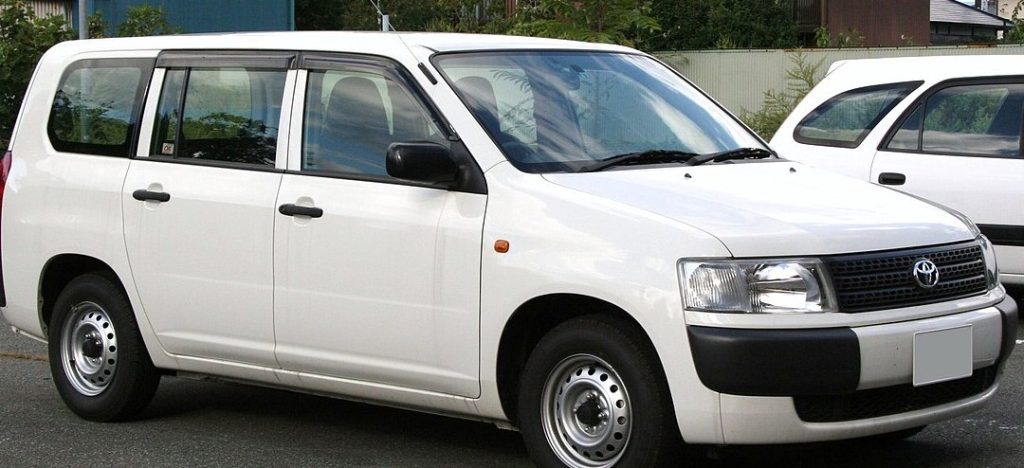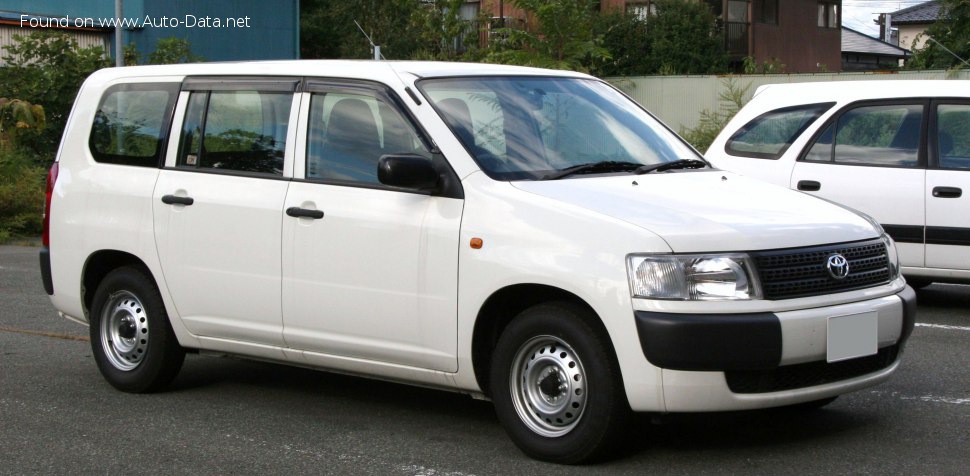
The Toyota Probox 1.4 D (75 Hp), produced from 2002 to 2014, is a compact, utilitarian station wagon that exemplifies Toyota’s commitment to building durable and cost-effective vehicles for global markets. While not sold in North America, the Probox achieved significant popularity in Japan, Asia, Africa, and parts of Europe, primarily as a fleet and commercial vehicle. This diesel-powered variant was particularly valued for its fuel economy and torque, making it ideal for businesses and light-duty applications. The name “Probox” itself – a portmanteau of “Professional Box” – accurately reflects its design philosophy: a no-frills vehicle focused on practicality and reliability.
The Toyota Probox 1.4 D (75 Hp): A Global Workhorse
The Probox’s long production run without major revisions underscores the success of its original concept. It caters to a market segment prioritizing function over form and long-term running costs over luxury. The 1.4 D (75 Hp) model, with its diesel engine, was especially well-suited for regions where fuel efficiency and hauling capability were paramount. Its enduring presence in its target markets demonstrates its robust engineering and its role as an essential tool for businesses and individuals.
Engine & Performance: The 1ND-TV Diesel
The heart of the Toyota Probox 1.4 D (75 Hp) is the 1ND-TV engine, a 1.4-liter (1364 cm3 or 83.24 cu. in.) inline-four turbodiesel. This engine showcases Toyota’s expertise in developing efficient and robust small-displacement diesel powerplants. Producing 75 horsepower (Hp) at 4000 rpm, the engine wasn’t designed for speed, but for consistent, reliable performance under load. Crucially, it delivered 170 Nm (125.39 lb.-ft.) of torque at 2000 rpm, providing excellent pulling power and drivability, particularly in urban environments or when carrying cargo.
The 1ND-TV engine incorporates a Commonrail diesel fuel injection system, enabling precise fuel delivery for improved fuel efficiency and reduced emissions. A turbocharger and intercooler further enhance performance, especially at higher altitudes or under sustained load. The engine features an Overhead Camshaft (OHC) valvetrain with 2 valves per cylinder and a high 18.5:1 compression ratio, optimizing combustion efficiency. Power is transferred to the front wheels via a durable 5-speed manual transmission, a common choice for commercial vehicles due to its reliability and driver control. This powertrain configuration results in a weight-to-power ratio of 13.7 kg/Hp (72.8 Hp/tonne) and a weight-to-torque ratio of 6.1 kg/Nm (165 Nm/tonne), highlighting its capability despite its modest power output.
Design & Features: Form Following Function
The Toyota Probox’s design embodies the principle of “form follows function.” It’s a 5-door, 5-seat station wagon optimized for cargo capacity and accessibility. Measuring 165.16 inches (4195 mm) in length, 66.73 inches (1695 mm) in width, and 60.04 inches (1525 mm) in height, the Probox is compact enough for city driving while offering a surprisingly spacious interior. The 100.39-inch (2550 mm) wheelbase contributes to a stable ride and maximizes interior volume, essential for its commercial role.
The interior, while spartan, is designed for durability and ease of cleaning. Hard-wearing plastics and utilitarian fabrics are standard, reflecting its workhorse nature. The rear seats typically fold flat, creating a large, unobstructed cargo area – a key selling point for businesses. Standard features include power steering (rack and pinion type) for easy maneuverability and a robust braking system with ventilated discs at the front and disc brakes at the rear, ensuring reliable stopping power even when fully loaded. The vehicle rides on 175/65 R14 tires, balancing cost, availability, and ride comfort. Safety features, while not as advanced as contemporary passenger cars, met the basic standards for its era and market segment, focusing on structural integrity and fundamental braking performance.
Technical Specifications
| Category | Specification |
| Brand | Toyota |
| Model | Probox |
| Generation | Probox |
| Engine Type | 1.4 D (75 Hp) |
| Production Start | 2002 |
| Production End | 2014 |
| Powertrain Architecture | Internal Combustion Engine |
| Body Type | Station wagon (estate) |
| Seats | 5 |
| Doors | 5 |
| Fuel Type | Diesel |
| Power | 75 Hp @ 4000 rpm |
| Torque | 170 Nm (125.39 lb.-ft.) @ 2000 rpm |
| Weight-to-Power Ratio | 13.7 kg/Hp (72.8 Hp/tonne) |
| Weight-to-Torque Ratio | 6.1 kg/Nm (165 Nm/tonne) |
| Engine Layout | Front, Transverse |
| Engine Model/Code | 1ND-TV |
| Engine Displacement | 1364 cm3 (1.4 Liters / 83.24 cu. in.) |
| Number of Cylinders | 4 |
| Engine Configuration | Inline |
| Cylinder Bore | 73 mm (2.87 in.) |
| Piston Stroke | 81.5 mm (3.21 in.) |
| Compression Ratio | 18.5:1 |
| Valves per Cylinder | 2 |
| Fuel Injection System | Diesel Commonrail |
| Engine Aspiration | Turbocharger, Intercooler |
| Valvetrain | OHC |
| Engine Oil Capacity | 4.3 Liters (4.54 US qt) |
| Coolant Capacity | 5.5 Liters (5.81 US qt) |
| Kerb Weight | 1030 kg (2270.76 lbs.) |
| Fuel Tank Capacity | 50 Liters (13.21 US gal) |
| Length | 4195 mm (165.16 in.) |
| Width | 1695 mm (66.73 in.) |
| Height | 1525 mm (60.04 in.) |
| Wheelbase | 2550 mm (100.39 in.) |
| Front Track | 1455 mm (57.28 in.) |
| Rear Track | 1465 mm (57.68 in.) |
| Drivetrain Architecture | Front-wheel drive |
| Drive Wheel | Front wheel drive |
| Gearbox Type | 5 gears, manual transmission |
| Front Brakes | Ventilated discs |
| Rear Brakes | Disc |
| Steering Type | Steering rack and pinion |
| Tires Size | 175/65 R14 |
The Toyota Probox 1.4 D (75 Hp) established a strong presence in international markets due to its unwavering focus on utility, reliability, and low operating costs. It became a favorite among small businesses, delivery companies, and government fleets, particularly in Japan, Southeast Asia, Africa, and parts of the Middle East. Competitors included the Nissan AD Van, the Honda Partner, and other Asian light commercial vehicles. The Probox consistently stood out for its Toyota reliability, ease of maintenance, and cargo space. While never officially sold in North America, the Probox represents Toyota’s ability to develop specialized, durable, and cost-effective vehicles tailored to specific regional needs. Its continued presence on the roads of its primary markets is a testament to its robust engineering and its lasting impact as an indispensable commercial vehicle.