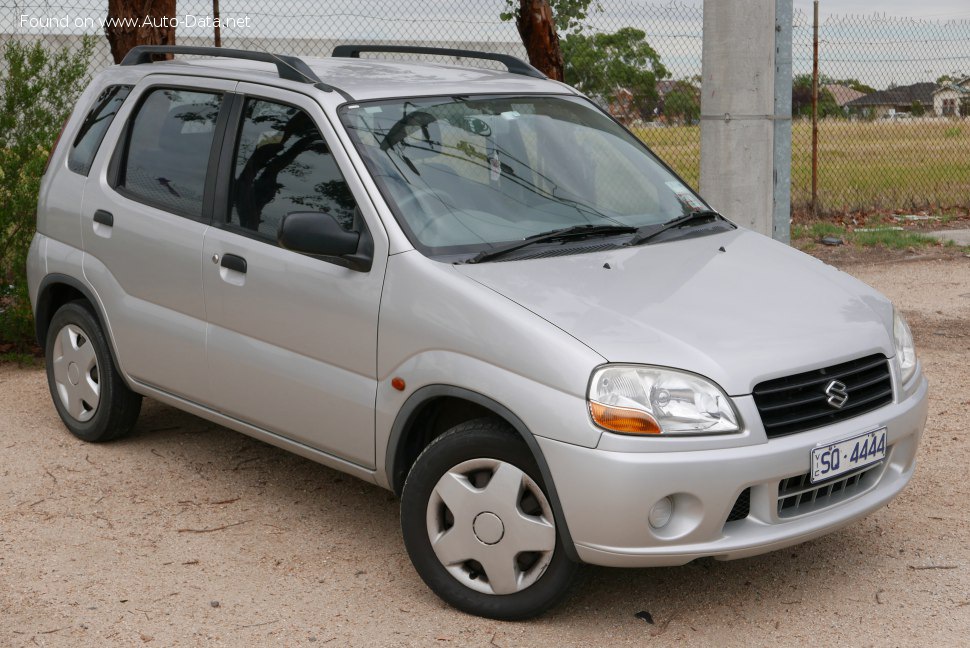
The Suzuki Ignis Hatchback I FH 1.0 i (5 dr) (53 Hp) represents a significant entry by Suzuki into the global subcompact car market, particularly gaining traction in Europe and Asia during its production run from 2000 to 2003. Though never officially offered for sale in the United States, the Ignis established itself as a practical, economical, and surprisingly resilient vehicle within its class. The 1.0 i variant, with its 53 horsepower engine and five-door configuration, was a key model in the Ignis lineup, showcasing Suzuki’s dedication to efficient and functional design in a compact, city-focused package. It provided an affordable and reliable transportation solution for a wide range of drivers.
The Suzuki Ignis: A Global City Car
The first-generation Ignis was more than just a basic hatchback. Its slightly elevated ride height foreshadowed the growing popularity of crossover vehicles, though the 1.0-liter, front-wheel-drive model remained firmly rooted in the hatchback segment. It offered a compelling combination of low operating costs and everyday usability. The design prioritized practicality and functionality over flashy aesthetics, a characteristic that appealed to its target demographic in international markets. The Ignis was designed to be a sensible and dependable choice for urban commuters and budget-conscious buyers.
Engine & Performance
The Suzuki Ignis Hatchback I FH 1.0 i was powered by a 1.0-liter (993 cm³) inline three-cylinder engine. This naturally aspirated engine, featuring a Single Overhead Cam (OHC) valvetrain with two valves per cylinder and single-point fuel injection, was engineered for fuel efficiency and durability. It produced 53 horsepower at 5700 rpm and a peak torque of 56.05 lb.-ft. (76 Nm) at 3300 rpm. This torque curve provided sufficient responsiveness for navigating city streets, allowing the lightweight Ignis to maneuver easily in urban traffic.
The engine’s compact design and aluminum construction contributed to the vehicle’s low curb weight of 1653.47 lbs. (750 kg). This light weight, combined with the three-cylinder engine, resulted in a weight-to-power ratio of 14.2 kg/Hp, which was competitive for its class and era. Power was delivered to the front wheels through a smooth-shifting 5-speed manual transmission, a common and reliable setup for economy cars. While not designed for high performance, the Ignis 1.0 i could accelerate from 0 to 60 mph in approximately 15.2 seconds, reaching a top speed of 90.1 mph (145 km/h). Its strength lay in its fuel economy, achieving a combined rating of 48 US mpg (4.9 l/100 km). Urban driving yielded 34.6 US mpg (6.8 l/100 km), while highway driving could reach up to 52.3 US mpg (4.5 l/100 km), making it an economical daily driver.
Design & Features
The Suzuki Ignis Hatchback I FH adopted a straightforward and practical design. As a 5-door hatchback, it prioritized accessibility and cargo space. Its compact dimensions – 151.38 inches in length, 62.6 inches in width, and 54.33 inches in height – made it highly maneuverable in urban environments, with a turning circle of just 31.5 feet. Despite its small size, the Ignis could comfortably seat five passengers, demonstrating Suzuki’s efficient interior packaging.
The exterior styling was clean and simple, featuring a relatively tall greenhouse and a short hood to maximize interior space. Large windows provided excellent visibility, enhancing safety and convenience in city driving. The front-engine, front-wheel-drive layout was typical for the segment, optimizing interior space and manufacturing efficiency. The interior was designed for durability and functionality, utilizing robust, easy-to-clean hard plastics. Cargo space was a key advantage, offering 9.89 cubic feet (280 liters) with the rear seats up, expanding to 21.9 cubic feet (620 liters) with the seats folded down, providing versatility for grocery shopping or weekend trips.
The chassis featured a wishbone front suspension and a coil spring rear suspension, providing a comfortable ride for its class while maintaining predictable handling. Braking was handled by ventilated discs at the front and drum brakes at the rear, a cost-effective and adequate setup for a lightweight vehicle with modest performance. The rack-and-pinion steering system contributed to the Ignis’s agile feel. Standard tires were 155/70 R13, mounted on 13-inch wheels, prioritizing efficiency and low rolling resistance.
Technical Specifications
| Category | Specification |
| Brand | Suzuki |
| Model | Ignis |
| Engine Displacement | 993 cm³ (1.0 Liter) |
| Engine Type | Inline Three-Cylinder, Naturally Aspirated |
| Valvetrain | Single Overhead Cam (OHC), 2 Valves per Cylinder |
| Fuel Injection | Single-Point |
| Horsepower | 53 Hp @ 5700 rpm |
| Torque | 56.05 lb.-ft. (76 Nm) @ 3300 rpm |
| Transmission | 5-Speed Manual |
| Drive Wheels | Front-Wheel Drive |
| Curb Weight | 1653.47 lbs. (750 kg) |
| Weight-to-Power Ratio | 14.2 kg/Hp |
| 0-60 mph | 15.2 seconds (estimated) |
| Top Speed | 90.1 mph (145 km/h) |
| Combined Fuel Economy | 48 US mpg (4.9 l/100 km) |
| Urban Fuel Economy | 34.6 US mpg (6.8 l/100 km) |
| Extra-Urban Fuel Economy | 52.3 US mpg (4.5 l/100 km) |
| Length | 151.38 inches |
| Width | 62.6 inches |
| Height | 54.33 inches |
| Turning Circle | 31.5 feet |
| Trunk Space (Rear Seats Up) | 9.89 cubic feet (280 liters) |
| Trunk Space (Rear Seats Down) | 21.9 cubic feet (620 liters) |