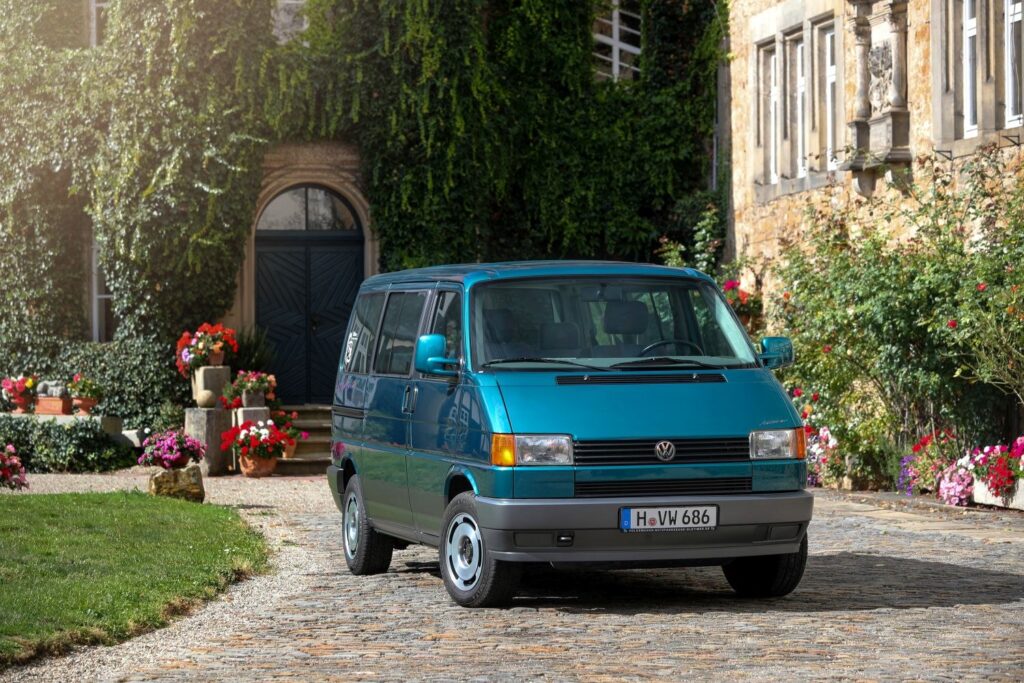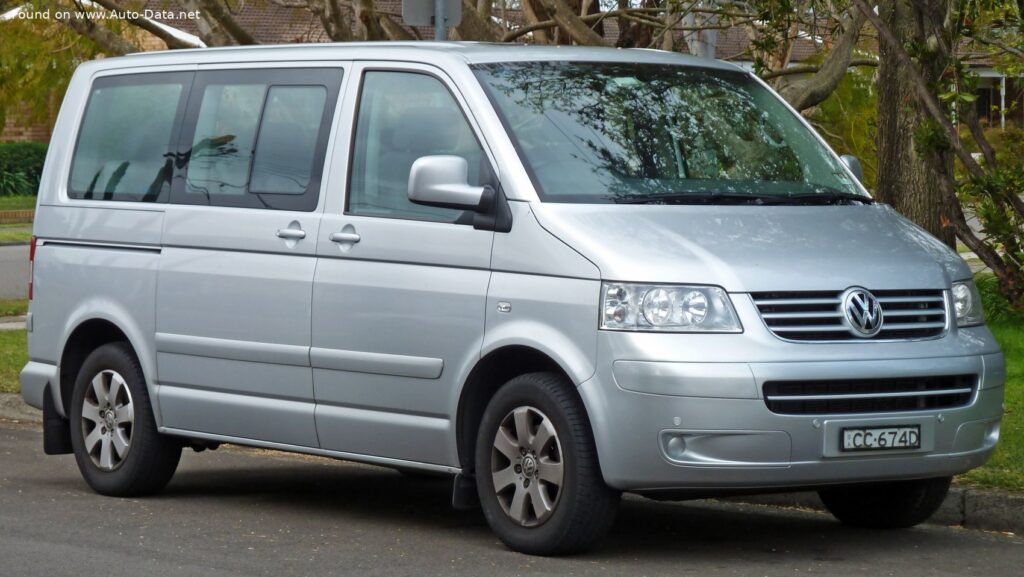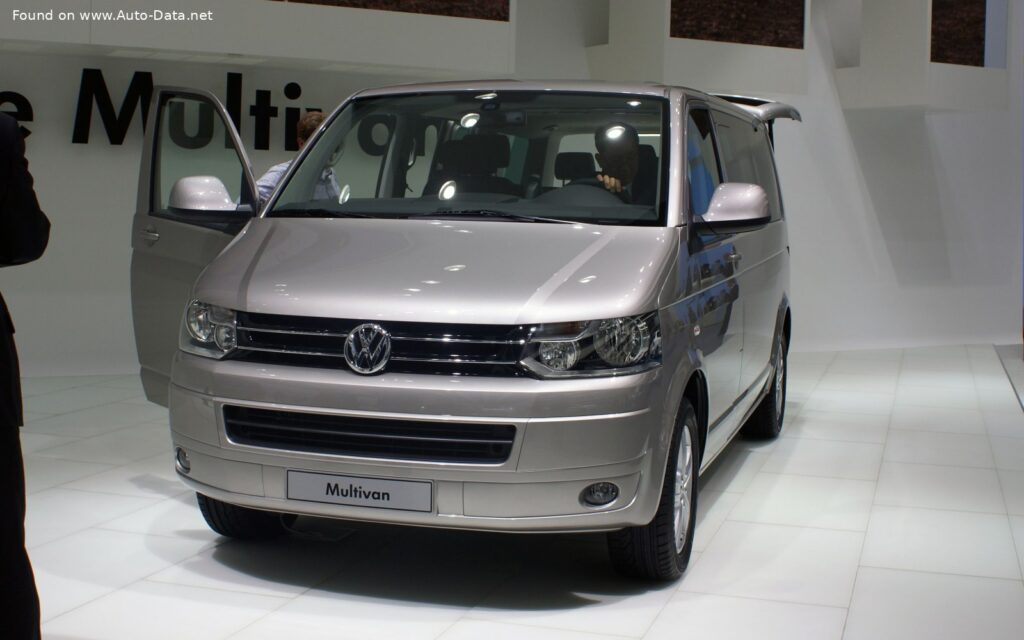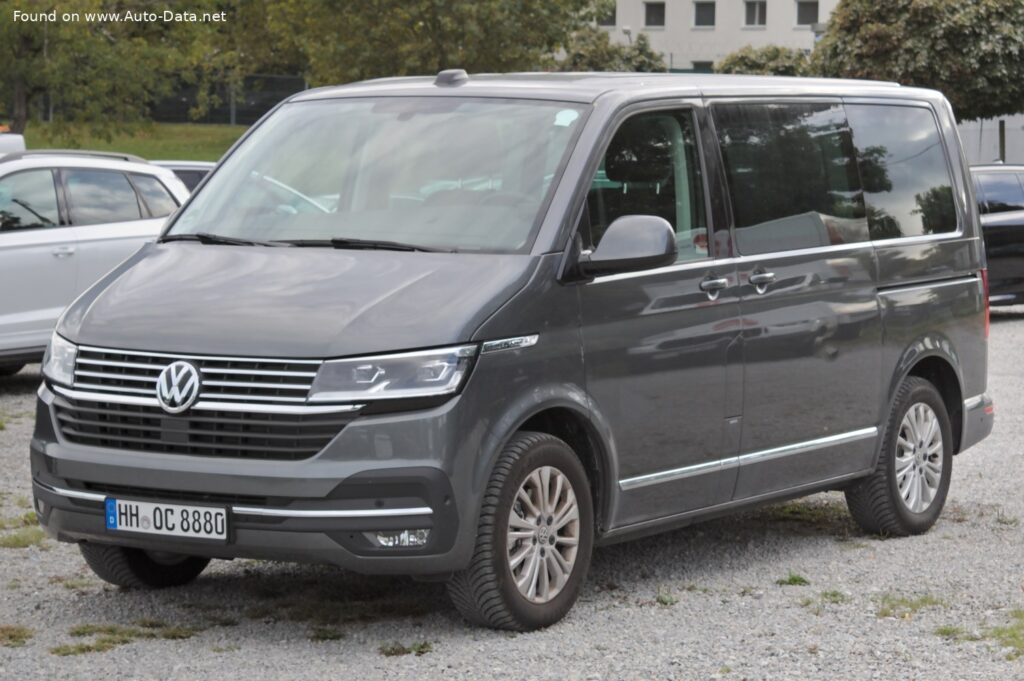
The Volkswagen Multivan (T6.1, facelift 2019) represents the latest evolution of a vehicle lineage deeply embedded in automotive history, tracing its roots back to the legendary Volkswagen Type 2 “Bus.” While not a common sight on American roads under this specific moniker, the Multivan is a cornerstone of Volkswagen’s commercial vehicle and passenger transport division in Europe and other international markets. This particular iteration, produced from 2019 to 2021, is a facelift of the sixth-generation Transporter/Multivan platform, known internally as T6.1. It cemented its reputation as a highly adaptable minivan, serving both as a spacious family hauler and a sophisticated executive shuttle.
Volkswagen Multivan (T6.1, Facelift 2019): A European Icon
The T6.1 facelift brought a host of technological and aesthetic updates, ensuring the Multivan remained competitive in its segment. It continued Volkswagen’s tradition of offering robust, practical, and comfortable vehicles designed to move people and their belongings with efficiency and German engineering prowess. The 2.0 TDI (150 Hp) DSG variant, a popular choice, combined a strong diesel powertrain with a smooth automatic transmission, catering to the demands for both performance and fuel economy in its primary markets.
Engine & Performance: The 2.0 TDI Powerplant
At the heart of this Volkswagen Multivan (T6.1, facelift 2019) model lies a potent yet frugal 2.0-liter TDI (Turbocharged Direct Injection) diesel engine. This four-cylinder, inline configuration engine, identified by codes like CXFA or CXHA, is a testament to Volkswagen’s expertise in diesel technology. Featuring a Double Overhead Camshaft (DOHC) valvetrain with four valves per cylinder and a sophisticated common rail fuel injection system, it delivers a robust 150 horsepower, available across a broad rev range from 3250 to 3750 rpm. Its power per liter stands at a respectable 76.2 HP/l, showcasing its efficiency.
Perhaps more critical for a vehicle designed to carry passengers and cargo is its torque output. The 2.0 TDI generates an impressive 250.77 lb-ft of torque, accessible from a low 1500 rpm all the way up to 3000 rpm. This wide torque band is crucial for effortless acceleration, confident overtaking, and maintaining speed, especially when the vehicle is fully loaded or towing. The engine’s front, transverse layout contributes to efficient packaging and front-wheel-drive architecture.
Power is managed by Volkswagen’s highly acclaimed 7-speed DSG (Direct Shift Gearbox) automatic transmission. This dual-clutch unit is renowned for its rapid, seamless gear changes, which not only enhance driving comfort but also contribute significantly to the vehicle’s overall efficiency. With this powertrain, the Multivan 2.0 TDI achieves a 0-60 mph acceleration time of 12.4 seconds and a top speed of 113.09 mph – figures that are more than adequate for a vehicle of its class, prioritizing steady progress and long-distance comfort over outright sportiness.
Fuel economy is a strong suit for this diesel-powered minivan. Volkswagen officially rated its combined fuel consumption at an impressive 39.2 US mpg (6 liters per 100 km). Even in urban driving, it manages 35.6 US mpg, demonstrating the inherent efficiency of the TDI engine combined with the DSG transmission and modern engine management systems, including a Start & Stop system and a particulate filter. These technologies help the Multivan meet stringent Euro 6d-ISC-FCM emission standards, with CO2 emissions ranging from 185 to 186 g/km.
Design & Features: Practicality and Versatility
The Volkswagen Multivan (T6.1, facelift 2019) retains its iconic, purposeful minivan silhouette, a design language optimized for maximum interior space and functionality. With five doors and seating configurations for 5 to 7 occupants, it offers remarkable versatility. The T6.1 facelift introduced refreshed styling cues, including a redesigned front grille, updated bumper, and modern LED lighting elements, giving it a more contemporary and sophisticated appearance while preserving its unmistakable identity.
Inside, the Multivan truly shines with its adaptable cabin. The Multivan’s reputation rests on its highly modular seating system, allowing seats to be slid, swiveled, or removed to create various passenger and cargo configurations. This flexibility is paramount for both family use and commercial applications, such as airport shuttles or VIP transport. The maximum trunk space of an astonishing 151.85 cubic feet (4300 liters) underscores its exceptional cargo-carrying capabilities, making it ideal for large luggage, sports equipment, or business goods.
Dimensions are crucial for a vehicle designed for both urban maneuverability and highway stability. The Multivan measures 193.07 inches in length, 74.96 inches in width (90.43 inches including mirrors), and stands between 77.56 and 78.35 inches tall, depending on the configuration. Its generous 118.11-inch wheelbase contributes to a smooth ride and stable handling. Despite its size, a minimum turning circle of 39.04 feet makes it surprisingly agile in tighter spaces. Ground clearance of 7.6 to 8.23 inches provides a degree of confidence on varied terrain, complemented by approach and departure angles designed for practical utility.
From a technological standpoint, the Multivan features an electric power steering system, offering precise control and ease of maneuvering. Standard safety equipment includes an Anti-lock Braking System (ABS) with ventilated discs at the front and disc brakes at the rear, ensuring reliable stopping power. The independent McPherson front suspension with a coil spring and anti-roll bar, paired with a wishbone rear suspension and transverse stabilizer, provides a comfortable and composed ride, even with a full load. Various tire and wheel size options, from 16-inch to 18-inch, allow for customization based on preference for ride comfort, handling, or aesthetics.
Technical Specifications
| Category | Specification |
| Brand | Volkswagen |
| Model | Multivan |
| Generation | Multivan (T6.1, facelift 2019) |
| Type (Engine) | 2.0 TDI (150 Hp) DSG |
| Start of Production | 2019 |
| End of Production | 2021 |
| Powertrain Architecture | Internal Combustion Engine |
| Body Type | Minivan (5 Doors, 5-7 Seats) |
| Fuel Consumption (Urban) | 6.6 l/100 km (35.6 US mpg) |
| Fuel Consumption (Extra Urban) | 5.7 l/100 km (41.3 US mpg) |
| Fuel Consumption (Combined) | 6 l/100 km (39.2 US mpg) |
| CO2 Emissions | 185-186 g/km |
| Fuel Type | Diesel |
| Acceleration 0 – 60 mph | 12.4 sec |
| Maximum Speed | 113.09 mph (182 km/h) |
| Emission Standard | Euro 6d-ISC-FCM |
| Weight-to-Power Ratio | 32.6 lbs/Hp (14.8 kg/Hp) |
| Weight-to-Torque Ratio | 14.3 lbs/Nm (6.5 kg/Nm) |
| Power | 150 Hp @ 3250-3750 rpm |
| Power per Liter | 76.2 Hp/l |
| Torque | 250.77 lb-ft @ 1500-3000 rpm (340 Nm) |
| Engine Layout | Front, Transverse |
| Engine Model/Code | CXFA, CXHA |
| Engine Displacement | 2.0 Liters (1968 cm3 / 120.09 cu. in.) |
| Number of Cylinders | 4 (Inline configuration) |
| Number of Valves per Cylinder | 4 |
| Fuel Injection System | Diesel Commonrail |
| Engine Aspiration | Turbocharger, Intercooler |
| Valvetrain | DOHC |
| Engine Oil Capacity | 7.4 l (7.82 US qt) |
| Engine Systems | Start & Stop System, Particulate filter |
| Kerb Weight | 4878.83 – 5121.34 lbs (2213-2323 kg) |
| Max. Weight | 6790.24 lbs (3080 kg) |
| Max Load | 1668.9 – 1911.41 lbs (757-867 kg) |
| Trunk (Boot) Space – Max | 151.85 cu. ft. (4300 l) |
| Fuel Tank Capacity | 18.49 US gal (70 l) |
| AdBlue Tank | 5.81 US gal (22 l) |
| Length | 193.07 in. (4904 mm) |
| Width | 74.96 in. (1904 mm) |
| Width Including Mirrors | 90.43 in. (2297 mm) |
| Height | 77.56 – 78.35 in. (1970-1990 mm) |
| Wheelbase | 118.11 in. (3000 mm) |
| Minimum Turning Circle (Diameter) | 39.04 ft. (11.9 m) |
The Volkswagen Multivan (T6.1, facelift 2019) holds a unique and esteemed position in the automotive landscape, particularly in Europe. It is more than just a minivan; it is a direct descendant of the iconic Volkswagen Type 2, a vehicle that transcended mere transportation to become a cultural phenomenon. This heritage imbues the Multivan with a certain charm and recognition that few competitors can match.
Its reputation is built on a foundation of reliability, durability, and unmatched practicality. Owners and businesses alike value the Multivan for its robust build quality and its ability to withstand demanding use. The 2.0 TDI engine, in particular, is celebrated for its longevity and fuel efficiency. This robust reputation contributes to strong residual values.
In its primary European market, the Multivan faces competition from vehicles like the Mercedes-Benz V-Class, Ford Transit Custom, Peugeot Traveller, and Citroën SpaceTourer. While these competitors offer similar versatility, the Multivan distinguishes itself with its heritage, perceived build quality, and the breadth of its configurable interior.
The absence of the Multivan in the mainstream American market reflects divergent automotive preferences. While Volkswagen historically offered a minivan in the U.S., the traditional large minivan segment has largely been eclipsed by SUVs and crossovers in North America. Furthermore, diesel powertrains have faced challenges in the U.S. passenger vehicle market. However, the Multivan’s enduring success globally underscores its timeless appeal and Volkswagen’s mastery in creating highly functional and beloved people movers.