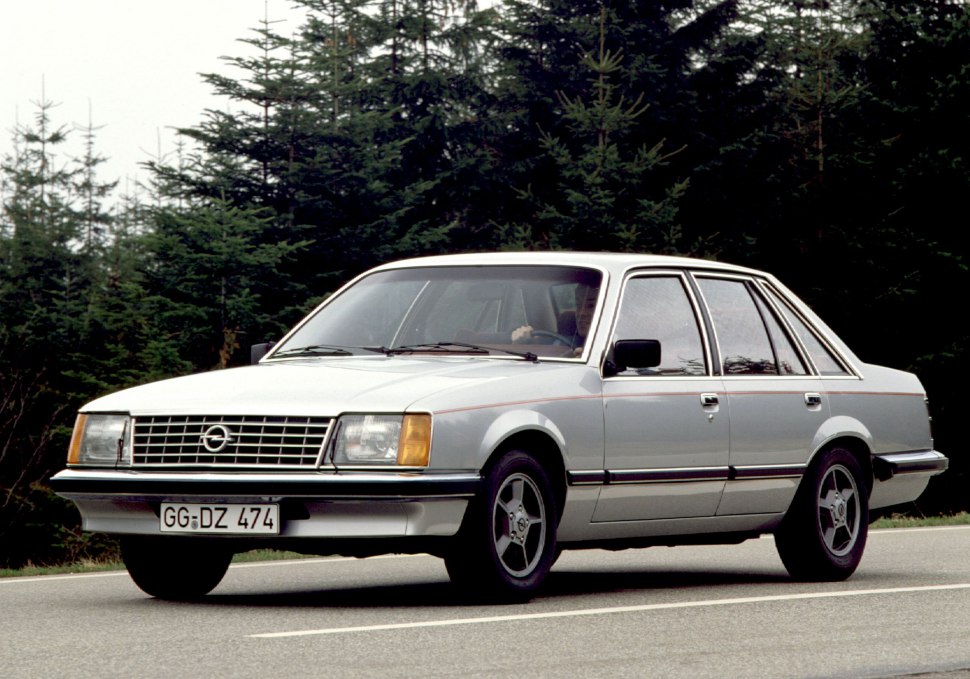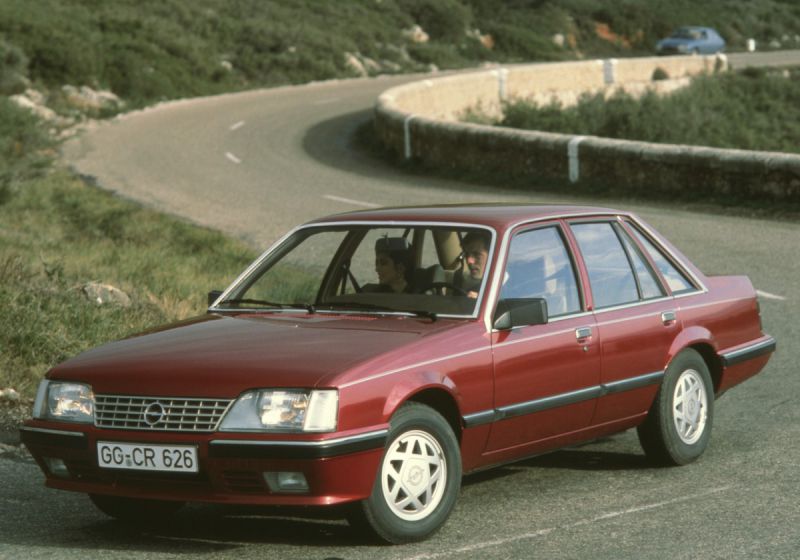
The Opel Senator A (facelift 1982) represents a significant chapter in the history of European executive automobiles, serving as Opel’s flagship sedan in the early 1980s. Produced by the German automaker Opel, a subsidiary of General Motors, the Senator was positioned above the Rekord and Commodore models, aiming to compete in the demanding luxury and executive car segments primarily across Europe. While Opel vehicles were occasionally rebadged and sold in other markets, the Senator itself was not directly offered under the Opel brand in the United States, making its primary impact felt within its native continent. This particular variant, the 2.0 E (115 Hp), was part of the refreshed A-generation, which received a significant update in 1982, enhancing its styling, features, and powertrain options to keep pace with evolving market expectations. Manufactured from 1983 to 1984, this iteration of the Senator A combined traditional German engineering with a focus on comfort and practicality, embodying the design philosophies prevalent in the early 1980s.
Opel Senator A (facelift 1982): A Detailed Overview
The Opel Senator A, launched in 1978, was Opel’s attempt to create a genuinely upmarket vehicle to rival the established German premium brands. The facelift in 1982 brought subtle but important changes, refining the design and updating the mechanical components. The Senator A was a key model for Opel, demonstrating their engineering capabilities and design prowess within the European automotive landscape. It was a direct competitor to models like the Ford Granada and Rover SD1, offering a blend of comfort, space, and reliability.
Engine & Performance
The Opel Senator A (facelift 1982) 2.0 E was powered by a 1,979 cc (120.77 cu. in.) inline four-cylinder gasoline engine. This engine utilized a Single Overhead Camshaft (SOHC) valvetrain with two valves per cylinder, a common configuration for Opel at the time. A multi-port fuel injection system replaced earlier carbureted setups, improving fuel efficiency and throttle response. Producing 115 horsepower at 5600 rpm and 160 Nm (118.01 lb.-ft.) of torque at 4200 rpm, the engine provided adequate performance for comfortable cruising and everyday driving.
Power was delivered to the rear wheels via a five-speed manual transmission, offering drivers a direct and engaging driving experience. The rear-wheel-drive layout contributed to balanced handling characteristics, typical of executive sedans of the era. Performance figures included a 0-60 mph acceleration time of approximately 12 seconds and a top speed of 111.85 mph (180 km/h). Combined fuel consumption was rated at 9.2 liters per 100 kilometers (25.6 US mpg), a respectable figure for a vehicle of its size and class in the early 1980s. The weight-to-power ratio was 11.6 kg/Hp, and the weight-to-torque ratio was 8.3 kg/Nm.
Design & Features
The Senator A (facelift 1982) maintained the classic four-door sedan body style, a hallmark of the executive car segment. The 1982 facelift brought subtle styling revisions, including a revised front grille, updated headlights, and refined body trim, resulting in a more modern and streamlined appearance. The vehicle measured 190.51 inches (4839 mm) in length, 67.8 inches (1722 mm) in width, and 55.71 inches (1415 mm) in height, presenting a substantial road presence. A wheelbase of 105.63 inches (2683 mm) contributed to a comfortable ride and a spacious interior.
The interior was designed with comfort and practicality in mind. While specific trim levels varied, the Senator typically featured comfortable cloth upholstery, with optional leather available. Amenities included power windows, central locking, and a heating and ventilation system. The spacious cabin comfortably accommodated five passengers, and the generous trunk capacity of 25.25 cu. ft. (715 liters) provided ample space for luggage and cargo. Safety features, while limited by the standards of today, included robust construction and effective braking systems, featuring ventilated disc brakes at the front and disc brakes at the rear. The turning circle was a manageable 35.43 feet (10.8 meters) for a car of its size.
Technical Specifications
| Category | Specification |
| Brand | Opel |
| Model | Senator |
| Generation | Senator A (facelift 1982) |
| Type (Engine) | 2.0 E (115 Hp) |
| Start of production | 1983 year |
| End of production | 1984 year |
| Powertrain Architecture | Internal Combustion engine |
| Body type | Sedan |
| Seats | 5 |
| Doors | 4 |
| Fuel consumption (combined) | 25.6 US mpg (9.2 l/100 km) |
| Fuel Type | Petrol (Gasoline) |
| Acceleration 0 – 60 mph | 12 seconds |
| Maximum speed | 111.85 mph (180 km/h) |
| Weight-to-power ratio | 11.6 kg/Hp, 86.1 Hp/tonne |
| Weight-to-torque ratio | 8.3 kg/Nm, 119.9 Nm/tonne |
| Power | 115 Hp @ 5600 rpm |
| Power per liter | 58.1 Hp/l |
| Torque | 118.01 lb.-ft. @ 4200 rpm (160 Nm) |
| Engine displacement | 120.77 cu. in. (1979 cm3) |
| Number of cylinders | 4 |
| Engine configuration | Inline |
| Cylinder Bore | 3.74 in. (95 mm) |
| Piston Stroke | 2.75 in. (69.8 mm) |
| Compression ratio | 9.4:1 |
| Number of valves per cylinder | 2 |
| Fuel injection system | Multi-port manifold injection |
| Engine aspiration | Naturally aspirated engine |
| Valvetrain | SOHC |
| Engine oil capacity | 4.02 US qt (3.8 l) |
| Kerb Weight | 2943.17 lbs (1335 kg) |
| Max. weight | 4155.71 lbs (1885 kg) |
| Max load | 1212.54 lbs (550 kg) |
| Trunk (boot) space – maximum | 25.25 cu. ft. (715 l) |
| Fuel tank capacity | 19.81 US gal (75 l) |
| Length | 190.51 in. (4839 mm) |
| Width | 67.8 in. (1722 mm) |
| Height | 55.71 in. (1415 mm) |
| Wheelbase | 105.63 in. (2683 mm) |
| Front track | 56.97 in. (1447 mm) |
| Rear (Back) track | 57.95 in. (1472 mm) |
| Ride height (ground clearance) | 5.51 in. (140 mm) |
| Drag coefficient (Cd) | 0.39 |
| Minimum turning circle (turning diameter) | 35.43 ft. (10.8 m) |
| Drivetrain Architecture | The Internal combustion engine (ICE) drives the rear wheels of the vehicle. |
| Drive wheel | Rear wheel drive |
| Number of gears and type of gearbox | 5 gears, manual transmission |
| Front brakes | Ventilated discs |
| Rear brakes | Disc |
Legacy and Market Impact
The Opel Senator A (facelift 1982) played a vital role in Opel’s strategy to compete in the European executive car market. It offered a compelling alternative to rivals like the Ford Granada and the more premium offerings from BMW and Mercedes-Benz. While lacking the prestige of its German competitors, the Senator provided a robust, reliable, and comfortable vehicle at a more accessible price point. The facelift in 1982 helped maintain its appeal with updated styling and features.
Today, the Senator A is appreciated by enthusiasts for its solid engineering, comfortable ride, and distinctive 1980s design. Its rear-wheel-drive layout and relatively simple mechanicals make it a popular choice among collectors and hobbyists. The Senator lineage continued with the Senator B, but the A-generation, particularly in its facelifted form, remains a significant example of Opel’s ambition in the executive class, representing a blend of traditional German engineering and evolving automotive technology.