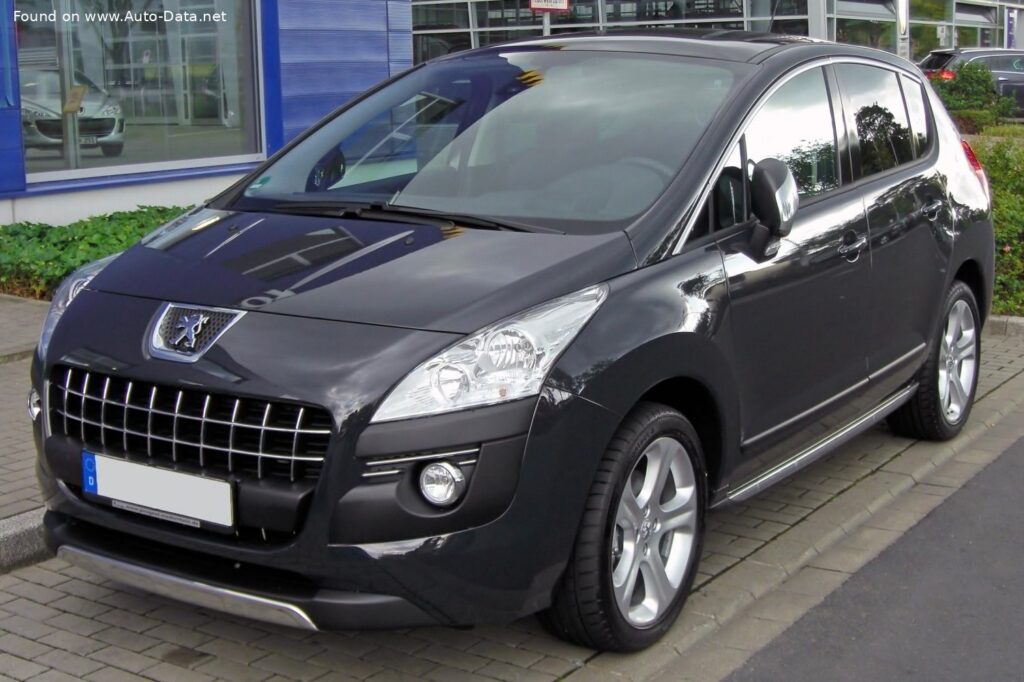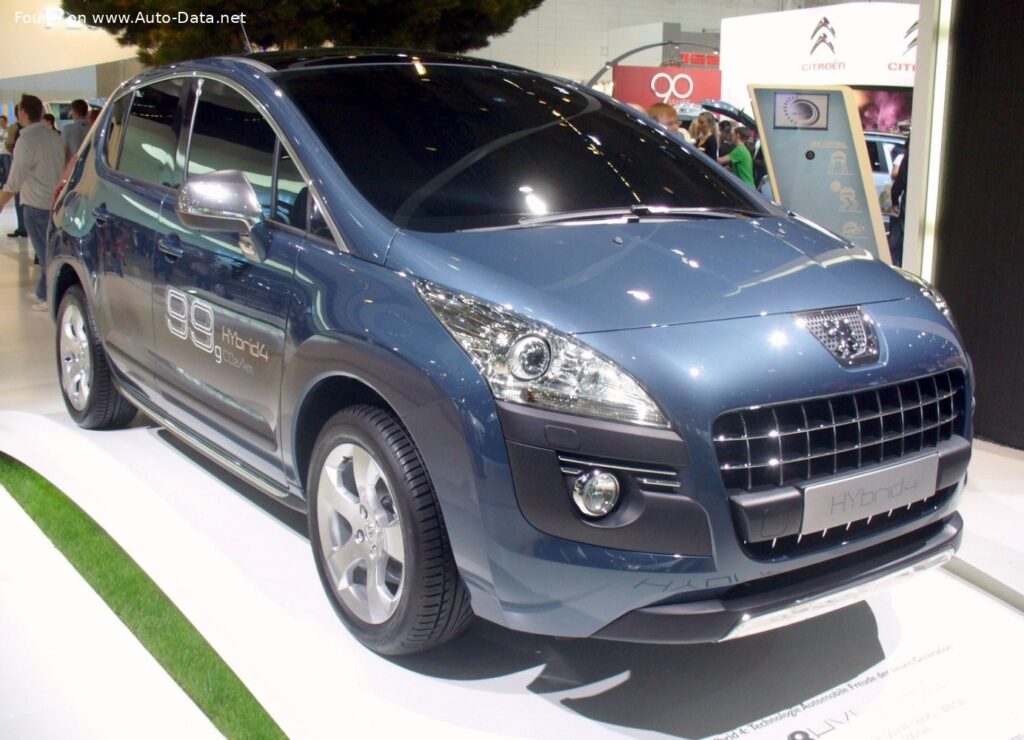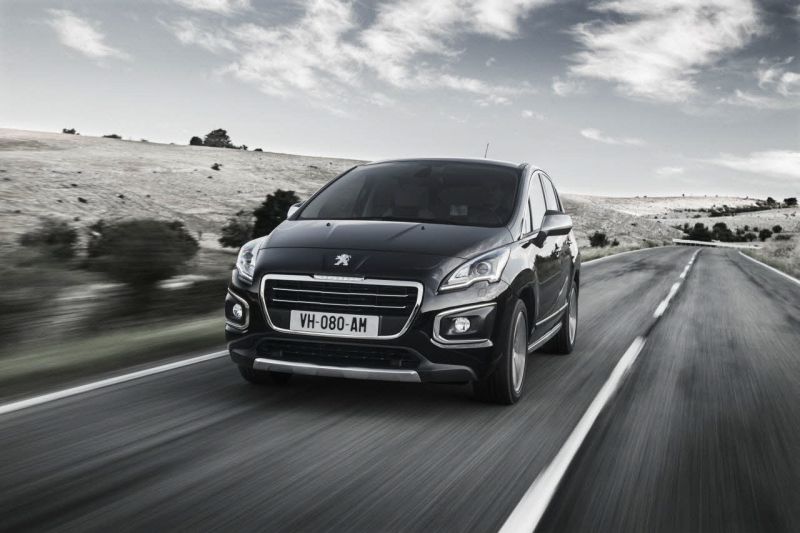
The Peugeot 3008 I (Phase II, 2013) represents a significant offering from the French automaker in the highly competitive compact crossover SUV segment. Launched in 2009, the first-generation 3008 carved out a niche for itself by blending the practicality of an SUV with the driving dynamics and comfort of a conventional hatchback. The “Phase II” designation refers to the comprehensive facelift introduced in 2013, which brought refreshed styling, updated features, and refinements to the powertrain lineup, ensuring the model remained relevant and appealing in its primary European and Asian markets until the introduction of the radically redesigned second generation in 2016.
Positioned as a versatile family vehicle, the 3008 I (Phase II, 2013) aimed to bridge the gap between traditional SUVs and MPVs (Multi-Purpose Vehicles). It offered an elevated driving position, a spacious and adaptable interior, and a strong emphasis on fuel efficiency and reduced emissions, particularly in its diesel variants, though the 1.6 THP gasoline engine discussed here provided a compelling balance of performance and refinement. While never officially sold in the United States, the 3008 played a crucial role in Peugeot’s global strategy, helping the brand capitalize on the burgeoning demand for crossovers, a trend that continues to dominate the automotive landscape worldwide. This detailed look focuses on the 1.6 THP (Turbo High Pressure) variant with its 156 horsepower engine and automatic transmission, a popular choice for its smooth power delivery and ease of driving.
Engine & Performance of the Peugeot 3008 I (Phase II, 2013)
At the heart of the Peugeot 3008 I (Phase II, 2013) 1.6 THP (156 Hp) Automatic lies a sophisticated 1.6-liter (1598 cm³) turbocharged inline-four gasoline engine, internally designated as the 5FM EP6CDTM. This engine, a product of collaboration between PSA Peugeot Citroën and BMW, was renowned for its impressive balance of power, torque, and efficiency for its displacement. Utilizing direct fuel injection, a turbocharger, and an intercooler, the engine produced a healthy 156 horsepower at 6000 rpm. More importantly for everyday driving, it delivered a robust 177.01 lb.-ft. (240 Nm) of torque from a remarkably low 1400 rpm, providing excellent low-end grunt and responsiveness, which is particularly beneficial in urban environments and for overtaking maneuvers.
Power was seamlessly transferred to the front wheels via a smooth-shifting 6-speed automatic transmission. This combination allowed the 3008 to accelerate from 0 to 60 mph in a respectable 9 seconds (0-100 km/h in 9.5 seconds), with a top speed of 125.52 mph (202 km/h). These figures underscored its capability as a comfortable highway cruiser and a nimble city vehicle. Despite its performance, the 1.6 THP engine maintained commendable fuel economy for its class, achieving a combined rating of 30.9 US mpg (7.6 l/100 km). Urban consumption stood at 21.4 US mpg (11 l/100 km), while extra-urban driving could see figures as high as 42 US mpg (5.6 l/100 km). Its CO2 emissions of 175 g/km meant it complied with the Euro 5 emission standard, reflecting Peugeot’s commitment to environmental responsibility during that era. The engine’s architecture, with a front, transverse layout and a front-wheel-drive setup, contributed to efficient packaging and predictable handling characteristics.
Design & Features of the Peugeot 3008 I (Phase II, 2013)
The Peugeot 3008 I (Phase II, 2013) retained the distinctive silhouette of the original model but benefited from a series of aesthetic upgrades that modernized its appearance. The facelift primarily focused on the front fascia, introducing a redesigned grille, revised headlights with LED daytime running lights, and updated fog lamp surrounds, giving it a more contemporary and sophisticated look. The rear received subtle tweaks to the taillight clusters, completing the refreshed exterior. As a 5-door SUV with seating for five, the 3008 was designed with practicality and versatility in mind.
Measuring 171.85 inches in length, 72.32 inches in width (excluding mirrors), and 64.37 inches in height, with a wheelbase of 102.87 inches, the 3008 offered a compact footprint that made it maneuverable in tight city streets, yet spacious enough for family duties. The interior was a key selling point, featuring a well-thought-out cabin with quality materials and a driver-focused cockpit. The elevated driving position provided excellent visibility, a characteristic highly valued by crossover buyers. Storage solutions were abundant, and the trunk space was particularly generous, offering a minimum of 18.08 cubic feet (512 liters) with the rear seats up, expanding to an impressive 56.64 cubic feet (1604 liters) when the rear seats were folded down. This adaptability, along with a split-opening tailgate (a common feature on SUVs of the era), made loading and unloading bulky items considerably easier.
Underneath, the 3008 was built on a platform shared with other PSA models, providing a comfortable and composed ride. It featured an independent McPherson strut front suspension with coil springs and an anti-roll bar, complemented by an independent coil spring rear suspension. This setup contributed to its car-like handling, setting it apart from more utilitarian SUVs. Braking performance was assured by ventilated discs at the front and solid discs at the rear, augmented by an Anti-lock Braking System (ABS) for enhanced safety. Steering was a precise rack and pinion system. The vehicle typically came with 17-inch or optional 18-inch wheels, shod with tires sized 225/50 R17 or 235/45 R18, respectively, offering a good balance of grip and ride comfort. Standard features on the Phase II models often included automatic climate control, a decent audio system, and various driver aids, all contributing to a pleasant ownership experience.
Technical Specifications for the Peugeot 3008 I (Phase II, 2013)
| General Information | |
| Brand | Peugeot |
| Model | 3008 |
| Generation | 3008 I (Phase II, 2013) |
| Type (Engine) | 1.6 THP (156 Hp) Automatic |
| Start of Production | 2013 |
| End of Production | 2015 |
| Powertrain Architecture | Internal Combustion engine |
| Body Type | SUV |
| Seats | 5 |
| Doors | 5 |
| Performance Specs | |
| Fuel Consumption (Urban) | 21.4 US mpg (11 l/100 km) |
| Fuel Consumption (Extra Urban) | 42 US mpg (5.6 l/100 km) |
| Fuel Consumption (Combined) | 30.9 US mpg (7.6 l/100 km) |
| CO2 Emissions | 175 g/km |
| Fuel Type | Petrol (Gasoline) |
| Acceleration 0 – 60 mph | 9 sec |
| Acceleration 0 – 100 km/h | 9.5 sec |
| Maximum Speed | 125.52 mph (202 km/h) |
| Emission Standard | Euro 5 |
| Weight-to-Power Ratio | 9.5 kg/Hp (105.4 Hp/tonne) |
| Weight-to-Torque Ratio | 6.2 kg/Nm (162.2 Nm/tonne) |
| Engine Specs | |
| Power | 156 Hp @ 6000 rpm |
| Power per Liter | 97.6 Hp/l |
| Torque | 177.01 lb.-ft. (240 Nm) @ 1400 rpm |
| Engine Layout | Front, Transverse |
| Engine Model/Code | 5FM EP6CDTM |
| Engine Displacement | 97.52 cu. in. (1598 cm³) |
| Number of Cylinders | 4 |
| Engine Configuration | Inline |
| Number of Valves per Cylinder | 4 |
| Fuel Injection System | Direct injection |
| Engine Aspiration | Turbocharger, Intercooler |
| Engine Oil Capacity | 4.49 US qt (4.25 l) |
| Coolant Capacity | 6.55 US qt (6.2 l) |
| Space, Volume and Weights | |
| Kerb Weight | 3262.84 lbs. (1480 kg) |
| Max. Weight | 4475.38 lbs. (2030 kg) |
| Max Load | 1212.54 lbs. (550 kg) |
| Trunk (boot) Space – Minimum | 18.08 cu. ft. (512 l) |
| Trunk (boot) Space – Maximum | 56.64 cu. ft. (1604 l) |
| Fuel Tank Capacity | 15.85 US gal (60 l) |
| Dimensions | |
| Length | 171.85 in. (4365 mm) |
| Width | 72.32 in. (1837 mm) |
| Width with mirrors folded | 75.2 in. (1910 mm) |
| Width including mirrors | 83.19 in. (2113 mm) |
| Height | 64.37 in. (1635 mm) |
| Wheelbase | 102.87 in. |