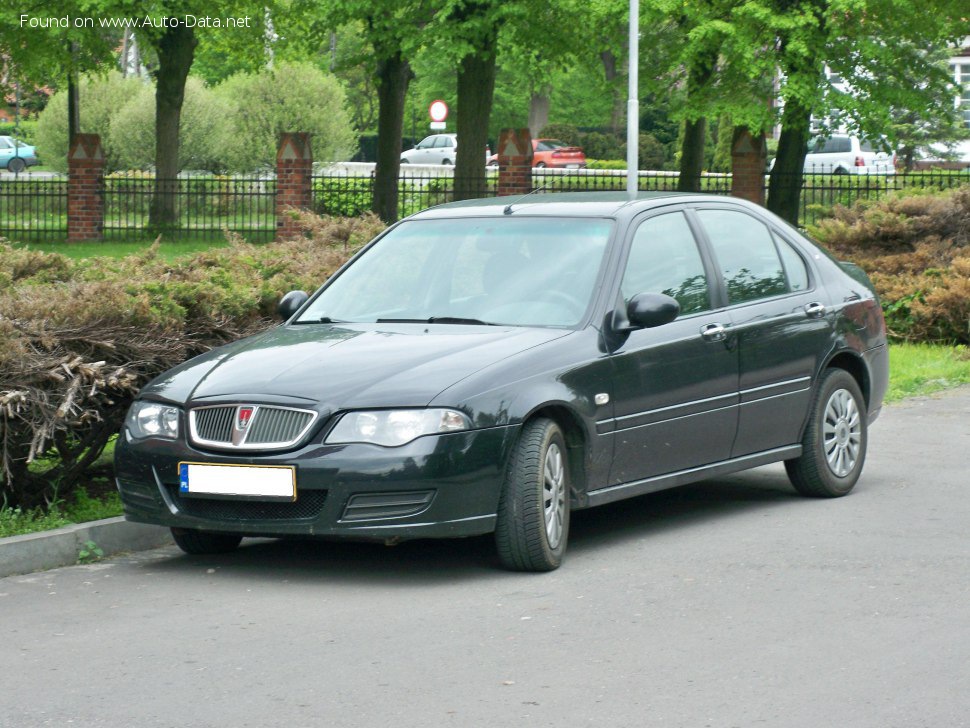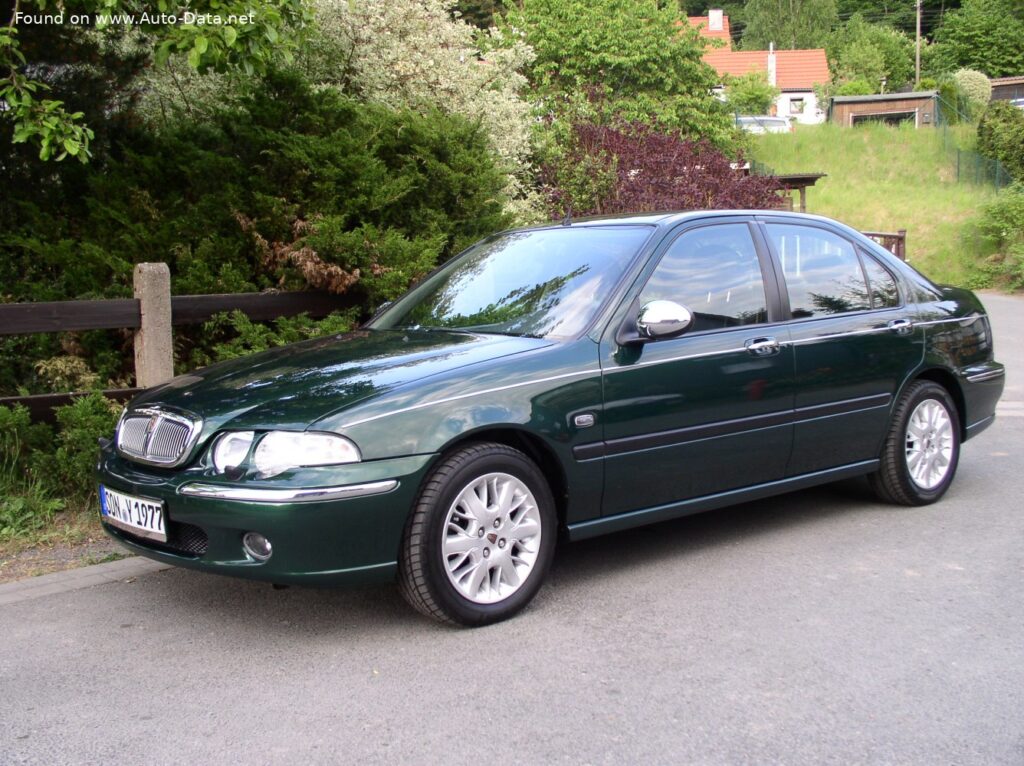
The Rover 45 (RT) 1.8i 16V (117 Hp) CVT represented a crucial offering for the British automaker Rover during its production run from 1999 to 2005. Positioned within the competitive European compact and mid-size segments, the 45 aimed to combine traditional British comfort with everyday usability. This article details the Rover 45 (RT) 1.8i 16V (117 Hp) CVT variant, a model that paired a free-revving 1.8-liter gasoline engine with a continuously variable transmission (CVT) to deliver a refined and efficient driving experience.
Rover 45 (RT): A European Compact
As a vehicle not officially sold in the United States, the Rover 45’s significance is rooted in the European market. Developed during a period of considerable change for Rover, the 45 benefited from a technical partnership with Honda. Essentially a re-engineered and restyled version of the Honda Domani – and sharing significant components with the Honda Civic – the Rover 45 aimed to provide a more mature aesthetic and driving experience than its Japanese counterpart. It targeted customers who prioritized understated elegance and comfort over sporty performance. The 1.8i 16V model with its CVT gearbox was specifically designed for drivers seeking ease of use and fuel efficiency in urban and suburban settings.
Engine & Performance
The Rover 45 (RT) 1.8i 16V (117 Hp) CVT was powered by Rover’s K-Series engine, specifically the K18 code variant. This 1.8-liter (1796 cc or 109.6 cu. in.) inline four-cylinder engine was naturally aspirated and featured a Double Overhead Camshaft (DOHC) valvetrain with four valves per cylinder, totaling 16 valves. This configuration facilitated efficient breathing and a responsive power delivery characteristic of the K-Series engines.
The engine produced 117 horsepower at 5500 rpm, resulting in a power-per-liter ratio of 65.1 hp/l. Torque output peaked at 118.01 lb.-ft. (160 Nm) at 2750 rpm. This low-end torque, combined with the smooth operation of the Continuously Variable Transmission (CVT), provided an accessible and flexible driving experience. A multi-port fuel injection system ensured precise fuel delivery and efficiency.
The CVT was a defining feature of this variant. Unlike traditional automatic transmissions with fixed gear ratios, the CVT offered an infinite number of ratios, allowing the engine to operate at its most efficient rpm for any given speed. This resulted in exceptionally smooth acceleration, free from the noticeable shifts of a conventional automatic. The Rover 45 1.8i 16V CVT could accelerate from 0 to 60 mph in 9.2 seconds, with a top speed of 118.06 mph (190 km/h). While not a performance leader, these figures were suitable for typical European driving conditions.
Fuel economy was a key benefit of the CVT. The combined fuel consumption was rated at 27 US mpg (8.7 l/100 km). Urban driving yielded 19.3 US mpg (12.2 l/100 km), while highway driving achieved an impressive 35.1 US mpg (6.7 l/100 km). These figures underscored Rover’s commitment to offering a practical and economical family sedan, particularly in markets sensitive to fuel costs.
Design & Features
The Rover 45 (RT) was a conventional four-door sedan with a conservative and mature aesthetic. Its design evolved Rover’s established styling cues, featuring a distinctive chrome grille and traditional headlamp clusters that gave it a recognizable “British” appearance. Despite its Honda underpinnings, Rover designers successfully imbued the 45 with a unique character.
Measuring 177.83 inches (4517 mm) in length, 66.77 inches (1696 mm) in width, and 54.92 inches (1395 mm) in height, with a 103.15-inch (2620 mm) wheelbase, the 45 offered a comfortable cabin for five occupants. The interior emphasized comfort and perceived quality, featuring materials and finishes intended to provide an upscale feel. Standard features included hydraulic power steering for a communicative and comfortable steering feel. Safety features included an Anti-lock Braking System (ABS), which was becoming increasingly common in the segment, enhancing braking control. The front suspension utilized a wishbone setup, while the rear featured a spring strut design, contributing to a balanced ride and handling.
Practicality was a strong suit. The trunk offered 16.6 cubic feet (470 liters) of space, expanding to 28.6 cubic feet (810 liters) with the rear seats folded. The vehicle rode on 185/60 R14 tires mounted on 14-inch wheel rims, a common specification for compact sedans of the early 2000s, balancing ride comfort with adequate grip.
Technical Specifications
| Category | Specification |
| General Information | |
| Brand | Rover |
| Model | 45 |
| Generation | 45 (RT) |
| Type (Engine) | 1.8i 16V (117 Hp) CVT |
| Production Start | 1999 |
| Production End | 2005 |
| Powertrain Architecture | Internal Combustion Engine |
| Body Type | Sedan |
| Seats | 5 |
| Doors | 4 |
| Performance Specifications | |
| Fuel Consumption (Urban) | 19.3 US mpg (12.2 l/100 km) |
| Fuel Consumption (Extra Urban) | 35.1 US mpg (6.7 l/100 km) |
| Fuel Consumption (Combined) | 27 US mpg (8.7 l/100 km) |
| Fuel Type | Petrol (Gasoline) |
| Acceleration 0-60 mph | 9.2 sec |
| Maximum Speed | 118.06 mph (190 km/h) |
| Weight-to-Power Ratio | 10.5 kg/Hp |
| Weight-to-Torque Ratio | 7.7 kg/Nm |
| Engine Specifications | |
| Power | 117 Hp @ 5500 rpm |
| Power per Liter | 65.1 Hp/l |
| Torque | 118.01 lb.-ft. (160 Nm) @ 2750 rpm |
| Engine Layout | Front, Transverse |
| Engine Model/Code | K18 |
| Engine Displacement | 1.8 liters (1796 cm3 / 109.6 cu. in.) |
| Number of Cylinders | 4 |
| Engine Configuration | Inline |
| Cylinder Bore | 3.15 in. (80 mm) |
| Piston Stroke | 3.52 in. (89.3 mm) |
| Compression Ratio | 10.5:1 |
| Valves per Cylinder | 4 |
| Fuel Injection System | Multi-port manifold injection |
| Engine Aspiration | Naturally aspirated engine |
| Valvetrain | DOHC |
| Engine Oil Capacity | 5.28 US qt (5 l) |
| Coolant Capacity | 5.81 US qt (5.5 l) |
| Space, Volume, and Weights | |
| Kerb Weight | 2711.69 lbs (1230 kg) |
| Max. Weight | 3615.58 lbs (1640 kg) |
| Max Load | 903.9 lbs (410 kg) |
| Trunk (Boot) Space – Minimum | 16.6 cu. ft. (470 l) |
| Trunk (Boot) Space – Maximum | 28.6 cu. ft. (810 l) |
| Fuel Tank Capacity | 14.53 US gal (55 l) |
| Dimensions | |
| Length | 177.83 in. (4517 mm) |
| Width | 66.77 in. (1696 mm) |
| Height | 54.92 in. (1395 mm) |
| Wheelbase | 103.15 in. (2620 mm) |
| Front Track | 58.07 in. (1475 mm) |
| Rear Track | 57.68 in. (1465 mm) |
| Drivetrain, Brakes, and Suspension | |
| Drivetrain Architecture | Front-wheel drive, Internal Combustion Engine |
| Drive Wheel | Front-wheel drive |
| Number of Gears and Type of Gearbox | 1 gear, automatic transmission CVT |
| Front Suspension | Wishbone |
| Rear Suspension | Spring Strut |
| Front Brakes | Ventilated discs |
| Rear Brakes | Disc |
| Assisting Systems | ABS (Anti-lock braking system) |
| Steering Type | Steering rack and pinion |
| Power Steering | Hydraulic Steering |
| Tires Size | 185/60 R14 |
| Wheel Rims Size | 14 inches |
Legacy and Market Impact
The Rover 45 (RT) played a complex role in the European automotive landscape. It followed the Rover 400 as Rover’s compact family car and competed with rivals like the Ford Focus, Vauxhall/Opel Astra, and Volkswagen Bora (Jetta). The 45’s appeal lay in its British design, comfortable ride, and refined interior.
Despite its solid engineering, the Rover 45’s market impact was limited by Rover’s financial difficulties and uncertain future. The 45 was often perceived as aging quickly against newer rivals. The CVT variant, while offering a smooth and efficient driving experience, was ahead of its time for some European markets.
The 45’s legacy is intertwined with the final years of the Rover Group. It represented one of the last attempts by the struggling British marque to offer a competitive product. Its successor was the MG ZS, a re-badged version of the 45. Production ceased in 2005 with the collapse of MG Rover, marking the end of an era for the brand. Today, the Rover 45 (RT) 1.8i 16V (117 Hp) CVT is remembered as a comfortable, understated, and practical family sedan that offered a unique blend of British character and Japanese reliability, a testament to a challenging but innovative period in Rover’s history.