The Skoda Octavia, a cornerstone of the Czech automaker’s lineup, has long been celebrated for its blend of practicality, value, and robust engineering. The third-generation Octavia, introduced in 2012, received a significant facelift in 2017, further enhancing its appeal in the highly competitive European compact segment. This refreshed model, particularly the Combi (station wagon) variant equipped with the 2.0 TDI (150 Hp) engine, represented a compelling choice for families and fleet buyers across the continent. While the Skoda brand is not typically available in the United States, the Octavia’s success in its primary markets offers valuable insights into the global automotive landscape and the diverse needs of international consumers.
Skoda Octavia III Combi (facelift 2017) 2.0 TDI (150 Hp): A European Perspective
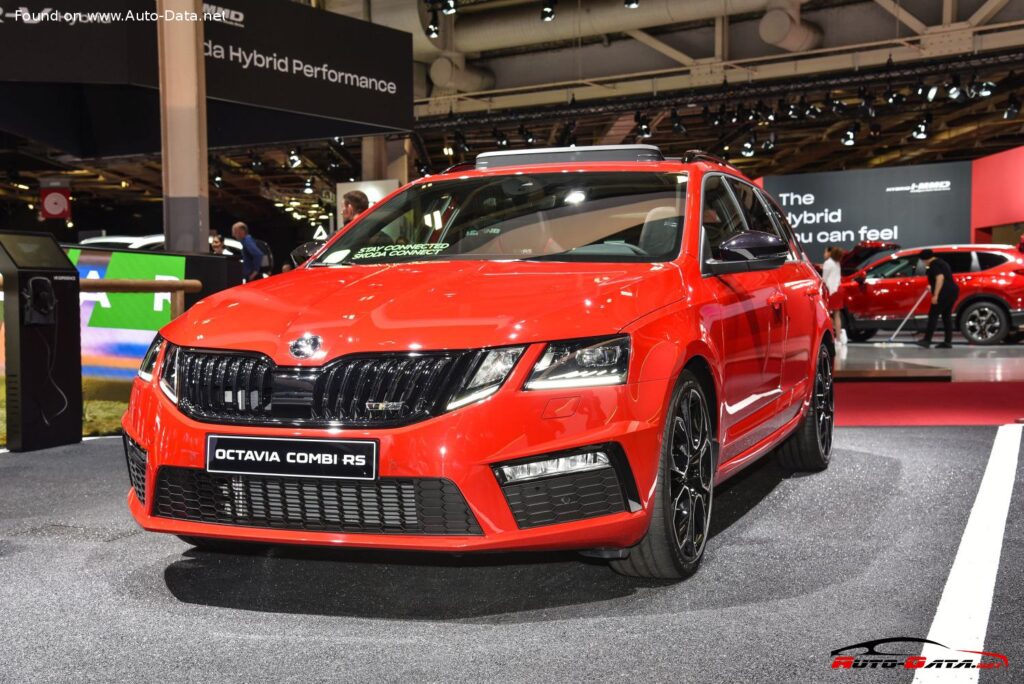
The Skoda Octavia III Combi (facelift 2017) 2.0 TDI (150 Hp) embodies Skoda’s philosophy of “Simply Clever,” offering thoughtful features, expansive interior space, and fuel-efficient powertrains, all wrapped in a discreet yet modern design. Positioned between the compact and mid-size categories, the Octavia Combi carved out a unique niche, providing near-mid-size practicality at a compact-segment price point. The 2017 facelift brought a redesigned front end with distinctive split headlights, updated infotainment systems, and enhanced driver-assistance technologies, ensuring the Octavia remained fresh and competitive against rivals from Volkswagen, Ford, and Opel.
Engine & Performance
At the heart of this particular Octavia Combi variant is a sophisticated 2.0-liter TDI (Turbocharged Direct Injection) diesel engine, delivering a respectable 150 horsepower. This inline four-cylinder powerplant, known by engine codes CKFC or CRMB, is a testament to the Volkswagen Group’s expertise in diesel technology. With an engine displacement of 1,968 cubic centimeters (approximately 120.09 cubic inches), it generates a healthy 76.2 horsepower per liter, indicating efficient power delivery for its size. The engine layout is front, transverse, driving the front wheels, a common and effective configuration for optimizing interior space and manufacturing efficiency.
The 2.0 TDI engine benefits from a common rail fuel injection system, which precisely controls fuel delivery for optimal combustion, contributing to both performance and efficiency. Coupled with a turbocharger and intercooler, the engine provides strong low-end torque and a responsive driving experience. Power is managed through a smooth-shifting 6-speed manual transmission, offering drivers direct control over the vehicle’s dynamics. This powertrain setup allows the Octavia Combi to accelerate from 0 to 60 mph in a brisk 8.1 seconds (calculated), with a top speed reaching 134.22 mph (216 km/h).
Fuel economy is a significant highlight of the 2.0 TDI engine, reflecting its primary role in markets where diesel remains a popular and efficient fuel choice. The combined fuel consumption is an impressive 4.3 liters per 100 kilometers, translating to approximately 54.7 US miles per gallon. Urban driving yields around 46.1 US mpg (5.1 l/100 km), while extra-urban (highway) cruising can achieve up to 60.3 US mpg (3.9 l/100 km). These figures, combined with CO2 emissions of 113 g/km, underscore its compliance with stringent Euro 6 emission standards, making it an environmentally conscious choice for its era. The inclusion of a particulate filter further reduces harmful emissions, aligning with modern environmental regulations.
Design & Features
The Skoda Octavia III Combi (facelift 2017) is a five-door, five-seat station wagon, a body style highly prized in Europe for its versatility. The 2017 facelift introduced a sharper, more assertive front fascia, characterized by its distinctive split headlamp design that drew both praise and debate, giving the Octavia a more unique visual signature within the Volkswagen Group family. The refreshed grille and bumper designs contributed to a wider, more planted appearance.
Measuring 183.74 inches (4667 mm) in length, 71.42 inches (1814 mm) in width, and 57.68 inches (1465 mm) in height, with a wheelbase of 105.75 inches (2686 mm), the Octavia Combi offers generous interior dimensions. This translates to ample legroom and headroom for all five occupants, a hallmark of Skoda’s thoughtful packaging. However, it’s in cargo capacity where the Combi truly shines. With the rear seats in place, it boasts a cavernous 21.54 cubic feet (610 liters) of trunk space. Folding the rear seats down expands this volume to an impressive 61.45 cubic feet (1740 liters), rivaling vehicles from a class above. This exceptional practicality makes it an ideal companion for family road trips, outdoor enthusiasts, or those who frequently transport large items.
Standard features for the era included essential safety and convenience technologies. The vehicle is equipped with an Anti-lock Braking System (ABS) for enhanced stopping control. Steering is handled by an electric power steering rack and pinion system, providing precise feedback and ease of maneuverability, particularly in urban environments with a minimum turning circle of 34.81 feet (10.61 m). The braking system consists of ventilated discs at the front and solid discs at the rear, ensuring confident stopping power. The car rides on 16-inch wheels fitted with 205/55 R16 tires, offering a comfortable and composed ride quality suitable for varied road conditions.
Technical Specifications
| Category | Specification |
| General Information | |
| Brand | Skoda |
| Model | Octavia |
| Generation | Octavia III Combi (facelift 2017) |
| Type (Engine) | 2.0 TDI (150 Hp) |
| Start of Production | 2017 year |
| End of Production | 2019 year |
| Powertrain Architecture | Internal Combustion engine |
| Body type | Station wagon (estate) |
| Seats | 5 |
| Doors | 5 |
| Performance Specs | |
| Fuel consumption (urban) | 5.1 l/100 km |
| Fuel consumption (extra urban) | 3.9 l/100 km |
| Fuel consumption (combined) | 4.3 l/100 km |
| CO2 emissions | 113 g/km |
| Fuel Type | Diesel |
| Acceleration 0 – 60 mph | 8.1 sec |
| Maximum speed | 216 km/h |
| Emission standard | Euro 6 |
| Weight-to-power ratio | 8.5 kg/Hp |
| Engine Specs | |
| Power | 150 Hp |
| Power per liter | 76.2 Hp/l |
| Engine layout | Front, Transverse |
| Engine Model/Code | CKFC, CRMB |
| Engine displacement | 1968 cm3 |
| Number of cylinders | 4 |
| Engine configuration | Inline |
| Cylinder Bore | 81 mm |
| Piston Stroke | 95.5 mm |
| Number of valves per cylinder | 4 |
| Fuel injection system | Diesel Commonrail |
| Engine aspiration | Turbocharger, Intercooler |
| Space, Volume and Weights | |
| Kerb Weight | 1279 kg |
| Max. weight | 1924 kg |
| Max load | 645 kg |
| Trunk (boot) space – minimum | 610 l |
| Trunk (boot) space – maximum | 1740 l |
| Fuel tank capacity | 50 l |
| Dimensions | |
| Length | 4667 mm |
| Width | 1814 mm |
| Height | 1465 mm |
| Wheelbase | 2686 mm |
The Skoda Octavia has consistently been a vital model for Skoda, cementing its reputation as a producer of reliable, practical, and well-built vehicles. The third-generation Combi, especially after its 2017 facelift, continued this legacy, offering a compelling package that resonated strongly with European consumers. Its success is rooted in its ability to deliver Volkswagen Group engineering and quality at a more accessible price point than its Audi or Volkswagen siblings, such as the VW Golf Variant or Passat Variant.
In its primary markets, the Skoda Octavia III Combi (facelift 2017) 2.0 TDI (150 Hp) competed with a broad array of compact and even some mid-size station wagons. Key rivals included the Ford Focus Estate, Opel Astra Sports Tourer, Peugeot 308 SW, and even its cousin, the SEAT Leon ST. What set the Octavia apart was its exceptional interior volume and cargo capacity, often outclassing direct competitors in terms of sheer practicality. Its robust build quality, comfortable ride, and the proven efficiency and durability of the 2.0 TDI engine made it a favored choice for long-distance commuters, families, and business fleets.
While not sold in the American market, the Octavia’s consistent performance and strong market position in Europe highlight the divergent preferences and market demands across different global regions, where diesel engines and station wagons continue to hold significant appeal. The 2017 facelift ensured the Octavia remained a relevant and competitive player until the introduction of the fourth-generation model, further solidifying its status as a benchmark for practicality and value in the European automotive landscape.