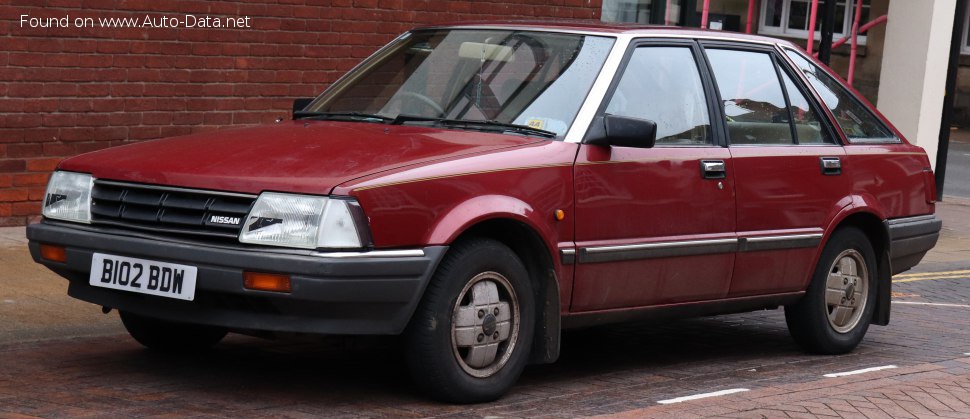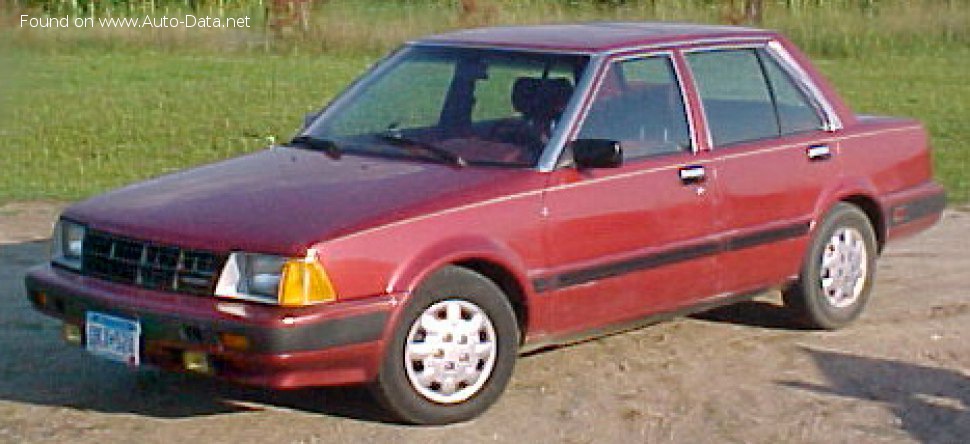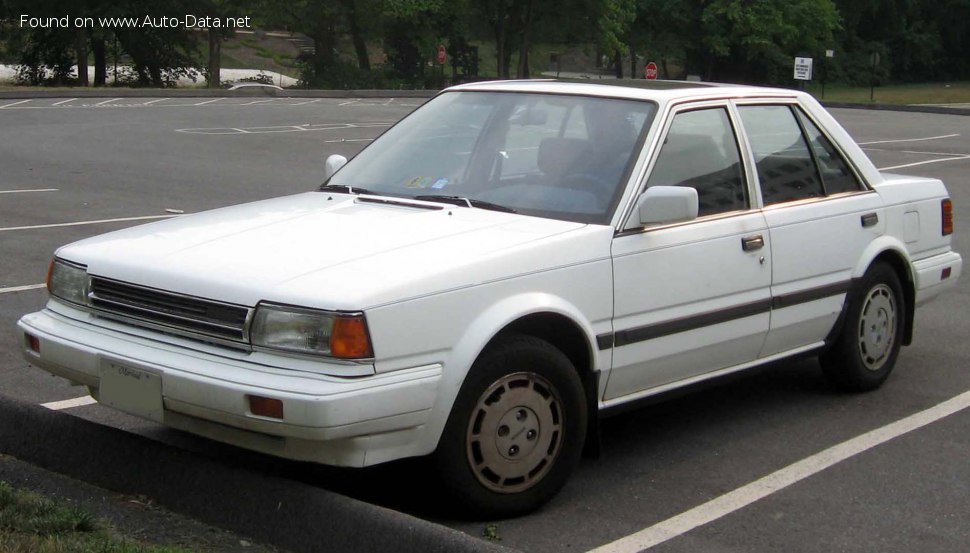
The Nissan Stanza (T12/T12Y) represents a significant chapter in Nissan’s history, particularly within the competitive compact-to-mid-size sedan segment during the late 1980s. Introduced in 1986 and produced until 1989, this generation of the Stanza, known internally as the T12 or T12Y chassis, served as a reliable and practical offering in markets worldwide. In North America, the Stanza was positioned as a sensible choice for buyers seeking a blend of fuel economy, dependability, and interior space, slotting above the compact Sentra and below the more upscale Maxima. Globally, this vehicle was often known by its more famous moniker, the Nissan Bluebird, with the Stanza nameplate primarily used in North America, Australia, and select other markets. This particular iteration, featuring the 2.0L (94 Hp) engine, embodied the era’s focus on functional design and straightforward mechanicals, making it a familiar sight on roads for many years.
Nissan Stanza (T12/T12Y): A Detailed Overview
The Nissan Stanza, particularly the T12/T12Y generation, was a crucial model for Nissan as it aimed to increase its market share in North America. While the Bluebird name was well-established in other regions, Nissan opted for the Stanza nameplate in key markets like the United States and Australia to differentiate the vehicle and appeal to local consumers. The Stanza’s success wasn’t about groundbreaking innovation, but rather about providing a well-rounded, dependable vehicle at a competitive price point. It filled a gap in Nissan’s lineup, offering a more spacious and comfortable alternative to the smaller Sentra, while remaining more accessible than the larger Maxima.
Engine & Performance
The Nissan Stanza (T12/T12Y) with its 2.0L engine delivered a performance profile tailored for everyday usability. The powertrain was centered around a 2.0-liter (1974 cc) inline-four cylinder engine, producing 94 horsepower. This engine, designated the CA20E, was naturally aspirated and utilized conventional fuel injection for efficient fuel delivery. Its front, transverse layout was standard for front-wheel-drive sedans of the era, maximizing interior space and streamlining manufacturing.
The 94 horsepower output was adequate for the time, providing sufficient power for typical driving scenarios – city commutes, highway cruising, and merging with traffic – without excessive fuel consumption. The inline-four configuration contributed to a smooth and balanced driving experience. The Stanza was available with either a manual or automatic transmission, emphasizing reliability and longevity, hallmarks of Nissan engineering. The front-wheel-drive setup, combined with a rack and pinion steering system and hydraulic power steering, offered predictable handling and ease of maneuverability. Braking was accomplished with disc brakes at the front and drum brakes at the rear, a common and effective configuration for vehicles in its class.
Design & Features
The design philosophy of the Nissan Stanza (T12/T12Y) prioritized practicality and utility, reflecting the automotive design trends of the mid-to-late 1980s. The body style was a conventional four-door sedan, accommodating five passengers. The exterior styling featured clean, somewhat boxy lines, prioritizing interior volume and aerodynamic efficiency over flashy aesthetics. While not designed to be visually striking, its understated appearance contributed to its broad appeal as a dependable family car.
The interior of the Stanza was designed with user-friendliness in mind. The five-seat configuration offered comfortable accommodation for adults, with adequate legroom and headroom. The dashboard layout was straightforward, with easily accessible controls and clear instrumentation, predating the era of complex infotainment systems. Materials were durable and hard-wearing, designed to withstand daily use. Higher trim levels often included features like air conditioning, power windows, power locks, and a decent audio system, enhancing comfort and convenience. Safety features, typical for the time, included three-point seatbelts for front occupants and lap belts for rear passengers, along with a robust unibody construction for passive crash protection. The Stanza’s design underscored its role as a reliable, no-nonsense vehicle.
Technical Specifications
| Feature | Specification |
| Brand | Nissan |
| Model | Stanza |
| Generation | Stanza (T12/T12Y) |
| Engine Type | 2.0L (94 Hp) |
| Start of Production | 1986 |
| End of Production | 1989 |
| Powertrain Architecture | Internal Combustion engine |
| Body Type | Sedan |
| Seats | 5 |
| Doors | 4 |
| Fuel Type | Petrol (Gasoline) |
| Power | 94 Hp |
| Engine Layout | Front, Transverse |
| Number of Cylinders | 4 |
| Engine Configuration | Inline |
| Engine Aspiration | Naturally aspirated engine |
| Front Brakes | Disc |
| Rear Brakes | Drum |
| Steering Type | Steering rack and pinion |
| Power Steering | Hydraulic Steering |
Legacy and Market Impact
The Nissan Stanza (T12/T12Y), despite its unassuming nature, played a vital role in Nissan’s expansion in the North American market during the late 1980s. It reinforced Nissan’s growing reputation for reliability and affordability, offering a compelling alternative to established competitors. In its segment, the Stanza competed with the Honda Accord, Toyota Camry, Mazda 626, and Mitsubishi Galant, all targeting buyers seeking dependable and efficient transportation. It also faced domestic competition from models like the Ford Tempo, Chevrolet Celebrity, and Pontiac 6000.
The Stanza’s reputation was built on its steadfast dependability and low running costs. Owners consistently praised its robust engine, durable interior, and consistent performance over many years. While it didn’t often receive accolades for styling or performance, its consistent sales demonstrated its value. It was a car that simply worked reliably, which was a priority for many consumers.
The T12/T12Y generation of the Stanza represented a period of refinement for Nissan’s front-wheel-drive platforms. It demonstrated Nissan’s ability to produce competitive, mass-market sedans that could compete globally. The Stanza nameplate was eventually discontinued in North America after this generation, with the Nissan Altima, introduced in the early 1990s, serving as its spiritual successor and becoming one of Nissan’s most successful models. The Stanza’s legacy is not one of revolution, but of being a steadfast workhorse – a dependable, practical, and economical sedan that helped solidify Nissan’s position as a major automotive player, offering sensible and reliable transportation to American consumers. Its straightforward engineering and no-frills approach made it a quintessential example of the accessible family sedan of its era.