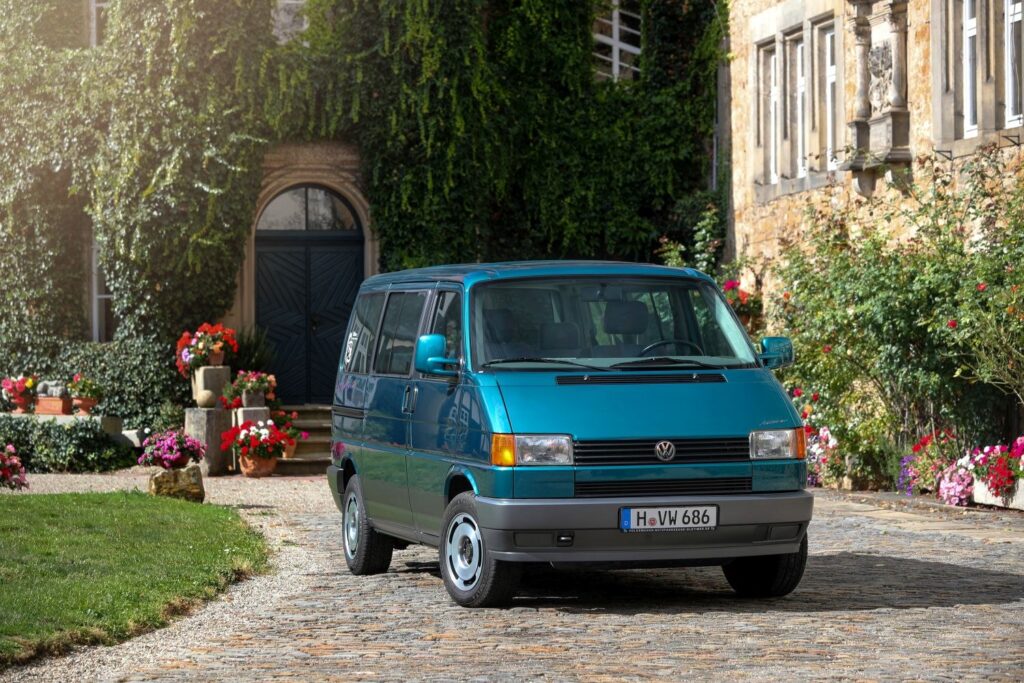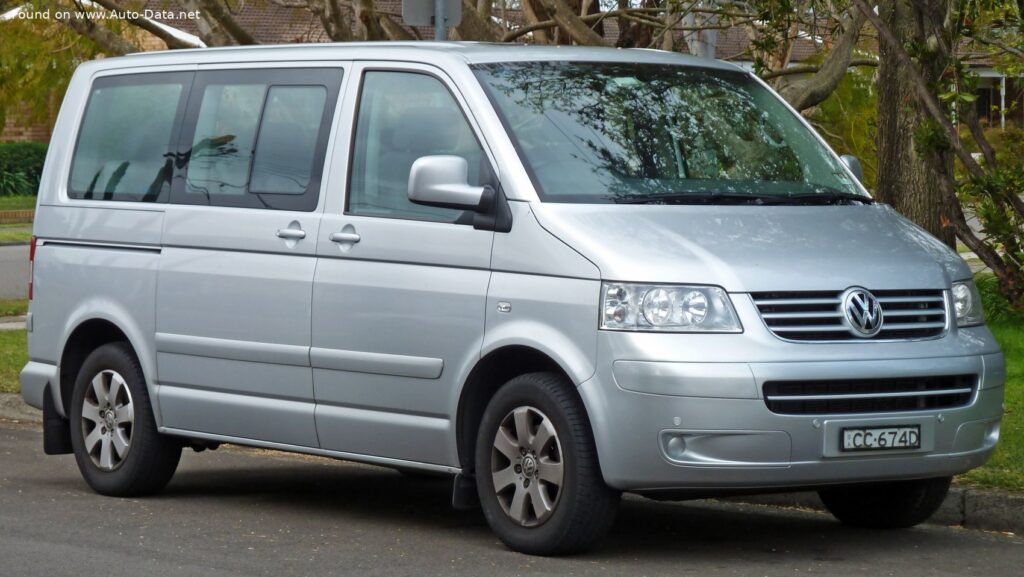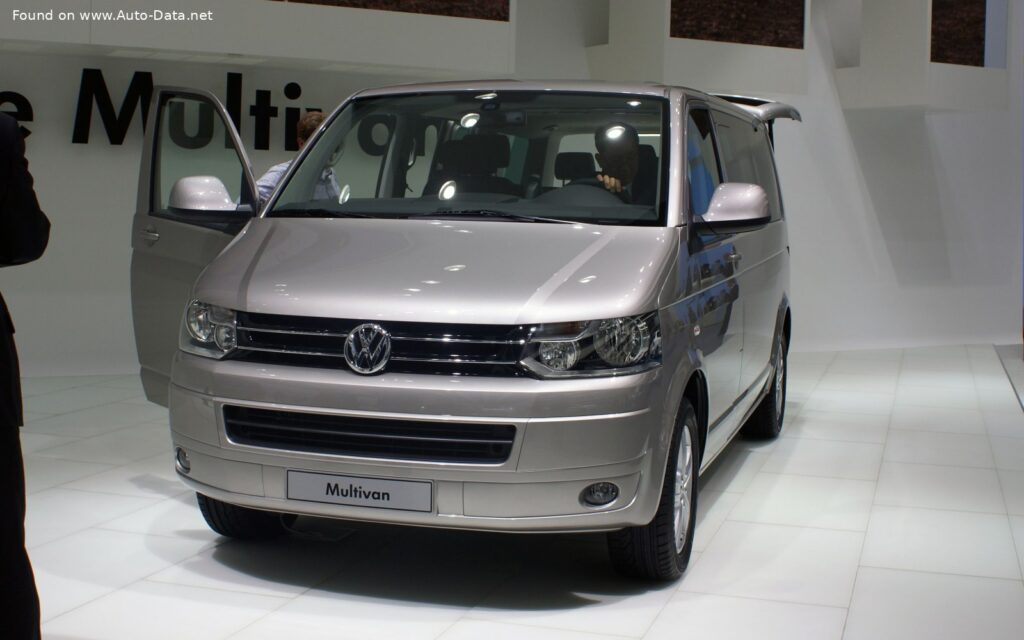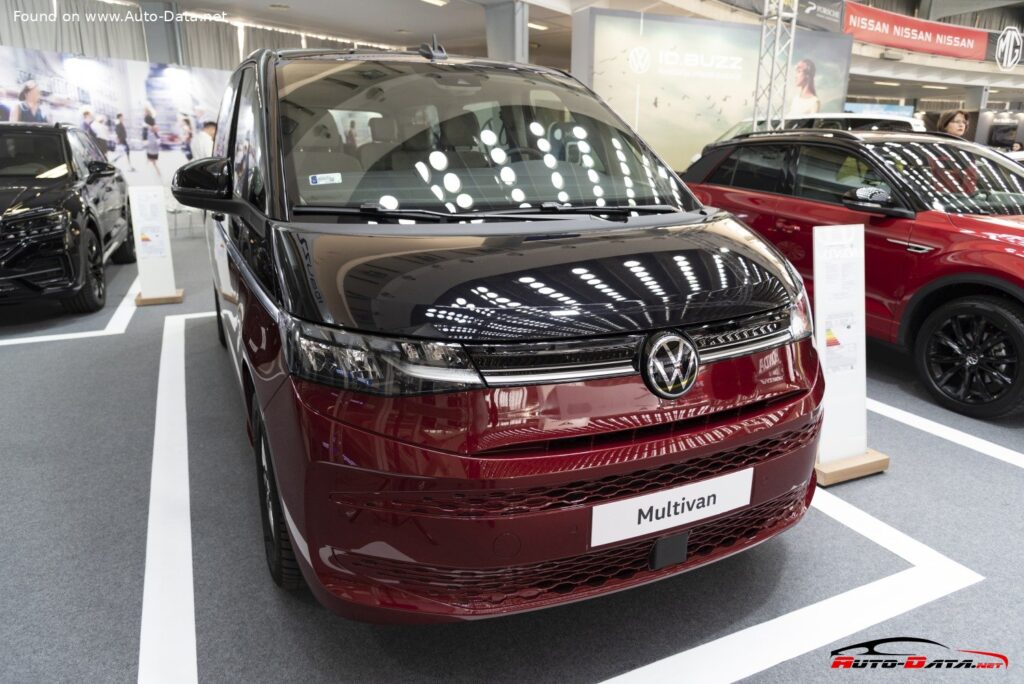
The Volkswagen Multivan (T7) 1.4 eHybrid (218 Hp) DSG represents the latest evolution in a storied lineage of versatile people movers, building upon the iconic Transporter series that began with the T1 “Bus” in the 1950s. Introduced in November 2021, the T7 generation marks a significant departure from its predecessors by transitioning to Volkswagen Group’s highly adaptable MQB (Modular Transverse Matrix) platform, a move that underpins its enhanced passenger car dynamics and integration of advanced technologies. Specifically, the Volkswagen Multivan (T7) 1.4 eHybrid (218 Hp) DSG variant is a plug-in hybrid electric vehicle (PHEV) that embodies Volkswagen’s commitment to efficiency and reduced emissions, while retaining the spaciousness and practicality for which the Multivan is renowned.
Primarily aimed at European and other international markets, where large, flexible passenger vans (often referred to as minivans in the US) remain highly popular for families, businesses, and leisure activities, the T7 Multivan is not officially sold in the United States. However, its sophisticated powertrain and design innovations offer a compelling glimpse into Volkswagen’s global automotive strategy. This particular eHybrid model combines a turbocharged gasoline engine with an electric motor, delivering a blend of performance and remarkable fuel economy, setting a new benchmark for the Multivan series in terms of environmental responsibility and driving refinement.
Engine & Performance: The 1.4 eHybrid (218 Hp) DSG
At the heart of the Volkswagen Multivan (T7) 1.4 eHybrid (218 Hp) DSG is a sophisticated plug-in hybrid powertrain architecture. This system leverages a 1.4-liter (1395 cm3 or 85.13 cu. in.) inline-four gasoline engine, part of Volkswagen’s well-regarded EA211 family. This internal combustion engine (ICE) is turbocharged and intercooled, featuring direct injection and a DOHC valvetrain, producing a robust 150 horsepower at 5000-6000 rpm and 184.39 lb.-ft. of torque at 1550-3500 rpm.
Complementing the gasoline engine is a powerful electric motor, strategically located between the combustion engine and the transmission. This electric motor contributes an additional 116 horsepower at 2500-4500 rpm and an impressive 243.4 lb.-ft. of torque from 0-2500 rpm, delivering instant acceleration characteristic of electric propulsion. The combined efforts of both power sources result in a substantial total system output of 218 horsepower at 4900-6500 rpm and a formidable 258.15 lb.-ft. of system torque available across a broad range of 1000-4100 rpm. Power is efficiently managed and sent to the front wheels via a smooth-shifting 7-speed automatic DSG (Direct Shift Gearbox) transmission.
This integrated powertrain allows the Multivan eHybrid to achieve a respectable 0-60 mph acceleration in approximately 11 seconds (0-100 km/h in 11.6 seconds) and reach a maximum speed of 118.06 mph (190 km/h). More critically, the PHEV system delivers outstanding fuel efficiency and low emissions. It boasts a combined fuel consumption (NEDC) of just 1.5 liters per 100 km, which translates to an exceptional 156.8 US mpg. CO2 emissions are remarkably low at 34 g/km, meeting the stringent Euro 6d-ISC-FCM emission standard.
The vehicle’s electric capabilities are supported by a 13 kWh gross (10.4 kWh net usable) lithium-ion battery pack, cleverly integrated below the floor to maintain interior space. This allows for an all-electric driving range (WLTP) of 28.58 to 31.07 miles (46-50 km), or an NEDC range of 36.04 to 37.28 miles (58-60 km), making daily commutes and short trips entirely emission-free. The average energy consumption (NEDC) is rated at 14.6 kWh/100 km, or 143 MPGe, demonstrating its significant electric efficiency.
Design & Features
The Multivan (T7) retains its characteristic minivan body style, offering five doors and flexible seating for 5 to 7 occupants. It measures 195.79 inches (4973 mm) in length, 76.42 inches (1941 mm) in width (88.66 inches or 2252 mm including mirrors), and 75.08 inches (1907 mm) in height, with a generous 122.99-inch (3124 mm) wheelbase. This substantial footprint translates into a remarkably spacious and adaptable interior.
The design of the T7 is a modern interpretation of the classic Multivan aesthetic, featuring sharper lines, contemporary lighting signatures, and an aerodynamic profile that contributes to its efficiency. The transition to the MQB platform allowed for a lower vehicle height and improved ingress/egress, while also enhancing driving dynamics closer to that of a conventional passenger car.
Interior flexibility is a cornerstone of the Multivan’s appeal. The modular seating system allows for easy removal and repositioning of individual seats, transforming the cabin from a comfortable people carrier to a cavernous cargo hauler. Minimum trunk (boot) space is an impressive 60.03 cu. ft. (1700 liters), which expands to a vast 116.54 cu. ft. (3300 liters) with seats removed or folded, making it ideal for everything from family vacations to transporting bulky equipment.
Safety and convenience features are paramount in a modern vehicle of this caliber. While specific details on every feature are not provided, it can be inferred that a vehicle launched in 2021 would include a comprehensive suite of driver assistance systems, advanced infotainment, and connectivity options typical of Volkswagen’s contemporary offerings. Standard features like ABS (Anti-lock braking system), ventilated front disc brakes, and rear disc brakes ensure confident stopping power. The electric power steering system provides ease of maneuverability, especially given the vehicle’s minimum turning circle of 39.7 feet (12.1 meters). The T7 also includes modern engine systems such as Start & Stop and a particulate filter, further enhancing its environmental credentials.
Volkswagen Multivan (T7) 1.4 eHybrid (218 Hp) DSG: Technical Specifications
| Category | Specification |
| General Information | |
| Brand | Volkswagen |
| Model | Multivan |
| Generation | Multivan (T7) |
| Type (Engine) | 1.4 eHybrid (218 Hp) DSG |
| Start of Production | November, 2021 |
| Powertrain Architecture | PHEV (Plug-in Hybrid Electric Vehicle) |
| Body Type | Minivan |
| Seats | 5-7 |
| Doors | 5 |
| Performance Specs | |
| Fuel Consumption (Combined NEDC) | 1.5 l/100 km (156.8 US mpg) |
| CO2 Emissions (NEDC) | 34 g/km |
| Fuel Type | Petrol / Electricity |
| Acceleration 0 – 60 mph | 11 sec |
| Acceleration 0 – 100 km/h | 11.6 sec |
| Maximum Speed | 118.06 mph (190 km/h) |
| Emission Standard | Euro 6d-ISC-FCM |
| Weight-to-Power Ratio | 9.7 kg/Hp (102.8 Hp/tonne) |
| Weight-to-Torque Ratio | 6.1 kg/Nm (165.1 Nm/tonne) |
| Electric Cars and Hybrids Specs | |
| Gross Battery Capacity | 13 kWh |
| Net (Usable) Battery Capacity | 10.4 kWh |
| Battery Technology | Lithium-ion (Li-Ion) |
| Battery Location | Below the floor |
| All-Electric Range (WLTP) | 28.58 – 31.07 mi (46-50 km) |
| All-Electric Range (NEDC) | 36.04 – 37.28 mi (58-60 km) |
| Average Energy Consumption (NEDC) | 14.6 kWh/100 km (143 MPGe) |
| Electric Motor Power | 116 Hp @ 2500-4500 rpm |
| Electric Motor Torque | 243.4 lb.-ft. (330 Nm) @ 0-2500 rpm |
| Electric Motor Location | Between the combustion engine and the transmission |
| System Power | 218 Hp @ 4900-6500 rpm |
| System Torque | 258.15 lb.-ft. (350 Nm) @ 1000-4100 rpm |
| Internal Combustion Engine Specs | |
| Power | 150 Hp @ 5000-6000 rpm |
| Power per Liter | 107.5 Hp/l |
| Torque | 184.39 lb.-ft. (250 Nm) @ 1550-3500 rpm |
| Engine Layout | Front, Transverse |
| Engine Model/Code | EA211 |
| Engine Displacement | 1.4 l (1395 cm3 / 85.13 cu. in.) |
| Number of Cylinders | 4 |
| Engine Configuration | Inline |
| Cylinder Bore | 2.93 in. (74.5 mm) |
| Piston Stroke | 3.15 in. (80 mm) |
| Number of Valves per Cylinder | 4 |
| Fuel Injection System | Direct injection |
| Engine Aspiration | Turbocharger, Intercooler |
| Valvetrain | DOHC |
| Engine Systems | Start & Stop System, Particulate filter |
| Space, Volume and Weights | |
| Kerb Weight | 4673.8 – 4975.83 lbs. (2120-2257 kg) |
| Max. Weight | 6062.71 lbs. (2750 kg) |
| Max Load | 1086.88 – 1388.91 lbs. (493-630 kg) |
| Trunk (Boot) Space – Minimum | 60.03 cu. ft. (1700 l) |
| Trunk (Boot) Space – Maximum | 116.54 cu. ft. (3300 l) |
| Fuel Tank Capacity | 11.89 US gal (45 l) |
| Max. Roof Load | 220.46 lbs. (100 kg) |
| Permitted Trailer Load with Brakes (12%) | 3527.4 lbs. (1600 kg) |
| Permitted Trailer Load without Brakes | 1653.47 lbs. (750 kg) |
| Permitted Towbar Download | 176.37 lbs. (80 kg) |
| Dimensions | |
| Length | 195.79 in. (4973 mm) |
| Width | 76.42 in. (1941 mm) |
| Width Including Mirrors | 88.66 in. (2252 mm) |
| Height | 75.08 in. (1907 mm) |
| Wheelbase | 122.99 in. (3124 mm) |
| Front Overhang | 37.48 in. (952 mm) |
| Rear Overhang | 35.31 in. (897 mm) |
| Ride Height (Ground Clearance) | 5.98 in. (152 mm) |
| Minimum Turning Circle (Turning Diameter) | 39.7 ft. (12.1 m) |
| Approach Angle | 18° |
| Departure Angle | 16.6° |
| Ramp-over (Brakeover) Angle | 11.8° |
| Drivetrain, Brakes and Suspension Specs | |
| Drivetrain Architecture | The Internal combustion engine (ICE) and electric motor drive the front wheels of the car with the ability to work in full electric or mixed mode. |
| Drive Wheel | Front wheel drive |
| Number of Gears and Type of Gearbox | 7 gears, automatic transmission DSG |
| Front Brakes | Ventilated discs |
| Rear Brakes | Disc |
| Assisting Systems | ABS (Anti-lock braking system) |
| Steering Type | Steering rack and pinion |
| Power Steering | Electric Steering |
| Tires Size | 215/65 R16; 235/55 R17; 235/50 R18 |
| Wheel Rims Size | 6.5J x 16; 6.5J x 17; 7.5J x 18 |
Legacy and Market Impact
The Volkswagen Multivan (T7) 1.4 eHybrid (218 Hp) DSG carries forward a rich legacy established by generations of Volkswagen Transporter-based passenger vans. The T-series, from the iconic T1 to the T6.1, has historically been a workhorse for businesses and a beloved companion for families and adventurers across Europe and beyond. The T7, however, represents a significant shift in its positioning. By moving to the MQB platform, it effectively separates itself from the more utilitarian commercial Transporter van (which continues as the T6.1 and will evolve into the T7.1 based on Ford Transit Custom). This strategic decision allows the Multivan to focus purely on passenger comfort, refinement, and advanced technology, making it a direct competitor to premium European minivans and large MPVs.
In its primary European market, the T7 Multivan competes with established rivals such as the Mercedes-Benz V-Class, Ford Tourneo Custom, and potentially even some larger SUVs or crossovers for family-oriented buyers. The introduction of the eHybrid powertrain is a critical differentiator, offering a compelling proposition for buyers facing increasingly stringent emissions regulations and rising fuel costs. Its ability to cover significant distances on electric power alone, combined with the flexibility of a gasoline engine for longer journeys, positions it as an environmentally conscious yet highly practical choice.
The T7 Multivan’s impact stems from its ability to blend the traditional virtues of space and versatility with modern automotive advancements. Its car-like driving dynamics, superior comfort, and comprehensive safety features, combined with the efficiency of its plug-in hybrid system, solidify its reputation as a sophisticated and sustainable people mover. While not available in the US, the Volkswagen Multivan (T7) 1.4 eHybrid (218 Hp) DSG stands as a testament to Volkswagen’s engineering prowess and its vision for the future of versatile, efficient family transportation in the global market. It underscores the evolving landscape of the automotive industry, where even traditional segments are embracing electrification to meet contemporary demands for performance, practicality, and environmental responsibility.