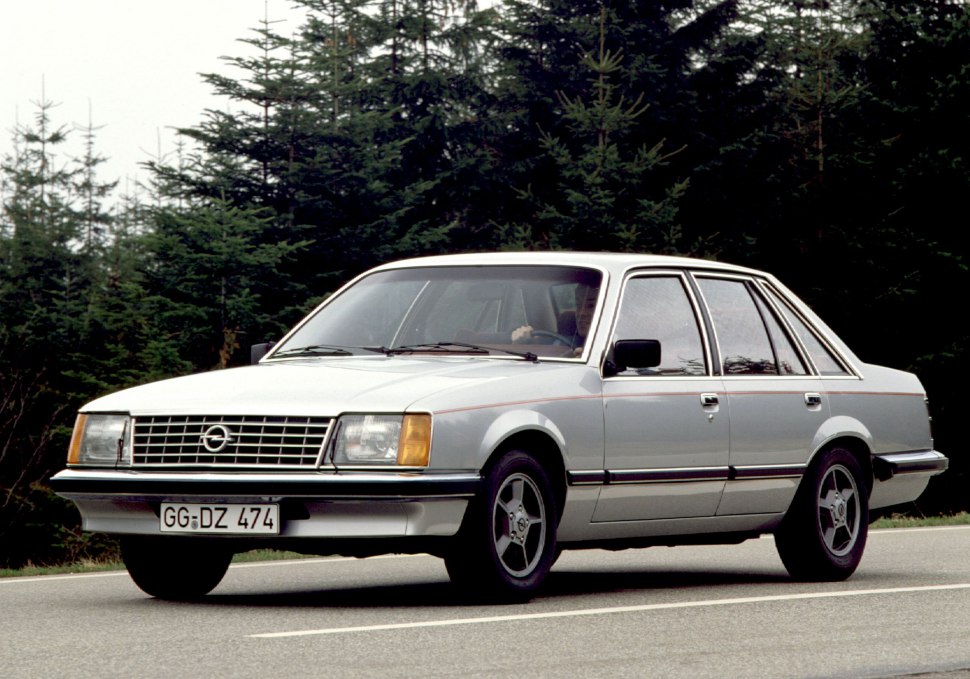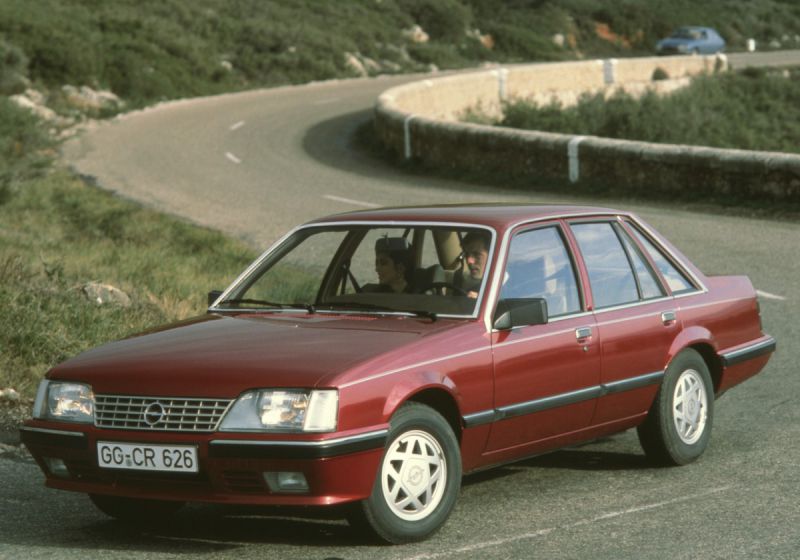
The Opel Senator A (facelift 1982) 2.5 E (136 Hp) Automatic represents a significant offering from Opel in the European executive car segment. Introduced in 1978, the Senator A was Opel’s flagship model, designed to compete with established luxury brands. This particular variant, produced between 1981 and 1982, showcases refinements to the original design, improving both aesthetics and mechanical performance. While never officially sold in the United States, the Senator A played a vital role in Opel’s strategy to gain market share in Europe, building on a reputation for engineering quality and value. It shared its platform with the Opel Rekord E and the Monza coupe, offering a blend of sophistication, comfort, and practicality.
Opel Senator A (facelift 1982) 2.5 E: A Detailed Overview
The Opel Senator A (facelift 1982) 2.5 E Automatic was positioned as a premium sedan, aimed at buyers seeking a spacious, comfortable, and well-equipped vehicle. The “facelift” designation refers to the subtle design updates implemented in 1982, intended to modernize the car’s appearance and maintain its competitiveness. This model distinguished itself with a 2.5-liter inline-six engine paired with a three-speed automatic transmission, offering a smooth and relaxed driving experience. The Senator A aimed to bridge the gap between mainstream sedans and more expensive luxury cars, providing a compelling alternative for discerning European consumers.
Engine & Performance
The heart of the Opel Senator A (facelift 1982) 2.5 E Automatic is a naturally aspirated inline-six gasoline engine, identified by the code H25E. This engine boasts a displacement of 2490 cubic centimeters (151.95 cubic inches), a configuration favored for its inherent smoothness and balanced power delivery. The engine utilizes a Single Overhead Camshaft (SOHC) valvetrain with two valves per cylinder, prioritizing reliability and ease of maintenance. Fuel delivery is managed by a multi-port manifold injection system, a significant improvement over older carbureted systems, resulting in enhanced fuel efficiency, improved throttle response, and reduced emissions.
The H25E engine generates 136 horsepower at 5600 rpm and 185 Nm (136.45 lb.-ft.) of torque at 4600 rpm. This output provides ample power for a vehicle of its size and class. Power is transferred to the rear wheels via a three-speed automatic transmission, chosen for its smooth shifting and relaxed cruising characteristics. Acceleration from 0 to 60 mph takes approximately 12.4 seconds, with a top speed of 114.95 mph (185 km/h). Fuel economy is rated at around 19.6 US mpg (12 l/100 km) in combined driving conditions, typical for a six-cylinder engine of this era. The engine requires 5.5 liters (5.81 US quarts) of oil and the cooling system holds 10 liters (10.57 US quarts) of coolant.
Design & Features
The Opel Senator A features a classic four-door sedan body style, embodying the understated elegance prevalent in European executive cars of the late 1970s and early 1980s. The 1982 facelift brought minor exterior updates, including revised grille designs, updated headlamp and taillight treatments, and subtle trim changes. These refinements aimed to modernize the Senator’s appearance while preserving its dignified presence.
The vehicle measures 190.08 inches (4828 mm) in length, 68.03 inches (1728 mm) in width, and 55.71 inches (1415 mm) in height. Its 105.63-inch (2683 mm) wheelbase contributes to a comfortable ride and stable handling. The Senator A offers generous interior space for five passengers and boasts a substantial trunk capacity of 715 liters (25.25 cubic feet). The 19.81 US gallon (75 liter) fuel tank provides a respectable cruising range. With a kerb weight of 3020.33 lbs. (1370 kg) and a maximum permissible weight of 4188.78 lbs. (1900 kg), the Senator A offers a considerable payload capacity. The drag coefficient (Cd) is 0.44, a reasonable figure for a large sedan of its time. The car is equipped with ventilated disc brakes at the front and disc brakes at the rear, providing adequate stopping power. The rear-wheel-drive layout and a turning circle of 35.43 feet (10.8 meters) deliver a balanced driving experience and good maneuverability.
Technical Specifications: Opel Senator A (facelift 1982) 2.5 E (136 Hp) Automatic
| Category | Specification |
| General Information | |
| Brand | Opel |
| Model | Senator |
| Generation | Senator A (facelift 1982) |
| Type (Engine) | 2.5 E (136 Hp) Automatic |
| Start of production | 1981 |
| End of production | 1982 |
| Powertrain Architecture | Internal Combustion engine |
| Body type | Sedan |
| Seats | 5 |
| Doors | 4 |
| Performance Specs | |
| Fuel consumption (combined) | 12 l/100 km |
| Fuel Type | Petrol (Gasoline) |
| Acceleration 0 – 60 mph | 12.4 sec |
| Maximum speed | 185 km/h |
| Engine Specs | |
| Power | 136 Hp @ 5600 rpm |
| Torque | 185 Nm @ 4600 rpm |
| Engine Model/Code | H25E |
| Engine displacement | 2490 cm3 |
| Number of cylinders | 6 |
| Engine configuration | Inline |
| Space, Volume and Weights | |
| Kerb Weight | 1370 kg |
| Max. weight | 1900 kg |
| Trunk (boot) space – maximum | 715 l |
| Fuel tank capacity | 75 l |
| Dimensions | |
| Length | 4828 mm |
| Width | 1728 mm |
| Height | 1415 mm |
| Wheelbase | 2683 mm |
Legacy and Market Impact in Europe
The Opel Senator A, particularly the 1982 2.5 E Automatic, held a significant position in the European automotive market. It served as Opel’s competitor to premium models from Ford, Mercedes-Benz, BMW, and Audi. While it may not have matched the prestige of some rivals, the Senator established a reputation for robust engineering, comfortable ride quality, and excellent value. Opel aimed to provide a large, capable sedan that was more affordable to purchase and maintain than its competitors. The inline-six engine was known for its durability and smooth operation, making the Senator a popular choice for executives, fleets, and families. Today, the Senator A is appreciated by enthusiasts for its classic design, reliable mechanics, and a driving experience representative of well-engineered European sedans of its era.