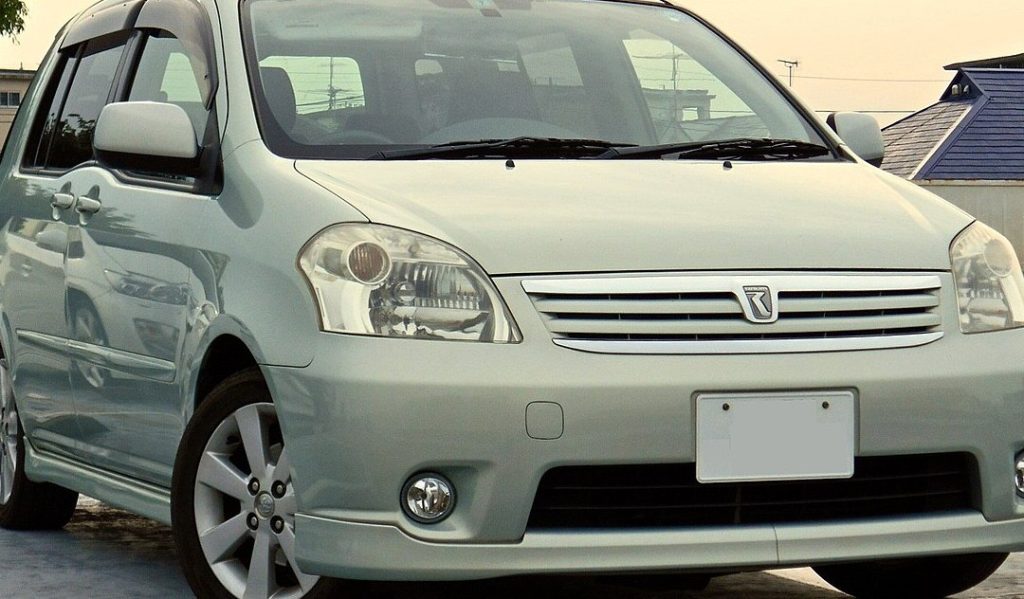
The Toyota Raum, a name derived from the German word for “space,” perfectly encapsulates the design philosophy behind this unique compact minivan. First introduced in 1997, the first-generation Raum (designated as the XZ10 series) emerged as a quintessential example of Toyota’s prowess in creating highly practical and space-efficient vehicles tailored for the demanding Japanese domestic market. This article specifically focuses on the 1.5 i 16V (94 Hp) variant, a cornerstone of the initial generation, which was produced from 1997 to 2003. While never officially imported for sale in the United States, the Toyota Raum played a significant role in defining the compact minivan segment in Japan, offering urban families and individuals a versatile, economical, and surprisingly spacious solution for their transportation needs. It represented Toyota’s commitment to innovation in packaging and utility, blending car-like driving dynamics with minivan practicality in a footprint ideal for crowded cityscapes.
Engine & Performance of the Toyota Raum
Under the hood, the 1997-2003 Toyota Raum 1.5 i 16V was powered by a reliable and efficient 1.5-liter (1496 cm3 or 91.29 cu. in.) inline four-cylinder engine. This naturally aspirated unit featured a Double Overhead Camshaft (DOHC) valvetrain with 16 valves (four per cylinder), a configuration that was advanced for its time and indicative of Toyota’s engineering philosophy prioritizing smooth operation and fuel efficiency. With a compression ratio of 9.8:1 and a multi-port manifold injection system, the engine produced a respectable 94 horsepower at 5400 rpm. Its power-per-liter figure stood at 62.8 Hp/l, showcasing a solid balance for its displacement.
Torque output was rated at 132 Nm (97.36 lb.-ft.) peaking at a relatively accessible 4400 rpm. This torque delivery, combined with a four-speed automatic transmission, was optimized for urban driving, providing sufficient responsiveness for city traffic and comfortable cruising on Japanese expressways. The powertrain architecture was front, transverse-mounted, driving the front wheels (Front Wheel Drive), a typical and efficient layout for compact vehicles of this class.
Performance figures, while not designed for outright speed, were adequate for its intended purpose. The Raum could achieve a top speed of 170 km/h (approximately 105.63 mph). More importantly for its market, fuel economy was a strong suit. In urban conditions, it delivered approximately 11 l/100 km (21.4 US mpg), while on extra-urban cycles, it improved significantly to 7 l/100 km (33.6 US mpg). This efficiency, coupled with a 45-liter (11.89 US gallon) fuel tank, offered a practical range for daily commuting and family trips without frequent stops for petrol. The vehicle’s kerb weight of 1090 kg (2403.04 lbs) contributed to a weight-to-power ratio of 11.6 kg/Hp, indicating a well-proportioned powertrain for its dimensions and class.
Design & Features of the Toyota Raum
The first-generation Toyota Raum adopted a distinctive “tall-boy” minivan body type, characterized by its relatively short length and width combined with a significant height. Measuring 4045 mm (159.25 in.) in length, 1685 mm (66.34 in.) in width, and 1535 mm (60.43 in.) in height, the Raum was designed to maximize interior volume within a compact exterior footprint, a crucial factor for navigating narrow Japanese streets and tight parking spaces. Its 2520 mm (99.21 in.) wheelbase provided a stable ride and contributed to a surprisingly spacious cabin for five occupants.
The Raum featured five doors, including conventional front doors and, notably, a single sliding door on the passenger side (a common configuration for Japanese compact minivans to ease access in tight spaces). The design prioritized practicality and ease of use, with a relatively low floor for easy entry and exit. The interior, though utilitarian, was designed with clever storage solutions and flexible seating arrangements to adapt to various cargo and passenger needs. Safety was addressed with the inclusion of ABS (Anti-lock Braking System), a significant feature for vehicles of its era, enhancing braking control in adverse conditions.
The suspension system comprised a wishbone setup at the front and coil springs at the rear, providing a comfortable and stable ride. Steering was managed by a hydraulic rack and pinion system, offering direct feedback to the driver. Braking duties were handled by ventilated discs at the front and drum brakes at the rear, a conventional and effective setup. The vehicle rode on 175/65 R14 S tires, providing a good balance of grip, comfort, and durability for everyday driving.
Technical Specifications: Toyota Raum 1.5 i 16V (94 Hp)
| Category | Specification |
| Brand | Toyota |
| Model | Raum |
| Generation | Raum (First Generation, XZ10) |
| Type (Engine) | 1.5 i 16V (94 Hp) |
| Production Start | 1997 |
| Production End | 2003 |
| Powertrain Architecture | Internal Combustion Engine |
| Body Type | Minivan |
| Seats | 5 |
| Doors | 5 |
| Performance Specs | |
| Fuel Consumption (Urban) | 11 l/100 km (21.4 US mpg) |
| Fuel Consumption (Extra Urban) | 7 l/100 km (33.6 US mpg) |
| Fuel Type | Petrol (Gasoline) |
| Maximum Speed | 170 km/h (105.63 mph) |
| Weight-to-Power Ratio | 11.6 kg/Hp (86.2 Hp/tonne) |
| Weight-to-Torque Ratio | 8.3 kg/Nm (121.1 Nm/tonne) |
| Engine Specs | |
| Power | 94 Hp @ 5400 rpm |
| Power per Liter | 62.8 Hp/l |
| Torque | 132 Nm (97.36 lb.-ft.) @ 4400 rpm |
| Engine Layout | Front, Transverse |
| Engine Displacement | 1496 cm3 (1.5 l / 91.29 cu. in.) |
| Number of Cylinders | 4 |
| Engine Configuration | Inline |
| Cylinder Bore | 74 mm (2.91 in.) |
| Piston Stroke | 87 mm (3.43 in.) |
| Compression Ratio | 9.8:1 |
| Valves per Cylinder | 4 |
| Fuel Injection System | Multi-port manifold injection |
| Engine Aspiration | Naturally aspirated engine |
| Valvetrain | DOHC |
| Space, Volume and Weights | |
| Kerb Weight | 1090 kg (2403.04 lbs) |
| Max. Weight (Gross Vehicle Weight) | 1365 kg (3009.31 lbs) |
| Max Load | 275 kg (606.27 lbs) |
| Fuel Tank Capacity | 45 l (11.89 US gal) |
| Dimensions | |
| Length | 4045 mm (159.25 in.) |
| Width | 1685 mm (66.34 in.) |
| Height | 1535 mm (60.43 in.) |
| Wheelbase | 2520 mm (99.21 in.) |
| Front Track | 1400 mm (55.12 in.) |
| Rear Track | 1395 mm (54.92 in.) |
| Drivetrain, Brakes and Suspension Specs | |
| Drivetrain Architecture | Internal Combustion Engine (ICE) drives the front wheels |
| Drive Wheel | Front Wheel Drive |
| Number of Gears / Gearbox Type | 4 gears, automatic transmission |
| Front Suspension | Wishbone |
| Rear Suspension | Coil spring |
| Front Brakes | Ventilated discs |
| Rear Brakes | Drum |
| Assisting Systems | ABS (Anti-lock braking system) |
| Steering Type | Steering rack and pinion |
| Power Steering | Hydraulic Steering |
| Tires Size | 175/65 R14 S |
Legacy and Market Impact of the Toyota Raum
The Toyota Raum, particularly the first-generation 1.5 i 16V model, carved out a significant niche in the highly competitive Japanese domestic market. Its primary appeal lay in its intelligent packaging and versatile nature, offering the practicality of a larger minivan in a footprint barely larger than a compact hatchback. This made it an ideal choice for Japanese families living in urban environments where space is at a premium and fuel efficiency is paramount.
The Raum’s reputation was built on Toyota’s core strengths: unwavering reliability, excellent build quality, and economical operation. These attributes made it a popular choice among consumers seeking a hassle-free and dependable family vehicle. Its compact dimensions, combined with features like the single sliding rear door, greatly enhanced its usability in congested areas, simplifying parking and passenger loading/unloading.
In its market segment, the Toyota Raum faced competition from other Japanese manufacturers who were also exploring the compact minivan concept. Rivals included models like the Honda S-MX, which offered a more youth-oriented design, and the Nissan Cube (though slightly smaller and boxier), which also emphasized urban utility and distinctive styling. Toyota’s own lineup included other compacts and minivans, but the Raum specifically targeted those who needed maximized interior space in a car-like package.
The Raum’s legacy is one of quiet competence and practical innovation. It demonstrated Toyota’s ability to identify and cater to specific market needs with purpose-built vehicles. While it never achieved global recognition like some of Toyota’s mainstream models, its success in Japan underscored a global trend towards more versatile and space-efficient vehicles, especially in markets with high population density. The first-generation Raum laid the groundwork for future compact minivans and multi-purpose vehicles, influencing subsequent designs that continued to prioritize intelligent packaging and urban adaptability. Its combination of a reliable, efficient engine, thoughtful design, and robust construction ensured its lasting appeal and contributed to Toyota’s reputation as a leader in automotive practicality.