The Vauxhall Grandland II 1.2 Turbo Mild Hybrid represents the second generation of Vauxhall’s prominent compact crossover SUV, signaling a significant step forward in the brand’s commitment to electrification and modern vehicle design. Introduced for production in October 2024 and continuing through June 2025, this iteration of the Grandland is specifically tailored for the European market, where Vauxhall (known as Opel in most other European countries) holds a strong presence, particularly in the United Kingdom. As a modern Mild Hybrid Electric Vehicle (MHEV), it combines a traditional gasoline engine with an electric motor to enhance efficiency and reduce emissions, placing it squarely in the competitive and rapidly evolving segment of family-friendly SUVs that prioritize both performance and environmental consciousness.
Engine & Performance of the Vauxhall Grandland II
At the heart of the Vauxhall Grandland II 1.2 Turbo (136 Hp) Mild Hybrid e-DCT is an advanced powertrain architecture built around a 1.2-liter turbocharged inline three-cylinder gasoline engine. This compact yet potent engine delivers 136 horsepower at 5500 rpm, demonstrating an impressive power density of 113.4 horsepower per liter. Torque output is equally robust, peaking at 169.64 lb.-ft. (230 Nm) at a low 1750 rpm, ensuring brisk acceleration and flexible in-gear performance. The engine features direct injection, a turbocharger with an intercooler, and a DOHC (Double Overhead Camshaft) valvetrain with Variable Valve Timing (VVT), all contributing to its efficiency and responsiveness. It also incorporates a Start & Stop System and a particulate filter to meet stringent Euro 6d emission standards.
What truly distinguishes this Grandland variant is its Mild Hybrid Electric Vehicle (MHEV) system. This sophisticated setup integrates a 48-volt lithium-ion battery with a net usable capacity of 0.4 kWh and an electric motor directly into the 6-speed automatic e-DCT (dual-clutch transmission). The synchronous electric motor contributes an additional 28 horsepower and 40.57 lb.-ft. (55 Nm) of torque, providing crucial assistance during acceleration and allowing for brief periods of all-electric driving, particularly at low speeds up to 18.02 mph (29 km/h). This seamless integration allows the vehicle to optimize fuel consumption, especially in urban environments, and enables regenerative braking to recharge the battery.
Performance figures reflect a well-balanced approach for a family SUV. The Grandland II 1.2 Turbo Mild Hybrid accelerates from 0 to 60 mph in a respectable 9.7 seconds (0-100 km/h in 10.2 seconds) and achieves a top speed of 124.9 mph (201 km/h). Fuel economy is a significant highlight, with a combined WLTP rating ranging from 42.8 to 42 US mpg (5.5-5.6 liters per 100 km), translating to CO2 emissions between 124-126 g/km. This efficiency, combined with a 14.53 US gallon (55 liter) fuel tank, ensures a practical driving range for both daily commutes and longer journeys.
Design & Features of the Grandland II
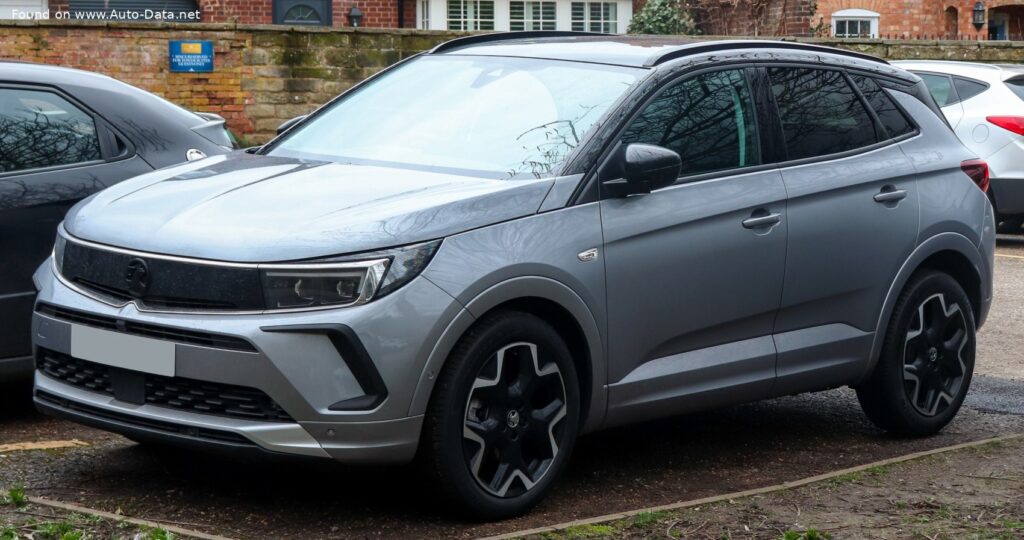
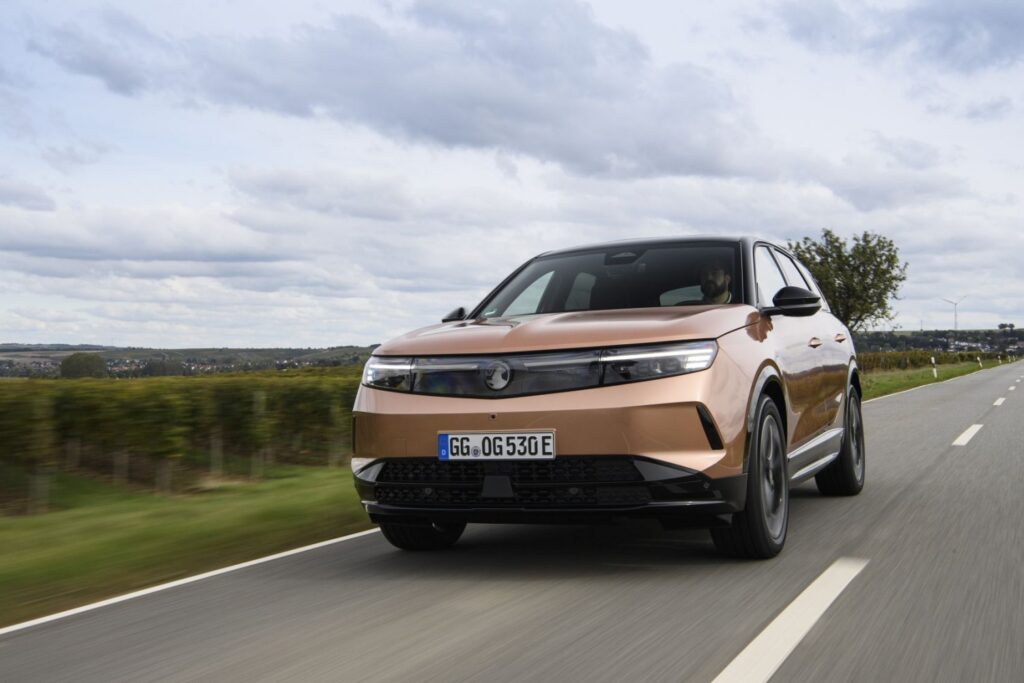
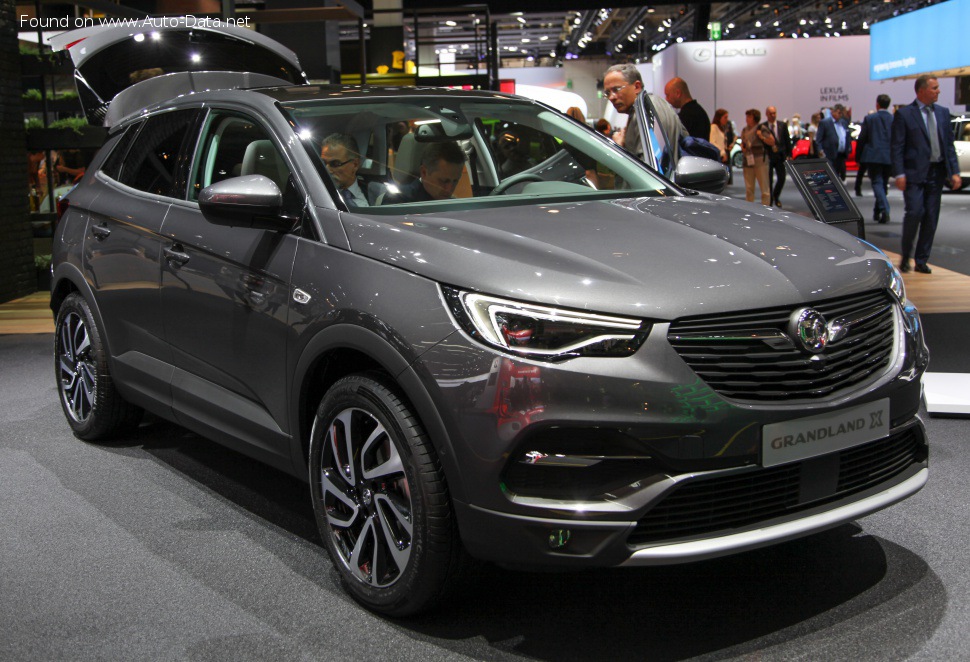
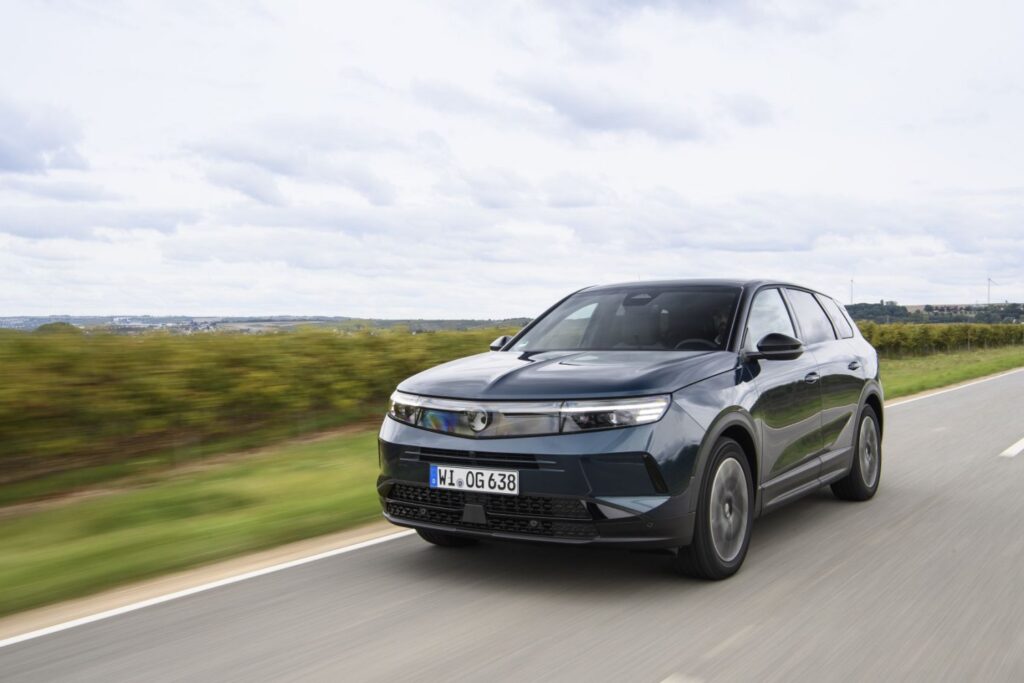
The Vauxhall Grandland II adopts a contemporary SUV body type, featuring five doors and seating for five occupants. Its design language is expected to follow Vauxhall’s latest aesthetic direction, characterized by bold lines, a distinctive front fascia, and a confident stance that projects both ruggedness and sophistication. With a length of 183.07 inches (4650 mm), a width of 75 inches (1905 mm), and a height of 65.24 inches (1657 mm), the Grandland II strikes a balance between urban maneuverability and interior spaciousness. The generous 109.61-inch (2784 mm) wheelbase contributes to a stable ride and ample legroom for passengers.
Practicality is a cornerstone of the Grandland II’s appeal. The trunk offers a substantial minimum cargo volume of 19.42 cubic feet (550 liters), which expands to an impressive 58.09 cubic feet (1645 liters) with the rear seats folded down, making it highly versatile for luggage, groceries, or sports equipment. The vehicle’s kerb weight stands at 3527.4 lbs. (1600 kg), with a maximum gross weight of 4673.8 lbs. (2120 kg), allowing for a maximum payload of 1146.4 lbs. (520 kg). It also boasts practical towing capabilities, with a permitted trailer load of 2425.08 lbs. (1100 kg) with brakes and 1653.47 lbs. (750 kg) without brakes.
Key features for a modern SUV like the Grandland II would undoubtedly include a comprehensive suite of safety and driver-assistance systems. While ABS (Anti-lock Braking System) is explicitly mentioned, contemporary vehicles in this segment typically offer advanced features such as adaptive cruise control, lane-keeping assist, blind-spot monitoring, and automatic emergency braking, enhancing both occupant safety and driving convenience. The electric power steering system and a minimum turning circle of 35.76 feet (10.9 meters) ensure agile handling in urban settings. The vehicle rides on 19-inch wheels, shod with 225/55 R19 or 235/55 R19 tires, providing a balance of grip and ride comfort.
Technical Specifications
| Category | Specification |
| General Information | |
| Brand | Vauxhall |
| Model | Grandland II |
| Type (Engine) | 1.2 Turbo (136 Hp) Mild Hybrid e-DCT |
| Start of Production | October, 2024 |
| End of Production | June, 2025 |
| Powertrain Architecture | MHEV (Mild Hybrid Electric Vehicle) |
| Body Type | SUV |
| Seats | 5 |
| Doors | 5 |
| Performance Specs | |
| Combined Fuel Consumption (WLTP) | 5.5-5.6 l/100 km |
| CO2 Emissions (WLTP) | 124-126 g/km |
| Fuel Type | Petrol (Gasoline) |
| Acceleration 0 – 60 mph | 9.7 sec |
| Maximum Speed | 201 km/h |
| Emission Standard | Euro 6d |
| Weight-to-power ratio | 11.8 kg/Hp |
| Electric Cars and Hybrids Specs | |
| Net (usable) Battery Capacity | 0.4 kWh |
| Battery Voltage | 48 V |
| Battery Technology | Lithium-ion (Li-Ion) |
| Max Speed (electric) | 29 km/h |
| Electric Motor Power | 28 Hp |
| Electric Motor Torque | 55 Nm |
| Electric Motor Location | Integrated into the transmission |
| Internal Combustion Engine Specs | |
| Power | 136 Hp @ 5500 rpm |
| Torque | 230 Nm @ 1750 rpm |
| Engine Layout | Front, Transverse |
| Engine Displacement | 1199 cm3 |
| Number of Cylinders | 3 |
| Engine Configuration | Inline |
| Number of Valves per Cylinder | 4 |
| Fuel Injection System | Direct injection |
| Engine Aspiration | Turbocharger, Intercooler |
| Valvetrain | DOHC, VVT |
| Space, Volume and Weights | |
| Kerb Weight | 1600 kg |
| Max. Weight | 2120 kg |
| Max Load | 520 kg |
| Trunk (boot) Space – Minimum | 550 l |
| Trunk (boot) Space – Maximum | 1645 l |
| Fuel Tank Capacity | 55 l |
| Dimensions | |
| Length | 4650 mm |
| Width | 1905 mm |
| Height | 1657 mm |
| Wheelbase | 2784 mm |
| Drivetrain, Brakes and Suspension Specs | |
| Drivetrain Architecture | MHEV, Front-wheel drive |
| Drive Wheel | Front-wheel drive |
| Number of Gears and Type of Gearbox | 6 gears, automatic transmission e-DCT |
Market Position and Legacy of the Grandland II
The Vauxhall Grandland II 1.2 Turbo Mild Hybrid e-DCT is poised to be a significant contender in the highly competitive European compact SUV segment. Vauxhall, as the British arm of the Stellantis group, leverages shared platforms and powertrains to offer compelling products. The Grandland II will face stiff competition from established rivals such as the Nissan Qashqai, Kia Sportage, Hyundai Tucson, Ford Kuga, Volkswagen Tiguan, and its platform siblings like the Peugeot 3008 and Citroën C5 Aircross.
Its role in the European market is critical, especially in the UK, where Vauxhall has a long-standing heritage. This second-generation Grandland is designed to appeal to families and individuals seeking a practical, stylish, and environmentally conscious vehicle. The mild-hybrid powertrain is particularly relevant in Europe, where strict emission regulations and rising fuel costs make efficient vehicles highly desirable. By offering a blend of a proven turbocharged gasoline engine with electric assistance, the Grandland II provides a stepping stone towards full electrification, without the range anxiety or higher cost sometimes associated with plug-in hybrids or battery electric vehicles.
The Grandland II’s legacy will be defined by its contribution to Vauxhall’s evolving product lineup and its ability to capture a substantial share of the lucrative SUV market. Its expected modern design, advanced technology features, and focus on efficiency and practicality position it as a strong offering for consumers. As Vauxhall continues its journey towards an all-electric future, models like the Grandland II Mild Hybrid are crucial in bridging the gap, offering accessible hybrid technology to a broad customer base and reinforcing the brand’s reputation for delivering innovative and relevant vehicles for the modern driver.