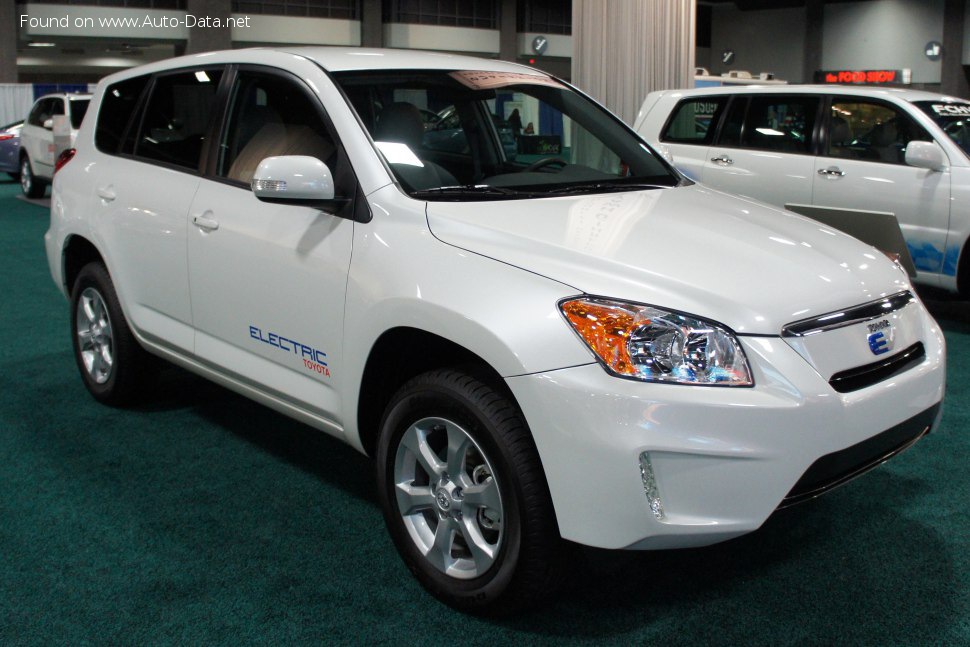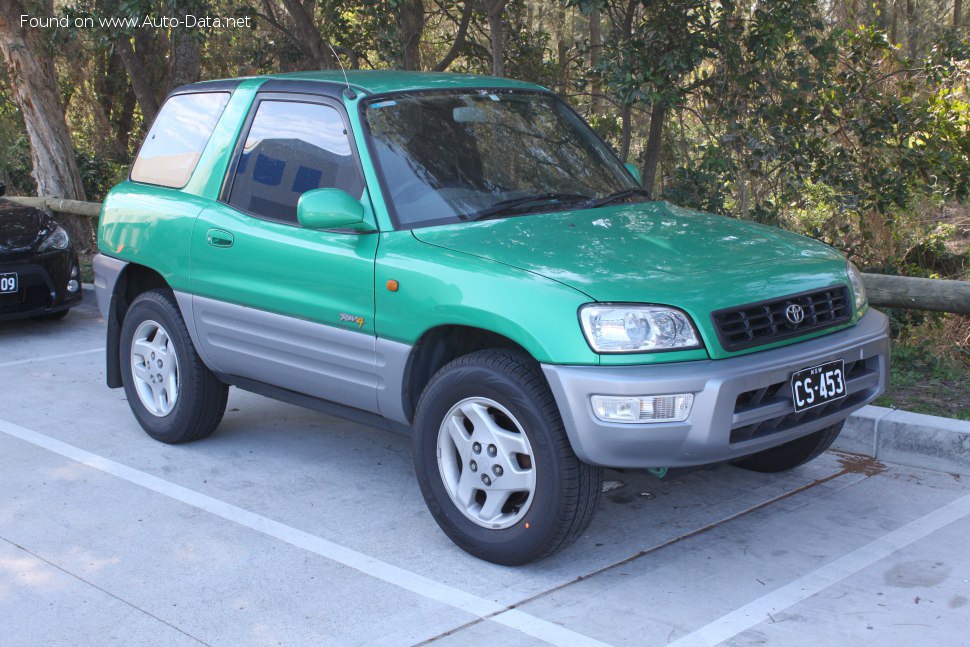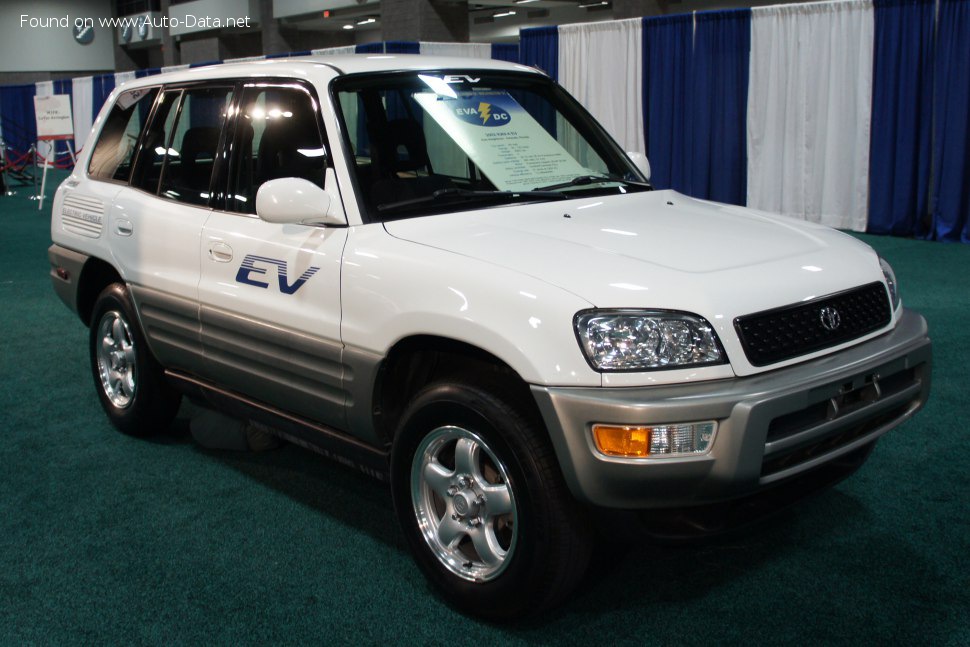
The Toyota RAV4 EV I (BEA11) represents a significant milestone in the history of electric vehicles, predating the widespread adoption of Battery Electric Vehicles (BEVs) by decades. Produced by Toyota from October 1997 to September 2003, this first-generation electric RAV4 was an early attempt to introduce a BEV to the mainstream market. Primarily developed as a “compliance car” to meet California’s stringent Zero Emission Vehicle (ZEV) mandates, the RAV4 EV I wasn’t a global sales phenomenon but a critical learning platform for Toyota, paving the way for its future electrification strategies, including its successful hybrid lineup.
Toyota RAV4 EV I (BEA11): A Pioneering Electric SUV
Based on the popular first-generation RAV4 compact SUV, the EV variant retained much of its gasoline-powered sibling’s practicality and familiar design, making it a more approachable electric vehicle for consumers and fleets at a time when EVs were often purpose-built and aesthetically unconventional. The RAV4 EV I combined the utility of a compact SUV with a zero-emission powertrain, offering a glimpse into a future where electric vehicles could be both functional and environmentally conscious.
Engine & Performance
The Toyota RAV4 EV I (BEA11) featured an innovative, for its time, electric powertrain designed for urban and suburban driving. This RAV4 was a pure BEV, relying solely on electricity for propulsion. Powering the front wheels was an electric motor, transversely mounted, delivering 68 horsepower (Hp) across a broad operational range of 3100-4600 rpm. Impressively for an EV, it produced 140.14 lb.-ft. of instant torque available from 0 to 1500 rpm, contributing to its sprightly acceleration from a standstill.
The energy source was a 27.36 kWh gross capacity Nickel-metal hydride (NiMH) battery pack, operating at 288 volts. This 992.08-pound battery pack was strategically located below the vehicle’s floor, contributing to a low center of gravity and preserving interior space. NiMH chemistry was a common choice for early EVs due to its durability and safety, though it would later be surpassed by lithium-ion in terms of energy density. This battery pack provided an all-electric range of approximately 133.59 miles on a single charge. Power was delivered via a single-gear automatic transmission, offering smooth, seamless acceleration.
Performance figures included an electronically limited top speed of 77.67 mph, adequate for typical highway speeds. The vehicle’s curb weight of 3395.12 lbs, coupled with its 68 Hp motor, resulted in a weight-to-power ratio of 44.2 Hp per tonne. While these figures seem modest by today’s EV standards, they were competitive and practical for the late 1990s and early 2000s, demonstrating Toyota’s commitment to a usable electric vehicle.
Design & Features
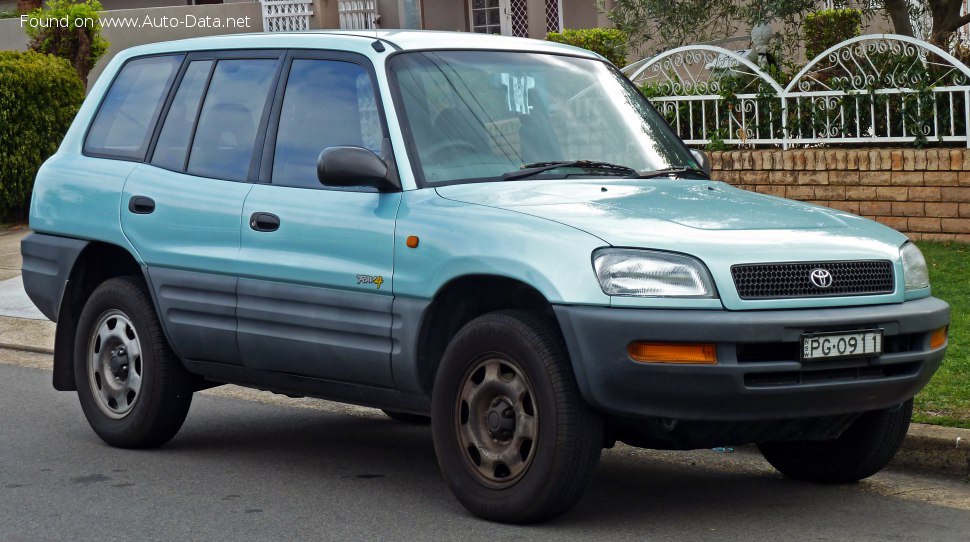
The Toyota RAV4 EV I (BEA11) retained the familiar design language of the first-generation RAV4, a compact SUV that had already established itself as a versatile vehicle. It featured a 5-door SUV body type, offering seating for five occupants and the cargo flexibility expected of an SUV. Dimensionally, the EV variant was nearly identical to its gasoline counterpart, with a length of 156.69 inches, a width of 66.73 inches, and a height of 65.94 inches. The wheelbase measured 94.88 inches, providing a stable ride.
The battery pack’s placement below the floor was a clever engineering solution that helped maintain the RAV4’s original cargo capacity and interior room, a significant advantage over other early EVs that often compromised utility for battery integration. Aesthetically, the RAV4 EV I was largely indistinguishable from its gasoline siblings, apart from subtle badging and the absence of an exhaust pipe. This understated approach aimed to normalize electric vehicles by presenting them in a familiar form factor.
Standard features for the era included power steering, an anti-lock braking system (ABS), and a practical interior. The front suspension utilized an independent MacPherson strut setup, while the rear featured a double wishbone with trailing arms, providing a balanced ride. Braking was handled by ventilated discs at the front and drum brakes at the rear, augmented by regenerative braking, which helped extend range and reduce brake wear. The vehicle rode on 195/80 R16 tires, mounted on 6.5J x 16 wheel rims.
Technical Specifications
| Category | Specification |
| General Information | |
| Brand | Toyota |
| Model | RAV4 EV I (BEA11) 5-door |
| Type (Engine) | 27.36 kWh (68 Hp) BEV |
| Production Start | October, 1997 |
| Production End | September, 2003 |
| Powertrain Architecture | BEV (Electric Vehicle) |
| Body Type | SUV |
| Seats | 5 |
| Doors | 5 |
| Performance Specs | |
| Fuel Type | Electricity |
| Maximum Speed | 125 km/h |
| Maximum Speed (MPH) | 77.67 mph (Electronically limited) |
| Weight-to-power ratio | 22.6 kg/Hp |
| Weight-to-power ratio (US) | 44.2 Hp/tonne |
| Weight-to-torque ratio | 8.1 kg/Nm |
| Weight-to-torque ratio (US) | 123.4 Nm/tonne |
| Electric Cars and Hybrids Specs | |
| Gross Battery Capacity | 27.36 kWh |
| Battery Voltage | 288 V |
| Battery Technology | Nickel-metal hydride (NiMH) |
| Battery Weight | 450 kg |
| Battery Weight (lbs) | 992.08 lbs |
| Battery Location | Below the floor |
| All-electric Range | 215 km |
| All-electric Range (miles) | 133.59 miles |
| Electric Motor Power | 68 Hp @ 3100-4600 rpm |
| Electric Motor Torque | 190 Nm @ 0-1500 rpm |
| Electric Motor Torque (lb-ft) | 140.14 lb.-ft. @ 0-1500 rpm |
| Electric Motor Location | Front axle, Transverse |
| System Power | 68 Hp @ 3100-6400 rpm |
| System Torque | 190 Nm @ 0-1500 rpm |
| Space, Volume and Weights | |
| Kerb Weight | 1540 kg |
| Kerb Weight (lbs) | 3395.12 lbs |
| Max. Weight | 1935 kg |
| Max. Weight (lbs) | 4265.94 lbs |
| Max Load | 395 kg |
| Max Load (lbs) | 870.83 lbs |
| Dimensions | |
| Length | 3980 mm |
| Length (in) | 156.69 in. |
| Width | 1695 mm |
| Width (in) | 66.73 in. |
| Height | 1675 mm |
| Height (in) | 65.94 in. |
| Wheelbase | 2410 mm |
| Wheelbase (in) | 94.88 in. |
| Drivetrain, Brakes and Suspension Specs | |
| Drivetrain Architecture | One electric motor drives the front wheels |
| Drive Wheel | Front-wheel drive |
| Number of Gears & Gearbox Type | 1 gear, automatic transmission |
| Front Suspension | Independent type McPherson |
| Rear Suspension | Double wishbone, Trailing arm |
| Front Brakes | Ventilated discs |
| Rear Brakes | Drum |
| Assisting Systems | ABS (Anti-lock braking system) |
The Toyota RAV4 EV I (BEA11) holds a unique place in automotive history. While never a mass-market success, its impact was profound, primarily within California’s ZEV mandate framework. Toyota produced approximately 1,500 units, primarily for lease to fleets, government agencies, and a limited number of private customers. This allowed Toyota to gather real-world data on EV performance, reliability, and consumer acceptance.
In its primary market, the RAV4 EV I competed with other pioneering EVs like the General Motors EV1 and the Honda EV Plus. However, the RAV4 EV offered the practical advantage of being based on an existing SUV platform, giving it a more familiar appearance and greater utility. This familiarity helped to demystify electric vehicles.
The vehicle earned a reputation for exceptional reliability and durability, a testament to Toyota’s engineering. Many of these early RAV4 EVs continued to operate for well over a decade, often exceeding 100,000 miles with their original NiMH battery packs. This longevity was remarkable given the nascent state of EV technology and helped dispel fears about battery degradation. A dedicated community of owners emerged, performing their own maintenance and developing aftermarket upgrades.
The RAV4 EV I’s legacy extends beyond its sales figures. It served as a testbed for Toyota’s electric powertrain components and battery management systems. The insights gained directly informed Toyota’s subsequent ventures into hybrid technology, notably the Prius. The experience with the RAV4 EV I solidified Toyota’s position as a leader in advanced powertrain development and laid foundational knowledge for its later electrification efforts. Despite its limited production, the Toyota RAV4 EV I (BEA11) remains a symbol of early EV innovation, proving that a major automaker could produce a practical, reliable electric vehicle.