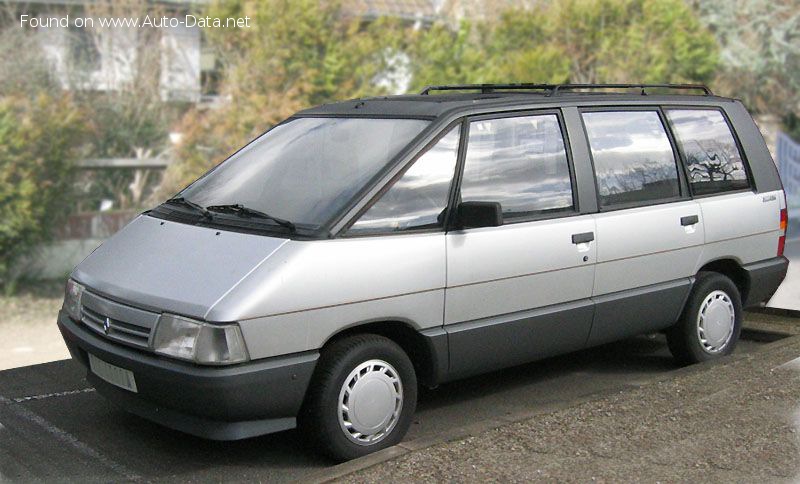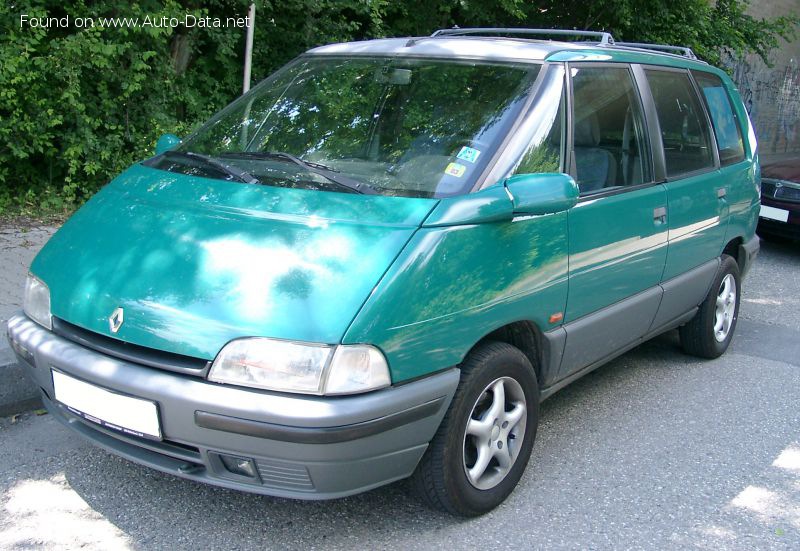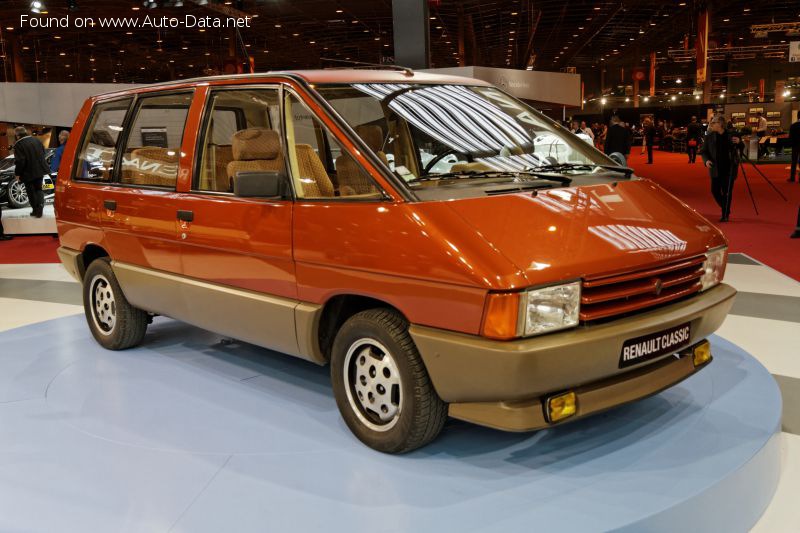
The Renault Espace I (J11/13) 2.1 TD (88 Hp) represents a pivotal moment in automotive history, particularly within the European market. Launched in 1984 and produced in its 2.1 TD (88 Hp) configuration from 1985 to 1988, the first-generation Espace, designated J11/13, essentially created the European Multi-Purpose Vehicle (MPV) segment – commonly known as a minivan in the United States. This vehicle was the result of a collaborative effort between Matra and Renault, initially conceived by Matra for Talbot. Its innovative “one-box” design, spacious and adaptable interior, and focus on family practicality quickly distinguished it. While minivans were concurrently gaining popularity in North America with models like the Chrysler Voyager, the Espace established its own unique position in Europe, offering a distinctly French approach to family transportation emphasizing comfort, versatility, and efficiency, especially with its durable diesel engine.
The Renault Espace I: A European Innovation
The Espace I wasn’t simply a new vehicle; it was a paradigm shift in how European families viewed transportation. Prior to its arrival, large families often relied on vans or station wagons, neither of which fully addressed the need for comfortable, flexible, and efficient people-carrying capabilities. The Espace filled this void, offering a vehicle that could comfortably accommodate up to seven passengers while still being relatively easy to maneuver and economical to operate. Its success paved the way for a wave of MPVs from other European manufacturers, solidifying its legacy as the originator of the segment.
Engine & Performance: The Heart of the Espace I
The Renault Espace I (J11/13) 2.1 TD (88 Hp) was powered by a longitudinally mounted 2.1-liter (2068 cm³) inline-four turbocharged diesel engine, internally designated J8S. This engine was a key factor in the Espace’s appeal, particularly in European markets where diesel engines were favored for their fuel economy and torque. Producing 88 horsepower at 4250 rpm and 134.24 lb.-ft. of torque at a low 2000 rpm, the engine provided sufficient power for a family-oriented MPV. The turbocharger broadened the power band and improved responsiveness compared to naturally aspirated diesel engines of the time.
The 2.1 TD engine was coupled with a 5-speed manual transmission that drove the front wheels. Performance figures were respectable for its class and era. Acceleration from 0 to 60 mph took approximately 12.6 seconds, and the vehicle reached a top speed of 99.42 mph (160 km/h). While not designed for outright speed, these numbers were adequate for family travel on European highways. Crucially, the diesel engine delivered excellent fuel efficiency. Combined fuel economy was rated at an impressive 34.6 US mpg (6.8 liters per 100 km), with even better figures of 46.1 US mpg (5.1 liters per 100 km) during extra-urban driving. This efficiency made the Espace 2.1 TD an economical choice for families, offering extended range and reduced running costs, a significant contributor to its success in Europe. The engine utilized a precombustion chamber injection system, a common diesel technology of the period, known for its robustness and reliability.
Design & Features: A Visionary Approach
The design of the Renault Espace I was groundbreaking. Its distinctive “one-box” silhouette, characterized by a steeply raked windshield that seamlessly integrated with the hood, created a spacious and aerodynamic interior. The drag coefficient (Cd) of 0.32 was quite low for a vehicle of its size and type at the time, contributing to fuel efficiency and reduced wind noise. The Espace I (J11/13) was exclusively offered as a 5-door minivan/MPV, maximizing interior space and passenger comfort.
The Espace’s interior was celebrated for its versatility. It accommodated seven passengers with individual seats that could be easily removed, folded, or swiveled to face the rear, creating a lounge-like atmosphere. This modularity was revolutionary, allowing owners to reconfigure the cabin for various needs, from transporting a large family to carrying bulky items. The minimum trunk space was 20.48 cu. ft. (580 liters), expanding to a substantial 108.06 cu. ft. (3060 liters) with the rear seats removed, demonstrating its exceptional utility.
The Espace I’s dimensions were compact by modern standards but generous for its time: 167.32 inches (4250 mm) in length, 69.96 inches (1777 mm) in width, and 65.35 inches (1660 mm) in height, with a wheelbase of 101.57 inches (2580 mm). Its relatively small footprint made it maneuverable in European cities, while the elevated driving position provided excellent visibility. Safety features, while basic by today’s standards, included a robust body structure. The independent McPherson strut front suspension and semi-independent rear suspension with coil springs provided a comfortable and stable ride, essential for long-distance family travel. Braking was handled by ventilated discs at the front and drum brakes at the rear, a typical setup for vehicles of its class. The rack and pinion steering offered predictable handling.
Technical Specifications: Renault Espace I (J11/13) 2.1 TD (88 Hp)
| Brand | Renault |
| Model | Espace |
| Generation | Espace I (J11/13) |
| Engine Type | 2.1 TD (88 Hp) |
| Start of Production | 1985 |
| End of Production | 1988 |
| Powertrain Architecture | Internal Combustion engine |
| Body Type | Minivan, MPV |
| Seats | 7 |
| Doors | 5 |
| Fuel Consumption (Urban) | 7.2 l/100 km (32.7 US mpg) |
| Fuel Consumption (Extra Urban) | 5.1 l/100 km (46.1 US mpg) |
| Fuel Consumption (Combined) | 6.8 l/100 km (34.6 US mpg) |
| Fuel Type | Diesel |
| Acceleration 0 – 62 mph (0 – 100 km/h) | 13.3 sec |
| Acceleration 0 – 60 mph (Calculated) | 12.6 sec |
| Maximum Speed | 99.42 mph (160 km/h) |
| Weight-to-Power Ratio | 14.1 kg/Hp (71 Hp/tonne) |
| Weight-to-Torque Ratio | 6.8 kg/Nm (146.8 Nm/tonne) |