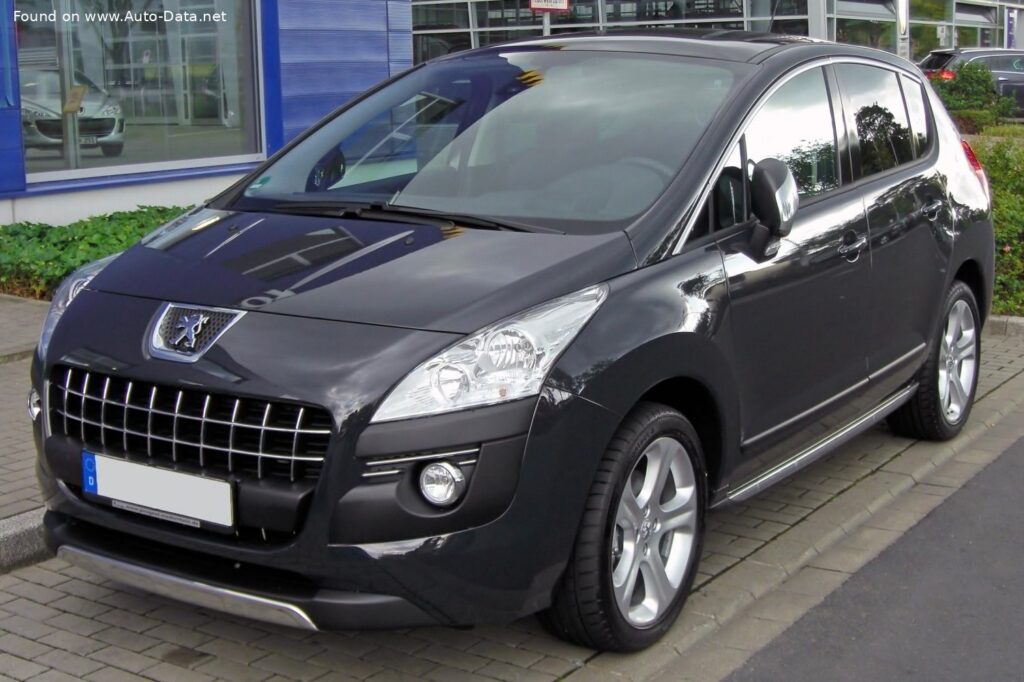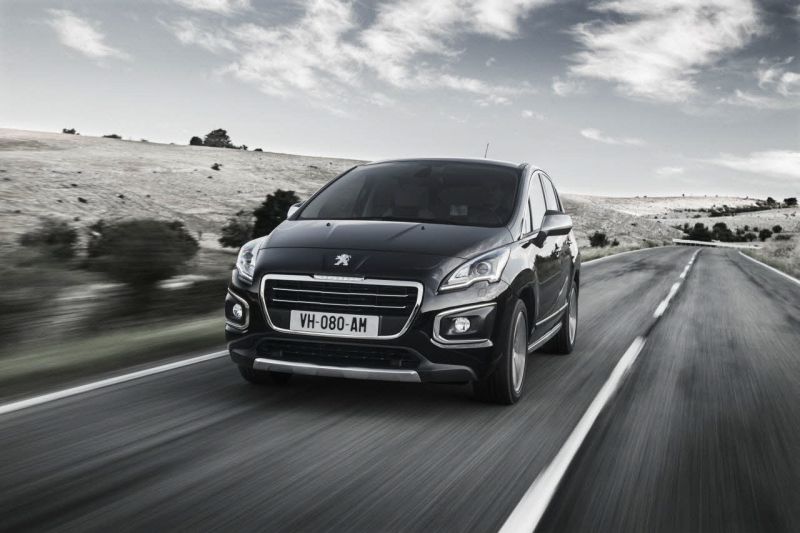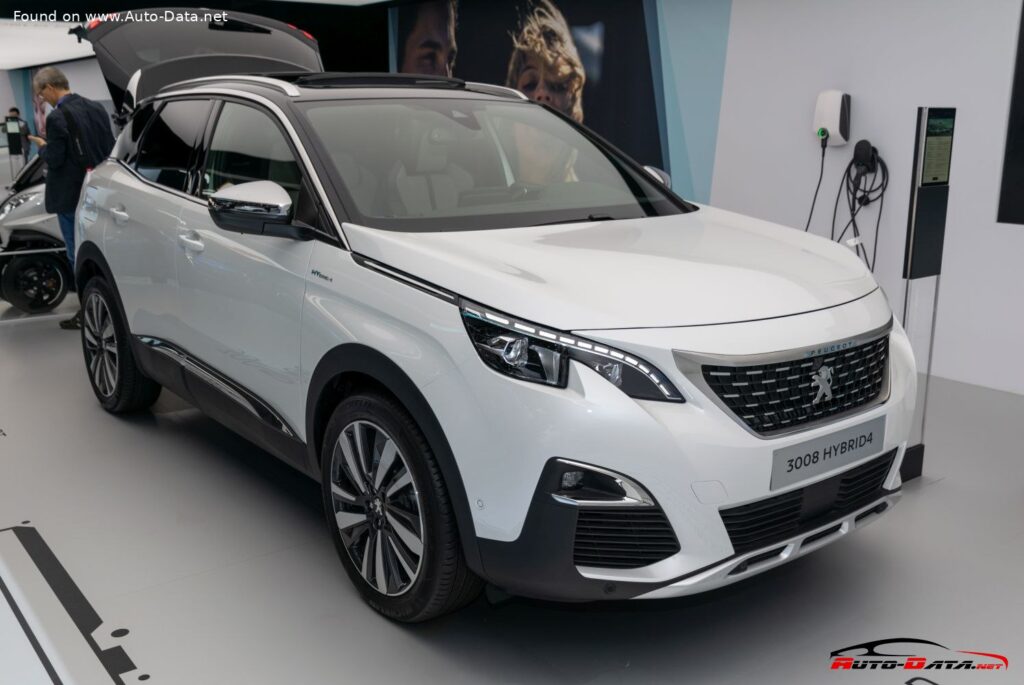
The Peugeot 3008 II (Phase I, 2016) 1.5 BlueHDi (130 Hp) S&S represents a pivotal moment for the French automaker, marking a dramatic shift in its approach to the highly competitive compact SUV segment. Introduced in 2016 and produced through 2020, this second-generation 3008 moved away from the somewhat unconventional MPV-SUV crossover styling of its predecessor to embrace a sleek, modern, and award-winning SUV design. While not sold in the United States market, the 3008 II achieved significant popularity across Europe and other international markets, earning praise for its striking aesthetics, refined interior, and efficient powertrains. The 1.5 BlueHDi (130 Hp) S&S variant, reviewed here, was a core offering, prioritizing fuel economy and a balanced performance profile suitable for both daily commutes and longer journeys. Its success culminated in the prestigious European Car of the Year award in 2017.
Engine & Performance: The 1.5 BlueHDi Powertrain
The Peugeot 3008 II (Phase I, 2016) 1.5 BlueHDi (130 Hp) S&S is powered by the YHZ DV5RC 1.5-liter (1499 cm3 or 91.47 cubic inches) BlueHDi diesel engine. This inline four-cylinder engine exemplifies Peugeot’s commitment to diesel refinement and efficiency, particularly within the European market. Producing 130 horsepower at 3750 rpm, the engine delivers power smoothly, making it well-suited for a vehicle of this size and intended use. Crucially for an SUV, the engine generates 300 Newton-meters (221.27 pound-feet) of torque, available from a low 1750 rpm. This substantial low-end torque provides strong acceleration from a standstill and confident overtaking capability, even with a fully loaded vehicle.
Performance figures demonstrate the engine’s balanced nature. The 3008 II 1.5 BlueHDi accelerates from 0 to 60 mph in 10.3 seconds (0-100 km/h in 10.8 seconds), reaching a maximum speed of 119.3 mph (192 km/h). These figures position it as a capable performer within its class, prioritizing usability over outright speed. Fuel economy is a standout feature, with a combined fuel consumption rating of 4 liters per 100 kilometers, equating to 58.8 US miles per gallon (70.6 UK mpg). This efficiency is further enhanced by Peugeot’s Start & Stop (S&S) system, which automatically shuts off the engine when stationary and restarts it seamlessly upon driver input, reducing fuel consumption and emissions in urban environments. The engine also meets stringent Euro 6 d-TEMP emission standards, utilizing a diesel common rail injection system, turbocharger with intercooler, and a particulate filter for cleaner operation.
Design & Features: A Modern Compact SUV
The Peugeot 3008 II marked a significant departure in design from its predecessor, adopting a modern and assertive SUV aesthetic. The vehicle features a distinctive front fascia characterized by sharp headlights and an upright grille, flowing into a sculpted body with prominent wheel arches. Its dimensions – a length of 175.08 inches (4447 mm), a width of 72.48 inches (1841 mm), and a height of 63.94 inches (1624 mm) – provide a commanding presence without being overly bulky. The 105.31-inch (2675 mm) wheelbase contributes to a stable ride and a spacious cabin.
Inside, the 3008 II is known for its innovative “i-Cockpit” design, featuring a small-diameter steering wheel, a configurable digital instrument cluster positioned above the steering wheel, and a central infotainment screen. The vehicle comfortably accommodates five occupants across two rows, accessible through five doors. Trunk space is generous, offering a minimum of 18.36 cubic feet (520 liters) with the rear seats up, expanding to 52.34 cubic feet (1482 liters) with the rear seats folded down, providing ample cargo capacity for families and various needs. The chassis and suspension are tuned for a comfortable yet engaging driving experience, utilizing an independent McPherson strut front suspension with coil springs and an anti-roll bar, and a semi-independent rear suspension with coil springs. Front ventilated disc brakes and rear disc brakes provide confident stopping power, assisted by ABS. Electric power steering ensures light and precise control. With 8.62 inches (219 mm) of ground clearance, a 20-degree approach angle, and a 29-degree departure angle, the 3008 II offers greater capability than many urban-focused SUVs, allowing it to handle light off-road conditions or challenging urban obstacles.
Technical Specifications
| Category | Specification |
| General Information | |
| Brand | Peugeot |
| Model | 3008 |
| Generation | 3008 II (Phase I, 2016) |
| Type (Engine) | 1.5 BlueHDi (130 Hp) S&S |
| Start of Production | 2017 |
| End of Production | 2020 |
| Powertrain Architecture | Internal Combustion engine |
| Body type | SUV |
| Seats | 5 |
| Doors | 5 |
| Performance Specifications | |
| Fuel consumption (economy) – urban | 4.6 l/100 km (51.1 US mpg) |
| Fuel consumption (economy) – extra urban | 3.7 l/100 km (63.6 US mpg) |
| Fuel consumption (economy) – combined | 4.0 l/100 km (58.8 US mpg) |
| CO2 emissions | 106 g/km |
| Fuel Type | Diesel |
| Acceleration 0 – 60 mph | 10.3 sec |
| Acceleration 0 – 100 km/h | 10.8 sec |
| Maximum speed | 119.3 mph (192 km/h) |
| Emission standard | Euro 6 d-TEMP |
| Weight-to-power ratio | 10.9 kg/Hp (91.7 Hp/tonne) |
| Weight-to-torque ratio | 4.7 kg/Nm (211.7 Nm/tonne) |
| Engine Specifications | |
| Power | 130 Hp @ 3750 rpm |
| Power per liter | 86.7 Hp/l |
| Torque | 300 Nm (221.27 lb.-ft.) @ 1750 rpm |
| Engine layout | Front, Transverse |
| Engine Model/Code | YHZ DV5RC |
| Engine displacement | 1499 cm3 (91.47 cu. in.) |
| Number of cylinders | 4 |
| Engine configuration | Inline |
| Number of valves per cylinder | 4 |
| Fuel injection system | Diesel Commonrail |
| Engine aspiration | Turbocharger, Intercooler |
| Engine oil capacity | 4 l (4.23 US qt) |
| Engine systems | Start & Stop System, Particulate filter |
| Space, Volume and Weights | |
| Kerb Weight | 1417 kg (3123.95 lbs.) |
| Max. weight | 1970 kg (4343.11 lbs.) |
| Max load | 553 kg (1219.16 lbs.) |
| Trunk (boot) space – minimum | 520 l (18.36 cu. ft.) |
| Trunk (boot) space – maximum | 1482 l (52.34 cu. ft.) |
| Fuel tank capacity | 53 l (14 US gal) |
| Permitted trailer load with brakes (12%) | 1500 kg (3306.93 lbs.) |
| Dimensions | |
| Length | 4447 mm (175.08 in.) |
| Width | 1841 mm (72.48 in.) |
| Width with mirrors folded | 1906 mm (75.04 in.) |
| Width including mirrors | 2098 mm (82.6 in.) |
| Height | 1624 mm (63.94 in.) |
| Wheelbase | 2675 mm (105.31 in.) |
| Front track | 1579-1601 mm (62.17 – 63.03 in.) |
| Rear (Back) track | 1587-1610 mm (62.48 – 63.39 in.) |
| Front overhang | 923 mm (36.34 in.) |
| Rear overhang | 849 mm (33.43 in.) |
| Ride height (ground clearance) | 219 mm (8.62 in.) |
| Minimum turning circle (turning diameter) | 10.67 m (35.01 ft.) |
| Approach angle | 20° |
| Departure angle | 29° |
| Drivetrain, Brakes and Suspension Specifications | |
| Drivetrain Architecture | The Internal combustion engine (ICE) drives the front wheels of the vehicle. |
| Drive wheel | Front wheel drive |
| Number of gears and type of gearbox | 6 gears, manual transmission |
| Front suspension | Independent, type McPherson with coil spring and anti-roll bar |
| Rear suspension | Semi-independent, coil spring |
| Front brakes | Ventilated discs |
| Rear brakes | Disc |
| Assisting systems | ABS (Anti-lock braking system) |
| Steering type | Steering rack and pinion |
| Power steering | Electric Steering |
| Tires size | 215/65 R17; 225/55 R18; 205/55 R19 |
| Wheel rims size | 17; 18; 19 |
Legacy and Market Impact
The Peugeot 3008 II, and specifically the Peugeot 3008 II (Phase I, 2016) 1.5 BlueHDi (130 Hp) S&S variant, established a significant legacy for Peugeot. Its transformation from its first generation into a stylish and modern SUV was a strategic success, capturing the evolving preferences of the European automotive market. Winning the European Car of the Year award in 2017 validated its innovative design, practical appeal, and overall excellence.
Within its primary European market, the 3008 II competed with established rivals such as the Nissan Qashqai, Renault Kadjar, Volkswagen Tiguan, Hyundai Tucson, and Kia Sportage. The 3008 distinguished itself through its bold exterior design, futuristic i-Cockpit interior, and a focus on driving dynamics and ride comfort. The 1.5 BlueHDi engine offered a compelling combination of power, refinement, and exceptional fuel economy, appealing to buyers prioritizing running costs and environmental responsibility. The success of this generation solidified Peugeot’s position in the competitive compact SUV segment, demonstrating its ability to blend French design flair with robust engineering and efficient powertrains. It helped reshape the brand’s image, moving it towards a more premium and technologically advanced perception. Even after the end of Phase I production in 2020, its impact on the SUV landscape and Peugeot’s brand trajectory remains significant, serving as a testament to successful redesign and engineering in meeting changing consumer demands.