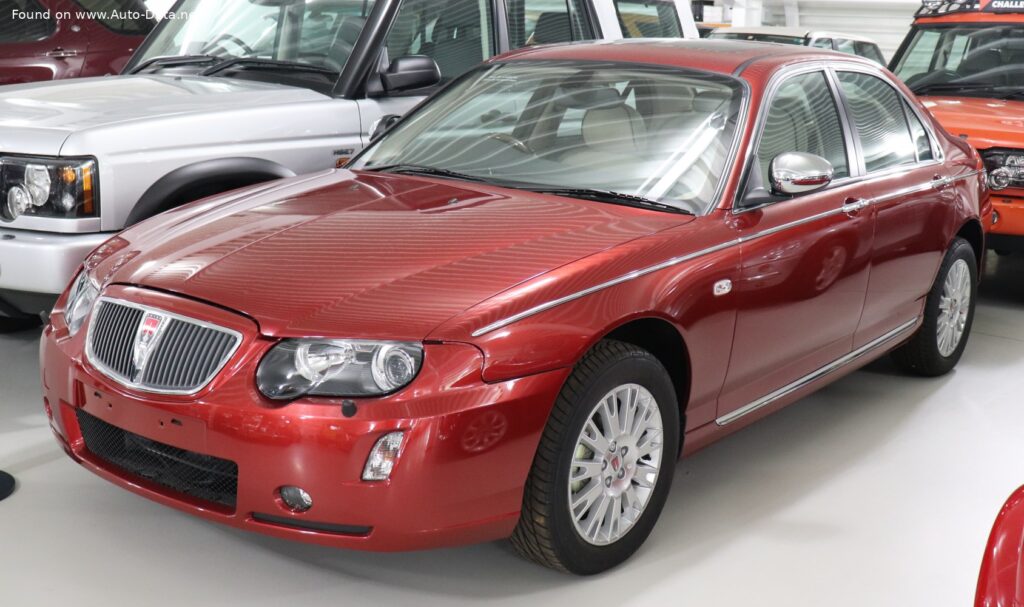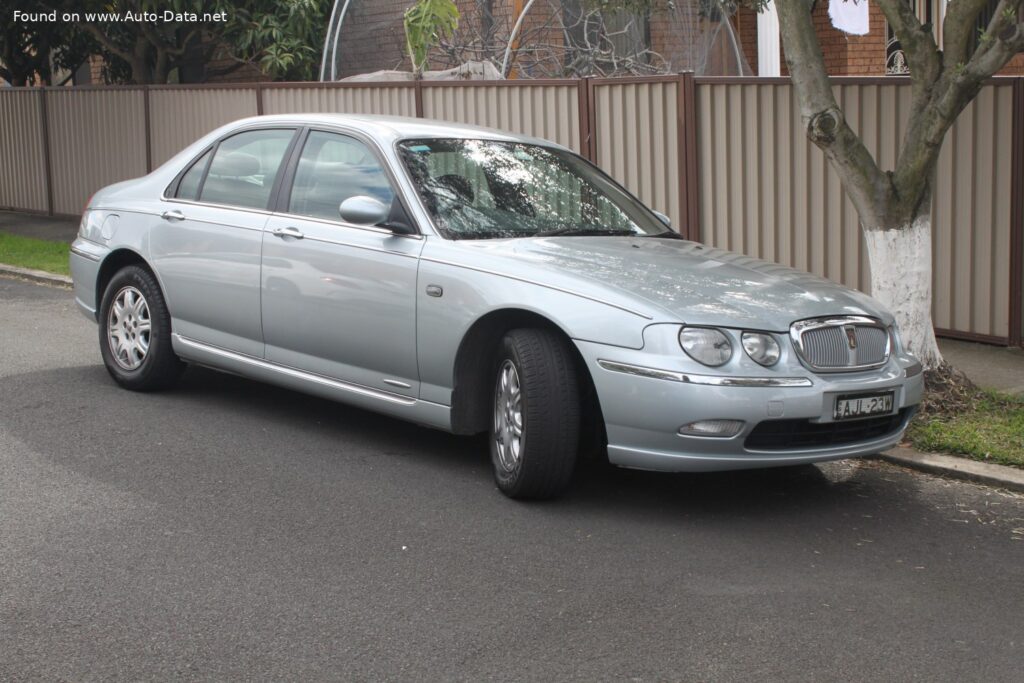
The Rover 75 1.8 16V T (150 Hp) represents a poignant chapter in British automotive history, embodying a blend of traditional luxury and contemporary engineering. Launched in 1998, the Rover 75 was the last entirely new model developed by the Rover Group before its eventual demise. This specific generation, produced between 2002 and 2004, featured a turbocharged 1.8-liter engine, intended to enhance its performance within the competitive European executive compact car segment. While never officially sold in the United States, the Rover 75 found a niche in European and Asian markets, appealing to buyers seeking a refined and distinctly British alternative to German and Japanese dominance.
Rover 75 1.8 16V T (150 Hp): A Detailed Overview
Developed largely under BMW’s ownership, the Rover 75 benefited from significant investment and engineering expertise. It was praised for its ride quality, refinement, and classic styling. The 1.8 16V T (150 Hp) model aimed to combine a more potent powertrain with the established comfort and elegance of the standard 75, offering a sophisticated saloon with a balance of performance and economy, while referencing Rover’s illustrious past.
Engine & Performance: The Heart of the Rover 75
The **Rover 75 1.8 16V T (150 Hp)** is powered by a turbocharged 1.8-liter (1796 cm³ or 109.6 cu. in.) 16-valve inline-four gasoline engine, designated 18K4G. This engine was a significant evolution of Rover’s K-Series, enhanced with a turbocharger and intercooler to substantially increase output and torque. The engine produces 150 horsepower at 5500 rpm, a respectable figure for its displacement at the time.
Critically, the engine delivers 215 Nm (158.58 lb.-ft.) of torque at 2100 rpm. This low-end torque is characteristic of turbocharged engines and greatly enhances drivability, providing strong acceleration from low speeds and making it suitable for both urban and highway driving. Power is delivered to the front wheels via a 5-speed manual transmission. This combination allows the Rover 75 1.8 16V T to accelerate from 0 to 60 mph in 8.6 seconds, with a maximum speed of 130.49 mph (210 km/h).
Despite its turbocharged nature, the engine also prioritized efficiency. Combined fuel economy is rated at 29.4 US mpg (8.0 l/100 km), with extra-urban driving yielding up to 38.6 US mpg (6.1 l/100 km). CO2 emissions are 193 g/km, balancing power and environmental considerations. The engine utilizes multi-port fuel injection and a DOHC (Double Overhead Camshaft) valvetrain for efficient combustion and valve timing. With a compression ratio of 9.2:1 and a bore and stroke of 80 mm (3.15 in.) and 89.3 mm (3.52 in.) respectively, the engine was engineered for smooth operation and durability.
Design & Features: Classic Elegance and Modern Comfort
The Rover 75’s design is arguably its most defining feature. It adopted a retro-classic styling, deliberately evoking the elegance of past Rover models, particularly those from the 1950s and 60s. The sedan body type, with four doors and seating for five, exudes understated luxury. From its prominent chrome grille and quad headlamps to its sweeping lines and gently sloping rear, the Rover 75 distinguished itself from competitors.
The interior continued the theme of traditional British luxury. High-quality materials, including real wood trim, chrome accents, and plush upholstery, created a comfortable environment. The dashboard layout was ergonomic and refined, prioritizing ease of use. Features included a climate control system, power windows, and a sophisticated audio system, contributing to the car’s premium feel. Trunk space of 15.26 cu. ft. (432 liters) provided ample room for luggage.
The Rover 75 featured a robust chassis. The front suspension utilized a wishbone design, while the rear featured coil springs, contributing to its comfortable ride and stable handling. Braking power was provided by ventilated discs at the front and disc brakes at the rear, complemented by an Anti-lock Braking System (ABS) as standard. The hydraulic rack and pinion power steering ensured precise maneuverability. The car rode on 195/65 R16 tires, mounted on 6J x 15 wheel rims, providing a balance of grip and ride comfort.
Technical Specifications: Rover 75 1.8 16V T (150 Hp)
The following table details the comprehensive technical specifications for the Rover 75 1.8 16V T (150 Hp) sedan:
| Category | Specification |
| Brand | Rover |
| Model | 75 |
| Generation | 75 |
| Type (Engine) | 1.8 16V T (150 Hp) |
| Production Start | 2002 |
| Production End | 2004 |
| Powertrain Architecture | Internal Combustion engine |
| Body Type | Sedan |
| Seats | 5 |
| Doors | 4 |
| Fuel Consumption (Urban) | 11.3 l/100 km (20.8 US mpg) |
| Fuel Consumption (Extra Urban) | 6.1 l/100 km (38.6 US mpg) |
| Fuel Consumption (Combined) | 8.0 l/100 km (29.4 US mpg) |
| CO2 Emissions | 193 g/km |
| Fuel Type | Petrol (Gasoline) |
| Acceleration 0 – 60 mph | 8.6 sec |
| Acceleration 0 – 100 km/h | 9.1 sec |
| Maximum Speed | 210 km/h (130.49 mph) |
| Weight-to-Power Ratio | 9.5 kg/Hp (105.6 Hp/tonne) |
| Weight-to-Torque Ratio | 6.6 kg/Nm (151.4 Nm/tonne) |
| Power | 150 Hp @ 5500 rpm |
| Power per Liter | 83.5 Hp/l |
| Torque | 215 Nm @ 2100 rpm (158.58 lb.-ft. @ 2100 rpm) |
| Engine Layout | Front, Transverse |
| Engine Model/Code | 18K4G |
| Engine Displacement | 1796 cm³ (109.6 cu. in.) |
| Number of Cylinders | 4 |
| Engine Configuration | Inline |
| Cylinder Bore | 80 mm (3.15 in.) |
| Piston Stroke | 89.3 mm (3.52 in.) |
| Compression Ratio | 9.2:1 |
| Valves per Cylinder | 4 |
| Fuel Injection System | Multi-port manifold injection |
| Engine Aspiration | Turbocharger, Intercooler |
| Valvetrain | DOHC |
| Engine Oil Capacity | 4.5 l (4.76 US qt) |
| Coolant Capacity | 6.2 l (6.55 US qt) |
| Kerb Weight | 1420 kg (3130.56 lbs.) |
| Max. Weight | 1960 kg (4321.06 lbs.) |
| Max Load | 540 kg (1190.5 lbs.) |
| Trunk (Boot) Space – Minimum | 432 l (15.26 cu. ft.) |
| Fuel Tank Capacity | 65 l (17.17 US gal) |
| Length | 4747 mm (186.89 in.) |
| Width | 1778 mm (70 in.) |
| Height | 1424 mm (56.06 in.) |
| Wheelbase | 2746 mm (108.11 in.) |
| Front Track | 1505 mm (59.25 in.) |
| Rear Track | 1505 mm (59.25 in.) |
| Drivetrain Architecture | Front wheel drive, Internal Combustion engine |
| Drive Wheel | Front wheel drive |
| Number of Gears/Gearbox Type | 5 gears, manual transmission |
| Front Suspension | Wishbone |
| Rear Suspension | Coil spring |
| Front Brakes | Ventilated discs |
| Rear Brakes | Disc |
| Assisting Systems | ABS (Anti-lock braking system) |
| Steering Type | Steering rack and pinion |
| Power Steering | Hydraulic Steering |
| Tires Size | 195/65 R16 |
| Wheel Rims Size | 6J x 15 |
The Rover 75, including the 1.8 16V T (150 Hp) variant, holds a unique and somewhat melancholic place in automotive history. It was a product of a troubled era for the British auto industry, but was praised for its refined driving dynamics, comfortable interior, and classic styling. It offered a compelling alternative to more mainstream offerings, particularly in Europe. Despite its unfortunate end with the collapse of MG Rover, the Rover 75 is remembered fondly by enthusiasts and owners, celebrated for its timeless design and exceptional ride comfort.