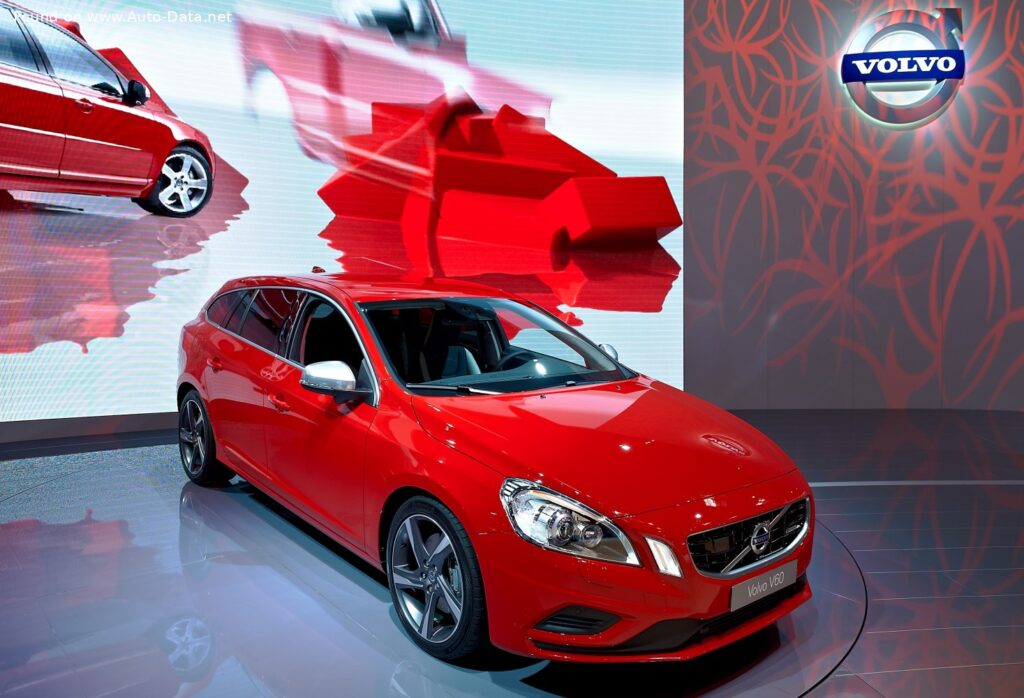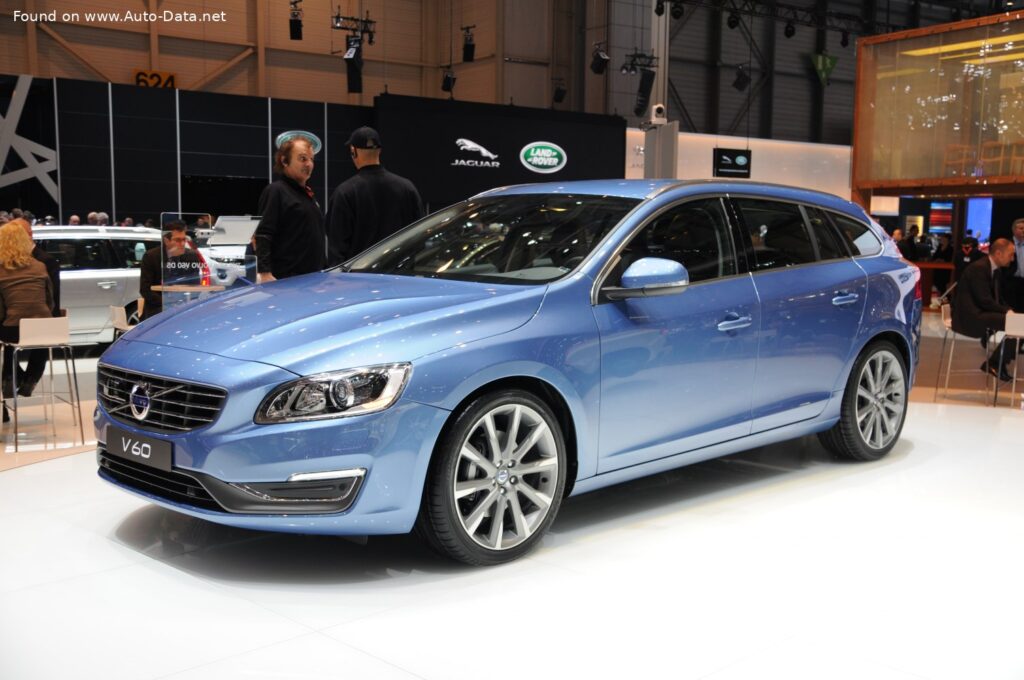
The Volvo V60 I, particularly in its 2013 facelifted iteration, represents a significant chapter in Volvo’s modern history, solidifying its position in the premium compact executive segment. Launched in 2010, the V60 was Volvo’s answer to the evolving demands for a more dynamically styled and driver-focused wagon, moving away from the boxy estates of its past while retaining the brand’s core values of safety and practicality. The 2013 facelift, which ran until 2015 for this specific generation, brought a host of aesthetic and technological updates, harmonizing its design with Volvo’s newer models and enhancing its appeal in a competitive European market dominated by German rivals. This article will delve into the specifications and market impact of a particular variant, the Volvo V60 I (2013 facelift) 1.6 T3 (150 Hp) Automatic, a powertrain configuration primarily targeted at European markets emphasizing efficiency and manageable performance.
The Volvo V60 I (2013 Facelift): A Refined European Premium Wagon
The Volvo V60 I (2013 facelift) marked a pivotal moment for the Swedish automaker, showcasing its ability to blend traditional Volvo strengths – safety, durability, and practicality – with a more contemporary and emotionally resonant design. This generation of V60 aimed to attract a broader customer base, particularly those seeking a premium wagon that offered a more engaging driving experience than its predecessors. While not widely sold in the United States, the V60 held a significant position in the European market, competing with established German brands and offering a compelling alternative for buyers prioritizing Scandinavian design and a focus on passenger well-being.
Engine & Performance: The 1.6 T3 Powertrain
The Volvo V60 I (2013 facelift) 1.6 T3 is powered by a 1.6-liter turbocharged inline-four gasoline engine, designated as the B4164T3. This engine produces 150 horsepower at 5700 rpm and 177.01 lb.-ft. (240 Nm) of torque between 1600 and 4000 rpm. The turbocharger, coupled with an intercooler, provides a broad and accessible torque curve, making the engine responsive in various driving conditions. This configuration prioritizes fuel efficiency and drivability over outright performance, aligning with the preferences of European consumers.
The engine is paired with a six-speed automatic transmission that delivers smooth and efficient gear changes. Power is sent to the front wheels. Acceleration from 0 to 60 mph is achieved in approximately 9.9 seconds (0-100 km/h in 10.4 seconds). Fuel economy figures are noteworthy, with approximately 23.8 US mpg in city driving, 39.9 US mpg on the highway, and a combined 31.8 US mpg. The engine meets Euro 5 emission standards, with CO2 emissions of 171 g/km, demonstrating Volvo’s commitment to environmental responsibility. The relatively small displacement of the engine also contributed to lower vehicle taxation in many European countries.
Design & Features: Elegance and Practicality
The V60 I (2013 facelift) retains the classic station wagon (estate) body style, a traditional strength for Volvo. The facelift brought subtle but significant design updates, including a wider grille, revised headlights that seamlessly integrate into the front fascia, and updated bumpers. These changes gave the V60 a more modern and cohesive appearance, aligning it with the design language of other contemporary Volvo models like the S60 sedan.
The interior of the V60 is characterized by its Scandinavian minimalism, ergonomic design, and high-quality materials. It comfortably accommodates five passengers, with supportive seats that are a hallmark of Volvo’s commitment to passenger comfort. Key features include a floating center console, a digital instrument cluster (introduced with the facelift), and advanced infotainment options. Safety remains a paramount concern, with standard features like ABS (Anti-lock Braking System) and a robust chassis. The V60’s dimensions – 182.48 inches in length, 71.85 inches in width, and 58.43 inches in height – provide a good balance between maneuverability and interior space. The trunk offers 15.19 cubic feet (430 liters) of cargo capacity, making it a practical choice for families and individuals with active lifestyles.
Technical Specifications: Volvo V60 I (2013 facelift) 1.6 T3 (150 Hp) Automatic
| Category | Specification |
| General Information | |
| Brand | Volvo |
| Model | V60 |
| Generation | V60 I (2013 facelift) |
| Type (Engine) | 1.6 T3 (150 Hp) Automatic |
| Start of production | 2013 year |
| End of production | 2015 year |
| Powertrain Architecture | Internal Combustion engine |
| Body type | Station wagon (estate) |
| Seats | 5 |
| Doors | 5 |
| Performance Specs | |
| Fuel consumption (economy) – urban | 9.9 l/100 km |
| Fuel consumption (economy) – extra urban | 5.9 l/100 km |
| Fuel consumption (economy) – combined | 7.4 l/100 km |
| CO2 emissions | 171 g/km |
| Fuel Type | Petrol (Gasoline) |
| Acceleration 0 – 60 mph | 9.9 sec |
| Acceleration 0 – 100 km/h | 10.4 sec |
| Emission standard | Euro 5 |
| Weight-to-power ratio | 11.1 kg/Hp |
| Engine Specs | |
| Power | 150 Hp @ 5700 rpm. |
| Power per liter | 94 Hp/l |
| Torque | 240 Nm @ 1600-4000 rpm. |
| Engine layout | Front, Transverse |
| Engine Model/Code | B4164T3 |
| Engine displacement | 1596 cm³ |
| Number of cylinders | 4 |
| Engine configuration | Inline |
| Cylinder Bore | 79 mm |
| Piston Stroke | 81.4 mm |
| Fuel injection system | Direct injection |
| Engine aspiration | Turbocharger, Intercooler |
| Space, Volume and Weights | |
| Kerb Weight | 1662 kg |
| Trunk (boot) space – minimum | 430 l |
| Dimensions | |
| Length | 4635 mm |
| Width | 1825 mm |
| Height | 1484 mm |
| Drivetrain, Brakes and Suspension Specs | |
| Drivetrain Architecture | The Internal combustion engine (ICE) drives the front wheels of the vehicle. |
| Drive wheel | Front wheel drive |
| Number of gears and type of gearbox | 6 gears, automatic transmission |
| Assisting systems | ABS (Anti-lock braking system) |
Legacy and Market Impact
The Volvo V60 I (2013 facelift) successfully repositioned Volvo as a maker of stylish, safe, and dynamically capable wagons. While the 1.6 T3 variant was primarily aimed at the European market, the V60 platform as a whole played a crucial role in revitalizing Volvo’s brand image. It demonstrated the company’s ability to adapt to changing consumer preferences and compete effectively in the premium segment. The V60’s success paved the way for future Volvo models, influencing their design, technology, and overall market strategy. It remains a testament to Volvo’s enduring commitment to building vehicles that prioritize both driver enjoyment and passenger well-being.