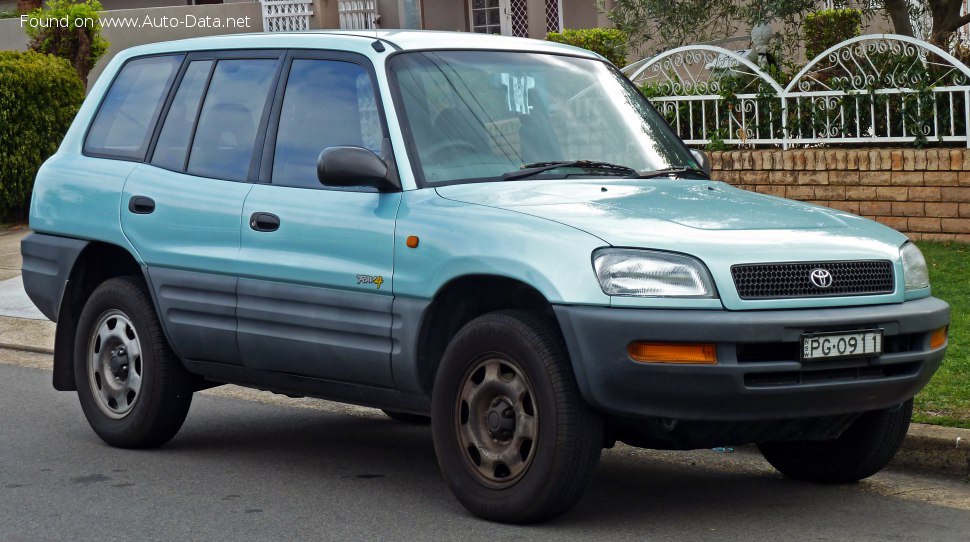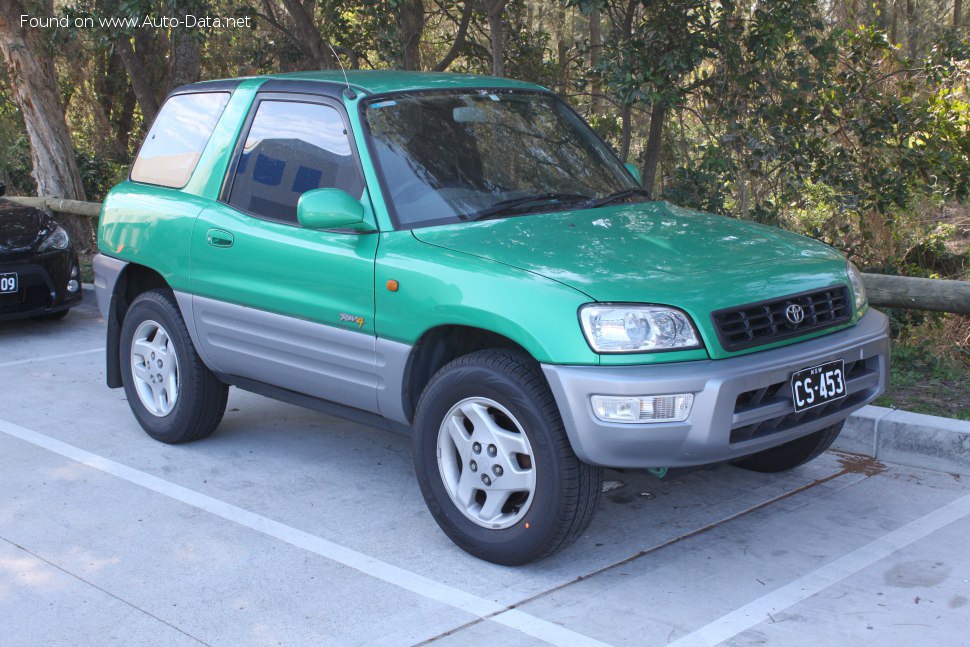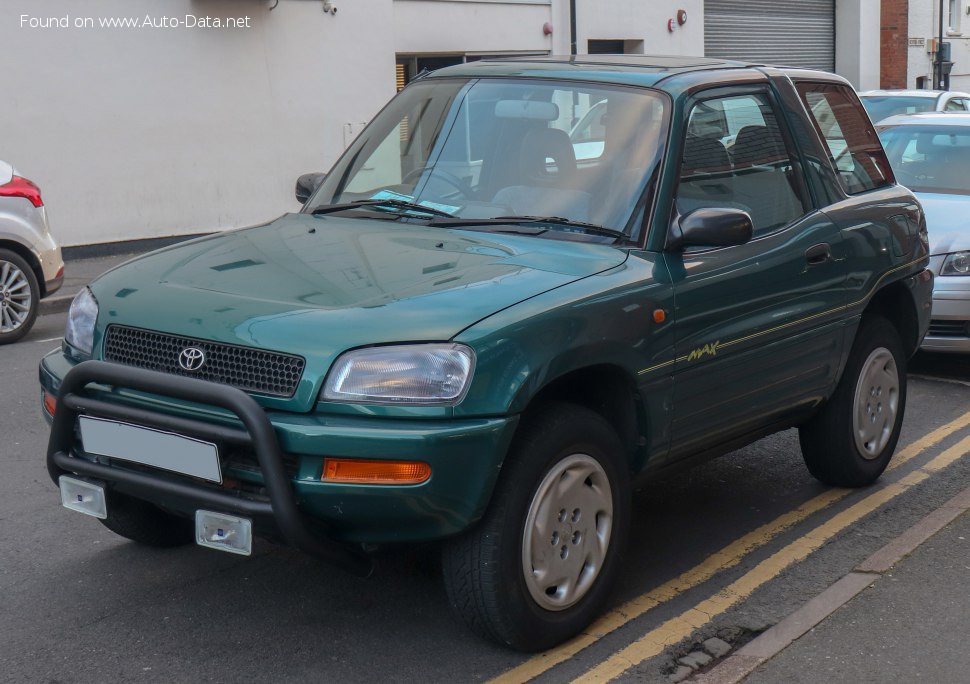
The Toyota RAV4, an acronym for “Recreational Activity Vehicle: 4-wheel drive,” is widely credited with pioneering the compact SUV segment. When it first debuted in 1994, the RAV4 offered a unique blend of car-like driving dynamics with the rugged appeal and versatility of an SUV, effectively creating a new market niche that would quickly become one of the most competitive and popular in the automotive world. The first generation, internally designated XA10, was initially offered in both three-door and five-door configurations, appealing to a broad range of buyers seeking a practical yet fun vehicle for both urban commutes and light off-road adventures.
This article delves into a particularly interesting variant: the Toyota RAV4 I (XA10) 3-door 2.4i (167 Hp) Automatic. While the first-generation RAV4 typically concluded its production run around the year 2000 in most major markets like North America and Europe, this specific iteration, equipped with a more potent 2.4-liter engine and a production span from 2000 to 2006, indicates a unique market strategy. It suggests that Toyota continued to offer the beloved XA10 three-door body style, perhaps with updated mechanicals, in specific regions, likely in markets where its compact dimensions and proven reliability held enduring appeal, or as a more affordable alternative to the newer, second-generation (XA20) RAV4. This particular model combines the classic, nimble XA10 chassis with a more modern and powerful engine, offering enhanced performance for its segment.
Engine & Performance: The Heart of the Toyota RAV4 I (XA10) 3-door 2.4i (167 Hp) Automatic
Powertrain Architecture
At the core of this specific Toyota RAV4 I (XA10) 3-door 2.4i (167 Hp) Automatic variant lies its robust and efficient powertrain. Powering this compact SUV is Toyota’s renowned 2AZ-FE engine, a 2.4-liter (2362 cm³, or 144.14 cu. in.) naturally aspirated inline-four gasoline unit. This engine, known for its strong reputation for reliability and smooth operation, was a significant upgrade in power output compared to the original 2.0-liter engines typically found in earlier XA10 models. With a power output of 167 horsepower at 6000 rpm and a healthy 224 Nm (165.21 lb.-ft.) of torque peaking at 4000 rpm, the 2.4-liter engine provided a significant boost in performance, making the RAV4 feel more spirited on the road.
The 2AZ-FE engine features a double overhead camshaft (DOHC) valvetrain with 4 valves per cylinder, ensuring efficient airflow and combustion. Its multi-port manifold injection system precisely delivers fuel, contributing to both power and fuel efficiency. With a compression ratio of 9.8:1, the engine was designed for optimal performance on regular unleaded gasoline. The engine layout is front, transverse, a typical configuration for front-wheel-drive or all-wheel-drive vehicles designed for compact packaging and interior space optimization.
Mated to this engine is a 4-speed automatic transmission, offering smooth and convenient gear shifts, perfectly suited for both urban driving and highway cruising. The power is delivered to all four wheels via an all-wheel-drive (4×4) system, providing enhanced traction and stability in various driving conditions, from slippery roads to light off-road trails.
Performance Metrics and Fuel Economy
The combination of the 167 horsepower engine and a relatively light curb weight of 2976.24 lbs (1350 kg) results in a commendable power-to-weight ratio of 123.7 Hp/tonne (8.1 kg/Hp). The torque-to-weight ratio stands at 165.9 Nm/tonne (6 kg/Nm), indicating responsive acceleration for a compact SUV of its time.
In terms of fuel economy, the Toyota RAV4 I (XA10) 3-door 2.4i (167 Hp) Automatic delivered respectable figures. It achieved an urban fuel consumption of approximately 18.7 US mpg (12.6 l/100 km) and an extra-urban (highway) consumption of around 26.4 US mpg (8.9 l/100 km). With a fuel tank capacity of 15.06 US gallons (57 liters), the vehicle offered a decent cruising range, making it practical for both daily commuting and longer trips.
Design & Features
Exterior and Interior
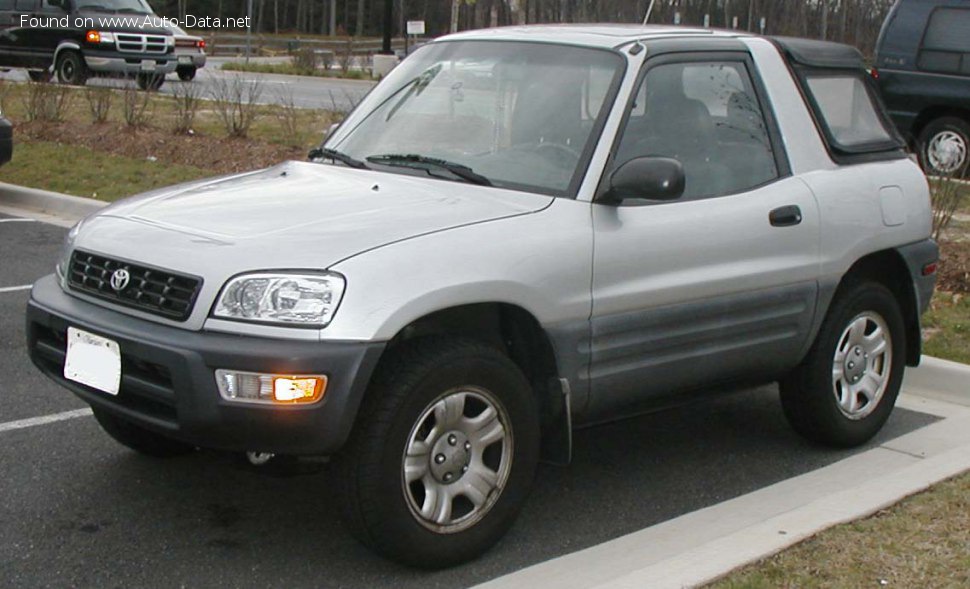
The Toyota RAV4 I (XA10) 3-door 2.4i (167 Hp) Automatic retains the iconic design language of the first-generation RAV4, characterized by its rounded, friendly aesthetics and compact dimensions. The three-door SUV body style emphasizes its sporty and agile character, making it an ideal choice for city dwellers and individuals seeking a more nimble vehicle. With an overall length of 165.35 inches (4200 mm), a width of 68.31 inches (1735 mm), and a height of 66.14 inches (1680 mm), it was significantly smaller than traditional SUVs, contributing to its ease of maneuverability and parking in congested environments. The wheelbase of 98.03 inches (2490 mm) further underscores its compact footprint.
Despite its compact exterior, the RAV4 offered a surprisingly versatile interior. The data indicates a seating capacity for 5 occupants. While a 3-door configuration typically implies two main passenger doors plus a rear hatch, seating five would mean a rear bench capable of accommodating three, albeit snugly. The cargo space was impressive for its class, with a minimum trunk volume of 14.13 cu. ft. (400 liters), expanding to a generous 48.2 cu. ft. (1365 liters) with the rear seats folded down, allowing for considerable utility for hauling luggage, sports equipment, or groceries.
Chassis, Safety, and Driving Dynamics
The chassis of the Toyota RAV4 I (XA10) 3-door 2.4i (167 Hp) Automatic was engineered for a comfortable and car-like ride, a key differentiator for the compact SUV segment. It featured an independent suspension setup with Spring Struts at the front and a Trailing arm design at the rear, providing a good balance between ride comfort and handling stability. Braking performance was handled by ventilated discs at the front and disc brakes at the rear, complemented by an Anti-lock Braking System (ABS) for enhanced safety during emergency stops.
Steering was managed by a rack and pinion system with hydraulic power steering, offering direct feedback and effortless maneuverability, particularly at lower speeds. The vehicle was fitted with 215/70 R16 tires on 16-inch wheel rims, providing a comfortable ride height and adequate grip. These features collectively contributed to the RAV4’s reputation for being easy and enjoyable to drive, a significant factor in its widespread appeal.
Technical Specifications
| Category | Specification |
| Brand | Toyota |
| Model | RAV4 |
| Generation | RAV4 I (XA10) 3-door |
| Type (Engine) | 2.4i (167 Hp) Automatic |
| Start of Production | 2000 year |
| End of Production | 2006 year |
| Powertrain Architecture | Internal Combustion engine |
| Body Type | SUV |
| Seats | 5 |
| Doors | 5 (Note: Model name specifies ‘3-door’; this typically refers to two passenger doors plus a rear hatch.) |
| Fuel Consumption (Urban) | 12.6 l/100 km / 18.7 US mpg |
| Fuel Consumption (Extra Urban) | 8.9 l/100 km / 26.4 US mpg |
| Fuel Type | Petrol (Gasoline) |
| Weight-to-Power Ratio | 8.1 kg/Hp, 123.7 Hp/tonne |
| Weight-to-Torque Ratio | 6 kg/Nm, 165.9 Nm/tonne |
| Power | 167 Hp @ 6000 rpm |
| Power per Litre | 70.7 Hp/l |
| Torque | 224 Nm @ 4000 rpm (165.21 lb.-ft. @ 4000 rpm) |
| Engine Layout | Front, Transverse |
| Engine Model/Code | 2AZ-FE |
| Engine Displacement | 2362 cm³ (2.4 l, 144.14 cu. in.) |
| Number of Cylinders | 4 |
| Engine Configuration | Inline |
| Cylinder Bore | 88.5 mm (3.48 in.) |
| Piston Stroke | 96 mm (3.78 in.) |
| Compression Ratio | 9.8:1 |
| Number of Valves per Cylinder | 4 |
| Fuel Injection System | Multi-port manifold injection |
| Engine Aspiration | Naturally aspirated engine |
| Valvetrain | DOHC |
| Engine Oil Capacity | 3.8 l (4.02 US qt) |
| Kerb Weight | 1350 kg (2976.24 lbs.) |
| Max. Weight | 1825 kg (4023.44 lbs.) |
| Max Load | 475 kg (1047.2 lbs.) |
| Trunk (boot) Space – Minimum | 400 l (14.13 cu. ft.) |
| Trunk (boot) Space – Maximum | 1365 l (48.2 cu. ft.) |
| Fuel Tank Capacity | 57 l (15.06 US gal) |
| Length | 4200 mm (165.35 in.) |
| Width | 1735 mm (68.31 in.) |
| Height | 1680 mm (66.14 in.) |
| Wheelbase | 2490 mm (98.03 in.) |
| Front Track | 1510 mm (59.45 in.) |
| Rear (Back) Track | 1500 mm (59.06 in.) |
| Drive Wheel | All wheel drive (4×4) |
| Number of Gears and Type of Gearbox | 4 gears, automatic transmission |
| Front Suspension | Spring Strut |
| Rear Suspension | Trailing arm |
| Front Brakes | Ventilated discs |
| Rear Brakes | Disc |
| Assisting Systems | ABS (Anti-lock braking system) |
| Steering Type | Steering rack and pinion |
| Power Steering | Hydraulic Steering |
| Tires Size | 215/70 R16 |
| Wheel Rims Size | 16 |
Legacy and Market Impact
The Toyota RAV4’s legacy is immense, as it essentially laid the groundwork for the modern compact SUV. Its blend of passenger car comfort, SUV practicality, and optional all-wheel drive resonated with a broad audience, particularly those who desired the utility of an SUV without the cumbersome size or fuel consumption of traditional, truck-based models. The first-generation RAV4 (XA10) quickly became a global success, recognized for its reliability, fuel efficiency (for its class), and surprisingly engaging driving dynamics.
The specific variant, the Toyota RAV4 I (XA10) 3-door 2.4i (167 Hp) Automatic, with its extended production run from 2000 to 2006, represents an interesting chapter in the RAV4’s history. While most markets transitioned to the second-generation (XA20) RAV4 by 2000-2001, this particular model likely served specific regional demands, possibly in parts of Asia or other emerging markets. In these regions, the established and proven XA10 platform, now equipped with the more powerful and contemporary 2AZ-FE engine, offered a compelling package. It allowed Toyota to continue leveraging the popularity and cost-effectiveness of the first-generation chassis while providing a performance update that kept it competitive. This strategy helped maintain the RAV4’s market presence and appeal against a growing number of rivals.
Competitors during its primary market lifespan for this specific variant would have included vehicles like the Suzuki Grand Vitara (known for its more rugged, body-on-frame construction), the Honda CR-V (a direct and formidable rival in the car-based SUV segment), and potentially other compact SUVs from Korean manufacturers like Hyundai and Kia, which were gaining traction in the early 2000s. Against these, the RAV4 I (XA10) with the 2.4-liter engine stood out with Toyota’s legendary reputation for quality and durability, combined with a peppy engine and a comfortable, nimble ride.
The three-door configuration, in particular, carved out a niche for younger buyers or those without families who appreciated its sportier aesthetic and even more compact footprint. It was often seen as a lifestyle vehicle, capable of urban commuting during the week and adventurous weekend getaways. Even today, the first-generation RAV4, including its more powerful variants, is remembered fondly for its instrumental role in shaping the automotive landscape and remains a testament to Toyota’s foresight in identifying and capitalizing on emerging market trends. Its impact continues to be felt in the proliferation of compact SUVs that dominate sales charts globally.