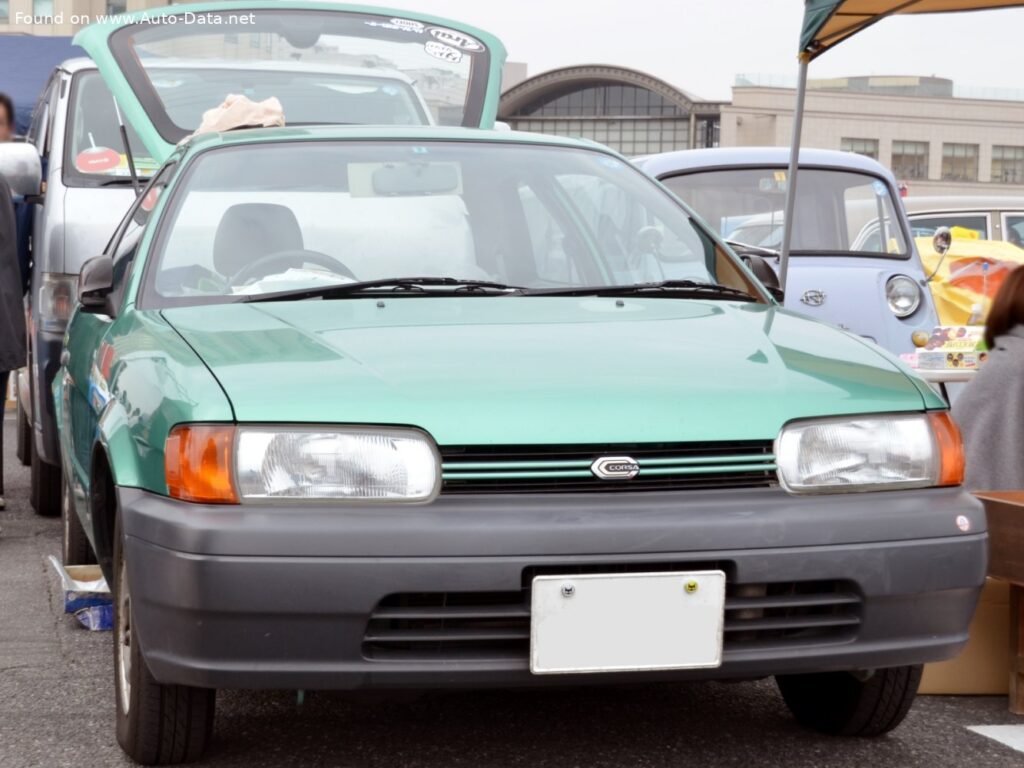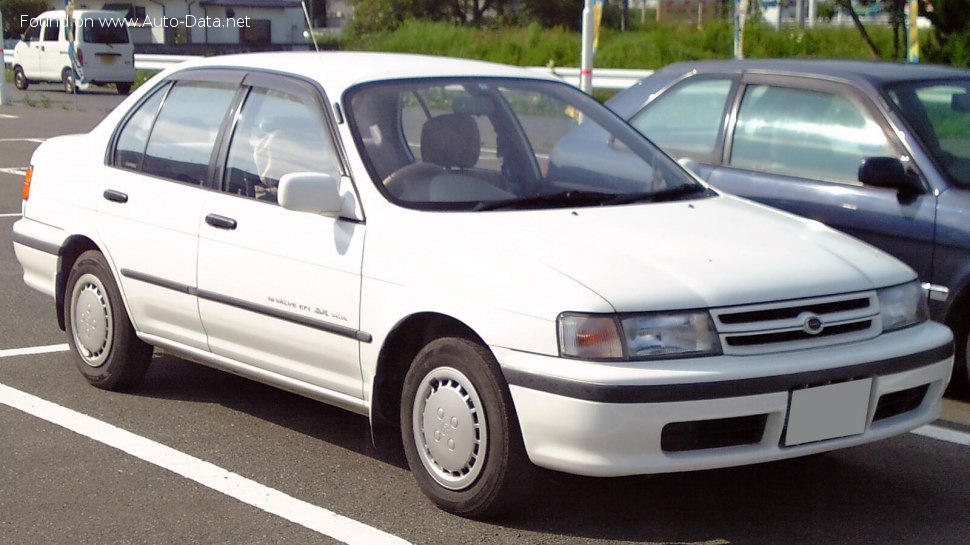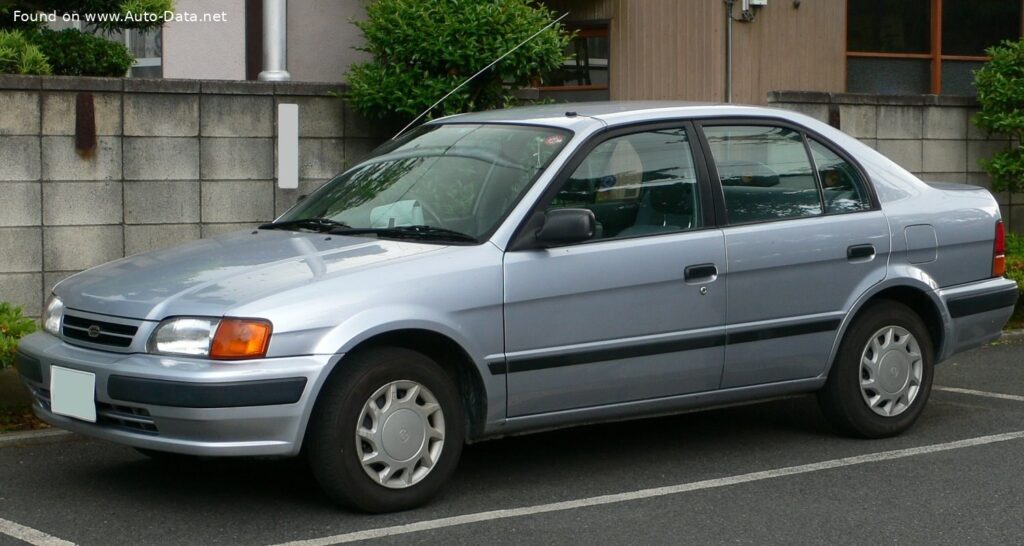
The Toyota Corsa Hatchback (L40) 1.3 i 97 (97 Hp) represents a significant chapter in Toyota’s long-standing commitment to producing reliable, efficient, and practical compact vehicles. Introduced in 1990 and produced until 1994, the L40 generation of the Toyota Corsa Hatchback (L40) served as a key player in its primary markets, most notably Japan, where it was often sold alongside its twin, the Toyota Tercel. While the Corsa nameplate itself was not directly marketed in the United States, its mechanical underpinnings and design philosophy were closely shared with the Tercel, a familiar name to American consumers.
Toyota Corsa Hatchback (L40): A Detailed Overview
Positioned as a subcompact or supermini, the Corsa (L40) was designed to offer economical transportation without sacrificing Toyota’s renowned build quality and durability. This particular variant, the 1.3 i 97 (97 Hp), showcased a blend of respectable power for its class and impressive fuel efficiency, making it an ideal choice for urban commuters and small families across various global markets. Its straightforward design, robust engineering, and focus on fundamental automotive competencies cemented its reputation as a dependable daily driver during the early 1990s.
Engine & Performance
At the core of the Toyota Corsa Hatchback (L40) 1.3 i 97 (97 Hp) lies Toyota’s well-regarded 4E-FE engine. This 1.3-liter (1331 cm3 or 81.22 cu. in.) inline four-cylinder powerplant was a testament to Toyota’s engineering prowess in developing small, high-revving, and incredibly durable engines. Featuring a Double Overhead Camshaft (DOHC) valvetrain with four valves per cylinder, the 4E-FE was advanced for its time in the subcompact segment.
The engine produced a healthy 97 horsepower at a high 6400 rpm, translating to a specific output of 72.9 Hp per liter. Torque figures stood at 83.34 lb.-ft. (113 Nm) delivered at 5200 rpm, ensuring brisk acceleration and adequate power for highway cruising, especially considering the vehicle’s lightweight nature. With a compression ratio of 9.6:1 and a multi-port manifold injection system, the 4E-FE was a naturally aspirated unit designed for optimal combustion and fuel delivery.
Power was sent to the front wheels via a front, transverse engine layout, a common and efficient setup for subcompact vehicles. This configuration contributed to a favorable weight distribution and maximized interior space. The Corsa’s lightweight kerb weight of just 1851.88 lbs. (840 kg) resulted in an impressive weight-to-power ratio of 8.7 kg/Hp (115.5 Hp/tonne), allowing the 97-horsepower engine to feel more potent than its displacement might suggest. Fuel economy was a strong suit, with an urban consumption estimated at 31.4 US mpg (7.5 l/100 km) and an even more impressive extra-urban figure of 56 US mpg (4.2 l/100 km), making it a highly economical choice for the era.
Design & Features
The Toyota Corsa Hatchback (L40) adopted the quintessential hatchback form factor, offering a versatile 3-door body style that balanced compact exterior dimensions with practical interior utility. Designed for five occupants, the Corsa provided ample space for its segment, making it suitable for both daily commutes and occasional longer trips. Its overall length of 154.72 inches (3930 mm), width of 64.76 inches (1645 mm), and height of 53.74 inches (1365 mm) made it highly maneuverable in congested city environments, further aided by a tight minimum turning circle of 29.53 feet (9 m).
Aesthetically, the L40 Corsa embodied the clean, functional design language prevalent in early 1990s Japanese cars. Its lines were smooth and unadorned, prioritizing aerodynamic efficiency and manufacturing simplicity over flamboyant styling. Large glass areas provided excellent visibility, a boon for urban driving and parking. Inside, the cabin was characterized by durable materials and an ergonomic layout, with controls positioned for ease of access and operation. While not luxurious, the interior was built to withstand years of use, a hallmark of Toyota’s design philosophy.
In terms of features, the Corsa (L40) offered a solid foundation for a compact car of its time. Safety equipment included an Anti-lock Braking System (ABS), which was a significant advanced feature for a subcompact vehicle in the early 1990s, enhancing braking control and safety in adverse conditions. The braking system comprised front disc brakes and rear drum brakes, a common and effective setup for vehicles of this size and performance level. The car rode on 155/80 SR13 tires, providing a comfortable ride and adequate grip for its intended use.
Technical Specifications
| Category | Specification |
| General Information | |
| Brand | Toyota |
| Model | Corsa |
| Generation | Corsa Hatchback (L40) |
| Type (Engine) | 1.3 i 97 (97 Hp) |
| Start of Production | 1990 year |
| End of Production | 1994 year |
| Powertrain Architecture | Internal Combustion engine |
| Body Type | Hatchback |
| Seats | 5 |
| Doors | 3 |
| Performance Specifications | |
| Fuel Consumption (Urban) | 31.4 US mpg (7.5 l/100 km) |
| Fuel Consumption (Extra Urban) | 56 US mpg (4.2 l/100 km) |
| Fuel Type | Petrol (Gasoline) |
| Weight-to-Power Ratio | 8.7 kg/Hp (115.5 Hp/tonne) |
| Weight-to-Torque Ratio | 7.4 kg/Nm (134.5 Nm/tonne) |
| Engine Specifications | |
| Power | 97 Hp @ 6400 rpm |
| Power per Liter | 72.9 Hp/l |
| Torque | 83.34 lb.-ft. (113 Nm) @ 5200 rpm |
| Engine Layout | Front, Transverse |
| Engine Model/Code | 4E-FE |
| Engine Displacement | 1.3 liters (1331 cm3 / 81.22 cu. in.) |
| Number of Cylinders | 4 |
| Engine Configuration | Inline |
| Cylinder Bore | 2.91 in. (74 mm) |
| Piston Stroke | 3.05 in. (77.4 mm) |
| Compression Ratio | 9.6:1 |
| Number of Valves per Cylinder | 4 |
| Fuel Injection System | Multi-port manifold injection |
| Engine Aspiration | Naturally aspirated engine |
| Valvetrain | DOHC |
| Engine Oil Capacity | 3.38 US qt (3.2 l) |
| Space, Volume and Weights | |
| Kerb Weight | 1851.88 lbs. (840 kg) |
| Dimensions | |
| Length | 154.72 in. (3930 mm) |
| Width | 64.76 in. (1645 mm) |
| Height | 53.74 in. (1365 mm) |
| Wheelbase | 93.7 in. (2380 mm) |
| Front Track | 55.12 in. (1400 mm) |
| Rear (Back) Track | 56.3 in. (1430 mm) |
| Minimum Turning Circle (Turning Diameter) | 29.53 ft. (9 m) |
| Drivetrain, Brakes and Suspension Specifications | |
| Drivetrain Architecture | The Internal combustion engine (ICE) drives the front wheels of the vehicle. |
| Drive Wheel | Front wheel drive |
| Front Brakes | Disc |
| Rear Brakes | Drum |
| Assisting Systems | ABS (Anti-lock braking system) |
| Tires Size | 155/80 SR13 |
Legacy and Market Impact
The Toyota Corsa Hatchback (L40), particularly the 1.3 i 97 (97 Hp) variant, carved out a strong reputation for itself in the early 1990s as a highly dependable and economical compact car. While it might not have been a direct competitor in the American market under the Corsa name, its sibling, the Toyota Tercel, enjoyed similar success and demonstrated the shared engineering excellence. In its primary markets, the Corsa was a formidable contender against other popular subcompacts of the era, such as the Nissan March (Micra), Honda Civic (in its smaller variants), and various European models like the Volkswagen Polo or Ford Fiesta.
Its historical significance lies in its contribution to Toyota’s global dominance in the small car segment. The L40 generation further solidified Toyota’s image as a manufacturer of vehicles that offered exceptional reliability, low running costs, and impressive fuel efficiency. These attributes were paramount for consumers in the early 1990s, who increasingly sought practical and affordable transportation solutions.
The Corsa (L40) was not a car designed for flash or excessive luxury; rather, it excelled in its role as a no-nonsense, durable workhorse. Its mechanical simplicity, coupled with Toyota’s manufacturing precision, meant that these vehicles often outlived their expected lifespan, becoming popular choices in the used car market for many years after their production ceased. The inclusion of features like ABS, while standard on premium vehicles, was a notable addition for a compact car of its class, highlighting Toyota’s commitment to safety across its lineup.
In essence, the Toyota Corsa Hatchback (L40) 1.3 i 97 (97 Hp) stands as a classic example of Toyota’s engineering philosophy: building well-engineered, efficient, and long-lasting vehicles that met the real-world needs of millions of drivers. It may not be a collector’s item in the same vein as a sports car, but its legacy is one of unwavering dependability and a vital contribution to the evolution of the modern compact car.