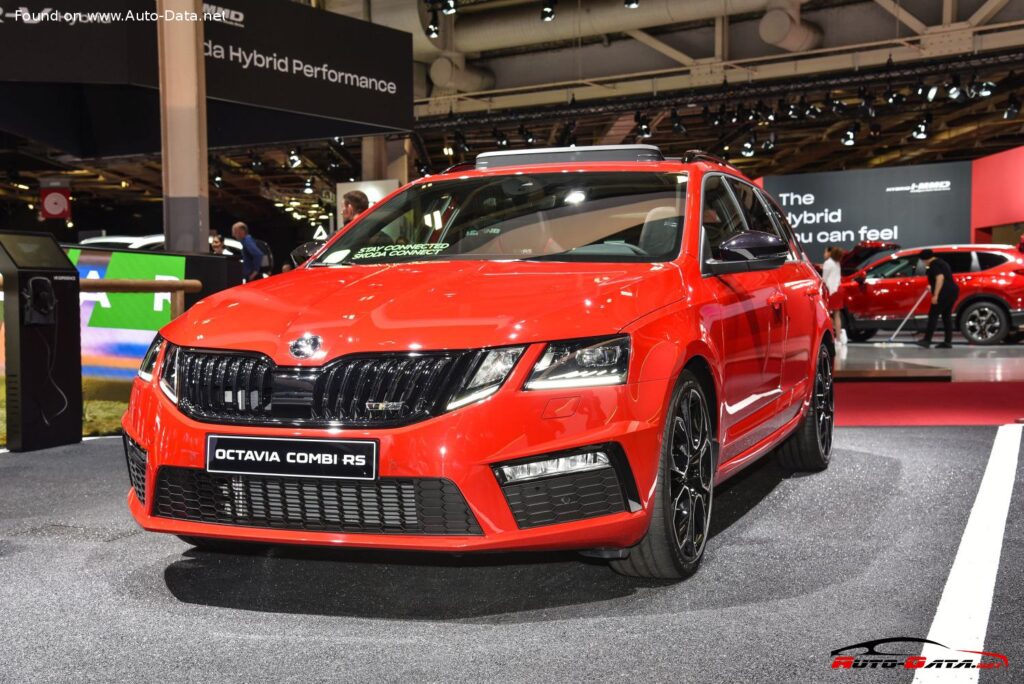
The Skoda Octavia III Combi (facelift 2017) RS 2.0 TSI (245 Hp) DSG represents a compelling blend of performance and practicality, a hallmark of the Czech automaker’s engineering prowess. As a European-market vehicle, the Octavia, and particularly its RS variant, carved a significant niche as a “hot wagon” offering a spirited driving experience without compromising on the versatility expected of a station wagon (known as an “estate” in Europe). While Skoda vehicles are not officially sold in the United States, the Octavia RS Combi gained recognition for its robust build quality, engaging dynamics, and ample cargo space, appealing to a broad range of drivers seeking a dynamic and functional vehicle.
The Skoda Octavia RS 245: A Performance Wagon
This particular iteration, often referred to as the Octavia RS 245, distinguished itself with an upgraded engine output compared to the standard RS models, becoming the most powerful production Octavia at the time. The Octavia RS 245 masterfully balanced everyday usability with exhilarating performance, attracting buyers who desired both dynamism and the convenience of a spacious, family-friendly vehicle. It successfully bridged the gap between a practical estate car and a performance-oriented hatchback.
Engine & Performance: The EA888 Powertrain
The heart of the Skoda Octavia III Combi (facelift 2017) RS 2.0 TSI (245 Hp) DSG is a highly regarded powertrain sourced from the Volkswagen Group. It features a turbocharged and intercooled 2.0-liter (1984 cm3 or 121.07 cu. in.) inline four-cylinder gasoline engine, identified by the EA888 engine code (DLBA, DKTB). This engine utilizes a Double Overhead Camshaft (DOHC) configuration with 16 valves (four per cylinder) and a direct fuel injection system, optimized for both power delivery and fuel efficiency.
The engine generates a robust 245 horsepower (Hp) across a broad rev range, from 5000 to 6200 rpm, resulting in an impressive power-per-liter output of 123.5 Hp/l. Torque figures are equally noteworthy, with 370 Nm (272.9 lb.-ft.) available from a low 1600 rpm all the way up to 4300 rpm. This wide torque band ensures strong, immediate acceleration and flexible in-gear performance, making overtaking maneuvers effortless.
Power is transmitted to the front wheels through a sophisticated 7-speed automatic DSG (Direct Shift Gearbox) transmission. This dual-clutch unit is renowned for its rapid and smooth gear changes, significantly contributing to the car’s sporty character and overall refinement. The combination of the potent engine and quick-shifting DSG allows the Octavia RS 245 Combi to accelerate from 0 to 60 mph in a swift 6.4 seconds (0-100 km/h in 6.7 seconds), with an electronically limited top speed of 155.34 mph (250 km/h).
Despite its performance capabilities, the vehicle maintains a respectable level of fuel efficiency for its class. The combined fuel consumption is rated at 6.2-6.3 liters per 100 kilometers, translating to an impressive 37.9 – 37.3 US mpg. CO2 emissions range from 141-144 g/km, adhering to the Euro 6 emission standard, demonstrating Skoda’s commitment to balancing performance with environmental responsibility. A Start & Stop System is also incorporated to further enhance fuel economy in urban driving conditions.
Design & Features: A Practical and Sporty Aesthetic
The Skoda Octavia III Combi (facelift 2017) RS 2.0 TSI (245 Hp) DSG boasts a sleek and purposeful design, characteristic of Skoda’s modern aesthetic. As a five-door station wagon, it combines a dynamic silhouette with exceptional practicality. The facelift brought revised front-end styling, including distinctive split headlights and a more aggressive bumper, giving the RS model an even more assertive stance. The vehicle’s dimensions are 184.61 inches (4689 mm) in length, 71.42 inches (1814 mm) in width, and 57.17 inches (1452 mm) in height, with a generous 105.51-inch (2680 mm) wheelbase. These dimensions contribute to a spacious cabin and a substantial road presence.
The RS designation is visually reinforced by sporty accents such as unique alloy wheels (available in 18-inch or 19-inch sizes), red brake calipers, a subtle rear spoiler, and dual exhaust tips. The drag coefficient (Cd) of 0.341 indicates a thoughtfully aerodynamic design, contributing to both fuel efficiency and high-speed stability.
Inside, the Octavia RS Combi offers a well-appointed and ergonomically designed cabin with seating for five. The RS treatment includes sport seats with enhanced bolstering, a flat-bottom steering wheel, and unique trim elements, all aimed at enhancing the driving experience. Critically, the Combi body style delivers outstanding cargo capacity. With the rear seats in place, it offers a cavernous 21.54 cu. ft. (610 liters) of trunk space, which expands to an enormous 61.45 cu. ft. (1740 liters) with the rear seats folded down. This makes it a highly versatile vehicle, capable of accommodating significant luggage, sports equipment, or even small furniture.
The Octavia RS features an independent McPherson strut front suspension with coil springs and an anti-roll bar, complemented by an independent multi-link rear suspension with a stabilizer. This setup is tuned for a sportier ride and improved handling dynamics, while still providing a comfortable experience for everyday driving. Ventilated disc brakes at the front and disc brakes at the rear, coupled with ABS (Anti-lock Braking System), ensure strong and consistent stopping power. Electric power steering provides precise and responsive control, further enhancing the car’s engaging character.
Technical Specifications: Skoda Octavia III Combi (facelift 2017) RS 2.0 TSI (245 Hp) DSG
| Category | Specification |
| General Information | |
| Brand | Skoda |
| Model | Octavia |
| Generation | Octavia III Combi (facelift 2017) |
| Type (Engine) | RS 2.0 TSI (245 Hp) DSG |
| Start of Production | 2017 |
| End of Production | 2019 |
| Powertrain Architecture | Internal Combustion Engine |
| Body type | Station wagon (estate), 5 Doors, 5 Seats |
| Performance Specs | |
| Fuel Consumption (Urban) | 8-8.2 l/100 km (29.4 – 28.7 US mpg) |
| Fuel Consumption (Extra Urban) | 5.1-5.3 l/100 km (46.1 – 44.4 US mpg) |
| Fuel Consumption (Combined) | 6.2-6.3 l/100 km (37.9 – 37.3 US mpg) |
| CO2 Emissions | 141-144 g/km |
| Fuel Type | Petrol (Gasoline) |
| Acceleration 0-60 mph | 6.4 sec |
| Acceleration 0-100 km/h | 6.7 sec |
| Maximum Speed | 250 km/h (155.34 mph, Electronically limited) |
| Emission Standard | Euro 6 |
| Weight-to-Power Ratio | 5.7 kg/Hp (176.4 Hp/tonne) |
| Weight-to-Torque Ratio | 3.8 kg/Nm (266.4 Nm/tonne) |
| Engine Specs | |
| Power | 245 Hp @ 5000-6200 rpm |
| Power per liter | 123.5 Hp/l |
| Torque | 370 Nm (272.9 lb.-ft.) @ 1600-4300 rpm |
| Engine Layout | Front, Transverse |
| Engine Model/Code | EA888 / DLBA, DKTB |
| Engine Displacement | 1984 cm3 (2.0 l / 121.07 cu. in.) |
| Number of Cylinders | 4 |
| Engine Configuration | Inline |
| Cylinder Bore | 82.5 mm (3.25 in.) |
| Piston Stroke | 92.8 mm (3.65 in.) |
| Compression Ratio | 9.6:1 |
| Number of Valves per Cylinder | 4 |
| Fuel Injection System | Direct injection |
| Engine Aspiration | Turbocharger, Intercooler |
| Valvetrain | DOHC |
| Engine Oil Capacity | 5.7 l (6.02 US qt) |
| Coolant Capacity | 8.6 l (9.09 US qt) |
| Engine Systems | Start & Stop System |
| Space, Volume & Weights | |
| Kerb Weight | 1389-1518 kg (3062.22 – 3346.62 lbs.) |
| Max. Weight (GVWR) | 1978 kg (4360.74 lbs.) |
| Max Load | 460-589 kg (1014.13 – 1298.52 lbs.) |
| Trunk (boot) Space – Minimum | 610 l (21.54 cu. ft.) |
| Trunk (boot) Space – Maximum | 1740 l (61.45 cu. ft.) |
| Fuel Tank Capacity | 50 l (13.21 US gal) |
| Max. Roof Load | 75 kg (165.35 lbs.) |
| Permitted Trailer Load with Brakes (8%) | 1800 kg (3968.32 lbs.) |
| Permitted Trailer Load with Brakes (12%) | 1600 kg (3527.4 lbs.) |
| Permitted Trailer Load without Brakes | 730 kg (1609.37 lbs.) |
| Permitted Towbar Download | 75 kg (165.35 lbs.) |
| Dimensions | |
| Length | 4689 mm (184.61 in.) |
| Width | 1814 mm (71.42 in.) |
| Width Including Mirrors | 2017 mm (79.41 in.) |
| Height | 1452 mm (57.17 in.) |
| Wheelbase | 2680 mm (105.51 in.) |
| Front Track | 1535 mm (60.43 in.) |
| Rear (Back) Track | 1544 mm (60.79 in.) |
| Front Overhang | 903 mm (35.55 in.) |
| Rear Overhang | 1106 mm (43.54 in.) |
| Ride Height (Ground Clearance) | 127 mm (5 in.) |
| Drag Coefficient (Cd) | 0.341 |
| Minimum Turning Circle (Diameter) | 10.59 m (34.74 ft.) |
| Approach Angle | 12.8° |
| Departure Angle | 12.5° |
| Drivetrain, Brakes & Suspension Specs | |
| Drivetrain Architecture | Front-wheel drive (Internal Combustion Engine drives the front wheels) |
| Drive Wheel | Front wheel drive |
| Number of Gears and Type of Gearbox | 7 gears, automatic transmission DSG |
| Front Suspension | Independent, McPherson type with coil spring and anti-roll bar |
| Rear Suspension | Independent multi-link spring suspension with stabilizer |
| Front Brakes | Ventilated discs |
| Rear Brakes | Disc |
| Assisting Systems | ABS (Anti-lock braking system) |
| Steering Type | Steering rack and pinion |
| Power Steering | Electric Steering |
| Tires Size | 225/40 R18; 225/35 R19 |
| Wheel Rims Size | 7.5J x 18; 7.5J x 19 |
Legacy & Market Impact of the Octavia RS Combi
The Skoda Octavia III Combi (facelift 2017) RS 2.0 TSI (245 Hp) DSG solidified Skoda’s reputation for offering compelling performance vehicles that punch above their weight class, particularly in the competitive European market. As a brand not present in the U.S. market, Skoda has nonetheless cultivated a strong identity globally, known for its “Simply Clever” solutions and robust engineering inherited from Volkswagen Group. The Octavia RS Combi exemplified this philosophy, providing a high-performance driving experience without sacrificing the core tenets of practicality and affordability that define the Skoda brand.
In its primary markets, the Octavia RS Combi was a formidable competitor in the “hot wagon” segment, challenging rivals such as the Ford Focus ST Wagon and the SEAT Leon ST Cupra. What set the Octavia RS apart was its unparalleled blend of space and pace. Its enormous trunk capacity, combined with a potent 245 Hp engine and engaging chassis, made it an ideal choice for enthusiasts who also needed a practical daily driver.
The facelifted third-generation RS, especially the 245 Hp variant, was praised for its refined driving dynamics and responsive steering. Its front-wheel-drive architecture, combined with a sophisticated electronic limited-slip differential, allowed for impressive traction and agility. Even after its production concluded in 2019, the 2017-2019 facelifted model remains a highly regarded used car, celebrated for its blend of performance, technology, and enduring utility.