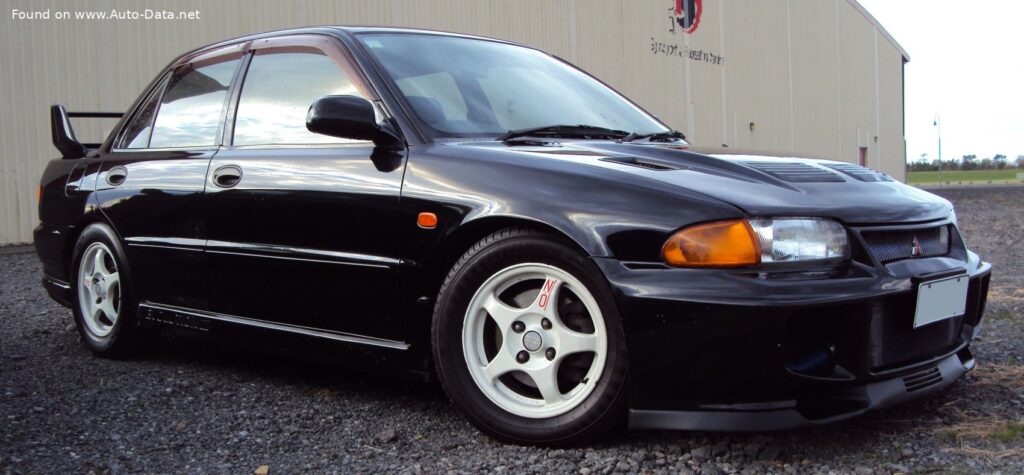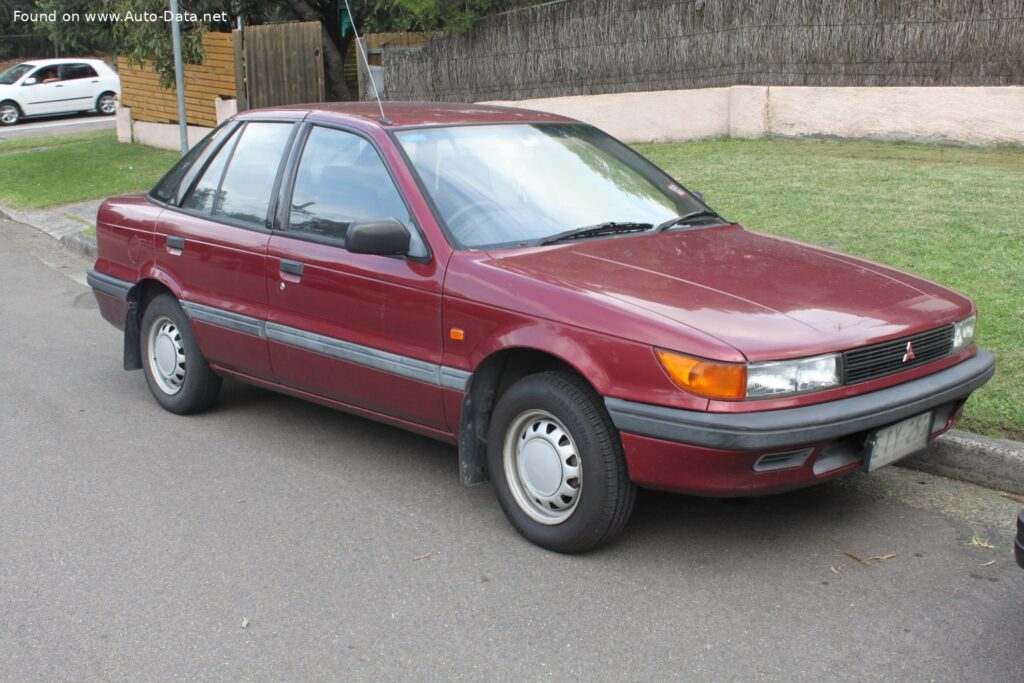
The Mitsubishi Lancer IV Hatchback 1.8 Diesel (60 Hp), produced from 1988 to 1992, represents a pivotal era for Mitsubishi Motors in the global compact car market. While not a model widely recognized in the United States, this particular variant played a crucial role in European and Asian markets, where fuel efficiency and practicality were paramount. As part of the fourth generation of the Lancer lineage, this five-door hatchback was designed as a no-nonsense, economical family vehicle, embodying Mitsubishi’s commitment to reliability and value during the late 1980s and early 1990s. Its robust diesel powertrain, combined with a versatile hatchback body, made it a popular choice for buyers seeking low running costs and everyday utility in regions where diesel engines were a mainstream option for passenger cars.
The Lancer IV generation, known internally as the C60/C70 series, built upon its predecessors’ reputation for dependable, unpretentious motoring. It offered a range of body styles and engine options globally, but the 1.8-liter diesel hatchback stood out for its particular focus on economy. In an era before the widespread adoption of direct injection and turbocharging in compact diesels, the Lancer’s naturally aspirated unit was a testament to straightforward engineering aimed at longevity and efficiency. This article delves into the specifics of this utilitarian Mitsubishi, examining its mechanical underpinnings, design philosophy, and its enduring legacy in the international automotive landscape.
Engine & Performance: The Powertrain of the Mitsubishi Lancer IV Hatchback 1.8 Diesel (60 Hp)
At the core of the Mitsubishi Lancer IV Hatchback 1.8 Diesel (60 Hp) was its 1.8-liter (1,796 cm³ or 109.6 cu. in.) naturally aspirated inline-four diesel engine, designated with the code 4D65. This powerplant was engineered for durability and impressive fuel economy rather than outright speed, a characteristic common among diesel engines of its time. Generating a modest 60 horsepower at 4,500 rpm and 83.34 lb-ft of torque at a low 3,000 rpm, the engine delivered adequate power for daily commuting and highway cruising, especially considering the vehicle’s relatively light curb weight of 2,270.76 pounds (1030 kg).
The engine’s architecture featured a conventional overhead camshaft (OHC) valvetrain with two valves per cylinder, a proven design for reliability and ease of maintenance. Fuel was delivered via a precombustion chamber injection system, a common method for indirect injection diesels of the period, known for its smoother operation compared to early direct injection systems. With a high compression ratio of 21.5:1, the engine efficiently converted diesel fuel into kinetic energy, contributing significantly to its stellar fuel economy figures. The powertrain was configured in a front, transverse layout, driving the front wheels through a 5-speed manual transmission – a setup that optimized interior space and manufacturing costs.
Performance figures reflected the car’s utilitarian purpose. The Lancer IV Hatchback 1.8 Diesel achieved a maximum speed of 91.96 mph (148 km/h), which was sufficient for highway travel but certainly not built for spirited driving. Its weight-to-power ratio of 17.2 kg/Hp (58.3 Hp/tonne) and weight-to-torque ratio of 9.1 kg/Nm (109.7 Nm/tonne) further underscore its focus on efficiency. Where this Lancer truly shone was in its fuel consumption: an impressive 51.1 US mpg (4.6 l/100 km) on the extra-urban cycle, and a combined 35.6 US mpg (6.6 l/100 km). These numbers were highly competitive for its era and made it an extremely economical choice for drivers in Europe and other markets facing higher fuel prices.
Design & Features: Practicality in Form and Function
The Mitsubishi Lancer IV Hatchback adopted a design language characteristic of late 1980s and early 1990s compact cars: functional, aerodynamic without being overly curvaceous, and prioritizing interior space. As a 5-door hatchback, it offered excellent versatility, combining the maneuverability of a compact car with the practicality of a small wagon. The body dimensions were well-proportioned for its segment, with a length of 166.73 inches (4235 mm), a width of 65.75 inches (1670 mm), and a height of 55.31 inches (1405 mm). The 96.65-inch (2455 mm) wheelbase provided a stable ride and contributed to a surprisingly roomy interior for its class.
Inside, the Lancer IV Hatchback was configured to seat five occupants comfortably. The design emphasized durability and straightforward ergonomics, with controls that were easy to understand and operate. One of the most significant advantages of the hatchback body style was its cargo capacity. The trunk offered a minimum of 11.3 cubic feet (320 liters) of space, which could be expanded to a generous 33.55 cubic feet (950 liters) by folding down the rear seats. This flexibility made it an ideal vehicle for families, small businesses, or anyone needing to transport varied cargo.
Underneath, the Lancer featured a conventional suspension setup for its time, with coil springs at both the front and rear, designed to provide a compliant ride suitable for varying road conditions. The steering system utilized a rack and pinion setup, offering direct and predictable handling. Braking duties were handled by disc brakes at the front and drum brakes at the rear, a common and cost-effective combination for compact cars of this period. The car rode on modest 175/70 R13 tires, which further contributed to its economical running costs and comfortable ride. While modern safety features like airbags and anti-lock brakes were not standard or even available on most compacts in this segment during the late 80s, the Lancer’s construction met the prevailing safety standards of its production years, focusing on structural integrity and passive safety.
Mitsubishi Lancer IV: A Global Perspective
The Lancer IV was a globally marketed vehicle, with variations tailored to specific regional preferences. While the diesel hatchback was particularly popular in Europe and Asia, other engine options and body styles were offered in different markets. This adaptability allowed Mitsubishi to compete effectively in a diverse range of automotive landscapes.
Technical Specifications
| Feature | Specification |
| Brand | Mitsubishi |
| Model | Lancer |
| Generation | Lancer IV Hatchback |
| Type (Engine) | 1.8 Diesel (60 Hp) |
| Production Years | 1988 – 1992 |
| Body Type | Hatchback |
| Seats | 5 |
| Doors | 5 |
| Fuel Consumption (Urban) | 6.5 l/100 km (36.2 US mpg) |
| Fuel Consumption (Extra Urban) | 4.6 l/100 km (51.1 US mpg) |
| Fuel Consumption (Combined) | 6.6 l/100 km (35.6 US mpg) |
| Fuel Type | Diesel |
| Maximum Speed | 148 km/h (91.96 mph) |
| Power | 60 Hp @ 4500 rpm |
| Torque | 113 Nm (83.34 lb-ft) @ 3000 rpm |
| Engine Layout | Front, Transverse |
| Engine Model/Code | 4D65 |
| Engine Displacement | 1796 cm³ (109.6 cu. in.) |
| Number of Cylinders | 4 |
| Engine Configuration | Inline |
| Cylinder Bore | 80.6 mm (3.17 in.) |
| Piston Stroke | 88 mm (3.46 in.) |
| Compression Ratio | 21.5:1 |
| Valves per Cylinder | 2 |
| Fuel Injection System | Precombustion chamber injection |
| Engine Aspiration | Naturally aspirated engine |
| Valvetrain | OHC |
| Engine Oil Capacity | 5.1 l (5.39 US qt) |
| Coolant Capacity | 6 l (6.34 US qt) |
| Kerb Weight | 1030 kg (2270.76 lbs) |
| Trunk Space (Minimum) | 320 l (11.3 cu. ft.) |
| Trunk Space (Maximum) | 950 l (33.55 cu. ft.) |
| Fuel Tank Capacity | 50 l (13.21 US gal) |
| Length | 4235 mm (166.73 in.) |
| Width | 1670 mm (65.75 in.) |
| Height | 1405 mm (55.31 in.) |
| Wheelbase | 2455 mm (96.65 in.) |
| Front Track | 1430 mm (56.3 in.) |
| Rear Track | 1430 mm (56.3 in.) |
| Drivetrain Architecture | Front-wheel drive (ICE drives front wheels) |
| Drive Wheel | Front wheel drive |
| Gearbox | 5 gears, manual transmission |
| Front Suspension | Coil spring |
| Rear Suspension | Coil spring |
| Front Brakes | Disc |
| Rear Brakes | Drum |
| Steering Type | Steering rack and pinion |
| Tires Size | 175/70 R13 |
Legacy & Market Impact of the Mitsubishi Lancer IV Hatchback 1.8 Diesel (60 Hp)
The Mitsubishi Lancer IV Hatchback 1.8 Diesel (60 Hp) carved out a significant niche for itself in markets where economic motoring was a primary concern. While it never achieved the iconic status of its performance-oriented Lancer Evolution siblings, its impact was nonetheless substantial within its segment. In Europe, the compact diesel hatchback market was fiercely competitive, dominated by established players like the Volkswagen Golf Diesel, Opel Kadett Diesel (Vauxhall Astra), Ford Escort Diesel, and the Toyota Corolla Diesel. The Lancer IV 1.8 Diesel held its own by offering a compelling package of Japanese reliability, strong fuel economy, and practical design.
Mitsubishi’s strategy with this model was clear: to provide a dependable, no-frills vehicle that offered excellent value for money and low running costs. Its naturally aspirated diesel engine, while not powerful, was renowned for its longevity and robustness, qualities highly prized by budget-conscious private owners and fleet operators alike. This reputation for unwavering reliability helped Mitsubishi build a loyal customer base in many international markets, positioning the Lancer as a sensible alternative to its European rivals.
The Lancer IV Hatchback 1.8 Diesel contributed to Mitsubishi’s broader global presence, demonstrating the brand’s ability to cater to diverse market demands beyond the sportier or more luxurious offerings. It represented a foundational product, selling in respectable numbers and serving as a workhorse that solidified Mitsubishi’s image as a manufacturer of durable and practical vehicles. While its mechanical impact wasn’t revolutionary, it refined existing technologies to deliver a highly effective and efficient package for its time. Its focus on fuel economy and practicality predated the modern emphasis on hybrid and electric vehicles, showing an early commitment to minimizing running costs, a theme that continues to resonate with consumers today.
Today, the Mitsubishi Lancer IV Hatchback 1.8 Diesel is a testament to the era of straightforward, mechanically sound motoring. While few examples remain on the road, those that do are often cherished for their resilience and simplicity. It stands as a reminder of Mitsubishi’s extensive global product portfolio and its significant role in providing accessible, reliable transportation to millions worldwide, particularly in markets that valued efficiency and durability above all else.