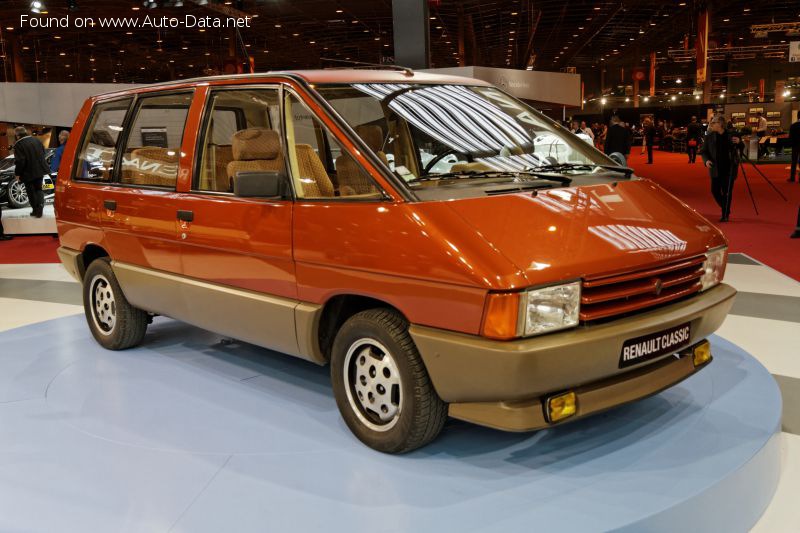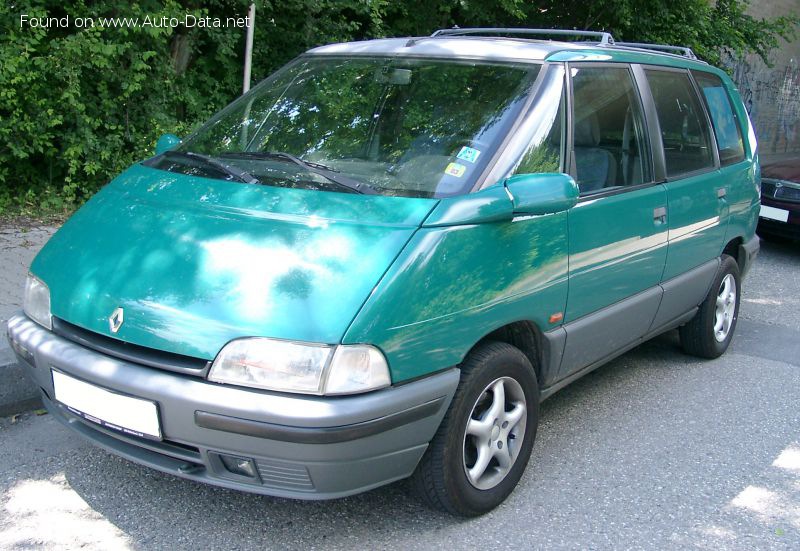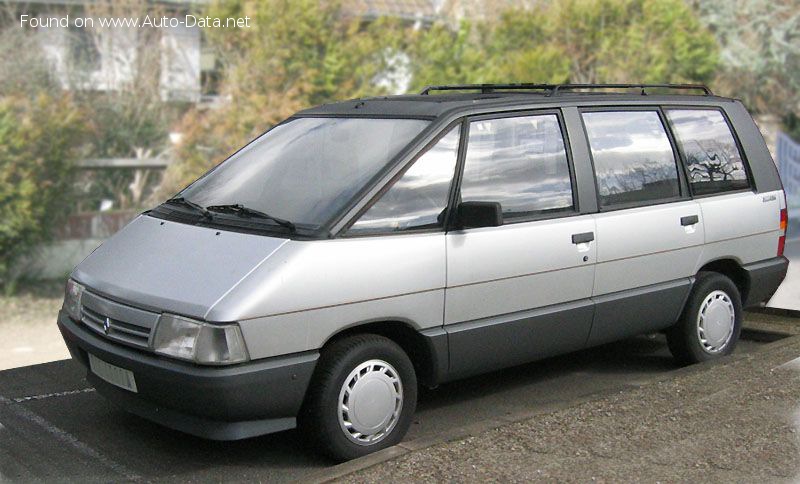
The Renault Espace I (J11/13, Phase II 1988) stands as a landmark achievement in automotive engineering, particularly within the European market. Originally launched in 1984, the Espace effectively invented the modern minivan or Multi-Purpose Vehicle (MPV) segment. The Phase II update, introduced in 1988, refined both the aesthetics and mechanical components of this groundbreaking vehicle. Though never officially offered for sale in the United States, the Espace’s impact on automotive design and family transportation was significant, establishing a new standard for practicality, versatility, and passenger comfort. The 2.2i TXE variant, producing 107 horsepower, was a popular choice, balancing performance with the Espace’s inherent spaciousness.
The Renault Espace I (J11/13, Phase II): A Revolutionary MPV
The Espace’s arrival marked a departure from traditional station wagons and large sedans, offering a uniquely adaptable vehicle designed to meet the evolving needs of modern families. It wasn’t simply a larger car; it was a fundamentally different approach to passenger transport. The Phase II model built upon this foundation, addressing early criticisms and enhancing the overall ownership experience. While the American market favored larger, body-on-frame minivans like the Dodge Caravan and Plymouth Voyager, the Espace represented a more sophisticated, European approach to the same problem – transporting people and cargo efficiently and comfortably.
Engine & Performance
The Renault Espace I (J11/13, Phase II 1988) 2.2i TXE was powered by a 2.2-liter (2165 cm³ or 132.12 cubic inches) inline-four cylinder gasoline engine, internally designated J7T 770. This naturally aspirated engine utilized multi-port fuel injection, a relatively advanced feature for the time, ensuring precise fuel delivery and consistent performance. The engine boasted a compression ratio of 9.2:1 and two valves per cylinder, generating 107 horsepower at 5000 rpm. Torque output was a respectable 125.39 lb.-ft. (170 Nm) at 3500 rpm, providing sufficient power for everyday driving and hauling passengers.
Power was transmitted to the wheels via a 5-speed manual transmission, giving drivers full control over the engine’s capabilities. A notable feature, and somewhat unusual for a vehicle of this type, was the availability of an all-wheel-drive (4×4) powertrain. This system enhanced traction and stability, particularly in inclement weather or on less-than-ideal road surfaces. While not intended for serious off-roading, the 4×4 option added a layer of versatility appreciated by many European drivers.
Performance figures were competitive for the segment. The 2.2i TXE could accelerate from 0 to 60 mph in approximately 9.5 seconds (0-100 km/h in 10 seconds), with a top speed of around 108.74 mph (175 km/h). These figures were adequate for comfortable highway cruising and confident merging. Fuel economy was a consideration, even in the late 1980s, with a combined fuel consumption of 26.1 US mpg (9 l/100 km). City driving yielded approximately 20.1 US mpg, while highway driving achieved 32.7 US mpg. The 16.64 US gallon (63 liter) fuel tank provided a reasonable driving range.
Design & Features
The Renault Espace I’s design was truly innovative, challenging conventional notions of family vehicle aesthetics. Its “one-box” silhouette, characterized by a steeply angled windshield that seamlessly integrated with the hood, gave it a futuristic appearance for the era. Classified as a minivan or MPV, the Espace featured five doors and offered seating for up to seven passengers. Its dimensions – 171.85 inches (4365 mm) in length, 69.96 inches (1777 mm) in width, and 65.35 inches (1660 mm) in height – were compact enough for navigating European cities while still providing ample interior space.
A significant design element was the use of composite body panels constructed from fiberglass-reinforced polyester mounted on a galvanized steel chassis. This construction method offered several advantages, including reduced weight, enhanced corrosion resistance, and simplified repairs. The Phase II facelift in 1988 included subtle but effective changes, such as revised headlights, a redesigned grille, and updated taillights, giving the vehicle a more refined and contemporary look while preserving its distinctive profile. The interior was designed for maximum flexibility, with removable seats and a configurable cargo area, allowing owners to adapt the space to their specific needs.
Technical Specifications
| Engine Type | Inline-4, Naturally Aspirated |
| Engine Displacement | 2.2 L (2165 cm³ / 132.12 cu in) |
| Engine Code | J7T 770 |
| Compression Ratio | 9.2:1 |
| Valve Configuration | 2 Valves per Cylinder |
| Fuel Injection | Multi-Port Fuel Injection |
| Maximum Power | 107 hp (79.6 kW) @ 5000 rpm |
| Maximum Torque | 170 Nm (125.39 lb-ft) @ 3500 rpm |
| Transmission | 5-Speed Manual |
| Drivetrain | Front-Wheel Drive or All-Wheel Drive (4×4) |
| 0-60 mph (0-100 km/h) | 9.5 sec (10 sec) |
| Top Speed | 108.74 mph (175 km/h) |
| Combined Fuel Economy | 26.1 US mpg (9 l/100 km) |
| City Fuel Economy | 20.1 US mpg |
| Highway Fuel Economy | 32.7 US mpg |
| Fuel Tank Capacity | 16.64 US gallons (63 L) |
| Length | 171.85 in (4365 mm) |
| Width | 69.96 in (1777 mm) |
| Height | 65.35 in (1660 mm) |
| Wheelbase | 101.57 in (2580 mm) |