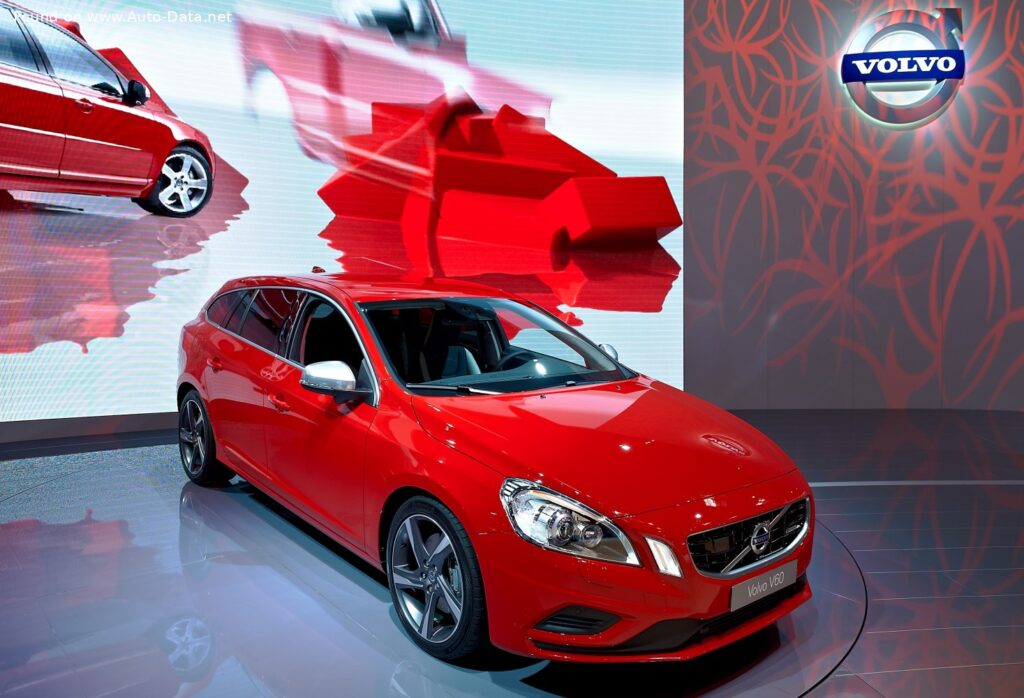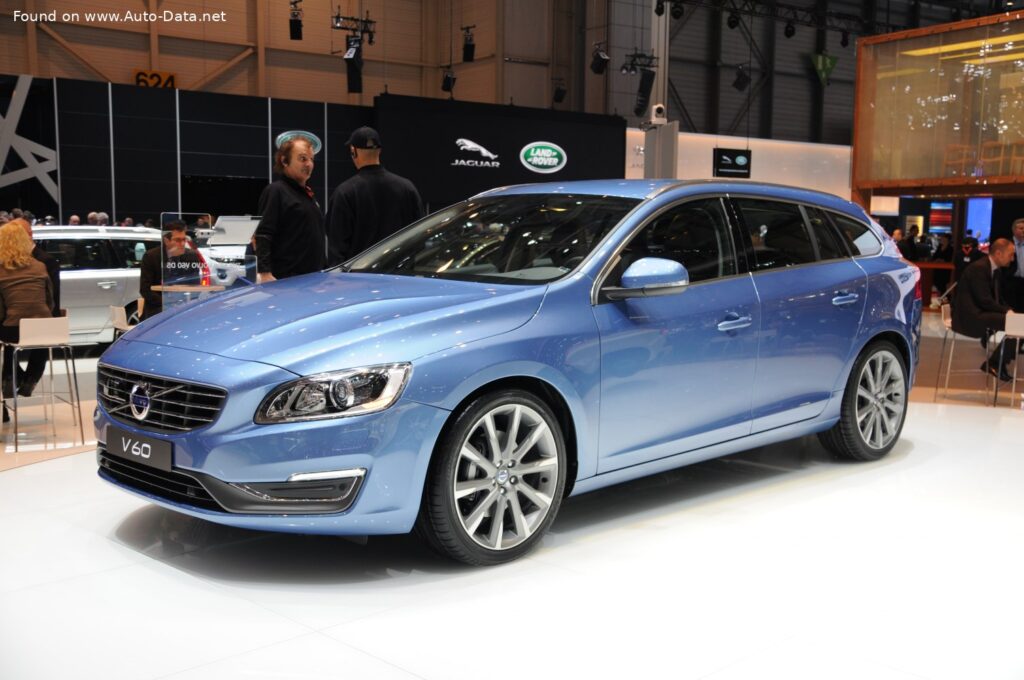
The Volvo V60 I, specifically its 2013 facelifted iteration equipped with the 1.6 T4 (180 Hp) start/stop engine, represented a significant offering in the highly competitive European compact executive wagon segment. Launched in 2013 and produced until 2015, this model showcased Volvo’s commitment to combining sophisticated Scandinavian design, practicality, safety, and efficient performance. While the V60 nameplate is familiar to American consumers, this particular 1.6-liter turbocharged gasoline engine variant was primarily tailored for European markets, where smaller displacement, high-efficiency powertrains were favored due to fuel costs and taxation structures. It stood as a testament to Volvo’s ability to deliver a premium driving experience with a focus on environmental responsibility, thanks in part to its advanced start/stop system.
Engine & Performance of the Volvo V60 I (2013 Facelift) 1.6 T4
The Volvo V60 I (2013 facelift) 1.6 T4 was powered by a transversely mounted 1.6-liter (1596 cm3, or 97.39 cubic inches) inline four-cylinder gasoline engine, internally designated as the B4164T. This engine incorporated direct injection and a turbocharger with an intercooler to optimize both efficiency and power output. Despite its relatively small displacement, the engine generated 180 horsepower at 5700 rpm, resulting in a power-to-liter ratio of 112.8 Hp/l.
Torque output was equally impressive, delivering 240 Nm (177.01 lb.-ft.) across a broad rev range, from 1600 to 5000 rpm. This wide torque band provided responsive acceleration in a variety of driving scenarios, making the V60 I 1.6 T4 feel more powerful than its engine size might suggest. Power was transferred to the front wheels via a six-speed manual transmission. This configuration enabled the V60 to accelerate from 0 to 60 mph in 8.1 seconds (0-100 km/h in 8.5 seconds), a respectable time for a family wagon of its size and power.
A standard Start & Stop System significantly enhanced the vehicle’s efficiency. This technology automatically shut down the engine when the vehicle was stationary, such as at a traffic signal, and seamlessly restarted it when the driver engaged the clutch, reducing fuel consumption and emissions in urban environments. The V60 I 1.6 T4 achieved a combined fuel economy of 6.6 l/100 km (35.6 US mpg), with urban consumption rated at 8.7 l/100 km (27 US mpg) and extra-urban at 5.4 l/100 km (43.6 US mpg). Compliance with the Euro 5 emission standard further underscored Volvo’s commitment to environmental performance.
Design & Features
The 2013 facelift refreshed the V60 I’s aesthetics, aligning its design with contemporary Volvo models. As a five-door station wagon (known as an “estate” in Europe), the V60 combined sleek, coupe-like styling with the practicality expected of a wagon. The facelift included a wider, lower grille, redesigned headlights, and updated front and rear bumpers, giving the car a more assertive and modern appearance. Volvo’s signature “hammer of Thor” daytime running lights, while not fully integrated, began to influence the sharper, more angular headlamp designs.
The interior continued Volvo’s tradition of ergonomic and aesthetically pleasing cabins. High-quality materials, a floating center console, and comfortable seating for five passengers were key features. Despite its sporty exterior, the V60 offered a practical trunk space of 430 liters (15.19 cubic feet), expandable by folding down the rear seats, making it a versatile vehicle for families and active lifestyles.
Safety, a core value of the Volvo brand, was paramount in the V60 I. The 2013 model would have included a comprehensive suite of active and passive safety systems, such as ABS (Anti-lock Braking System), multiple airbags, stability control, and potentially advanced driver-assistance systems like City Safety (Volvo’s low-speed collision avoidance system), depending on the trim level and market. The car’s substantial kerb weight of 1640 kg (3615.58 lbs) also contributed to a feeling of solidity and safety on the road.
Technical Specifications: Volvo V60 I (2013 Facelift) 1.6 T4 (180 Hp) Start/Stop
| Category | Specification |
| General Information | |
| Brand | Volvo |
| Model | V60 I (2013 facelift) |
| Type (Engine) | 1.6 T4 (180 Hp) start/stop |
| Production Years | 2013 – 2015 |
| Powertrain Architecture | Internal Combustion Engine |
| Body Type | Station wagon (estate) – 5 Doors, 5 Seats |
| Performance Specifications | |
| Fuel Type | Petrol (Gasoline) |
| Fuel Consumption (Urban) | 8.7 l/100 km (27 US mpg) |
| Fuel Consumption (Extra Urban) | 5.4 l/100 km (43.6 US mpg) |
| Fuel Consumption (Combined) | 6.6 l/100 km (35.6 US mpg) |
| Acceleration 0-60 mph | 8.1 sec |
| Acceleration 0-100 km/h | 8.5 sec |
| Emission Standard | Euro 5 |
| Weight-to-Power Ratio | 9.1 kg/Hp (109.8 Hp/tonne) |
| Weight-to-Torque Ratio | 6.8 kg/Nm (146.3 Nm/tonne) |
| Engine Specifications | |
| Power | 180 Hp @ 5700 rpm |
| Power per liter | 112.8 Hp/l |
| Torque | 240 Nm @ 1600-5000 rpm (177.01 lb.-ft. @ 1600-5000 rpm) |
| Engine Layout | Front, Transverse |
| Engine Model/Code | B4164T |
| Engine Displacement | 1596 cm3 (1.6 Liters / 97.39 cu. in.) |
| Number of Cylinders | 4 (Inline configuration) |
| Cylinder Bore | 79 mm (3.11 in.) |
| Piston Stroke | 81.4 mm (3.2 in.) |
| Fuel Injection System | Direct injection |
| Engine Aspiration | Turbocharger, Intercooler |
| Engine Oil Capacity | 4.1 l (4.33 US qt) |
| Coolant Capacity | 9.2 l (9.72 US qt) |
| Engine Systems | Start & Stop System |
| Space, Volume and Weights | |
| Kerb Weight | 1640 kg (3615.58 lbs.) |
| Max. Weight (GVWR) | 2100 kg (4629.71 lbs.) |
| Max Load | 460 kg (1014.13 lbs.) |
| Trunk (Boot) Space – minimum | 430 l (15.19 cu. ft.) |
| Fuel Tank Capacity | 67.5 l (17.83 US gal) |
| Dimensions | |
| Length | 4635 mm (182.48 in.) |
| Width | 1825 mm (71.85 in.) |
| Height | 1484 mm (58.43 in.) |
| Wheelbase | 2776 mm (109.29 in.) |
| Front Track | 1588 mm (62.52 in.) |
| Rear (Back) Track | 1585 mm (62.4 in.) |
| Minimum Turning Circle | 11.3 m (37.07 ft.) |
| Drivetrain, Brakes and Suspension | |
| Drivetrain Architecture | Internal combustion engine drives front wheels (Front-wheel drive (FWD)) |
| Drive Wheel | Front wheel drive |
| Gearbox | 6 gears, manual transmission |
| Assisting Systems | ABS (Anti-lock braking system) |
| Steering Type | Steering rack and pinion |
Legacy & Market Impact
The Volvo V60 I, particularly in its 2013 facelifted guise with the 1.6 T4 engine, established a distinct position in the European premium compact executive segment. In markets like Germany, the UK, and Scandinavia, it competed with the BMW 3 Series Touring, Audi A4 Avant, and Mercedes-Benz C-Class Estate. While these German rivals offered a wider range of engine options, the V60 1.6 T4 provided a compelling alternative with its blend of Scandinavian design, safety, and efficient performance.
Volvo’s reputation for safety was a significant selling point, often cited as a primary reason for purchase. The V60 continued this legacy, appealing to buyers who prioritized occupant protection and a secure driving experience. Its design, while conservative, exuded a quiet confidence and timeless elegance. The practicality of the station wagon body style, combined with the comfortable interior, made it ideal for families and professionals.
The 1.6 T4 engine, with its 180 horsepower and the efficiency of the start/stop system, showcased Volvo’s engineering in downsized turbocharged engines. This approach was particularly relevant in Europe, where emissions regulations and fuel costs incentivized smaller, more efficient powertrains. The V60 1.6 T4 demonstrated that a relatively small engine could deliver ample power for daily driving while keeping running costs in check.
Historically, the V60 I bridged the gap between Volvo’s traditional wagons and its newer, more dynamically styled models. It solidified Volvo’s position as a premium brand capable of competing on design, technology, and driving dynamics, not just safety. Its success paved the way for future generations of Volvo wagons, including the current V60, which continues to uphold the brand’s core values while embracing modern design and advanced powertrains. The 2013 facelift of the V60 I 1.6 T4 remains a well-regarded example of a balanced, efficient, and distinctly Volvo executive wagon.