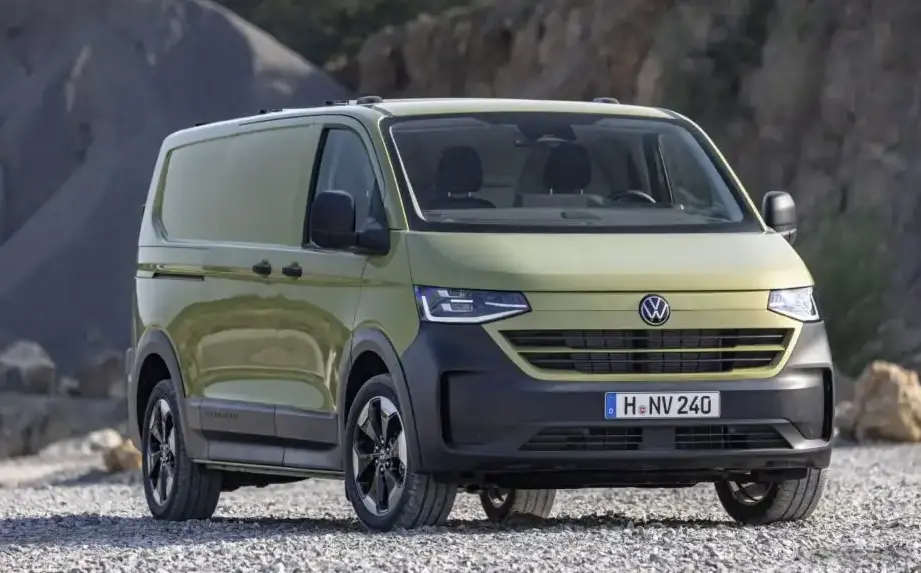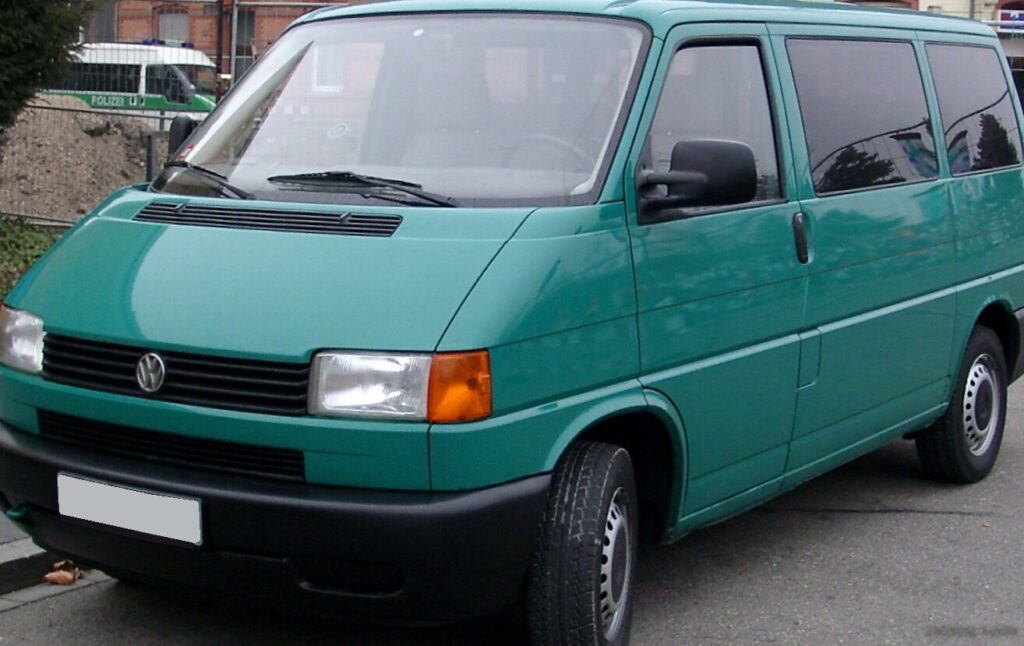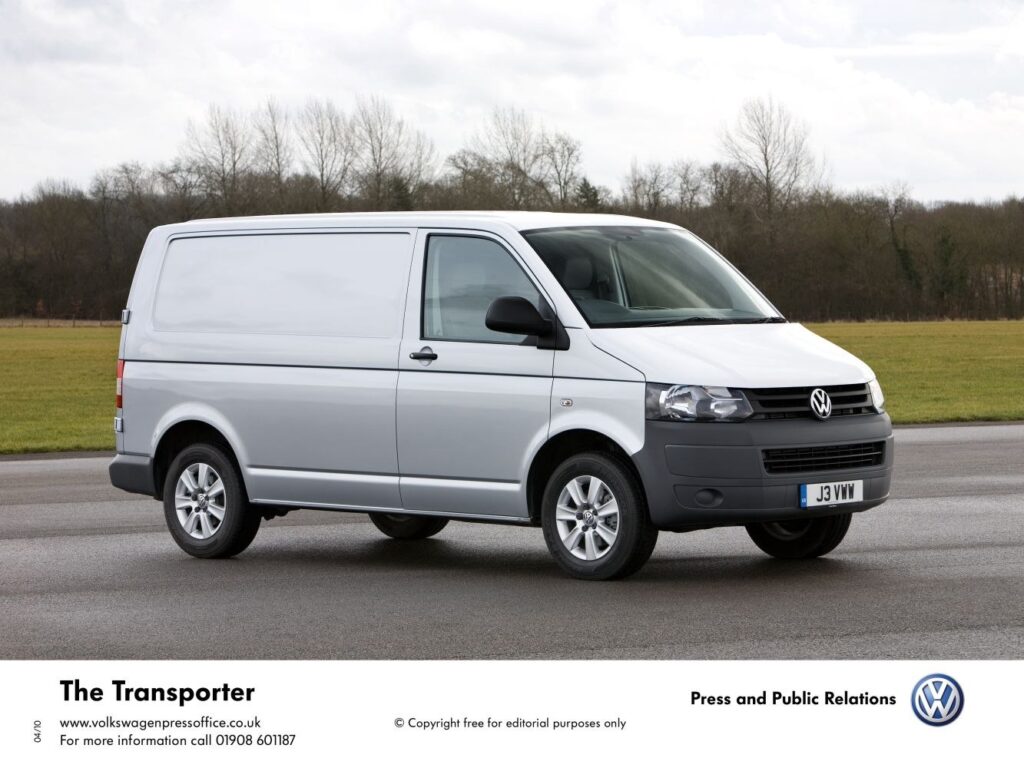
The Volkswagen Transporter (T5, facelift 2009) Panel Van represents a significant iteration of Volkswagen’s highly regarded commercial vehicle line, the Transporter. Launched in 2011 as part of the T5 generation’s mid-cycle refresh, this specific model, equipped with the potent 2.0 TSI (204 Hp) engine and designated L1H2 for its standard length and medium-high roof configuration, served as a versatile and efficient solution for businesses across Europe and other international markets. While the Transporter series has a storied history and is globally recognized, this particular generation and variant were not officially sold in the United States, where Volkswagen’s commercial vehicle offerings have traditionally been limited to larger models or passenger-focused vans. Nonetheless, its engineering prowess, efficiency, and robust design embody the German automotive philosophy, making it a benchmark in its class. Production for this facelifted T5 model ran from 2011 to 2015, bridging the gap to the subsequent T6 generation.
Volkswagen Transporter T5: A European Workhorse
The T5 generation, introduced in 2003, continued the Transporter’s legacy of reliability and adaptability, building upon the foundations laid by its predecessors, which date back to the iconic Type 2 “Bus.” The 2009 facelift brought a host of updates, including refreshed styling, enhanced interior ergonomics, and critically, a new range of more efficient and powerful engines, such as the 2.0 TSI gasoline unit. This particular model, the Panel Van, was designed primarily for cargo transport, emphasizing practicality, load capacity, and operational economy, while also offering a surprisingly car-like driving experience for a utility vehicle.
Engine & Performance of the Volkswagen Transporter 2.0 TSI
At the heart of this specific Volkswagen Transporter (T5, facelift 2009) Panel Van is a sophisticated 2.0-liter TSI (Turbocharged Stratified Injection) gasoline engine, coded EA888 / CJKA. This inline four-cylinder powerplant, mounted transversely at the front, was a significant departure from the previous generation’s naturally aspirated or less advanced turbocharged units, showcasing Volkswagen’s commitment to modern engine technology even in its commercial offerings. With a displacement of 1984 cubic centimeters (121.07 cubic inches), the engine generates an impressive 204 horsepower at a broad range of 4200 to 6000 rpm. This high power output for a commercial van engine translates to excellent acceleration and highway cruising capability.
Torque delivery is equally impressive, with a substantial 350 Newton-meters (258.15 lb.-ft.) available from a low 1500 rpm all the way up to 4000 rpm. This wide torque band is crucial for a panel van, providing strong pulling power for heavy loads and reducing the need for frequent gear changes, especially in urban environments or when climbing inclines. The engine benefits from direct fuel injection, a turbocharger, and an intercooler, all contributing to its efficiency and responsiveness. The DOHC (Double Overhead Camshaft) valvetrain with four valves per cylinder ensures optimal airflow for combustion, further enhancing performance.
Paired with a 6-speed manual transmission driving the front wheels, the 2.0 TSI engine propels the Transporter L1H2 from 0 to 60 mph in a swift 8.1 seconds (0-100 km/h in 8.5 seconds), which is remarkably quick for a commercial vehicle of its size and purpose. Its maximum speed reaches 120.55 mph (194 km/h), allowing it to easily keep pace with highway traffic. Despite its performance, Volkswagen also engineered this powertrain for reasonable fuel economy for its class, with a combined NEDC cycle rating of 24.8 – 24 US mpg (9.5-9.8 l/100 km) and CO2 emissions of 222-228 g/km, meeting Euro 5 emission standards. The engine’s oil capacity is 6.02 US quarts, and the cooling system holds 11.62 US quarts.
Design & Features: The Versatile Panel Van
The Volkswagen Transporter (T5, facelift 2009) Panel Van is characterized by its utilitarian yet modern design, tailored specifically for commercial applications. As a ‘Panel Van,’ it features solid side panels instead of windows in the cargo area, providing security for contents and a large surface for company branding. This particular variant, designated L1H2, indicates a standard length (L1) and a medium-high roof (H2). With an overall length of 192.6 inches (4892 mm), a width of 74.96 inches (1904 mm) (89.88 inches or 2283 mm including mirrors), and a height of 85.67 inches (2176 mm), it offers a substantial yet manageable footprint for urban deliveries and regional transport. The 118.11-inch (3000 mm) wheelbase contributes to stable handling and a generous cargo area.
Inside, the Panel Van typically offers seating for 2 to 3 occupants, prioritizing cargo space over passenger accommodation. The cabin is designed for durability and functionality, with hard-wearing materials and practical storage solutions essential for daily commercial use. The true highlight of the Panel Van is its cargo capacity, boasting a maximum trunk space of 6700 liters (236.61 cubic feet). This cavernous volume, combined with a maximum payload capacity ranging from 2317.06 to 2341.31 lbs (1051-1062 kg), makes it an incredibly capable vehicle for transporting a wide array of goods.
Underneath, the Transporter features an independent McPherson strut front suspension with coil springs and an anti-roll bar, paired with an independent coil spring rear suspension with a transverse stabilizer and trailing arms. This sophisticated setup, uncommon for many commercial vans, provides a comfortable ride even when unladen and maintains composure under heavy loads. Braking is handled by ventilated discs at both the front (340×32.5 mm) and rear (294×22 mm), supplemented by an Anti-lock Braking System (ABS) for enhanced safety. Hydraulic power steering ensures ease of maneuverability, particularly in tight urban spaces, aided by a relatively tight minimum turning circle of 39.04 feet (11.9 meters). The vehicle comes with various tire options, including 215/60 R17, 235/55 R17, and 255/45 R18, mounted on 7J x 17 or 8J x 18 wheel rims. Its ground clearance of 7.91 inches (201 mm) and respectable approach, departure, and ramp-over angles provide capability for varied terrains.
Technical Specifications: Volkswagen Transporter (T5, facelift 2009) Panel Van 2.0 TSI (204 Hp) L1H2
| Category | Specification |
| Brand | Volkswagen |
| Model | Transporter |
| Generation | Transporter (T5, facelift 2009) Panel Van |
| Type (Engine) | 2.0 TSI (204 Hp) L1H2 |
| Production Start | 2011 |
| Production End | 2015 |
| Powertrain Architecture | Internal Combustion Engine (Front Wheel Drive) |
| Body Type | Van |
| Seats | 2-3 |
| Doors | 4-5 |
| Performance Specs | |
| Fuel Consumption (Urban, NEDC) | 12.7-13 l/100 km (18.5 – 18.1 US mpg) |
| Fuel Consumption (Extra Urban, NEDC) | 7.7-8 l/100 km (30.5 – 29.4 US mpg) |
| Fuel Consumption (Combined, NEDC) | 9.5-9.8 l/100 km (24.8 – 24 US mpg) |
| CO2 Emissions (NEDC) | 222-228 g/km |
| Fuel Type | Petrol (Gasoline) |
| Acceleration 0-62 mph (0-100 km/h) | 8.5 sec |
| Acceleration 0-60 mph (Calculated) | 8.1 sec |
| Maximum Speed | 194 km/h (120.55 mph) |
| Emission Standard | Euro 5 |
| Weight-to-Power Ratio | 8.6 kg/Hp (116.6 Hp/tonne) |
| Weight-to-Torque Ratio | 5 kg/Nm (200.1 Nm/tonne) |
| Engine Specs | |
| Power | 204 Hp @ 4200-6000 rpm |
| Power per Liter | 102.8 Hp/l |
| Torque | 350 Nm (258.15 lb.-ft.) @ 1500-4000 rpm |
| Engine Layout | Front, Transverse |
| Engine Model/Code | EA888 / CJKA |
| Engine Displacement | 1984 cm3 (121.07 cu. in. / 2.0 Liters) |
| Number of Cylinders | 4 |
| Engine Configuration | Inline |
| Cylinder Bore | 82.5 mm (3.25 in.) |
| Piston Stroke | 92.8 mm (3.65 in.) |
| Compression Ratio | 9.8:1 |
| Valves per Cylinder | 4 |
| Fuel Injection System | Direct injection |
| Engine Aspiration | Turbocharger, Intercooler |
| Valvetrain | DOHC |
| Engine Oil Capacity | 5.7 l (6.02 US qt) |
| Coolant Capacity | 11 l (11.62 US qt) |
| Space, Volume and Weights | |
| Kerb Weight | 1749-2138 kg (3855.88 – 4713.48 lbs.) |
| Max. Weight | 2800-3200 kg (6172.94 – 7054.79 lbs.) |
| Max Load | 1051-1062 kg (2317.06 – 2341.31 lbs.) |
| Trunk (Boot) Space – Maximum | 6700 l (236.61 cu. ft.) |
| Fuel Tank Capacity | 80 l (21.13 US gal) |
| Permitted Trailer Load with Brakes (12%) | 2500 kg (5511.56 lbs.) |
| Permitted Trailer Load without Brakes | 750 kg (1653.47 lbs.) |
| Permitted Towbar Download | 100 kg (220.46 lbs.) |
| Dimensions | |
| Length | 4892 mm (192.6 in.) |
| Width | 1904 mm (74.96 in.) |
| Width (including mirrors) | 2283 mm (89.88 in.) |
| Height | 2176 mm (85.67 in.) |
| Wheelbase | 3000 mm (118.11 in.) |
| Front Overhang | 896 mm (35.28 in.) |
| Rear Overhang | 996 mm (39.21 in.) |
| Ride Height (Ground Clearance) | 201 mm (7.91 in.) |
| Minimum Turning Circle | 11.9 m (39.04 ft.) |
| Approach Angle | 21° |
| Departure Angle | 17° |
| Ramp-over (Brakeover) Angle | 14° |
| Wading Depth | 300 mm (11.81 in.) |
| Drivetrain, Brakes and Suspension | |
| Drivetrain Architecture | Front wheel drive (ICE drives front wheels) |
| Drive Wheel | Front wheel drive |
| Number of Gears / Gearbox Type | 6 gears, Manual transmission |
| Front Suspension | Independent, McPherson with coil spring and anti-roll bar |
| Rear Suspension | Independent coil spring, Transverse stabilizer, Trailing arm |
| Front Brakes | Ventilated discs, 340×32.5 mm |
| Rear Brakes | Ventilated discs, 294×22 mm |
| Assisting Systems | ABS (Anti-lock braking system) |
| Steering Type | Steering rack and pinion |
| Power Steering | Hydraulic Steering |
| Tire Sizes | 215/60 R17; 235/55 R17; 255/45 R18 |
| Wheel Rim Sizes | 7J x 17; 8J x 18 |
Legacy and Market Impact of the Volkswagen Transporter
The Volkswagen Transporter (T5, facelift 2009) Panel Van, particularly with the 2.0 TSI engine, cemented the T5 generation’s reputation as a leader in the European light commercial vehicle segment. While the Transporter’s American market presence is primarily through its spiritual successor, the Routan (a rebadged Chrysler minivan), or historically through imported T2/T3 models, in its home market, the T5 was a ubiquitous sight. It was highly valued for its blend of car-like driving dynamics, robust build quality, impressive cargo capacity, and a wide array of configurations, from the basic panel van to luxury passenger shuttles like the Multivan or California camper.
The introduction of the efficient and powerful TSI gasoline engine in a commercial van was a forward-thinking move by Volkswagen. While diesel engines traditionally dominate the European LCV market due to their fuel efficiency and torque characteristics, the 2.0 TSI offered a compelling alternative for operators who might benefit from its lower noise, smoother operation, and strong performance, especially in markets or applications where diesel emissions regulations were becoming stricter. Its ability to accelerate quickly and maintain high speeds made it suitable for express deliveries or long-distance hauling.
In the competitive European market, the T5 Transporter faced strong rivals such as the Ford Transit Custom, Mercedes-Benz Vito, Renault Trafic, and Peugeot Expert. However, the Transporter consistently stood out for its premium feel, advanced engineering, and strong residual values. Its independent suspension on all four wheels, a feature often reserved for passenger cars, provided a ride quality and handling capability that many competitors struggled to match, making it a more comfortable and less fatiguing vehicle for drivers spending long hours on the road.
The T5 generation, and its facelifted variant from 2009-2015, played a crucial role in maintaining the Transporter’s iconic status. It evolved the lineage with modern technology, improved safety features (for its era), and a strong emphasis on driver comfort and operational efficiency. Its legacy is one of unwavering reliability and versatility, continuing the tradition of the Volkswagen Transporter as the quintessential European workhorse, adaptable to countless commercial applications and beloved by tradespeople and fleet operators alike. The success of the T5 set the stage for its successor, the T6, ensuring the Transporter nameplate remains a dominant force in the global commercial vehicle landscape.