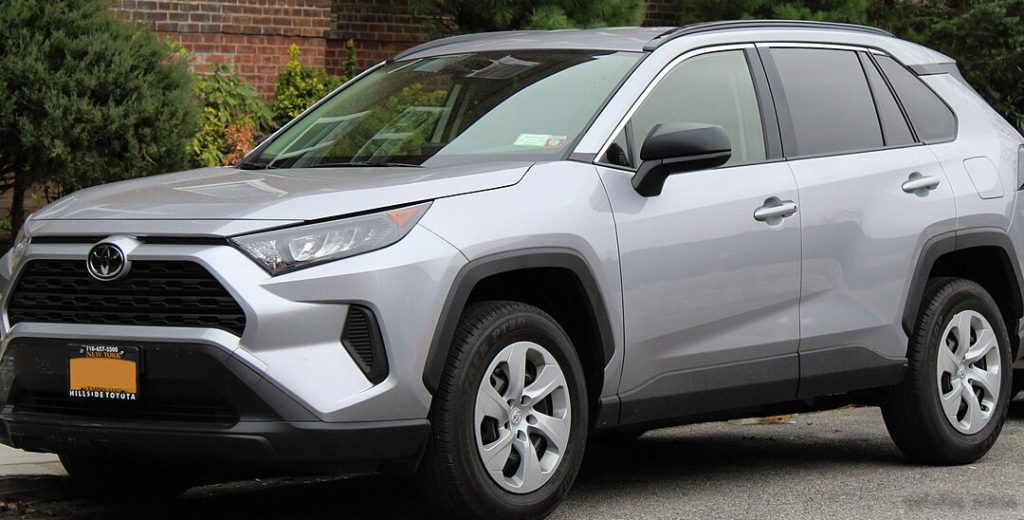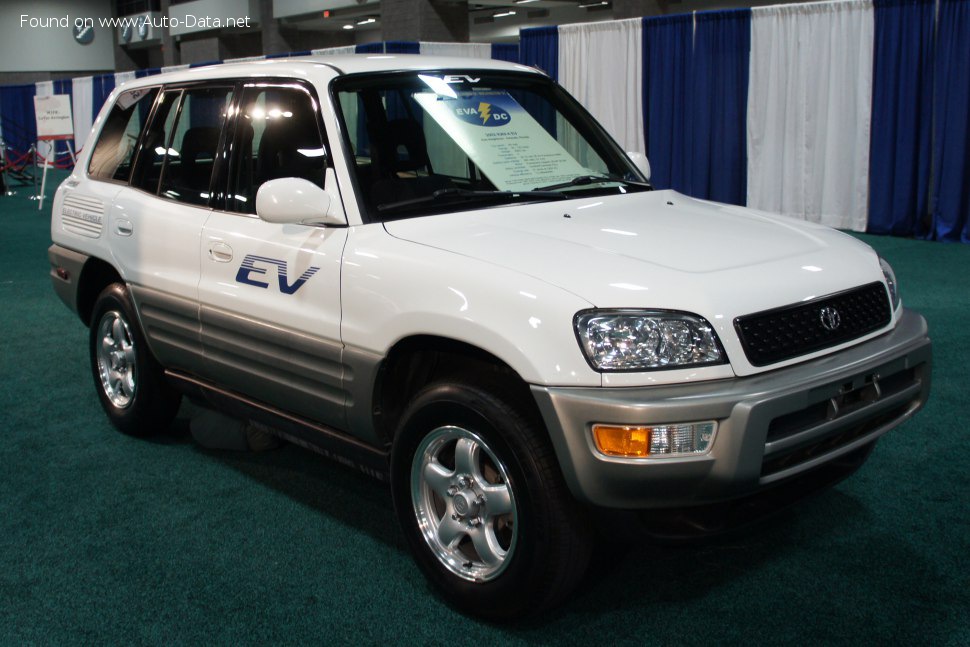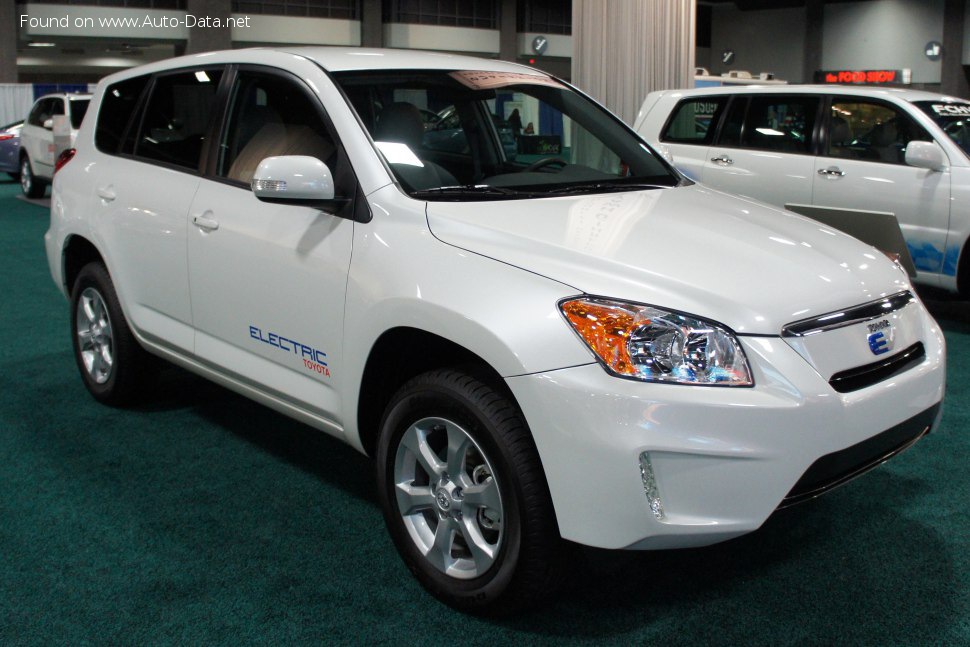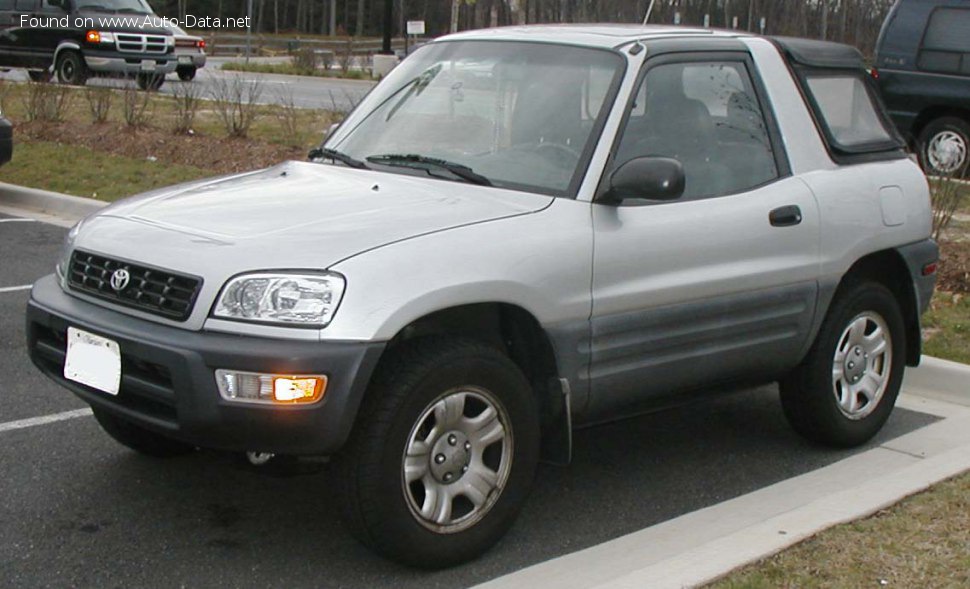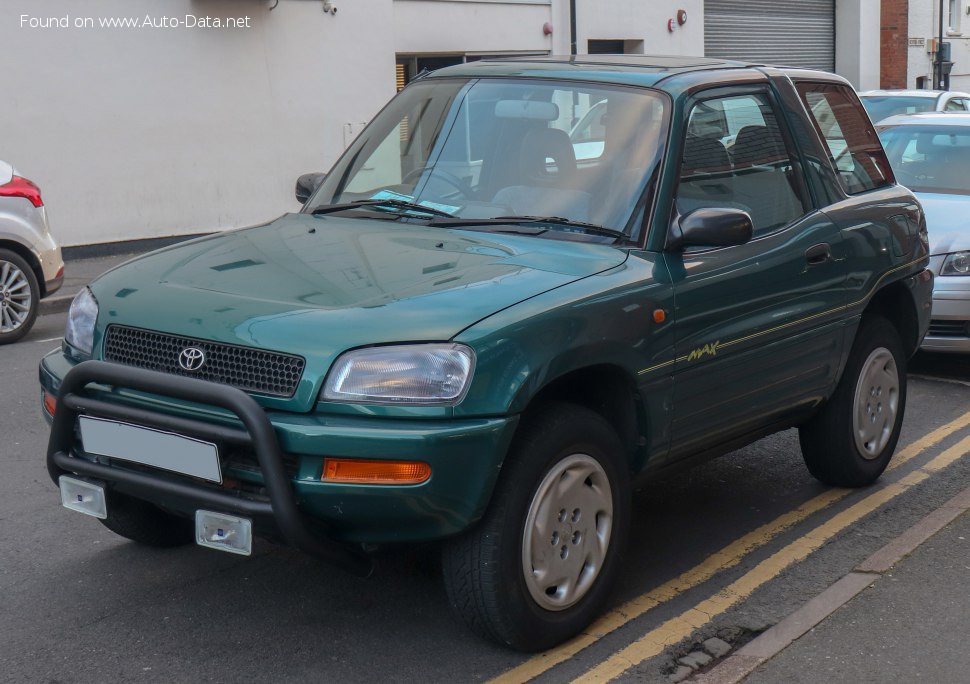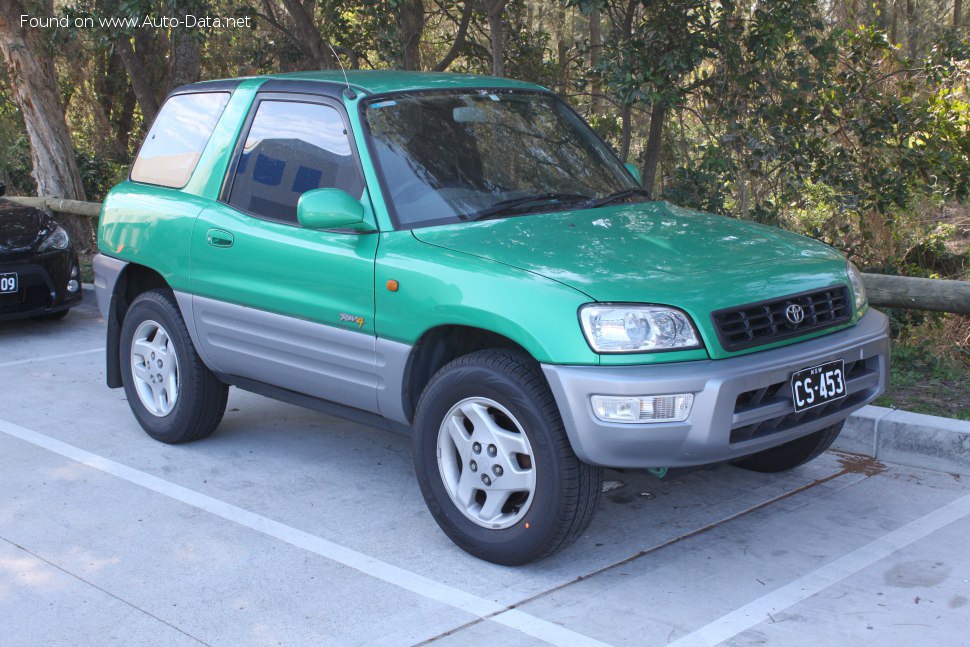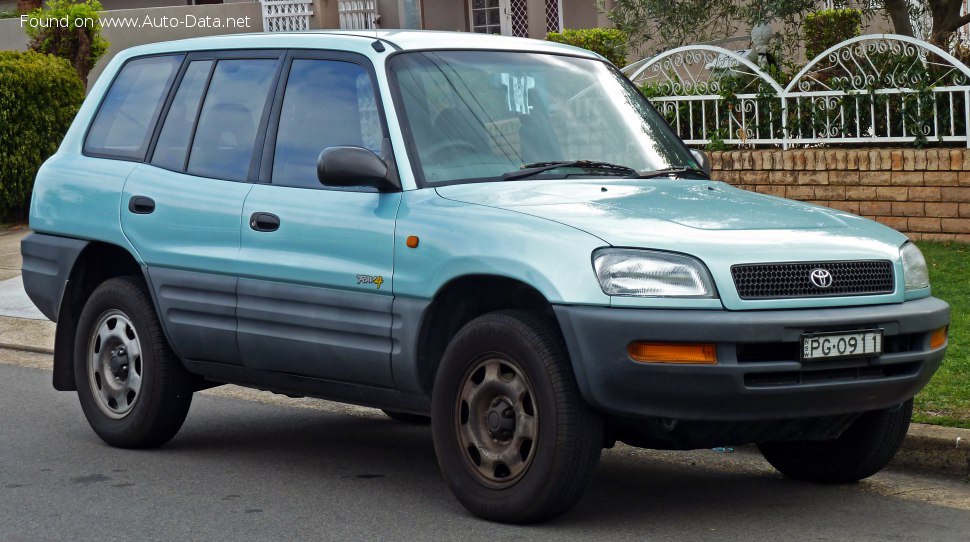
The Toyota RAV4 I (XA10) 5-door, launched in 1995, represents a watershed moment in automotive history, widely credited with popularizing the compact sport utility vehicle (SUV) segment. The name, standing for “Recreational Activity Vehicle: 4-wheel drive,” accurately reflects its design intent: a vehicle blending the utility and higher driving position of an SUV with the fuel efficiency, maneuverability, and driving experience of a passenger car. The first-generation RAV4, especially the practical 5-door model, provided a compelling option for consumers desiring versatility without the size or fuel consumption associated with traditional, truck-based SUVs. Produced until 2000, this model quickly garnered international recognition for its innovative approach, establishing a new benchmark for urban-friendly, all-wheel-drive vehicles.
Engine & Performance of the Toyota RAV4 I (XA10)
The Toyota RAV4 I (XA10) 5-door was powered by a dependable 2.0-liter 16-valve inline-four engine, internally designated as the 3S-FE. This naturally aspirated engine was engineered to balance everyday performance with fuel efficiency. It produced 129 horsepower at 5600 rpm, showcasing Toyota’s ability to extract usable power from a relatively small displacement engine. Torque output was rated at 129.07 lb.-ft. (175 Nm) at 4600 rpm, providing sufficient pulling power for city driving and light off-road use. The engine’s configuration, featuring four valves per cylinder and a Double Overhead Camshaft (DOHC) valvetrain, contributed to its smooth operation and responsiveness.
Power was transmitted to all four wheels through a conventional 4-speed automatic transmission, favored for its ease of use and smooth shifting, particularly in urban settings. The permanent all-wheel-drive (4WD) system enhanced traction and stability, making the RAV4 suitable for diverse road conditions, from wet surfaces to light snow or gravel. While not intended for demanding off-road adventures, its 8.07 inches (205 mm) of ground clearance and capable 4WD system offered a significant advantage over standard sedans. The vehicle reached a top speed of 105.01 mph (169 km/h), which was competitive for a compact SUV of its time.
Fuel economy was a key selling point for the RAV4, especially compared to larger SUVs. The 2.0-liter engine, combined with the automatic transmission, achieved an estimated 27.4 US mpg (8.6 l/100 km) in city driving and an impressive 39.9 US mpg (5.9 l/100 km) on the highway. These figures highlighted Toyota’s commitment to efficiency, making the RAV4 an economical choice for daily commutes and longer trips. Its 15.32 US gallon (58-liter) fuel tank provided a practical driving range.
Design & Features of the Toyota RAV4 I (XA10)
The design of the first-generation Toyota RAV4 I (XA10) 5-door was characterized by its compact, approachable, and rounded aesthetic, a departure from the boxy, utilitarian appearance of traditional SUVs. With a length of 162.01 inches (4115 mm), a width of 66.73 inches (1695 mm), and a height of 65.35 inches (1660 mm), it achieved a balance between exterior compactness and interior space. The 5-door body style provided easy access to both front and rear seats, comfortably accommodating five passengers. Its short overhangs, combined with approach and departure angles of 37 and 30 degrees respectively, suggested its ability to handle moderately rough terrain.
The interior of the RAV4 featured a practical and user-friendly layout. The elevated seating position offered excellent visibility, a desirable trait for both city driving and navigating varied landscapes. Despite its compact exterior dimensions, the interior was cleverly designed to maximize cargo space. The minimum trunk volume of 14.37 cu. ft. (407 liters) could be expanded to 22.81 cu. ft. (646 liters) by folding down the rear seats, providing considerable flexibility for carrying luggage, groceries, or sports equipment.
From a chassis perspective, the RAV4 utilized a car-derived unibody construction, a significant departure from the body-on-frame design common in larger SUVs. This choice contributed to its superior ride comfort and handling characteristics, making it feel more like a car than a truck. The front suspension employed an independent McPherson strut setup, while the rear featured a double wishbone design, both contributing to a refined ride and stable handling. Braking was provided by ventilated discs at the front and drum brakes at the rear, a common and effective configuration for vehicles in this class during the mid-1990s. Hydraulic rack and pinion power steering ensured light and precise control. Standard 215/70 R16 tires mounted on 6.0J x 16 wheels provided a good balance of grip and comfort.
Technical Specifications
| Category | Specification |
| Brand | Toyota |
| Model | RAV4 I (XA10) 5-door |
| Type (Engine) | 2.0i 16V (129 Hp) 4WD Automatic |
| Production Start | 1995 |
| Production End | 2000 |
| Powertrain Architecture | Internal Combustion Engine |
| Body Type | SUV |
| Seats | 5 |
| Doors | 5 |
| Performance Specs | |
| Fuel Consumption (Urban) | 8.6 l/100 km / 27.4 US mpg |
| Fuel Consumption (Extra Urban) | 5.9 l/100 km / 39.9 US mpg |
| Fuel Type | Petrol (Gasoline) |
| Maximum Speed | 169 km/h / 105.01 mph |
| Weight-to-Power Ratio | 9.7 kg/Hp / 103.2 Hp/tonne |
| Weight-to-Torque Ratio | 7.1 kg/Nm / 140 Nm/tonne |
| Engine Specs | |
| Power | 129 Hp @ 5600 rpm |
| Power per liter | 64.6 Hp/l |
| Torque | 175 Nm @ 4600 rpm / 129.07 lb.-ft. @ 4600 rpm |
| Engine Layout | Front, Transverse |
| Engine Model/Code | 3S-FE |
| Engine Displacement | 1998 cm3 / 2.0 liters / 121.93 cu. in. |
| Number of Cylinders | 4 |
| Engine Configuration | Inline |
| Cylinder Bore | 86 mm / 3.39 in. |
| Piston Stroke | 86 mm / 3.39 in. |
| Compression Ratio | 9.8:1 |
| Valves per Cylinder | 4 |
| Fuel Injection System | Multi-port manifold injection |
| Engine Aspiration | Naturally aspirated |
| Valvetrain | DOHC |
| Engine Oil Capacity | 4.1 l / 4.33 US qt |
| Coolant Capacity | 7.7 l / 8.14 US qt |
| Space, Volume and Weights | |
| Kerb Weight | 1250 kg / 2755.78 lbs. |
| Maximum Weight (GVWR) | 1710 kg / 3769.9 lbs. |
| Maximum Load | 460 kg / 1014.13 lbs. |
| Trunk (Boot) Space – Minimum | 407 l / 14.37 cu. ft. |
| Trunk (Boot) Space – Maximum | 646 l / 22.81 cu. ft. |
| Fuel Tank Capacity | 58 l / 15.32 US gal |
| Dimensions | |
| Length | 4115 mm / 162.01 in. |
| Width | 1695 mm / 66.73 in. |
| Height | 1660 mm / 65.35 in. |
| Wheelbase | 2410 mm / 94.88 in. |
| Front Track | 1460 mm / 57.48 in. |
| Rear Track | 1465 mm / 57.68 in. |
| Ride Height (Ground Clearance) | 205 mm / 8.07 in. |
| Minimum Turning Circle | 10.8 m / 35.43 ft. |
| Approach Angle | 37° |
| Departure Angle | 30° |
| Drivetrain, Brakes and Suspension Specs | |
| Drive Wheel | All-wheel drive (4×4) |
| Number of Gears & Gearbox Type | 4 gears, automatic transmission |
| Front Suspension | Independent type McPherson |
| Rear Suspension | Double wishbone |
| Front Brakes | Ventilated discs |
| Rear Brakes | Drum |
| Steering Type | Steering rack and pinion |
| Power Steering | Hydraulic Steering |
| Tires Size | 215/70 R16 |
| Wheel Rims Size | 6.0J x 16 |
Legacy and Market Impact
The Toyota RAV4 I (XA10) 5-door fundamentally altered the automotive landscape. Prior to its introduction, the SUV market was dominated by large, truck-based vehicles prioritizing off-road capability over on-road comfort and fuel efficiency. Toyota boldly entered new territory by offering a car-based SUV that combined the strengths of both segments, effectively creating the “crossover SUV” category – a segment that would experience explosive growth in subsequent decades.
Its initial success stemmed from its unique combination of practicality, reliability, and accessibility. Consumers, particularly in urban and suburban areas, appreciated the RAV4’s ease of parking, lower running costs, and more comfortable ride compared to traditional SUVs. Its standard all-wheel-drive system provided confidence in inclement weather, a valued feature in many markets. The RAV4’s reputation for Toyota’s renowned reliability and low maintenance costs further enhanced its appeal, ensuring strong resale values and a loyal customer base.
In terms of competition, the first-generation RAV4 faced rivals such as the Honda CR-V, which arrived shortly after, and to a lesser extent, the Suzuki Vitara (Sidekick in some markets) and Subaru Forester. However, the RAV4 distinguished itself with its distinctive styling, slightly more engaging driving dynamics, and Toyota’s robust engineering. It quickly became the benchmark against which new compact SUVs were measured.
The RAV4’s historical significance lies in its role as a pioneer. It demonstrated that a utility vehicle didn’t need to be bulky or fuel-intensive, paving the way for the proliferation of compact and mid-size crossovers that now dominate new car sales globally. Its success not only solidified Toyota’s position as an innovator but also fundamentally reshaped consumer expectations for what a family vehicle could be. The XA10 generation laid the foundation for the RAV4 to become one of the world’s best-selling vehicles, evolving through multiple generations while remaining true to its original principles of versatility, efficiency, and car-like handling.