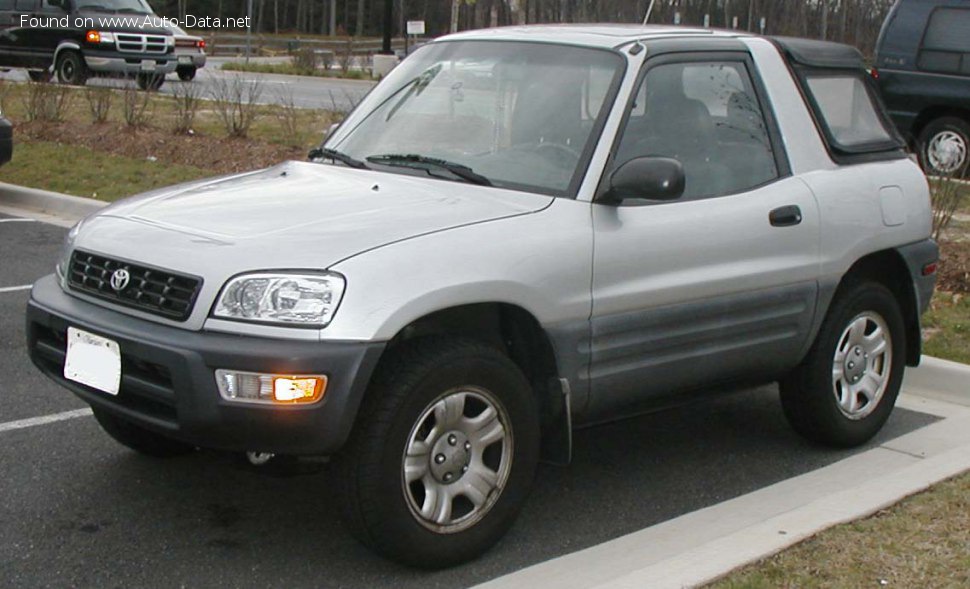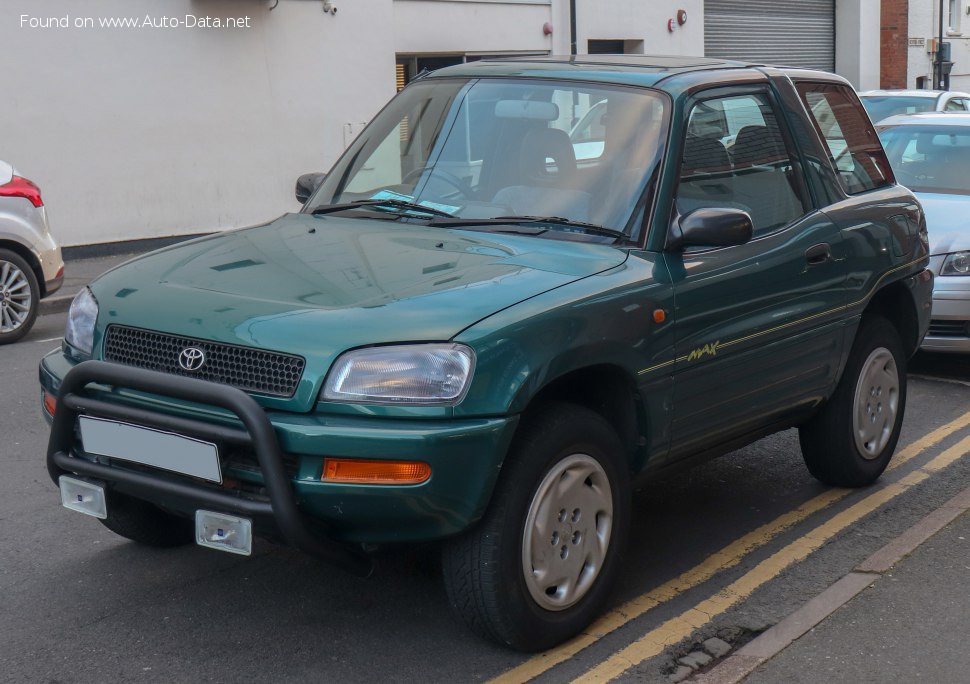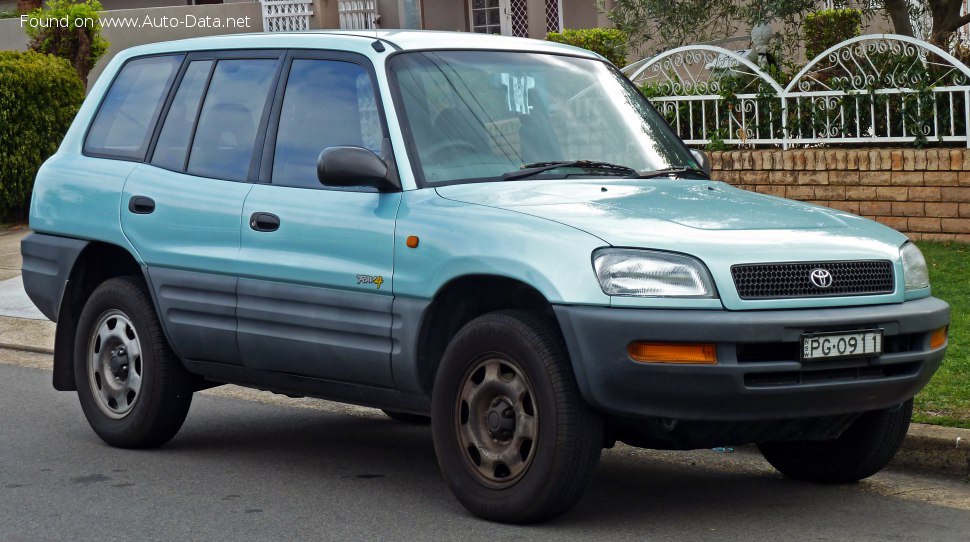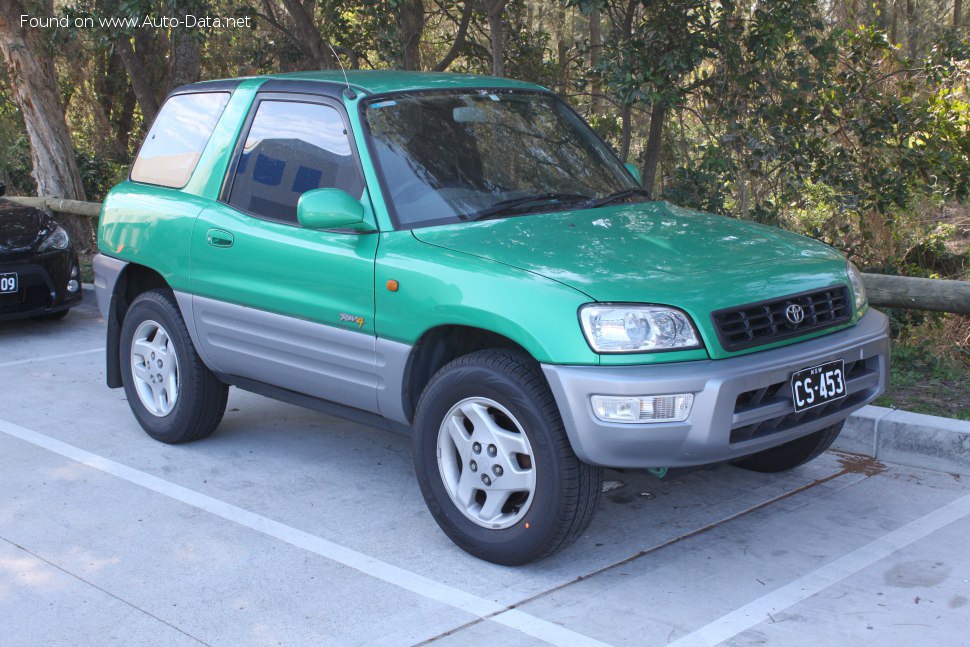
The Toyota RAV4, an acronym for “Recreational Activity Vehicle: 4-wheel drive,” debuted in 1994, fundamentally creating the compact sport utility vehicle (SUV) segment. The first generation, internally designated XA10, quickly gained recognition for blending passenger car comfort and handling with the utility and all-wheel-drive capability traditionally associated with SUVs. This article details the facelifted 1997 model year of the 3-door variant, specifically the 2.0i 16V (126 Hp) 4WD configuration, produced from January 1997 to 2000. This iteration of the Toyota RAV4 I (XA10, facelift 1997) 3-door refined the original formula, appealing to a growing market seeking an agile, fuel-efficient, and urban-friendly alternative to larger, truck-based SUVs.
The Toyota RAV4 I (XA10, facelift 1997) 3-door: A Pioneering Compact SUV
At a time when SUVs were predominantly body-on-frame vehicles, the RAV4 distinguished itself with unibody construction derived from Toyota’s passenger car platforms, offering a more refined driving experience. The 1997 facelift brought subtle but effective updates, maintaining its competitiveness. The 3-door model emphasized sportiness and compactness, making it ideal for urban environments and those prioritizing maneuverability and a distinctive aesthetic. Its permanent all-wheel-drive system, combined with a four-cylinder engine, provided confidence in various driving conditions, from city streets to light off-road trails.
Engine & Performance: The Heart of the Toyota RAV4 I (XA10, facelift 1997) 3-door
The 1997 Toyota RAV4 I (XA10, facelift 1997) 3-door 2.0i 16V (126 Hp) 4WD was powered by the Toyota 3S-FE engine. This 2.0-liter (1998 cm³ or 121.93 cu. in.) inline-four cylinder engine was known for its reliability and smooth operation. It featured a Double Overhead Camshaft (DOHC) valvetrain with four valves per cylinder, designed for efficient breathing and power delivery. Fuel was supplied via a multi-port manifold injection system, ensuring precise fuel metering and improved combustion.
The naturally aspirated 3S-FE engine produced 126 horsepower at 5400 rpm, providing ample motivation for a compact SUV of its time. Torque output was 131.29 lb.-ft. (178 Nm) at 4400 rpm, offering good low-to-mid-range punch for acceleration and negotiating inclines. With a compression ratio of 9.8:1, the engine balanced performance with reasonable fuel efficiency. Power was routed through a 5-speed manual transmission, offering direct driver engagement.
The permanent all-wheel-drive (4×4) system enhanced traction and stability, particularly in adverse weather or on unpaved surfaces. This contributed to the RAV4’s reputation as a versatile vehicle. Performance figures included a top speed of 105.63 mph (170 km/h). Fuel economy was estimated at 18.8 US mpg in urban driving, 30.5 US mpg on the highway, and a combined average of 25 US mpg, making it relatively economical for its segment and era.
Design & Features: Form Meets Function in the XA10 RAV4
The design of the first-generation RAV4, and particularly the 3-door facelifted variant, was characterized by its youthful and modern aesthetic. Unlike the boxy, utilitarian SUVs of the past, the RAV4 featured smooth, rounded lines and integrated bumpers and bodywork. The 3-door body type, measuring 145.87 inches (3705 mm) in length, 66.73 inches (1695 mm) in width, and 65.35 inches (1660 mm) in height, emphasized its agile and city-friendly nature. Despite its compact exterior, the interior comfortably accommodated five occupants, with a versatile cargo area ranging from 6.11 cu. ft. (173 liters) to 18.36 cu. ft. (520 liters) with the rear seats folded.
The RAV4’s car-like driving dynamics were due to its sophisticated chassis and suspension. It featured an independent MacPherson strut front suspension and a double wishbone rear suspension, providing superior ride comfort and handling compared to truck-based competitors. This setup minimized body roll and enhanced stability. Steering was handled by a hydraulic rack and pinion system, offering direct feedback and ease of maneuverability, with a tight turning circle of 32.81 feet (10.0 meters).
Braking performance was managed by ventilated discs at the front and drum brakes at the rear, a common setup for vehicles in this class during the late 1990s. The vehicle rode on 215/70 R16 tires mounted on 6.0J x 16-inch wheel rims, providing a balance of grip and ride comfort. Key exterior features included its distinctive spare tire mounted on the rear tailgate. Inside, the RAV4 offered a straightforward yet functional cabin, with controls logically placed and durable materials, reflecting its target audience’s active lifestyle.
Technical Specifications: Toyota RAV4 I (XA10, facelift 1997) 3-door 2.0i 16V (126 Hp) 4WD
| Category | Specification |
| General Information | |
| Brand | Toyota |
| Model | RAV4 |
| Generation | RAV4 I (XA10, facelift 1997) 3-door |
| Type (Engine) | 2.0i 16V (126 Hp) 4WD |
| Start of Production | January, 1997 |
| End of Production | 2000 |
| Powertrain Architecture | Internal Combustion engine |
| Body Type | SUV |
| Seats | 5 |
| Doors | 3 |
| Performance Specifications | |
| Fuel Consumption (Economy) – urban | 12.5 l/100 km (18.8 US mpg) |
| Fuel Consumption (Economy) – extra urban | 7.7 l/100 km (30.5 US mpg) |
| Fuel Consumption (Economy) – combined | 9.4 l/100 km (25 US mpg) |
| Fuel Type | Petrol (Gasoline) |
| Maximum Speed | 170 km/h (105.63 mph) |
| Weight-to-Power Ratio | 9.3 kg/Hp (107.2 Hp/tonne) |
| Weight-to-Torque Ratio | 6.6 kg/Nm (151.5 Nm/tonne) |
| Engine Specifications | |
| Power | 126 Hp @ 5400 rpm |
| Power per liter | 63.1 Hp/l |
| Torque | 178 Nm @ 4400 rpm (131.29 lb.-ft. @ 4400 rpm) |
| Engine Layout | Front, Transverse |
| Engine Model/Code | 3S-FE |
| Engine Displacement | 1998 cm³ (2.0 l / 121.93 cu. in.) |
| Number of Cylinders | 4 |
| Engine Configuration | Inline |
| Cylinder Bore | 86 mm (3.39 in.) |
| Piston Stroke | 86 mm (3.39 in.) |
| Compression Ratio | 9.8:1 |
| Number of Valves per Cylinder | 4 |
| Fuel Injection System | Multi-port manifold injection |
| Engine Aspiration | Naturally aspirated engine |
| Valvetrain | DOHC |
| Engine Oil Capacity | 4.1 l (4.33 US qt) |
| Coolant Capacity | 8 l (8.45 US qt) |
| Space, Volume, and Weights | |
| Kerb Weight | 1175 kg (2590.43 lbs.) |
| Trunk (boot) space – minimum | 173 l (6.11 cu. ft.) |
| Trunk (boot) space – maximum | 520 l (18.36 cu. ft.) |
| Fuel Tank Capacity | 58 l (15.32 US gal) |
| Permitted trailer load with brakes (12%) | 1500 kg (3306.93 lbs.) |
| Dimensions | |
| Length | 3705 mm (145.87 in.) |
| Width | 1695 mm (66.73 in.) |
| Height | 1660 mm (65.35 in.) |
| Wheelbase | 2200 mm (86.61 in.) |
| Front Track | 1460 mm (57.48 in.) |
| Rear (Back) Track | 1465 mm (57.68 in.) |
| Minimum Turning Circle (turning diameter) | 10.0 m (32.81 ft.) |
| Drivetrain, Brakes, and Suspension Specifications | |
| Drive Wheel | All wheel drive (4×4) |
| Number of Gears and Type of Gearbox | 5 gears, manual transmission |
| Front Suspension | Independent type McPherson |
| Rear Suspension | Double wishbone |
| Front Brakes | Ventilated discs |
| Rear Brakes | Drum |
| Steering Type | Steering rack and pinion |
| Power Steering | Hydraulic Steering |
| Tires Size | 215/70 R16 |
| Wheel Rims Size | 6.0J x 16 |
Legacy and Market Impact: The Enduring Influence of the RAV4
The Toyota RAV4’s legacy is immense, particularly the first generation, which fundamentally reshaped the automotive landscape. Before its arrival, SUVs were largely seen as rugged, utilitarian vehicles, often truck-based and primarily purchased for heavy-duty tasks or serious off-roading. The RAV4 shattered this perception, proving that an SUV could be compact, stylish, fuel-efficient, and fun to drive, with car-like comfort and handling. It pioneered the “crossover” segment, appealing to a broader demographic, including urban dwellers, young families, and individuals seeking adventure without the bulk of a traditional SUV.
The 1997 facelifted Toyota RAV4 I (XA10, facelift 1997) 3-door played a crucial role in solidifying this reputation. Its compact dimensions and nimble handling made it particularly popular in congested city environments, while the available all-wheel-drive system offered peace of mind for light off-road excursions or inclement weather. Competitors quickly emerged, including the Honda CR-V, Subaru Forester, and later models like the Suzuki Grand Vitara, all vying for a share of the rapidly expanding compact SUV market that the RAV4 had created.
The RAV4’s success was not just about market share; it was about cultural impact. It demonstrated that consumers desired vehicles that combined versatility and a commanding driving position with the refinement and efficiency of a passenger car. Its reputation for Toyota’s legendary reliability, coupled with its innovative concept, ensured strong sales and high customer satisfaction. The first-generation RAV4, particularly the sporty 3-door variant, is now recognized as a modern classic, celebrated for its pioneering spirit and its role in ushering in the era of the crossover SUV, a segment that continues to dominate global automotive sales today. Its influence can be seen in nearly every compact SUV on the road, a testament to Toyota’s foresight and engineering excellence.